

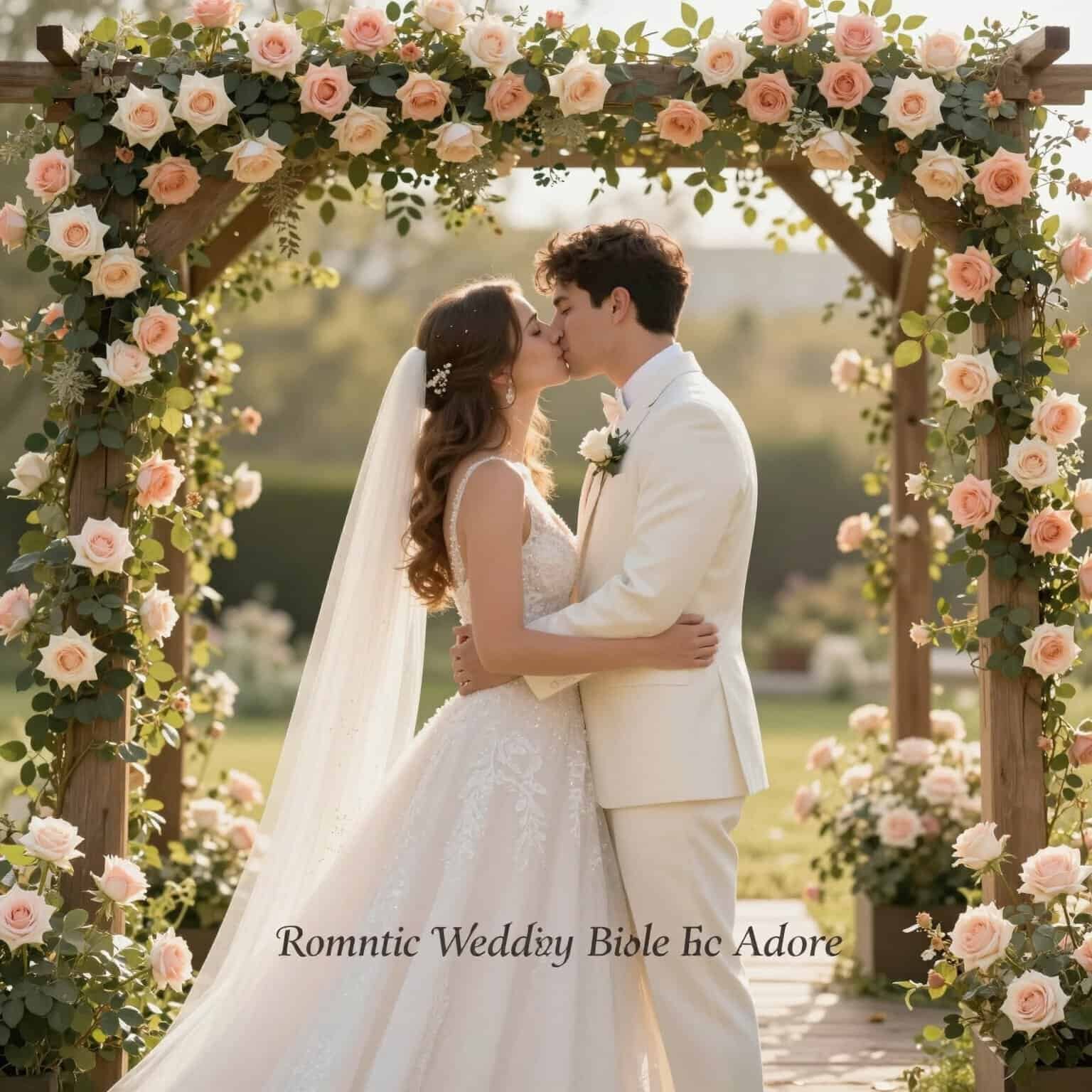
08 May Wedding Bible Verses About Love — Romantic Readings for Couples
Pick a verse that captures your love’s depth and fits your style—1 Corinthians 13:13 is short and punchy, while Song of Solomon 8:6‑7 adds romance, and Ruth 1:16‑17 promises lifelong devotion. Choose a translation that matches your tone;KJV feels classic, NIV feels contemporary. Test it aloud to ensure it flows with your invitation design and ceremony music. If you keep going, you’ll discover how to align each verse perfectly with every wedding moment.
Table of Contents
Choose the Perfect Wedding Bible Verse for Your Invitation
How do you capture the heart of your celebration in a single line? Pick a verse that mirrors your love story and fits the space on your card. Short, punchy passages like 1 Corinthians 13:13—“faith, hope, love; greatest is love”—work well because they’re memorable and easy to read. If you want a hint of romance, try Song of Solomon 8:6‑7, but keep the excerpt brief to avoid crowding the design. Choose a translation that matches your tone: NIV feels contemporary, KJV feels classic. Test the wording aloud; it should flow naturally when guests read it. Align the verse with any visual motifs—perhaps a vine for Ecclesiastes 4:9‑12 if you’re using a floral theme. Finally, confirm the wording with your officiant to ensure it fits the ceremony’s theological context. This careful selection makes your invitation both beautiful and meaningful.
Match a Wedding Bible Verse to Your Ceremony Theme
Looking for a verse that mirrors your ceremony’s vibe? Start by pinpointing the core theme—whether it’s unity, devotion, or celebration. If you’re lighting a unity candle, choose Ecclesiastes 4:9‑12; its image of two cords woven together amplifies the symbolism. For a garden‑style wedding, Song of Solomon 8:6‑7 offers poetic, nature‑rich language that blends with blossoms. A rustic barn setting benefits from Genesis 2:24, its simple “one flesh” promise echoing earthy simplicity. When the focus is on lifelong commitment, Ruth 1:16‑17 speaks directly to “where you go I’ll go,” reinforcing steadfast loyalty. Match the verse length to the moment: short for a program header, medium for a reading, longer for a sermon. Finally, test the phrasing aloud; the rhythm should flow naturally with your music and transitions, ensuring the scripture feels integrated, not tacked on.
Top Short Wedding Bible Verses for Vows, Unity Candle & Programs
After pinpointing the ceremony’s vibe, turn to the verses that fit the specific moments—vows, the unity candle, and the printed program. For vows, Ruth 1:16‑17 offers a concise promise: “Where you go I’ll go, and where you die I’ll die.” Its brevity lets you speak directly from the heart while grounding the exchange in Scripture. For the unity candle, Ecclesiastes 4:9‑12 captures togetherness in a short, memorable line: “Two are better than one… a cord of three strands isn’t easily broken.” This image pairs perfectly with the flame’s symbolism. For programs, 1 Corinthians 13:13 delivers the ultimate love summary: “Faith, hope, love—these three; but the greatest of these is love.” Its three‑word rhythm fits elegant print and reminds guests of the day’s core message. Choose the translation that matches your style, rehearse aloud, and let each verse enhance its moment.

Apply 1 Corinthians 13 to Modern Wedding Vows
Ever wondered how the timeless “love chapter” can shape today’s vows? When you weave 1 Corinthians 13 into your ceremony, you give each promise a biblical backbone. Start with “love is patient” and pledge to listen before reacting, especially during stressful moments. Follow with “love is kind,” promising gentle words when disagreements arise. “It doesn’t envy” becomes a vow to celebrate each other’s successes without comparison. “It doesn’t boast” reminds you to keep humility at the center of your partnership. “It isn’t proud” asks you to admit mistakes and seek forgiveness quickly. “It never fails” seals your commitment to lasting devotion, even when life’s seasons change. By quoting the chapter line‑by‑line, you turn abstract virtues into concrete, actionable vows that resonate with guests and anchor your marriage in timeless biblical truth.
Use Genesis 2:24 as a Wedding Bible Verse for Unity
When you choose Genesis 2:24 for your ceremony, you give the couple a clear script for script that’s as biblical‑than‑itself. The verse—“Therefore a man shall leave his father and mother and be joined to his wife, and they’ll become one flesh”—captures unity in a single, memorable line. Use it during the exchange of rings or the lighting of the unity candle, and it instantly signals that the marriage is a divinely‑ordained partnership.
Pair the reading with a brief pause, letting the words settle before the vows begin. This focus on “one flesh” reinforces the idea that the couple’s lives will intertwine, sharing hopes, burdens, and joys. Selecting Genesis 2:24 also aligns with traditional liturgy, making it familiar to many guests while still feeling fresh when spoken in a contemporary translation.
The result is a powerful, concise declaration of togetherness that anchors the entire ceremony.
Add Ruth 1:16‑17 as a Wedding Bible Verse for Commitment
Looking to anchor your vows in a promise of unwavering loyalty? Ruth 1:16‑17 offers a timeless declaration of commitment that resonates deeply in a wedding ceremony. When you recite, “Where you go I’ll go, and where you stay I’ll stay,” you echo Naomi’s steadfast bond, framing marriage as a mutual journey of faith and devotion. This verse highlights two key promises: shared direction and shared destiny. By inviting your partner to walk hand‑in‑hand through life’s twists, you set a tone of absolute reliance and trust. Its poetic rhythm fits beautifully into vow exchanges, and its biblical authority reassures guests of a sacred covenant. Use it as a centerpiece reading, or weave it into your own words, to underscore that love isn’t just feeling—it’s a deliberate, enduring choice to stand together, no matter what lies ahead.

Select the Best Translation for Your Wedding Bible Verses
Ruth 1:16‑17 sets the tone for a vow that pledges unwavering loyalty, and the translation you choose will shape how that promise sounds to your guests. When you pick a version, consider your audience’s familiarity, the lyrical flow, and theological nuance. The NIV offers contemporary language that reads smoothly aloud, making it ideal for mixed crowds. If you favor a word‑for‑word rendering, the ESV preserves the original structure and works well for program text. The KJV delivers historic cadence, perfect for traditional ceremonies that cherish classic diction. Test each rendering aloud; a verse that feels natural at a 30‑second reading will keep listeners engaged. Align the style with other ceremony elements—modern vows pair nicely with a modern translation, while a candle‑lighting ritual may benefit from the reverent tone of the KJV. Finally, confirm the chosen version with your officiant to ensure doctrinal consistency.
Read and Display Wedding Bible Verses Seamlessly
Want to make your ceremony flow effortlessly? You’ll want to prep each verse so it reads smoothly and displays clearly on your program or screen. First, select a font that’s legible from a distance—serif for classic elegance, sans‑serif for modern minimalism. Keep line spacing generous; 1.5 em prevents crowding when you project 1.. the verses into your tablet reading aloud, and rehears. aloud to gauge timing—most love verses hover around 30‑45 seconds. Use a slide deck or digital cue card that auto‑advances after a set interval, so you never fumble with page turns. Highlight key phrases—like “patient, kind” from 1 Corinthians 13:4‑8—by bolding or coloring them, drawing guests’ eyes without breaking the flow. Finally, sync the display with your music cues; a subtle fade‑in aligns the spoken word with the background melody, creating a seamless, heartfelt moment for everyone.
Frequently Asked Questions
Can We Combine Multiple Verses Into One Reading?
You can blend verses, but keep it smooth. Choose a short core—say 1 Corinthians 13:4‑7—and weave in a line from Genesis 2:24 for unity, then finish with Numbers 6:24‑26 for blessing. Ensure each transition feels natural, and test the flow aloud so the reading stays under two minutes. Keep the total under 70 words, and verify the officiant approves the combined script.
How to Handle Verses With Gender‑Specific Language?
You should first identify the verses you want, then decide whether to keep the original wording or adapt it. If you keep the gender‑specific language, explain its historical context and let the couple choose if it feels appropriate. If you prefer inclusive language, substitute “husband” and “wife” with “partner,” “spouse,” or “beloved.” Either way, read the revised version aloud to ensure it flows naturally and respects the ceremony’s tone.
Are There Non‑Christian Scriptures Suitable for Interfaith Weddings?
You can definitely include non‑Christian texts in an interfaith ceremony. Choose verses that celebrate love, unity, and commitment—like the Bhagavad‑Gītā’s “In the world of illusion, love is the highest truth,” or the Qur’an’s 30:21 about signs of partnership. Buddhist sutras on compassion, or the Tao Te Ching’s harmony passages also work. Pick translations your guests understand, read them aloud, and weave them into vows or readings for inclusive meaning.
What Is the Best Way to Credit the Translation on the Program?
You should list the version’s name right after the verse, using italics or quotation marks, then add the publisher and year in parentheses. For example: “1 Corinthians 13:4‑8 (NIV, 2011).” If you use a public‑domain translation, note “ESV, 2001” or “KJV, 1769.” Keep the format consistent throughout the program, and place the citation directly beneath each passage so guests can easily see which translation you chose.
Should We Include Verse References in Both the Printed and Digital Invites?
Yes, you should list verse references on both printed and digital invites. Including them everywhere keeps the message consistent, helps guests locate the passage, and adds a professional touch.
Print versions let people see the citation instantly, while digital versions let you embed clickable links for quick access.
This dual approach also ensures that any venue or officiant who checks the program finds the same information.
Conclusion
By picking a verse that mirrors your love story, you’ll give your wedding a heartfelt, timeless touch. Whether you lean on the poetic promise of 1 Corinthians 13, the unity of Genesis 2:24, or the steadfast devotion of Ruth 1:16‑17, the right words will echo through every vow, candle, and program. Choose the translation that feels most natural to you, and let the scripture weave seamlessly into your celebration, creating a beautiful, lasting reminder of your commitment.








No Comments