

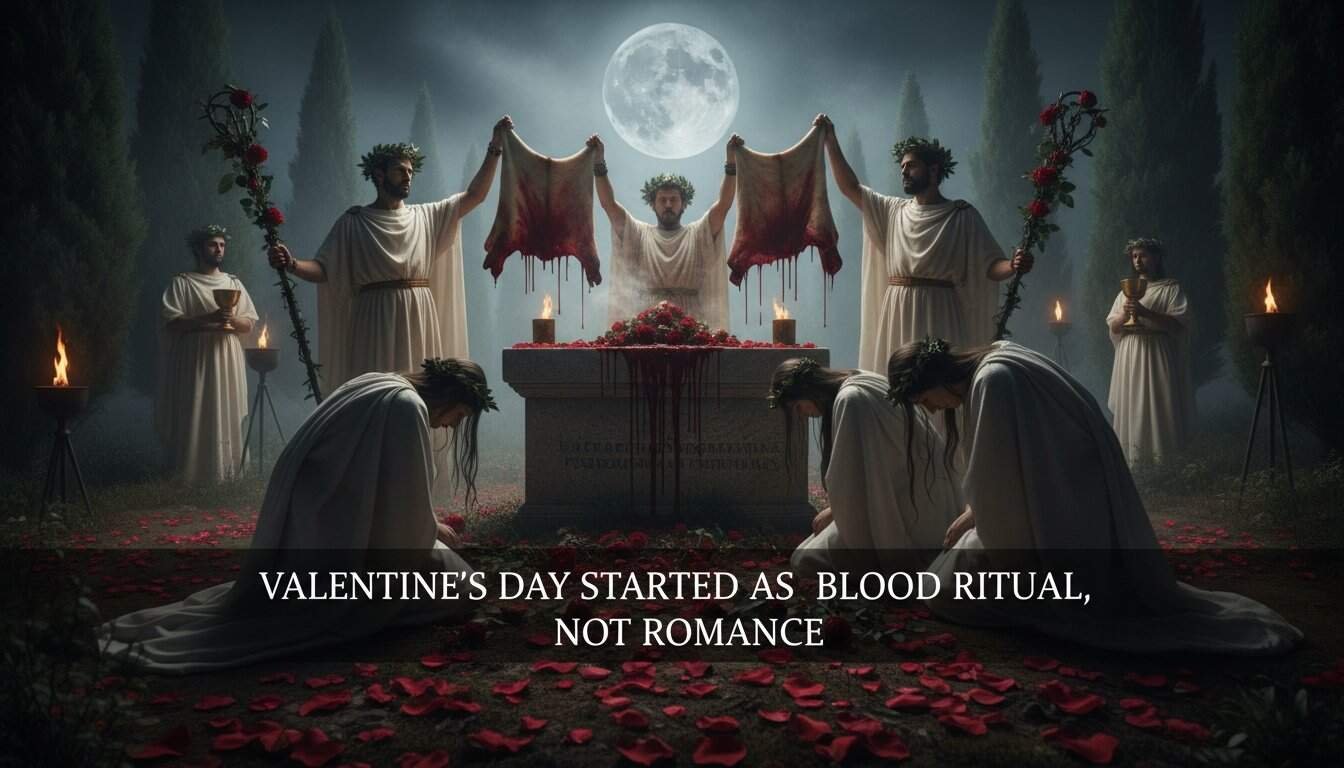
22 Jan Valentine’s Day Started as a Blood Ritual, Not Romance
You’re right—Valentine’s Day’s origins trace back to Lupercalia, Rome’s February 15th blood ritual where priests sacrificed goats and dogs, smeared blood on their foreheads, then struck women with animal-hide strips to ensure fertility. This brutal ceremony honored wolf-nursed founders Romulus and Remus until Pope Gelasius banned it in 496 A.D., replacing it with St. Valentine’s feast. Medieval poets like Chaucer later invented the romance connection around 1382, completely transforming the holiday’s meaning from sacred bloodshed to courtly love.
Table of Contents
Key Takeaways
- Valentine’s Day originates from Lupercalia, a Roman blood ritual on February 15th involving goat and dog sacrifices for fertility.
- Luperci priests smeared sacrificial blood on foreheads and struck women with animal-hide strips to ensure reproductive blessings.
- Pope Gelasius I banned the pagan blood ritual in 496 A.D. and replaced it with St. Valentine’s feast day.
- Medieval poets like Chaucer transformed Valentine from Christian martyr to patron of romance without historical evidence supporting love connections.
- The modern romantic celebration masks ancient fertility rites that used ritualized violence and animal sacrifice for divine protection.
What Was Ancient Rome’s Lupercalia Festival?
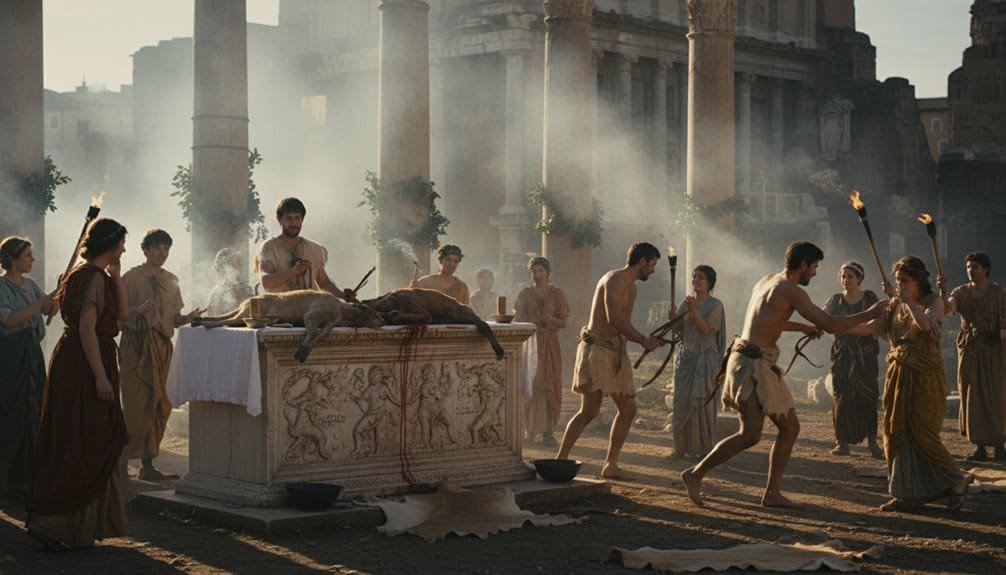
How did ancient Romans channel primal forces to protect their city through blood and laughter? You’d witness the Lupercalia festival, a February 15th ritual that connected Rome’s survival to its wolf-mother origins. These Lupercal origins traced back to the 6th century BCE, when priests called Luperci gathered at the sacred cave where Romulus and Remus were supposedly nursed by a she-wolf.
You’d see young noble priests sacrifice goats and a dog, then smear sacrificial blood on each other’s foreheads with bloody knives. They’d laugh during this purification—laughter wasn’t optional, it was required acknowledgment of spiritual cleansing. The Palatine rites transformed these bloodied priests into sacred runners who’d race through Rome’s streets, striking women with animal-hide thongs.
This wasn’t entertainment—it was Rome’s essential purification ceremony. You’d understand that without these rituals, Romans believed their city would face divine punishment and collapse. The festival occurred during Parentalia, a nine-day period when Romans honored their deceased family ancestors.
How Roman Priests Used Blood Rituals For Fertility
You’d witness Roman priests orchestrating elaborate blood ceremonies where sacred animals became conduits for fertility magic through ritualistic sacrifice.
They’d drench themselves in bull’s blood during the taurobolium, whip celebrants with goat-hide strips soaked in sacrificial essence, and preserve animal blood for extended ceremonial use across multiple festivals.
These priests believed that animal vitality transferred directly to human reproductive capacity through blood contact, transforming violent spectacles into sacred fertility enhancement rituals.
Sacred Animal Sacrifices
What transforms a simple animal slaughter into sacred communion with fertility gods? You’d witness the Luperci priests selecting specific animals—male goats and dogs—whose blood carried mythological power connecting to Rome’s wolf-nursed founders. Under the Flamen dialis’s supervision, these sacred offerings weren’t random choices but deliberate selections honoring Lupercus, the fertility deity demanding precise ritual elements.
You’d see consecrated entrails—lungs, heart, liver—carefully separated from profane flesh, placed on turf while high-priests invoked Jupiter, Juno, and Minerva. The distinction between exta (divine portions) and viscera (human consumption) maintained spiritual boundaries essential to deity rites. These weren’t mere slaughters but transformative ceremonies where animal sacrifice became divine communication, ensuring fertility blessings flowed from gods to Roman society through bloodied ritual precision.
Blood-Soaked Whipping Ceremonies
The crimson-streaked foreheads of two chosen Luperci priests marked the beginning of Rome’s most visceral fertility ceremony, where sacrificial blood became the sacred medium connecting mortal flesh to divine reproductive power.
You’d witness milk-soaked wool cleansing their painted faces as essential purification, while freshly cut goat and dog hides transformed into februa—sacred thongs designed for divine purpose.
Nearly naked Luperci would sprint anticlockwise around Palatine Hill, their laughter echoing through Forum streets as they wielded blood-blessed whips.
Women positioned themselves deliberately along these routes, believing each leather strike would grant fertility and ease childbirth pain.
This voluntary participation reflected deep conviction that animal hide contact directly enhanced reproductive capability, maintaining ancient pastoral traditions linking sacrifice to human procreation through ritualized violence.
Fertility Enhancement Beliefs
When faced with empire-wide fertility crises triggered by lead poisoning, Roman priests turned to blood sacrifice as their most potent weapon against reproductive failure. You’d witness eunuch priests descending into trenches during taurobolium ceremonies, allowing bull’s blood to drench their bodies completely. They believed this ritual bloodshed transferred the animal’s reproductive potency directly to participants seeking fertility enhancement.
The fertility symbolism extended beyond Cybele’s cult into Lupercalia practices. You’d see priests applying sacrificial blood to foreheads, then striking women with blood-soaked whips made from freshly killed goats. This physical contact with sacred blood was thought to guarantee pregnancy and successful childbirth.
These ceremonies represented Rome’s philosophical framework where “death ensures life” – spilling blood to combat sterility, miscarriage, and infant mortality plaguing their lead-poisoned society.
Why Saint Valentine Defied Emperor Claudius II
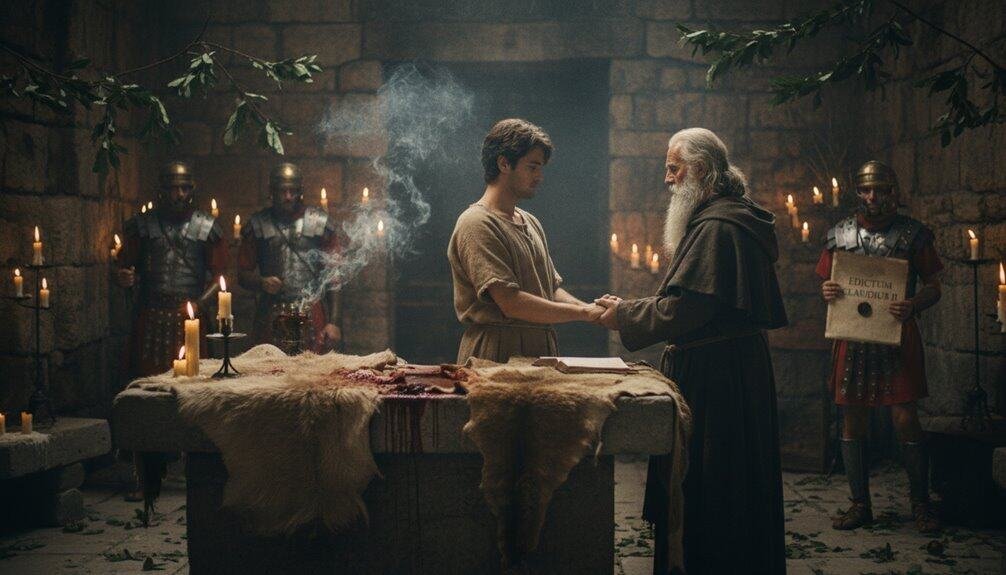
How could a Roman priest risk everything to challenge the most powerful man in the empire? Saint Valentine’s defiance of Emperor Claudius II stemmed from deep spiritual conviction that transcended imperial authority. You’d understand his motivation by examining the emperor’s brutal marriage ban, which dissolved thousands of unions to boost military recruitment. Claudius II demanded exclusive worship, making Valentine’s Christian practices illegal.
Valentine recognized the emperor’s tyranny and acted deliberately. He performed hundreds of secret wedding ceremonies for Roman soldiers, knowing these rituals undermined imperial military strategy. His discussion ideas centered on converting Claudius II to Christianity, despite their initial rapport deteriorating into conflict.
Valentine’s spiritual rebellion remained unrelated to other topics of political dissent—this was purely religious resistance. He chose martyrdom over compromise, continuing his sacred ceremonies until imperial authorities discovered his defiance in 269 A.D., leading to his arrest and execution.
How Christianity Transformed Valentine’s Day Traditions
You’re witnessing one of history’s most dramatic religious transformations when Pope Gelasius I banned Lupercalia in A.D. 496 and replaced it with St. Valentine’s Day on February 14.
The church deliberately repositioned pagan fertility rituals involving animal skin whippings into a Christian feast day honoring martyred saints named Valentine.
This strategic substitution shifted Roman citizens from participating in blood-soaked fertility rites to venerating Christian martyrs who’d died for performing secret marriages.
Pope Gelasius Bans Lupercalia
Why did Pope Gelasius I launch such a fierce campaign against Rome’s ancient fertility festival? You’ll find his 495 CE ban wasn’t about some unrelated topic or irrelevant theme—it was spiritual warfare. Gelasius condemned Lupercalia as demon worship, calling participants “vile rabble” who defiled their Christian baptism through pagan superstition.
The Roman Senate fought back fiercely, insisting the ritual protected Rome’s safety. Aristocratic Christians claimed abandoning Lupercalia caused pandemics and disease. You’d witness theological battle lines drawn between papal authority and civic tradition.
Despite imperial edicts banning pagan worship since 341 CE, this fertility rite persisted among nominally Christian Romans. The festival’s deep cultural roots—reinforcing both feminine fertility and Roman identity—made complete elimination nearly impossible, even under determined papal opposition.
Martyr Stories Replace Paganism
Gelasius couldn’t simply erase centuries of ritual through papal decree—he needed replacement narratives that satisfied Rome’s hunger for sacred drama. Valentine’s martyrdom provided the perfect substitute, transforming blood sacrifice from fertility rite into sacrificial love story. You’ll find these legends weren’t accidents—they deliberately emphasized marriage consent and romantic devotion, revolutionary concepts that separated Christian practice from Roman tradition.
The martyr stories served dual purposes: they preserved ritual intensity while introducing new values. Valentine’s clandestine marriages became symbols of sacred rebellion, where love trumped imperial authority. These narratives offered Romans familiar themes of sacrifice and blood, but channeled them toward life-affirming ends. Christian women’s later marriages increased life expectancy, proving love’s practical wisdom. The transformation was complete—pagan bloodshed evolved into romantic sacrifice.
When Medieval Poets Created Valentine’s Day Romance
How did Valentine’s Day transform from a bloody Roman festival into the romance-centered celebration you know today? You can trace this shift directly to medieval poets who revolutionized the saint’s meaning in the 14th century.
Geoffrey Chaucer ignited Valentine’s romance in 1382 with his *Parlement of Foules*, declaring “For this was on seynt Valentynes day,/ Whan every foul cometh there to chese his make.” His nearly 700-line poem reimagined February 14th as nature’s mating ritual, where birds choose partners freely—a satirical jab at forced political marriages.
Fellow poets amplified this transformation. Oton de Granson pledged undying love in *Complaint to Saint Valentine*, while John Gower and Sir John Clanvowe celebrated the saint as love’s patron. These writers created an entirely new tradition, shifting Valentine from martyr to romance deity.
You’re experiencing their literary invention—no pre-Chaucer evidence exists linking Valentine to romantic love.
Why Valentine’s Day Origins Remain Historically Unclear?
Despite medieval poets establishing Valentine’s romantic reputation, the saint’s actual identity remains shrouded in historical mystery. You’ll find the Catholic Church recognized at least three martyred Saint Valentines, creating confusion about which figure inspired the holiday. The sparse historical records offer little concrete evidence about any Valentine’s life or supernatural miracles.
You’re dealing with approximately 1,500 years between the Roman era and modern Valentine’s Day that remain largely unaccounted for historically. The connection between ancient Lupercalia agricultural rites and Christian saint veneration can’t be definitively proven, though Pope Gelasius I’s 496 A.D. declaration strategically placed Saint Valentine’s feast day on February 14.
The legendary anecdotes you’ve heard—secret marriages, healing blindness, prison letters—lack historical verification. Scholars debate whether early Christians deliberately blended pagan agricultural rites with saint holidays for conversion purposes, leaving Valentine’s Day’s true origins vague at best.
Frequently Asked Questions
What Other Ancient Cultures Had Similar Blood-Based Fertility Festivals?
You’ll find ancient fertility rites with blood sacrifices across Mediterranean and Near Eastern cultures. Carthaginians burned children for Baal Hammon’s agricultural favor, while Greeks performed sphagia rites, burying sacrificial victims for chthonic deities during Thesmophoria. Phoenicians cooked kids in mother’s milk to awaken vine spirits, and pre-Islamic Arabs conducted bloody Kaaba ceremonies. These cross-cultural practices reveal humanity’s ritualistic belief that blood offerings ensured fertile harvests and divine protection.
How Did Common Romans React to the Ban of Lupercalia?
You’d witness Romans defiantly rejecting the ban of lupercalia through persistent celebration for over a century.
Roman reactions included Senate protests defending the festival’s necessity for civic prosperity, while common citizens maintained annual February 15th observances despite Christian prohibition.
You’d see cross-class participation continuing traditional blood rituals, demonstrating deep ancestral attachment.
Even facing papal condemnation as “vile rabble,” Romans preserved their fertility ceremony’s ritualistic structure against institutional suppression.
Were There Female Priests Involved in Any Valentine’s Day Traditions?
No, you won’t find evidence of female priesthood in Valentine’s Day traditions. The Luperci priests who performed Lupercalia’s ritual sexuality were exclusively male, striking women with bloody goat hides for fertility blessings. Saint Valentina represents virgin martyrdom, not clerical authority. Across cultures, Valentine traditions center on male religious figures and modern female entrepreneurs like Esther Howland, but ancient female priests remain absent from these ceremonial origins.
What Happened to the Lupercal Cave After Christianity Spread?
The Lupercal cave aftermath reveals Christianity’s complex relationship with pagan sites. You’ll find the Christianization impact wasn’t immediate—Augustus had restored the cave, but Christian emperors gradually suppressed its rituals.
By 391 AD, Theodosius banned the ceremonies, yet you’d still witness celebrations into the 6th century.
The cave itself likely fell into disrepair as Christian authorities redirected devotional practices toward churches, transforming sacred landscapes.
Do Any Modern Valentine’s Day Customs Directly Trace to Lupercalia?
You won’t find direct connections between modern Valentine’s customs and Lupercal rituals despite popular claims. Scholars have thoroughly examined the evidence and found no traceable links from fertility whipping, blood symbolism, or naked running to today’s romantic traditions. The festivals occurred on different dates, served different purposes, and were separated by centuries. Christianity banned Lupercalia completely, creating a cultural gap that Valentine’s romance customs later filled independently.
Conclusion
You’ve witnessed Valentine’s Day’s transformation from Lupercalia’s blood-soaked fertility rites to Christianity’s martyrdom tales, then to medieval courtly love. You can’t ignore how cultures worldwide have adapted these rituals—from Roman priests slapping women with goat hide to poets crafting romantic verses. You’re participating in an ancient cycle of renewal and connection, whether you’re exchanging chocolates or flowers. The blood ritual’s essence remains: you’re still seeking fertility, partnership, and life’s continuation through ceremonial acts.










No Comments