

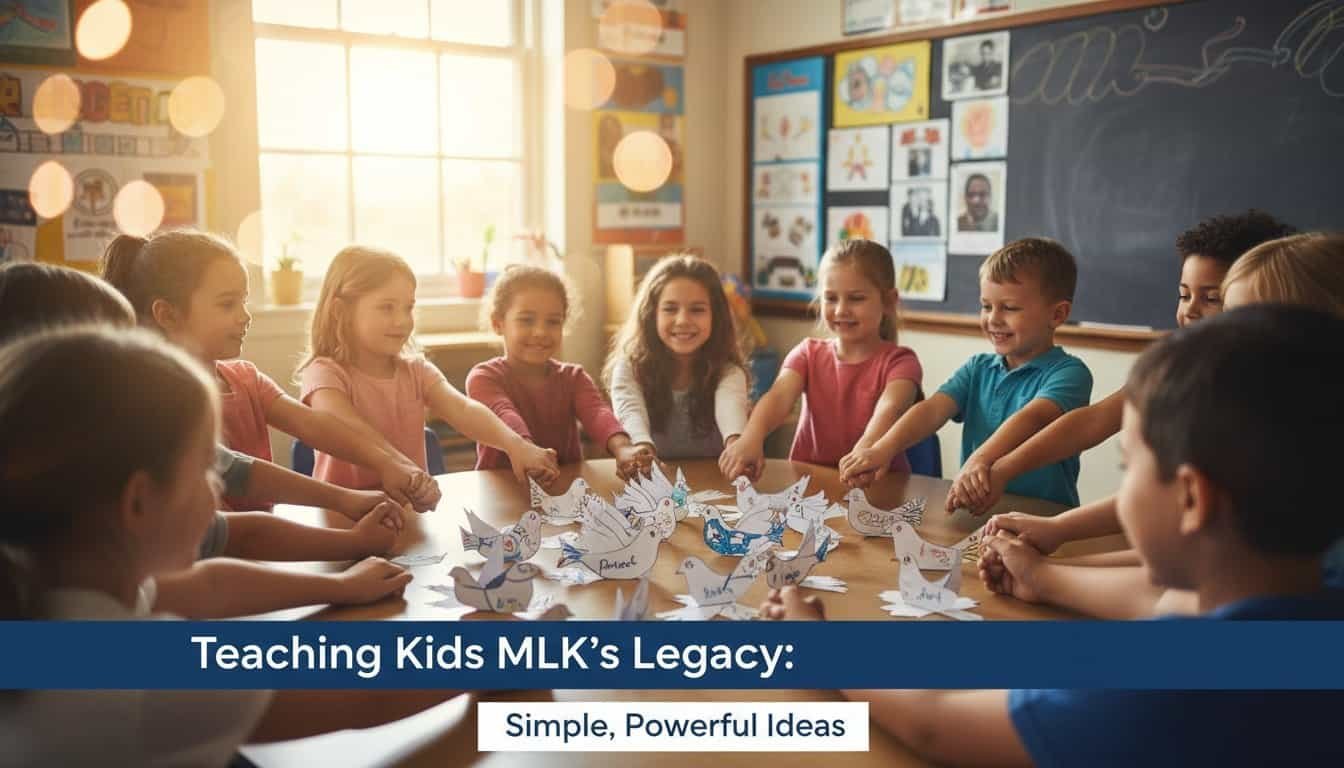
19 Jan Teaching Kids MLK’s Legacy: Simple, Powerful Ideas
You can teach your children about Dr. King’s legacy through simple stories that highlight his dream of all children playing together regardless of skin color. Focus on his belief in peaceful change through words, not fighting, and how one person’s courage can inspire others. Try activities like “Different but Equal” games using colored paper, write thank-you notes to diverse community helpers, and encourage daily inclusion goals like inviting lonely classmates to join activities. These approaches will transform his powerful teachings into practical lessons your kids can apply.
Table of Contents
Key Takeaways
- Share age-appropriate stories about Dr. King’s dream of children playing together regardless of skin color.
- Use “Different but Equal” activities with colored paper to demonstrate fairness and equal opportunities.
- Teach character-building through tales emphasizing courage, kindness, and standing up for what’s right.
- Create action projects like thank-you notes to community helpers and organizing supplies for families.
- Connect MLK’s dream to daily life through inclusion goals like inviting lonely classmates to lunch.
Choose Age-Appropriate MLK Stories That Teach Character
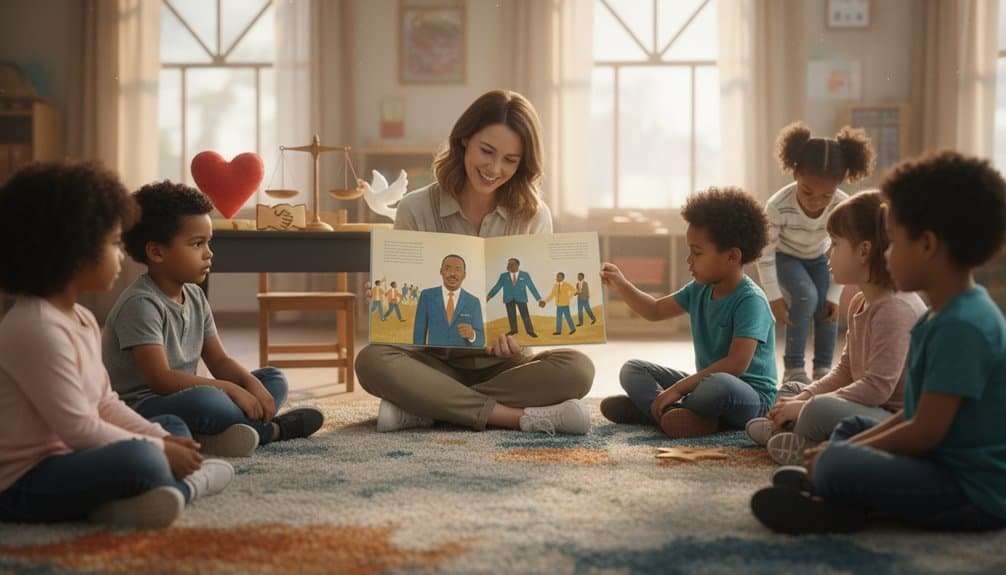
How can you help young minds grasp the profound lessons of Martin Luther King Jr.’s life? Start with stories that match their understanding level. For preschoolers, focus on Dr. King’s dream that all children could play together, regardless of skin color. Elementary kids can learn about his peaceful protests and how he used words instead of fighting to create change.
Share stories about his childhood experiences with unfairness, helping kids connect emotionally. Emphasize how he believed in equal opportunity for everyone and always practiced respectful dialogue, even with those who disagreed with him. These character-building tales show children that one person’s courage and kindness can change the world, inspiring them to stand up for what’s right.
Try These Simple Activities to Demonstrate Equality
Why not turn abstract concepts of equality into hands-on experiences that children can see and feel? You can create simple activities that make MLK’s message come alive in your home or classroom.

Try the “Different but Equal” game where everyone gets different colored paper but equals opportunity to create something beautiful. This shows how diversity strengthens communities. Set up fairness challenges where kids take turns being decision-makers, helping them understand how rules should apply to everyone equally.
Create action projects like writing thank-you notes to community helpers of all backgrounds or organizing supplies for families in need. These activities transform MLK’s teachings from history lessons into fairness action that kids can practice today, building character through real experiences.
Help Kids Connect MLK’s Dream to Their Own Lives
When children see themselves as part of MLK’s dream, his message becomes personal and meaningful in their everyday world.
You can help kids connect Dr. King’s vision to their daily experiences by asking simple questions. “How do you want others to treat you at school?” “What would you do if someone couldn’t play because they looked different?” These conversations help children understand that fair treatment isn’t just history—it’s happening right now.
Encourage kids to set their own inclusion goals. Maybe they’ll invite a lonely classmate to lunch or stand up when someone’s being teased. Help them see that every kind action continues Dr. King’s work.

When children realize they can be dream-builders too, MLK’s legacy transforms from a distant story into their own powerful mission for justice.
Answer Children’s Questions About Race and Justice
Stay calm during these conversations. Your openness teaches them that discussing fairness and justice is important, not scary.
Frequently Asked Questions
What Age Should I Start Teaching My Child About MLK?
You can start teaching your child about MLK around age 3-4 using age appropriate, simple concepts like kindness and fairness. Begin with family friendly picture books showing how Dr. King wanted everyone to be friends regardless of skin color. As they grow, you’ll gradually introduce deeper ideas about equality and peaceful change. Start early with basic concepts, then build understanding over time.
How Do I Explain Mlk’s Assassination to Young Children?
You can explain MLK’s death by saying some people didn’t like his message of treating everyone equally, and one person made a very bad choice that hurt Dr. King.
Use age appropriate language like “Dr. King died” rather than violent details.
Focus on how his dream didn’t die with him – people continued his important work.
Emphasize that love and kindness are stronger than hate.
Are There Good MLK Books for Preschoolers?
Yes, there are wonderful MLK books for preschoolers! Look for picture books with simple illustrations and two word ideas like “dreams matter” or “be kind.” These books support early literacy while teaching Dr. King’s message. Choose books with colorful pictures, easy words, and positive themes about friendship and fairness. You’ll find age-appropriate stories that make his legacy accessible and meaningful for little ones.
Should I Take My Child to MLK Day Events?
Yes, taking your child to MLK Day events can be wonderful! Choose activities that match your child’s age and attention span. Look for family-friendly celebrations with music, storytelling, or community service projects. Going to events helps children see MLK’s values in action and connects them with others who share these important ideals. Prepare with age appropriate conversations beforehand to help them understand what they’ll experience.
How Do I Handle if My Child Makes Insensitive Racial Comments?
Stay calm and address it immediately with sensitive language responses. Don’t shame your child, but explain why those words hurt people. Use this as a teachable moment for restorative conversations about respect and kindness. Ask questions like “How do you think that made someone feel?” Help them understand Dr. King’s message that we’re all equal and deserve love regardless of skin color.
Conclusion
You’re helping shape tomorrow’s leaders by teaching Dr. King’s message today. When you share his stories, practice equality activities, and connect his dream to your child’s world, you’re planting seeds of justice and kindness. Don’t worry if you don’t have all the answers about race—what matters is you’re starting these important conversations. Keep talking, keep teaching, and watch your children grow into compassionate people who’ll continue MLK’s legacy.











No Comments