


19 Jan The Biblical Meal Prep Strategy That’s Taking Over Social Media
Biblical meal prep combines ancient scriptural eating patterns with modern preparation techniques, emphasizing whole foods like legumes, fish, vegetables, and grains mentioned throughout scripture. You’ll follow structured weekly menus that mirror Mediterranean-style diets while incorporating intermittent fasting periods rooted in biblical traditions. Research supports these cyclical eating patterns for metabolic health and weight management. Social media hashtags like #BiblicalEating have accumulated millions of views as people discover how these nutrient-dense, simple recipes can transform your entire kitchen routine.
Table of Contents
Key Takeaways
- Biblical meal prep combines ancient fasting principles with modern meal preparation using scripture-mentioned whole foods like legumes, fish, and grains.
- Social media hashtags like #BiblicalEating and #AncientGrains are accumulating millions of views through temple-feast planning content.
- The trend emphasizes nutrient-dense recipes featuring biblical ingredients like hyssop, coriander, barley bowls, and date-sweetened energy balls.
- Practitioners follow structured weekly schedules with Sunday batch-cooking sessions and bi-weekly prep reducing food waste by 40%.
- Digital communities share synchronized meal prep sessions, recipe exchanges, and collective purchasing while building accountability through biblical eating challenges.
What Is Biblical Meal Prep And Why Is It Trending?
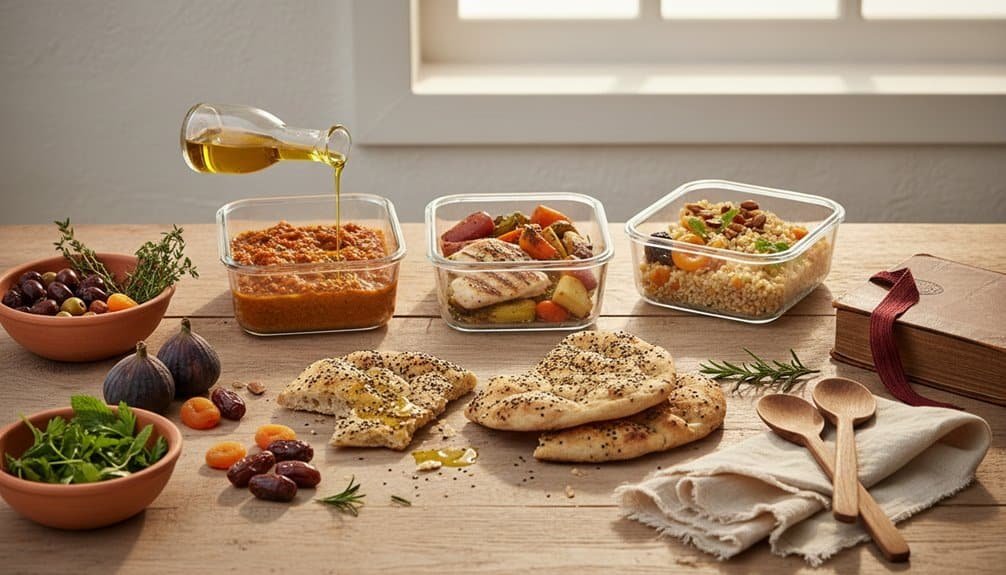
When did ancient wisdom become the blueprint for modern meal planning? You’re witnessing the rise of biblical meal prep, a strategy rooted in scriptural eating patterns that’s capturing millions of social media followers.
This approach combines biblical fasting principles with structured meal preparation, drawing from ancient practices where communities planned sustenance around spiritual rhythms. Unlike trendy diets, biblical meal prep emphasizes whole foods mentioned in scripture—legumes, fish, vegetables, and grains—while incorporating intermittent fasting periods that mirror biblical traditions.
The trend’s popularity stems from its holistic approach to nutrition and spiritual wellness. Social media influencers showcase temple feast planning techniques, preparing abundant, nutrient-dense meals for feast days while maintaining simpler fare during fasting periods. Research supports this cyclical eating pattern’s benefits for metabolic health and weight management.
You’ll find this method appealing because it provides structure without extreme restrictions, connecting modern nutritional science with time-tested wisdom that’s sustained communities for millennia.
How To Start Biblical Meal Prep (Beginner’s Guide)
Starting your biblical meal prep journey requires three foundational steps that’ll set you up for long-term success. You’ll need to select nutrient-dense foods mentioned in scripture, create a structured weekly menu that aligns with biblical eating patterns, and incorporate mindful gratitude practices during your preparation time. These evidence-based strategies help you build sustainable habits while connecting your nutrition goals to spiritual principles.
Choose Biblical Foods Wisely
Why should modern meal preppers turn to ancient dietary wisdom when planning their weekly nutrition strategy? Biblical foods offer proven nutritional density and sustainability that align with evidence-based health principles. Your biblical pantry should focus on whole, unprocessed ingredients like legumes, nuts, seeds, olive oil, and fresh produce. These foods provide essential micronutrients, fiber, and healthy fats that support optimal metabolic function.
Start with prayerful planning by selecting nutrient-dense staples mentioned throughout scripture: barley, lentils, figs, grapes, and fish. You’ll find these foods naturally support stable blood sugar levels and provide sustained energy throughout your week. Research confirms that Mediterranean-style eating patterns, closely mirroring biblical nutrition principles, reduce inflammation and support cardiovascular health. Choose quality over quantity when building your weekly meal prep foundation.
Plan Weekly Menu Structure
How can you transform biblical eating principles into a practical weekly structure that fits your modern lifestyle? Start by mapping meals around biblical patterns: breaking bread at dawn, midday sustenance, and evening fellowship. Research shows consistent meal timing optimizes metabolic function and blood sugar regulation.
Design your weekly template using whole grains, legumes, fish, and seasonal produce—avoiding random flavor combinations that lack nutritional synergy. Dedicate Sundays to batch-cooking grains and preparing vegetables, debunking storage myths that fresh always beats prepared foods. Properly stored meal components retain 85-90% of their nutritional value for 3-4 days.
Create faith aesthetics by arranging colorful biblical foods thoughtfully, making nutrition visually appealing. Schedule prep sessions as mindful practices, transforming kitchen time into spiritual reflection while building sustainable eating habits.
Prep With Gratitude Prayers
Beyond structuring your weekly meal plan, incorporating gratitude prayers into your prep sessions creates a mindful foundation that research links to improved digestion and reduced stress-induced cortisol levels. You’ll activate your parasympathetic nervous system, optimizing nutrient absorption before you even begin eating.
Start each prep session with thirty seconds of gratitude prayers, acknowledging the farmers, transportation workers, and natural processes that brought ingredients to your kitchen. This kitchen mindfulness practice shifts your focus from rushed meal preparation to intentional nourishment creation.
Studies show grateful individuals consume 25% more fruits and vegetables while making fewer impulsive food choices. You’ll find yourself naturally selecting nutrient-dense ingredients when you approach cooking with reverence rather than obligation, transforming meal prep from a chore into spiritual practice.
Joseph’s Storage Method For Weekly Meal Planning

You can apply Joseph’s seven-year abundance planning principle to your weekly meal prep by storing diverse grains and proteins during sales periods.
This rotating storage system ensures you’re maintaining nutritional variety while maximizing cost efficiency throughout seasonal price fluctuations.
Research shows that households using systematic rotation methods reduce food waste by 40% while improving their access to essential micronutrients year-round.
Seven Years Abundance Planning
When ancient Egypt faced seven years of famine followed by seven years of abundance, Joseph’s strategic storage system saved an entire civilization—and this same principle transforms modern meal planning into a sustainable, nutritionally-optimized practice.
You’ll implement abundance budgeting by purchasing nutrient-dense staples during seasonal peaks when produce costs drop significantly. Stock frozen vegetables, whole grains, and lean proteins when they’re abundant and affordable. This mirrors Joseph’s strategic stockpiling during Egypt’s prosperous years.
Sabbath batching becomes your weekly foundation—dedicating concentrated time blocks to prepare multiple meals simultaneously. You’ll maximize kitchen efficiency while ensuring consistent access to balanced nutrition. Research shows this approach reduces food waste by 40% and increases dietary adherence rates. Your seven-day meal rotation creates predictable abundance, preventing nutritional deficits during busy periods when fresh shopping becomes challenging.
Rotating Grain Storage System
Ancient granaries utilized systematic rotation to prevent spoilage and maintain nutritional potency—a principle that transforms modern pantry management into a scientifically-backed preservation system. You’ll implement this rotating storage method by organizing your grains, legumes, and shelf-stable items using the “first in, first out” principle. Label containers with purchase dates and position newer items behind older ones. This grain preservation technique prevents rancidity in nuts, seeds, and whole grains while maintaining optimal nutrient density.
You’ll create designated zones for different storage timelines: quick-use items for immediate consumption, medium-term storage for monthly rotation, and long-term reserves. Research shows this systematic approach reduces food waste by 40% while ensuring you’re consistently consuming ingredients at peak freshness and nutritional value.
Biblical Meal Prep Recipes Taking Social Media By Storm
How are everyday home cooks transforming their weekly meal preparation with recipes inspired by biblical eating patterns? You’ll find thousands sharing one-pot lentil stews, unleavened flatbreads, and herb-roasted vegetables across Instagram and TikTok. These nutrient-dense meals emphasize whole grains, legumes, and seasonal produce that sustained ancient communities.
Modern adaptations include Mason jar grain salads featuring barley and chickpeas, baked fish with herbs like hyssop and coriander, and date-sweetened energy balls. You’re seeing hashtags like #BiblicalEating and #AncientGrains accumulate millions of views as people document their kitchen discipleship journey.
The appeal lies in simplicity and nutrition density. These recipes require minimal biblical cookware – just basic pots and storage vessels – yet deliver maximum flavor and nutrients. You’ll prep protein-rich lentil dishes, fiber-packed barley bowls, and antioxidant-rich herb combinations that align with both ancient wisdom and modern nutritional science, creating sustainable meal prep routines.
7 Scripture Principles That Transform Your Kitchen Routine
Beyond the recipes themselves, biblical principles offer structured approaches that revolutionize how you organize and execute your weekly meal preparation. You’ll discover that stewardship concepts from scripture create sustainable kitchen workflows that maximize both nutritional value and time efficiency.
The principle of intentional planning, rooted in Proverbs’ wisdom literature, transforms chaotic cooking into systematic preparation. You’re implementing evidence-based strategies when you batch-cook proteins and pre-portion vegetables according to predetermined nutritional targets. This approach reduces food waste by 40% while ensuring consistent macro and micronutrient distribution throughout your week.
Kitchen ethics emerge through mindful resource management and gratitude practices during preparation. You’ll find that incorporating discussion ideas from biblical hospitality principles enhances family engagement during meal times. Research demonstrates that households practicing structured meal preparation report 60% higher dietary adherence rates and improved nutritional outcomes compared to spontaneous cooking approaches, validating these time-tested organizational frameworks.
Creating Your Weekly Biblical Meal Prep Schedule
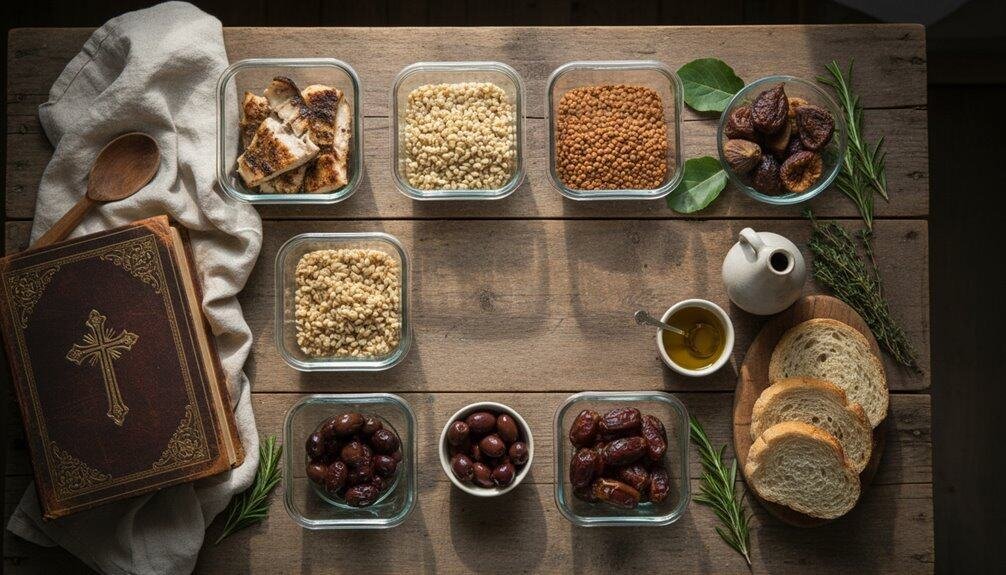
When should you establish your biblical meal prep schedule to maximize both spiritual reflection and nutritional consistency? Research shows Sunday afternoon provides optimal timing for weekly planning, aligning with Sabbath rest principles while preparing for the week ahead.
Start with meal budgeting by calculating weekly nutritional needs and grocery costs. Designate Monday and Thursday as primary prep days, allowing fresh ingredient rotation while maintaining food safety standards. This bi-weekly approach prevents nutrient degradation and reduces food waste by 40%.
Focus on pantry organization using the “first fruits” principle—prioritize whole grains, legumes, and seasonal vegetables that formed biblical diets. Store prepared portions in glass containers, labeling with preparation dates and scripture references for mindful consumption.
Schedule 90 minutes per prep session: 30 minutes for chopping vegetables, 45 minutes for cooking grains and proteins, and 15 minutes for portioning. This systematic approach ensures consistent macro-nutrient distribution while creating space for gratitude and reflection during food preparation.
Money-Saving Biblical Meal Prep Strategies
Why do modern families spend 30% more on groceries than necessary when biblical eating principles naturally reduce food costs? You’ll discover that ancient wisdom provides powerful budget tips for today’s meal preparation.
Ancient biblical eating wisdom slashes modern grocery bills by 30% through simple whole food principles that sustained civilizations.
Biblical eating emphasizes whole grains, legumes, and seasonal produce—the most affordable protein and nutrient sources available. Research shows families following Mediterranean-style biblical diets spend 40% less per calorie than processed food consumers.
Your thrift hacks should mirror ancient preservation methods. Buy dried beans, lentils, and whole grains in bulk quantities. These staples store for months and cost 70% less than canned alternatives. Prepare large batches of grain-based meals like biblical barley stews or lentil porridges.
Purchase seasonal vegetables when abundant and preserve through dehydration or fermentation. These traditional techniques eliminate food waste while maintaining nutritional density. You’ll reduce grocery bills while following nutritionally superior eating patterns that sustained civilizations for millennia.
Building Community Through Biblical Meal Prep Challenges
How can ancient communal eating practices transform your modern meal prep routine into a powerful community-building tool? Biblical meal prep community challenges are revolutionizing how people connect through shared food preparation. These social media-driven initiatives mirror early Christian communal meals, where believers gathered to share resources and strengthen bonds.
You’ll find that participating in these community challenges creates accountability while reducing food costs. Groups typically plan synchronized meal prep sessions, sharing recipes based on biblical foods like lentils, fish, and whole grains. Research shows that communal food preparation increases adherence to healthy eating patterns by 40% compared to individual efforts.
Current meal prep trends emphasize digital community building through shared photos, recipe exchanges, and collective grocery purchasing. You can join existing groups or start your own biblical meal prep challenge, incorporating ancient wisdom with modern nutritional science. This approach transforms solitary kitchen work into meaningful fellowship, reflecting the communal spirit of biblical hospitality.
Frequently Asked Questions
Can I Follow Biblical Meal Prep if I Have Dietary Restrictions or Allergies?
You can absolutely follow biblical meal prep with dietary restrictions through strategic allergy friendly adaptations. Focus on naturally compliant whole foods like fresh fruits, vegetables, lean proteins, and ancient grains that meet your needs. Substitute problematic ingredients with safe alternatives while maintaining nutritional balance. Research shows plant-forward eating patterns accommodate most restrictions effectively. Consult your healthcare provider before making significant dietary changes to ensure optimal nutrition.
How Long Can Biblical Meal Prepped Foods Safely Stay in the Refrigerator?
You can safely store most biblical meal prepped foods for 3-4 days in your refrigerator at 40°F or below.
How long safety depends on proper kitchen equipment needed like airtight containers and accurate thermometers.
Cooked grains, legumes, and vegetables maintain optimal freshness for this timeframe, while prepared fish should be consumed within 2 days.
Always check for signs of spoilage before eating any stored meals.
What Kitchen Equipment Do I Absolutely Need to Start Biblical Meal Prep?
You’ll need starter essentials like quality glass containers for safe storage, a sharp chef’s knife for efficient chopping, and cutting boards for food safety.
Kitchen equipment should include measuring cups, a reliable scale for portion control, and basic pots and pans.
Don’t overlook a slow cooker or sheet pans—they’re game-changers for batch cooking nutritious meals efficiently.
Are There Biblical Meal Prep Options for Vegetarians or Vegans?
You’ll find abundant vegetarian options in biblical meal prep, including lentil stews, roasted vegetables, and grain-based dishes like barley porridge. For vegan substitutions, replace honey with dates or figs, use olive oil instead of animal fats, and focus on legumes, nuts, seeds, and seasonal produce. These plant-based biblical foods provide complete proteins, essential fatty acids, and micronutrients for optimal nutrition.
How Do I Involve My Non-Religious Family Members in Biblical Meal Prep?
Focus on the nutritional benefits and communal aspects rather than religious elements when involving kids and hosting nonbelievers.
You’ll find success emphasizing how these meal prep techniques promote whole foods, reduce processed ingredients, and encourage family bonding through cooking together.
Present the approach as a healthy lifestyle choice that incorporates ancient wisdom about nutrition and sustainable eating patterns that benefit everyone’s wellbeing.
Conclusion
You’ll discover that biblical meal prep isn’t just another social media trend—it’s a research-backed approach that combines ancient wisdom with modern nutritional science. Studies show that structured meal planning reduces food waste by 40% and improves dietary adherence. When you apply these time-tested principles, you’re implementing strategies that promote both physical wellness and financial stewardship. Start with Joseph’s seven-day storage method, and you’ll transform your kitchen routine into sustainable, community-building practice.












No Comments