

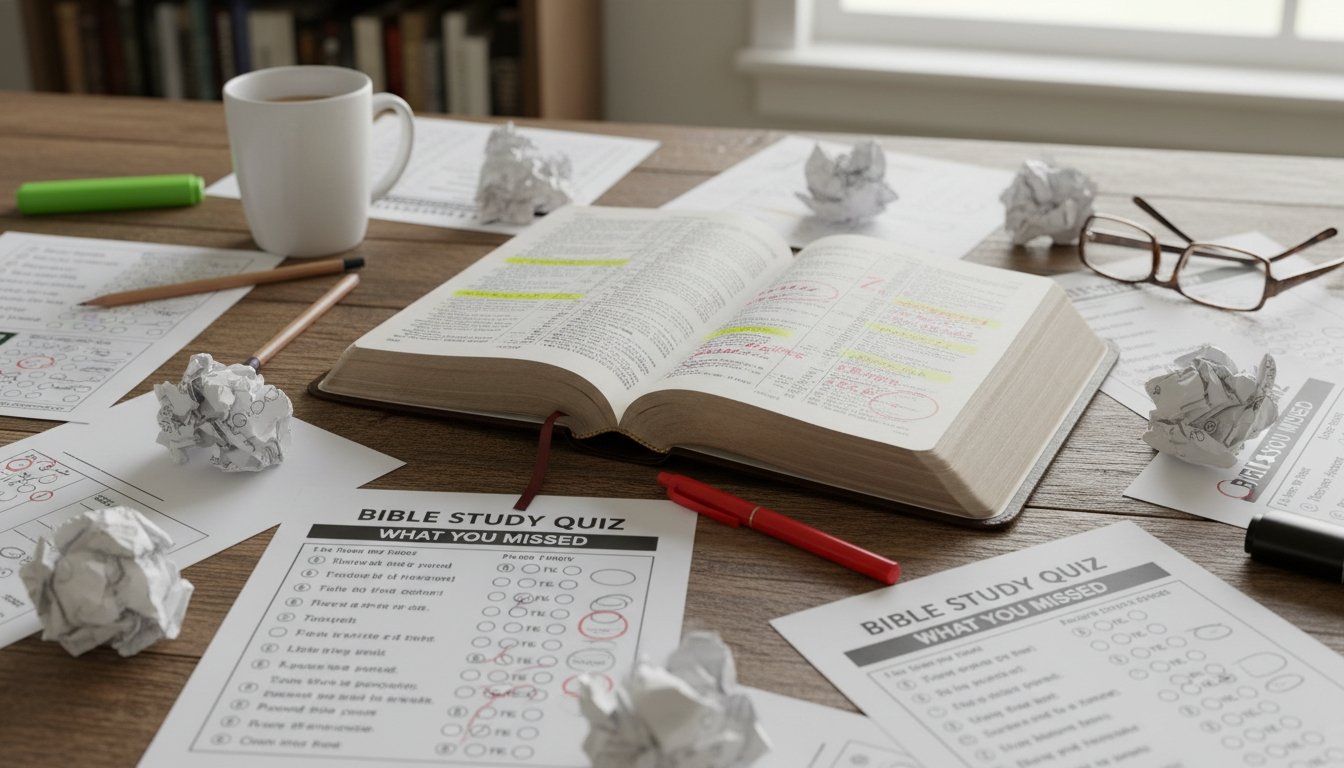
11 Apr 7 Bible Trivia Questions and Answers for Youth Groups
You’ll find seven bite‑size Bible trivia questions perfect for youth groups, each with a concise answer under 20 words and a brief two‑sentence explanation that ties the fact to Scripture. The set mixes easy, medium, and hard difficulty, includes prompts for deeper discussion, and suggests scoring options to keep competition lively. You’ll also get quick tips for running the quiz smoothly and adapting it for different ages. Keep going to discover the full list and how to use it.
7 Fun Bible Trivia Questions for Youth Groups
Looking for a lively way to spark conversation and competition? You can turn a regular youth meeting into a fast‑paced quiz night with bite‑size Bible facts that keep everyone on their toes. Pick questions that range from “Who built the ark?” to “What miracle opened the eyes of a blind man?” Mix easy, medium, and tough levels so newcomers feel confident while seasoned readers get a challenge. Use a buzzer app or simple hand‑raise system to crank up the excitement, and award points for speed and accuracy. Throw in a few “bonus” clues—like a favorite verse or a quick story recap—to deepen knowledge without slowing the flow. Encourage teams to discuss answers briefly before responding; this builds teamwork and reinforces memory. End the session with a short recap of the most surprising facts, leaving participants eager for the next round of fun, faith‑filled trivia.
Quick Answers and Explanations for Each Question
You’ll get a quick answer right after each question, then a brief explanation that ties the fact to its biblical context.
These concise clarifications highlight the key points you need to remember.
Quick Answers Explained
What makes a quick answer truly helpful? You give the core fact in a single sentence, then add just enough context for the youth to see why it matters. Keep the response under 20 words, use everyday language, and avoid jargon. When you follow a quick answer with a brief explanation, limit it to two sentences that connect the fact to a story or principle from Scripture. This structure lets participants recall the answer instantly while still grasping its relevance. Remember to use active verbs—“Jesus healed,” “Moses led”—so the action feels immediate. By staying concise, you respect attention spans and encourage deeper discussion later.
Key Points Clarified
Ever wondered how each quick answer turns a fact into a memorable lesson? You’ll see the key point behind every trivia item, then the why behind it. When a question asks, “Who built the ark?” you answer “Noah,” but you also note that his obedience illustrates trust in God’s plan. For “What’s the shortest verse?” you give “Jesus wept,” and explain its depth—compassion in a single line. Each clarification links the answer to a broader theme, so you remember the story, not just the name. You’ll notice patterns: promises (covenants), miracles (faith), and leadership (obedience). By connecting facts to these themes, you turn trivia into teaching moments that stick with your group.
How to Use the Questions to Spark Deeper Scripture Discussion
Ever wondered how a simple quiz can turn a casual gathering into a vibrant study session? You can use each trivia question as a springboard, not just a score‑keeper. After a youth answers, pause and ask, “What does this verse reveal about God’s character?” or “How does this story connect to our lives today?” Encourage the group to cite the surrounding passage, then explore the cultural or theological backdrop. When a question sparks disagreement, guide the conversation toward respectful interpretation rather than winning. Use follow‑up prompts like, “What other scripture mirrors this theme?” or “What does this teach us about prayer?” By linking each fact to a broader narrative, you transform a game into a discovery journey. Keep the dialogue flowing, let curiosity lead, and watch the youth deepen their biblical insight while still having fun.
Tips for Running a Smooth Bible Trivia Quiz Session
Ready to keep your Bible trivia night flowing without hiccups? First, set a clear schedule: announce start time, explain rules, and allocate a fixed limit for each round. Use a simple score sheet or digital app so you can update points instantly; avoid manual tallying that slows the game. Assign a reliable timer and a microphone, and test all equipment before participants event begins. Keep questions organized by difficulty and theme, and have backup cards ready in case a prompt confuses the group. Encourage quick answers, but give a brief pause for discussion after each correct response to reinforce learning without derailing momentum. Rotate the quizmaster or let volunteers read questions to maintain energy. Finally, end with a brief recap of high‑scoring facts and a prayer, leaving participants energized and ready for the next session.
Adapting the Trivia for Different Ages and Knowledge Levels
You can match questions to each age group, making younger kids get simple facts while teens tackle deeper themes. Shift the difficulty by swapping easy recall items for more interpretive prompts. This keeps everyone engaged and ensures the quiz feels challenging yet fair.
Tailor Questions By Age
How can you keep every youth member engaged while respecting their different knowledge levels? Start by sorting participants into age brackets—tweens, early teens, and high‑schoolers. For each bracket, select questions that match typical biblical literacy. Tweens enjoy simple “who‑did‑what” prompts, like “Who built the ark?” Early teens handle “where‑did‑it‑happen” and basic “why” queries, such as “Why did David fight Goliath?” High‑schoolers thrive on thematic or interpretive questions, like “What does the story of Joseph teach about forgiveness?” Keep the wording clear and avoid jargon. Rotate groups so younger kids hear a few harder clues and older kids practice answering easier ones. This mix maintains interest, builds confidence, and reinforces the whole group’s learning.
Adjust Difficulty Levels
Ever wondered how to keep the quiz challenging yet fair for everyone? You can adjust difficulty by layering question types: start with easy recall, then add moderate inference, and finish with complex application. Use a three‑tier system—Beginner, Intermediate, Advanced—and assign each tier a set number of points. For younger kids, keep clues visible and limit answer choices to three. For teens with more biblical knowledge, remove hints and require longer explanations. Mix formats: multiple‑choice for quick wins, fill‑in‑the‑blank for medium difficulty, and short‑essay for high‑level thinking. Track scores in real time; if a group consistently nails a tier, bump them up. Conversely, if they struggle, drop a level to keep morale high and learning effective.
Three Simple Scoring Systems to Keep the Competition Engaging
Want to keep your youth group buzzing with excitement? Try a points‑per‑correct system: each right answer earns a set number of points, say five, and you can add bonus points for speed or difficulty. This keeps the scoreboard simple and fuels friendly competition.
Second, use a tiered ladder: assign three tiers—easy, medium, hard—worth 2, 4, and 6 points respectively. Players choose the tier before answering, so they weigh risk versus reward. The ladder adds strategy without overwhelming younger participants.
Third, implement a “streak” bonus: every consecutive correct answer adds an extra point to the next question’s value. If a player misses, the streak resets. This encourages focus and celebrates consistency. Rotate these systems each session, or let the group vote on which to use, keeping the trivia night fresh, engaging, and motivating for everyone.
Free Bible Trivia Packs and Generators for Youth Leaders
Looking for ready‑made Bible trivia packs that you can download and use instantly? You’ll find dozens of free PDF bundles on sites like MinistryTools, YouthMinistry.com, and the official Bible.org resource page. Each pack contains 30–50 questions, answer keys, and suggested discussion prompts, all organized by theme—heroes, miracles, parables, or New‑Testament epistles. If you prefer custom content, try online generators such as TriviaMaker or Quizizz’s Bible template; just select difficulty, number of questions, and the scriptural focus, then click “Generate” to receive a printable worksheet or a shareable link. Most generators let you export to Google Slides or PowerPoint, so you can project the quiz during a youth night without extra setup. Keep a folder of these PDFs on a cloud drive, update them monthly, and you’ll always have fresh material that engages teens while reinforcing Scripture memorization.
Frequently Asked Questions
Can I Use the Trivia Questions for Non‑Christian Youth Groups?
Yes, you can use the trivia questions for non‑Christian youth groups, but you should adapt them. Remove overtly religious language, focus on universal themes like moral lessons, historical facts, or cultural stories, and ensure the content respects the participants’ beliefs. Explain the purpose as educational fun, not proselytizing, and be ready to answer any follow‑up questions about the material’s origin or relevance.
How Often Should I Update the Trivia Questions?
You should refresh the trivia set every three to six months. That cadence keeps the content feeling fresh, aligns with seasonal curriculum changes, and prevents participants from memorizing answers.
If you notice declining engagement or new material becoming relevant, adjust sooner. Regular updates also let you incorporate feedback, add diverse themes, and maintain excitement, ensuring the quizzes stay lively and educational for the youth.
What Copyright Rules Apply to Using Free Trivia Packs?
You can use free trivia packs as long as you respect the creator’s license—most are released under Creative Commons or similar terms. Check whether the pack requires attribution, non‑commercial use, or share‑alike conditions, and follow those rules. If you plan to sell or distribute the material commercially, you’ll need explicit permission. Always keep records of the source and license to avoid infringement.
Are There Recommended Ice‑Breaker Activities Before the Quiz?
Yes, you should start with quick, low‑pressure ice‑breakers to get everyone relaxed before the quiz. Try a “Two Truths and a Lie” round where each person shares two true facts and one false one about themselves, then let the group guess the lie.
Follow with a short “Speed‑Friend” activity: pair up, give each duo a minute to learn three fun details about their partner, then switch. These games spark conversation, build camaraderie, and set a lively tone for the trivia.
How Can I Incorporate Music or Multimedia Into the Trivia?
You can weave music and multimedia into the trivia by playing short audio clips that hint at a verse or story, then asking participants to identify the reference. Use video snippets of worship songs or animated Bible scenes as visual prompts, and let teams buzz in with answers.
Add a slide show of themed images for each round, and reward quick correct guesses with a brief chorus or a fun sound effect. This keeps energy high and reinforces learning.
Conclusion
You’ve got everything you need to turn a simple quiz into a lively, faith‑building experience. By mixing fun questions, clear explanations, and flexible scoring, you’ll keep teens engaged while deepening their scriptural knowledge. Use the tips and resources to tailor each session to your group’s age and skill level, and watch the excitement—and the conversation—grow. Happy trivia!










No Comments