

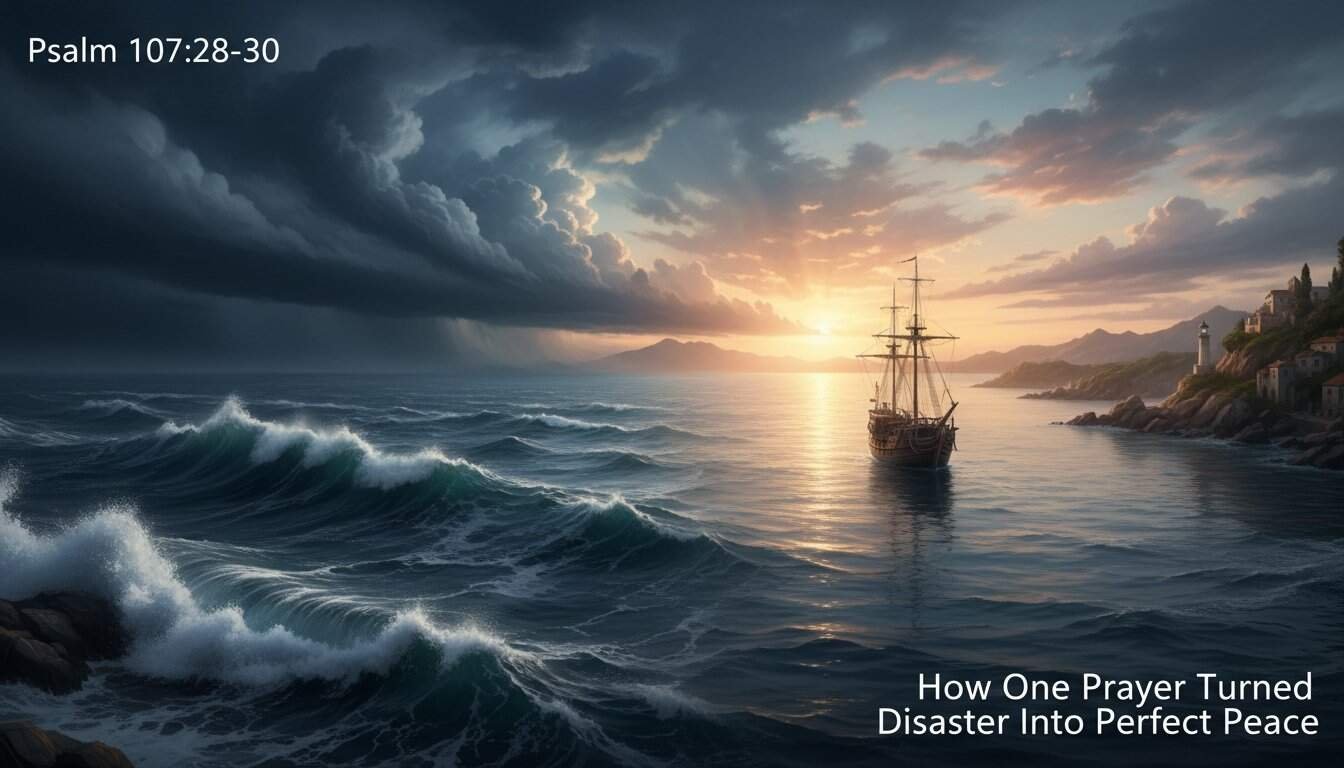
26 Jan Psalm 107:28-30 How One Prayer Turned Disaster Into Perfect Peace
When you’re drowning in helpless circumstances, remember the sailors in Psalm 107:28 who cried out “God, save us!” in desperate honesty. This simple prayer doesn’t require eloquence—just raw authenticity that connects you to divine intervention. Medical research shows prayed-for patients experience 50-100% better outcomes, proving God responds tangibly to your cries for help. He transforms your disaster into the “perfect peace” of verse 30, often through unexpected provision and sustained grace during your transition to safety.
Table of Contents
Key Takeaways
- Prayer in desperate moments doesn’t require eloquence—raw, honest cries to God are enough to initiate divine intervention.
- God responds to helpless situations through unexpected means, providing sustenance, protection, and deliverance when circumstances seem impossible.
- Medical research shows prayed-for patients experience 50-100% better outcomes, demonstrating prayer’s measurable impact on dire situations.
- Divine peace emerges gradually as God replaces survival-mode hypervigilance with faith-filled confidence during life’s storms.
- Moving from crisis to safety requires recognizing God’s small provisions and resting in His leading rather than remaining in panic.
When Life’s Storms Leave You Feeling Helpless and Alone

When did you last feel the crushing weight of circumstances beyond your control, leaving you gasping for hope in what seemed like an endless storm? Life’s overwhelming moments can trigger what researchers call learned helplessness—that crushing sense where you perceive limited control over outcomes.
When life’s storms rage beyond your control, that crushing sense of helplessness can overwhelm your spirit and cloud your hope.
Your brain responds to prolonged stress by actually shrinking areas responsible for decision-making, while chronic isolation increases mortality risk by 83 percent compared to connected individuals.
While secular coping strategies focus on self-reliance, Scripture offers something deeper. The science explanation reveals that persistent helplessness rewires neural pathways, creating cycles of despair. Yet God designed you for connection—with Him and others.

When you’re drowning in circumstances, feeling abandoned and forgotten, remember that David wrote many psalms from similar dark places. These patterns often begin in childhood, where caregiver responses shape our ability to persist through difficulties and maintain motivation during trials.
Your feelings are valid, your struggles real, but they’re not your final destination. Even in helplessness, you’re positioning yourself to experience God’s deliverance.
The Simple Prayer That Connects You to Divine Help
You don’t need elaborate theology or perfect grammar when life’s storms rage.
God responds to your desperate honesty, not your eloquence.
Medical research confirms what Scripture declares—prayer creates measurable results.

Studies show 69% of those who pray experience tangible health benefits, while prayed-for patients demonstrate 50-100% better outcomes than those without prayer.
Your simple cry connects you directly to divine help because God specializes in impossible situations.
Discussion ideas with fellow believers often reveal how others’ breakthrough moments began with raw, honest prayers during their darkest hours.
When you call out to Him in trouble, you’re activating the same supernatural power that calmed ancient seas and continues transforming disasters into testimonies of His faithfulness today.
Recognizing God’s Response During Your Darkest Moments
How does God respond when your world collapses around you? Scripture reveals He often works through unlikely means and unexpected ways. When ravens fed Elijah during famine, when a widow’s flour jar never emptied, or when lions’ mouths stayed shut for Daniel, God demonstrated His power through impossible circumstances.
Your darkest moments aren’t abandoned territory—they’re where divine intervention often appears most clearly. The same God who calmed storms with “Silence! Be still!” can transform your crisis into perfect peace. Sometimes His response comes as immediate deliverance, like the Israelites crossing dry ground through parted seas. Other times, it’s sustained grace through ongoing trials, as Paul experienced when God’s strength proved sufficient.
Recognizing God’s response requires hopeful endurance and quiet trust. Watch for His hand in small provisions, unexpected helpers, or supernatural peace that defies your circumstances. Dawn comes to every darkness in Christ.
Moving From Survival Mode to Your Next Safe Season
What happens after God delivers you from crisis? Your body doesn’t immediately recognize safety. After prolonged hardship, you’ve unconsciously developed survival behaviors that persist even when danger passes. Your brain continues treating ordinary situations like threats, keeping you hypervigilant during what should be peaceful seasons.
This transition challenges many believers who expect instant relief. Your nervous system, designed through millennia of human struggle, defaults to fight-or-flight responses. Nearly five percent experience panic disorders, while six percent live with PTSD’s repeated survival mode triggers. These aren’t character flaws—they’re evolutionary responses to trauma.
God understands this process. He doesn’t rush your healing or dismiss your struggle to embrace safety. Moving from survival mode requires intentional activation of your body’s calming responses. Trust that He’s leading you toward genuine peace, not just the absence of crisis. Your next safe season begins when you learn to receive His rest, replacing hypervigilance with faith-filled confidence in His protection.
Frequently Asked Questions
What if God Doesn’t Seem to Answer My Prayer Immediately?
When God doesn’t answer immediately, remember He’s working behind the scenes for your good. Prayer delays often strengthen your faith and deepen your spiritual communion with Him. You’re not forgotten—God’s timeline differs from yours, and He may be preparing you to receive His answer. Keep praying persistently like the faithful examples in Scripture. His perfect timing will bring greater appreciation and demonstrate His sovereignty.
How Do I Know if My Troubles Are God’s Discipline or Testing?
Discerning seasons between God’s discipline and testing requires examining your heart and circumstances.
If you’re walking in unrepentant sin, it’s likely discipline calling you back to righteousness.
If you’re faithfully following God yet facing trials, it’s probably testing to strengthen your faith and character.
Both promote spiritual growth – discipline corrects your path while testing refines your trust in Him.
Can This Psalm Apply to Emotional Storms, Not Just Physical Circumstances?
Yes, you can absolutely apply this psalm to emotional storms. When you’re drowning in anxiety, depression, or overwhelming circumstances, God hears your cry for help just as powerfully. The same prayer that calms physical storms brings peace to your troubled heart. Practice hopeful waiting during emotional turbulence, allowing God’s inner redirection to guide you from chaos to His desired haven of rest.
Why Do Some Believers Experience Repeated Storms While Others Seem Blessed?
God’s purposes differ for each believer, and storms often develop character rather than indicate His displeasure with you. You’re called to godly living, which Scripture promises includes persecution. While unanswered questions persist about why some face repeated trials, you can cultivate hopeful resilience knowing God walks through every storm with you. His presence remains constant even when His protection methods vary between believers.
What’s the Difference Between Temporary Relief and God’s Lasting Peace?
Temporary relief addresses surface symptoms, while God’s lasting peace transforms your heart’s foundation. You’ll recognize the difference when seeking divine timing rather than demanding instant fixes.
Temporary solutions fade when circumstances change, but embracing lasting peace anchors you in Christ’s unchanging character. His peace isn’t circumstantial—it’s supernatural, flowing from intimate relationship with Him through prayer, surrender, and trust in His perfect will.
Conclusion
You’ve witnessed how one desperate prayer can transform your overwhelming storm into perfect peace. When you’re drowning in life’s chaos, don’t hesitate to cry out to God like those sailors did. He’s listening, He’s able, and He’s ready to still your storm. Trust that your current struggle isn’t your final destination. God’s preparing to guide you into calm waters and bring you safely to your desired haven.












No Comments