

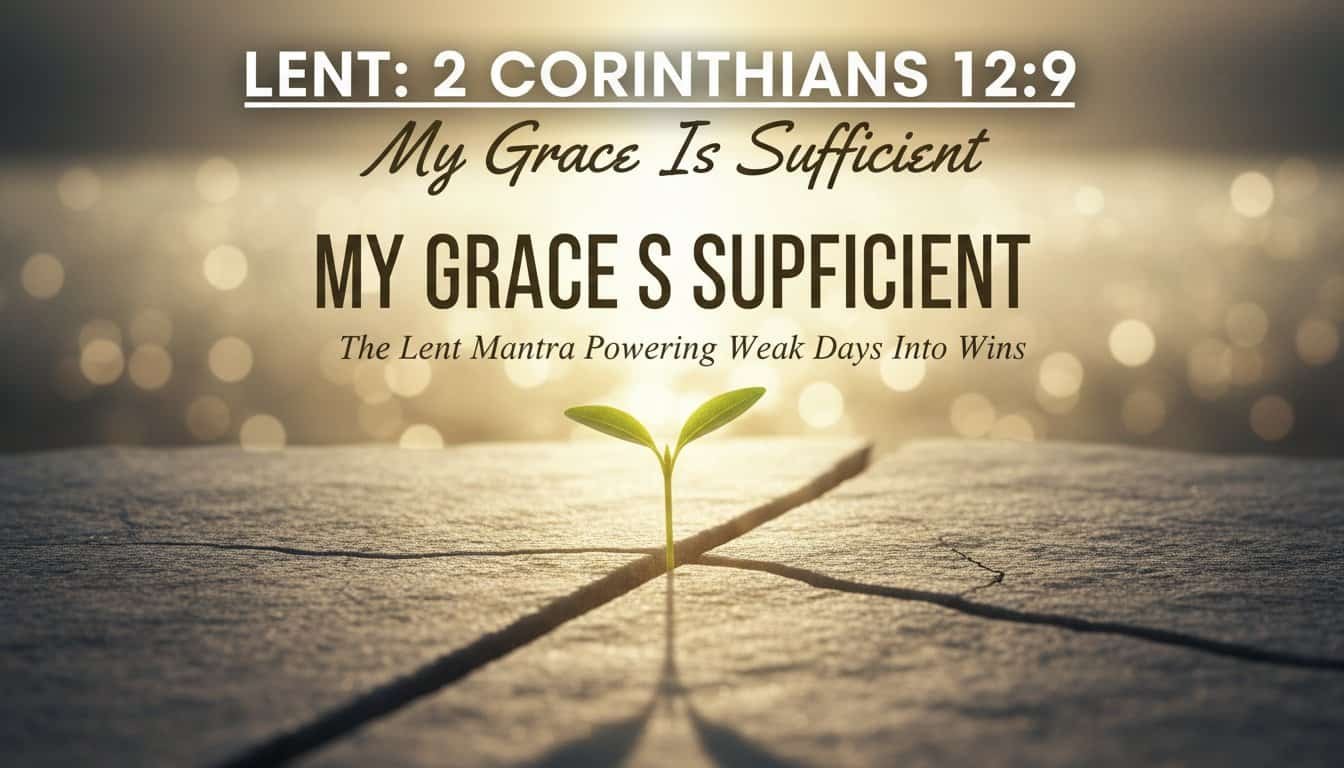
04 Mar 2 Corinthians 12:9 My Grace Is Sufficient: The Lent Mantra Powering Weak Days Into Wins
When you’re struggling through Lent’s challenges, Paul’s words in 2 Corinthians 12:9 become your lifeline: “My grace is sufficient for you.” Your weakness isn’t a spiritual failure—it’s God’s invitation to experience His transformative power. Each stumble during fasting, every prayer that feels empty, becomes sacred space where Christ’s strength meets your frailty. You don’t need perfection; you need surrender. Your limitations position you to receive divine grace that turns ordinary struggles into extraordinary spiritual victories, revealing deeper truths about finding strength through complete dependence on God’s provision.
Table of Contents
Key Takeaways
- God’s grace transforms daily struggles and weak moments into sacred opportunities for spiritual growth and divine strength.
- Paul’s thorn demonstrates that divine power is perfected in weakness, making limitations gateways to experiencing Christ’s sufficiency.
- Simple Lenten practices like fasting and digital detox create space for grace-filled dependence rather than self-effort.
- Prayer shifts from asking God to remove struggles to requesting sustaining grace to endure them with divine power.
- Acknowledging inadequacies and surrendering limitations positions believers to receive transformative grace that turns weakness into spiritual wins.
What Lent Teaches Us About Finding Strength in Weakness

Why does the Church invite us into practices that deliberately expose our limitations during Lent? Because true strength emerges when you acknowledge your weakness and turn to God’s sustaining grace.
Lenten practices reveal our weakness not to shame us, but to open us to God’s transforming strength.
Lenten disciplines aren’t about proving your spiritual fortitude—they’re designed to reveal your dependence on divine support. When you fast, you’re not demonstrating willpower; you’re creating space for God by weakening attachments to good things. This intentional vulnerability protects against worship critique that elevates self-reliance over surrender.
Jesus modeled this paradox perfectly. His forty-day fast exposed Him to temptation, yet His weakness became the pathway for divine strength. In Matthew 20:25-28, He redefined power through servanthood rather than dominance.

Your Lenten struggles aren’t failures—they’re invitations. When ritual critique whispers that you’re inadequate, remember that God’s power perfects itself in your acknowledged limitations. You don’t need perfection; you need openness to receive His sufficient grace. Even seemingly lightweight sacrifices like avoiding jaywalking can reveal how easily we become frustrated when thwarted by small delays.
Paul’s Thorn: Why God’s Grace Shines Through Our Struggles?
You’ve probably wondered why God doesn’t simply remove the struggles that weigh you down, just as Paul pleaded three times for his thorn to be taken away.
God’s response to Paul reveals a profound truth: His power isn’t diminished by your weakness—it’s actually perfected through it, transforming your struggles into showcases of divine strength. Paul described this affliction as a messenger of Satan, yet recognized that God allowed it for the divine purpose of preventing pride from his extraordinary revelations.
When you embrace this reality, you’ll discover that God’s grace doesn’t eliminate your thorns but transforms them into instruments of His glory.
God’s Power Through Weakness
When life’s sharpest afflictions pierce through your carefully constructed defenses, you’re experiencing what the apostle Paul knew intimately—God’s transformative power working through human frailty. Your thorn weaknesses aren’t obstacles to God’s plan—they’re conduits for His strength.

Paul discovered this paradoxical truth when God refused his repeated prayers for healing. Instead of removal, he received revelation: “My power is made perfect in weakness” (2 Corinthians 12:9). Your struggles become showcases for divine sufficiency.
When you’re overwhelmed, stressed, or facing seemingly insurmountable challenges, you’re positioned perfectly for God’s grace resilience. Your inadequacy highlights His adequacy. Your limitations magnify His limitless power. Rather than hiding your weaknesses, embrace them as opportunities for God’s strength to shine through your surrendered life.
Grace Transforms Our Struggles
Though Paul never reveals the exact nature of his thorn, its mysterious identity becomes secondary to its transformative power in his life. Whether you lean toward physical ailment or demonic harassment among the various thorn interpretations, God’s grace remains the constant force reshaping your perspective on suffering.
When you’re wrestling with persistent struggles, remember that Christ’s response to Paul wasn’t elimination but transformation. “My grace is sufficient for you” becomes your lifeline, turning weakness into a showcase for divine power. You’ll discover strength through acceptance rather than through answers.
Your struggles don’t disappear, but they become sanctified spaces where grace flows most powerfully, transforming your character and deepening your dependence on Christ’s sustaining presence.
Simple Lenten Fasting Practices That Build Spiritual Resilience
How can simple fasting practices transform your spiritual weakness into resilience during Lent’s forty-day journey? You don’t need to embrace extreme measures to experience God’s transformative grace. Start with the Church’s gentle guidance: fast partially on Ash Wednesday and Good Friday, and abstain from meat on Lenten Fridays. These foundational practices create space for spiritual growth.
Consider modern tech mindfulness approaches that 31% of adults are choosing. A digital detox from smartphones, social media, or streaming services can redirect your attention toward prayer and scripture. When you feel weak during these fasts, remember Paul’s words: “My grace is sufficient for you” (2 Corinthians 12:9).
Your fasting doesn’t have to be perfect. Each moment you choose discipline over indulgence, you’re building spiritual muscle. Christ’s forty-day desert fast models endurance through God’s strength, not your own. Let His grace fill the empty spaces your fasting creates.
Transform Your Lenten Prayers With “My Grace Is Sufficient”

Transform your prayer life by embracing this truth. Instead of pleading for God to remove your struggles, invite His grace to sustain you through them. When you acknowledge your inadequacies before Him, you’re experiencing humility awakening—recognizing that your weakness qualifies you for His strength.
Your vulnerability empowerment begins when you stop hiding your failures and start boasting in them. Pray through your limitations, knowing Christ’s power rests upon your surrender. Don’t ask for tomorrow’s grace today; rest in His sufficient provision for this moment.
Let weakness become your prayer’s starting point, not its obstacle. God’s grace carries you through struggles rather than eliminating them, making your Lenten journey a testament to His unfailing strength.
Biblical Heroes Who Found Power in Their Weaknesses
Throughout Scripture, God consistently chooses the unlikely and transforms their weaknesses into displays of His mighty power.
Gideon threshed wheat in secret, feeling like his family’s weakest member, yet God called him a “mighty warrior.” When weakness reframed his perspective, the Spirit clothed him with victory over the Midianites. Moses doubted his speaking ability and murderous past, but God equipped him to lead Israel to freedom through obedience rather than eloquence.
Young Jeremiah protested his inadequacy, yet God touched his mouth and provided every word needed. David faced Goliath with just a sling, proving that divine strength operates beyond human limitations. Paul discovered grace led resilience when God declared, “My grace is sufficient for you, for my power is made perfect in weakness” (2 Corinthians 12:9).
You’ll find that God’s pattern remains unchanged—He delights in using your vulnerabilities to showcase His incomparable strength and faithfulness.
Daily Lenten Reflections for Embracing Your Limitations
You don’t have to carry the weight of your limitations alone—each morning offers a fresh opportunity to surrender your weaknesses to Christ’s sufficient grace. When you embrace your daily struggles through prayer and fasting, you’re creating sacred space for the Holy Spirit to transform what feels like failure into spiritual victory. Your limitations aren’t obstacles to overcome but invitations to experience God’s power working most perfectly through your vulnerable, surrendered heart.
Weakness Becomes Spiritual Strength
How often do we mistake our limitations for spiritual failures, when God intends them as doorways to His power? During Lent, you’re invited to discover how weakness transforms into spiritual strength through resolute surrender to Christ’s grace.
When you acknowledge your limitations honestly, you position yourself to receive God’s transformative power. Paul’s thorn became his testimony—proof that divine strength perfects itself through human frailty. Your spiritual stumbling blocks aren’t obstacles to overcome independently; they’re invitations to experience God’s sufficiency.
Through quiet reliance on grace rather than self-effort, you’ll find that admitting powerlessness becomes the prerequisite for receiving salvation. Christ’s cross demonstrates this paradox perfectly: apparent defeat becoming ultimate victory, weakness revealing redemptive power that changes everything.
Finding Peace Through Limitations
Where does true peace originate when life’s constraints feel overwhelming? You’ll discover it emerges through self acceptance of your limitations rather than fighting them. When you embrace what you can’t control, God’s grace transforms restrictions into pathways for deeper communion with Him.
Through intensified prayer during Lent, you’ll find quiet moments amid penitence leading to less cluttered interior life. This routine release from constant striving allows space for authentic spiritual growth. As you reflect on personal weaknesses, you’re guided toward prayer commitments that foster genuine connection with God.
Penance teaches you to prioritize spirit over body, turning away from material attachments. This self-denial isn’t punishment—it’s liberation. When you stop demanding perfection from yourself, you create room for Christ’s sufficient grace to work powerfully through your acknowledged weakness.
Grace Transforms Daily Struggles
Although daily struggles often feel insurmountable, God’s grace actively transforms each challenge into sacred opportunity for spiritual growth. When you engage with Scripture regularly, you’re 60% less likely to experience spiritual stagnation. This isn’t mere coincidence—Bible engagement uniquely predicts your resistance to temptations and moral improvements across all demographics.
During Lent, embrace Paul’s revelation in 2 Corinthians 12:9. His weakness became God’s strength showcase. Your financial stress, relationship conflicts, and health concerns aren’t irrelevant pairing with faith—they’re precisely where grace operates most powerfully. Two word discussion ideas like “grace transforms” capture this truth perfectly.
Regular Bible readers report twice the life transformation rates. As you lean into limitations this Lenten season, you’ll discover God’s sufficient grace doesn’t eliminate struggles—it transforms them into victories.
Practical Ways to Turn Lenten Challenges Into Growth
When Lenten practices feel overwhelming, you can transform those struggles into stepping stones for spiritual growth. Start small—if 50% of observers fast from favorite foods, you don’t need perfection on day one. Each stumble becomes an opportunity to experience Christ’s sufficient grace.
Consider pairing traditional disciplines with modern approaches. While 34% increase prayer during Lent, you might combine this with secular mindfulness techniques that enhance your awareness of God’s presence. Even non spiritual fasting can deepen your appreciation for divine provision when approached with intentional reflection.
When you face emptiness from fasting, remember Isaiah 58’s call for authentic spiritual practice. Use these moments to identify false comforts and lean into God’s strength. Like Paul’s thorn, your weaknesses become showcases for divine power.
Track your progress through small wins—choosing prayer over complaint, service over self-focus. Each choice builds spiritual muscle, transforming Lenten challenges into lasting transformation.
Preparing for Easter by Celebrating Weakness as Strength
Building spiritual muscle through Lenten challenges ultimately leads you to Easter’s profound truth: God’s power shines brightest through your acknowledged weakness. As you’ve practiced fasting, prayer, and almsgiving, you’ve discovered that vulnerability isn’t failure—it’s invitation.
Your hardened expectations about strength dissolve when you embrace Paul’s declaration: “When I’m weak, then I’m strong” (2 Corinthians 12:10). Unlike secular resilience that demands self-reliance, Easter reveals Christ’s resurrection power working through your frailty.
You’re preparing for Easter by celebrating what the world rejects: dependence, limitation, and need. Your forty-day journey transforms weakness from shame into sanctuary where Christ’s grace flourishes. When you acknowledge hunger during fasting or struggle in prayer, you’re not failing—you’re creating space for divine strength.
Your struggles aren’t spiritual failures—they’re sacred invitations for Christ’s power to transform your weakness into divine strength.
Easter morning proclaims that your mortal limits end in God’s limitless life, your failures become resurrection stories, and your weakness becomes the very place where Christ’s power rests most perfectly.
Frequently Asked Questions
When Did the 40-Day Lenten Period Officially Begin in Church History?
The 40-day Lenten period officially began at the Council of Nicaea in 325 AD. You’ll find that Lent origins trace back to earlier shorter fasts, but fastings evolution reached this milestone when church leaders clarified the 40-day preparation. Like Moses and Elijah’s biblical fasts, you’re called to this sacred journey. God’s grace strengthens you through each day of spiritual preparation before Easter’s joy.
Why Do Catholics Receive Ashes on Their Foreheads on Ash Wednesday?
You receive ashes on your forehead as a powerful symbol of repentance and mortality, drawing from biblical traditions of humility before God. This cross-shaped marking identifies you as Christ’s follower beginning your Lenten journey. The ashes from last year’s Palm Sunday palms remind you “from dust you came, to dust you’ll return.” Consider this practice among your discussion ideas and summer readings about meaningful faith traditions.
What Foods Were Christians Originally Forbidden to Eat During Lent?
Early Christians practiced crystalized fasting during Lent, forbidding meat, dairy products, eggs, and alcohol. You’d consume only bread, vegetables, salt, and water for supper, while Holy Week restricted meals to bread and salt alone. This dietary asceticism reflected deep spiritual discipline, with some observing complete daytime fasts until sunset. Your ancestors understood that denying physical appetites strengthens spiritual hunger for God’s transformative grace.
How Did Pope Gregory I Change Early Lenten Fasting Practices?
Pope Gregory I transformed fasting customs by adding four days to Lent’s beginning, moving the start from Sunday to Ash Wednesday.
You’ll find he standardized the 46-day period across all churches, ensuring 40 actual fasting days excluding Sundays.
His changes created uniformity where regional variations once caused confusion.
Through God’s guidance, Gregory established the structured Lenten framework that strengthened spiritual discipline for generations of faithful believers.
Why Are Sundays Excluded From the 40-Day Lenten Fasting Count?
Why Sundays aren’t counted in Lent’s forty days reflects Christ’s resurrection triumph. You’re given fasting exemptions because Lent Sundays celebrate Jesus conquering death—making mourning inappropriate. These Sunday exceptions honor early Christians who recognized resurrection joy supersedes penance. When you struggle with Lenten disciplines, remember these weekly feast days remind you that Christ’s victory already transforms your weakness into strength, just as His grace proves sufficient for your journey.
Conclusion
You’ve journeyed through Lent discovering that God’s grace truly is sufficient for your weaknesses. Don’t let this season’s end diminish what you’ve learned—carry Paul’s truth with you daily. When life overwhelms you, remember that Christ’s power rests on you through your struggles. You’re not meant to be strong enough on your own. Let His grace continue transforming your limitations into victories, making you more than a conqueror through Him who loves you.












No Comments