


19 Jan MLK’s Blueprint for Protest: What Works Now
You can replicate King’s protest success by following his three-step blueprint: meticulous preparation through nonviolence training and role-playing scenarios, strategic coalition-building that extends beyond your base to include unlikely allies like moderate clergy and suburban voters, and deliberate timing that maximizes economic pressure while forcing opponents to reveal their moral failings on camera. King’s Birmingham campaign perfectly demonstrates how disciplined protesters, diverse coalitions, and strategic provocation create the political leverage needed to transform outrage into concrete policy victories that modern movements still rely on.
Table of Contents
Key Takeaways
- Meticulous preparation through workshops on nonviolence, legal rights, and role-playing scenarios transforms ordinary citizens into disciplined changemakers.
- Build diverse coalitions beyond your base constituency, focusing on shared moral stakes rather than guilt-based solidarity for broader legitimacy.
- Strategic timing maximizes economic and political pressure by aligning protests with shopping seasons, media cycles, and congressional debates.
- Maintain strict nonviolent discipline to generate public sympathy, delegitimize violent opposition, and create moral authority for your cause.
- Frame local struggles within universal American principles, making opposition appear un-American while transforming individual grievances into national narratives.
How King’s Protesters Prepared for Maximum Impact
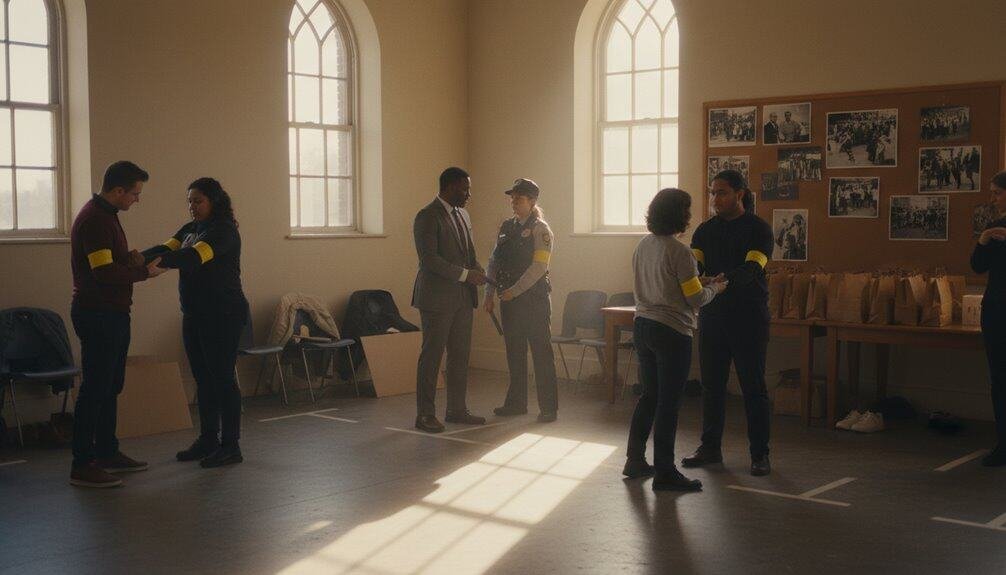
The success of Martin Luther King Jr.’s civil rights campaigns stemmed from meticulous preparation that transformed ordinary citizens into disciplined agents of social change. You’ll notice King’s teams didn’t simply organize marches—they systematically trained participants through workshops that taught nonviolent resistance techniques, legal rights, and emotional self-control under provocation. Their discipline strategy included role-playing scenarios where volunteers practiced responding to verbal abuse and physical violence without retaliation.
King’s organizers carefully built coalition support by engaging local churches, labor unions, and student groups months before public demonstrations. They studied timing meticulously, considering factors like local politics, media cycles, and economic pressures. The Birmingham campaign exemplified this approach: organizers deliberately launched during Easter shopping season, maximizing economic impact while ensuring maximum media coverage of their disciplined response to violent opposition.
Why King Built Unlikely Alliances That Couldn’t Be Ignored
Strategic coalition-building became King’s most powerful weapon because he understood that isolated movements fail while diverse alliances create unstoppable momentum.
You’ll notice King deliberately cultivated relationships with white clergy, labor unions, and suburban moderates—groups that weren’t natural civil rights supporters. He recognized that allyship dynamics required demonstrating shared moral stakes rather than demanding solidarity based on guilt.
King’s strategic nonviolence made these partnerships possible because it positioned his movement as morally superior to violent opponents. When Bull Connor’s police attacked peaceful protesters in Birmingham, white allies couldn’t dismiss the brutality as justified retaliation. You can see how King’s coalition strategy worked: diverse voices amplified his message beyond Black communities, creating broader political pressure that single-constituency movements couldn’t achieve.
King’s Method for Turning Outrage Into Policy Wins
Building coalitions created the foundation, but King’s genius lay in systematically converting public outrage into concrete legislative victories through carefully orchestrated campaigns that forced politicians to act. You can see his nonviolent strategy in Birmingham’s 1963 campaign, where he deliberately provoked violent responses from authorities while maintaining peaceful pressure through sit-ins and marches. The resulting television footage of police dogs attacking children created national moral crisis that politicians couldn’t ignore.
King understood timing was everything. He escalated protests when Congress debated legislation, making inaction politically impossible. His peaceful pressure created what he called “constructive tension” – forcing society to confront injustice rather than ignore it. Each campaign targeted specific, achievable goals while building momentum toward broader change.
What Modern Activists Can Learn From King’s Playbook
How can today’s movements harness King’s strategic framework to achieve lasting policy change? You must embrace deliberate nonviolence as both moral imperative and tactical advantage. King understood that nonviolent resistance generates broader public sympathy while delegitimizing opponents who resort to force. Modern activists should study how King’s campaigns carefully escalated pressure through economic boycotts, strategic demonstrations, and civil disobedience.
You’ll need to master strategic storytelling that transforms individual grievances into universal narratives. King connected local struggles to America’s founding principles, making segregation appear fundamentally un-American. Today’s movements must similarly frame issues within shared values rather than partisan divisions.
Build diverse coalitions that extend beyond your base constituency. King’s success depended on religious leaders, labor unions, and moderate allies who provided legitimacy and political leverage for concrete policy victories.
Frequently Asked Questions
How Did King’s Personal Faith Influence His Protest Strategies and Decisions?
King’s faith influence shaped every protest decision you’d observe in his movement. You’ll find his Christian beliefs drove nonviolent resistance strategies, viewing love as transformative power against hatred. His protest decisions consistently reflected biblical principles of turning the other cheek and loving enemies.
You can trace how his theology demanded peaceful methods, even when facing violent opposition, making faith central to tactical choices.
What Role Did Women Leaders Play in King’s Civil Rights Movement?
You’ll find women leadership was integral to King’s protest strategy, though often underrecognized. Figures like Ella Baker shaped organizational structures, while Diane Nash orchestrated sit-ins and Freedom Rides. Rosa Parks didn’t just spark the Montgomery boycott—she’d been strategically chosen for her role. These women developed grassroots networks, trained activists, and provided tactical expertise that made King’s nonviolent campaigns effective and sustainable.
How Did King Handle Disagreements Within His Own Organization and Supporters?
You’ll find King’s disagreement management centered on dialogue and strategic compromise. When facing internal dissent from younger activists demanding more aggressive tactics, he’d convene extended discussions to find middle ground.
You can see his approach with SNCC tensions—he acknowledged their frustrations while maintaining nonviolent principles. He’d often defer to local leadership preferences and adapt strategies rather than impose top-down decisions, preventing organizational fractures.
What Were King’s Biggest Failures or Protests That Didn’t Succeed?
You’ll find King’s most significant failures in Albany, Georgia (1961-62) and Chicago (1966).
Albany lacked focused objectives and faced a shrewd police chief who avoided violent confrontations that generated media sympathy.
Chicago’s housing campaign exposed 策略局限 (strategic limitations) when confronting complex economic issues versus legal segregation.
These 失败案例 (failure cases) taught King that nonviolent protest worked better against clear legal targets than systemic economic inequalities requiring different approaches.
How Did King’s Approach Differ From Other Civil Rights Leaders?
You’ll notice King’s nonviolent discipline set him apart from leaders like Malcolm X, who advocated armed self-defense, and Stokely Carmichael, who embraced Black Power militancy.
King’s strategic coalition building also distinguished him—he deliberately courted white allies, religious groups, and moderate politicians, while more radical leaders like SNCC’s later leadership rejected interracial cooperation.
His approach emphasized moral persuasion over confrontational separatism.
Conclusion
You’ll find King’s blueprint remains remarkably relevant because it’s grounded in strategic discipline rather than spontaneous emotion. You can’t replicate his success without understanding that he methodically prepared participants, strategically built coalitions across racial and class lines, and systematically converted public sympathy into legislative pressure. Today’s movements that embrace his patient, coalition-building approach while adapting his nonviolent escalation tactics consistently achieve more durable policy victories than those relying solely on viral moments.











No Comments