

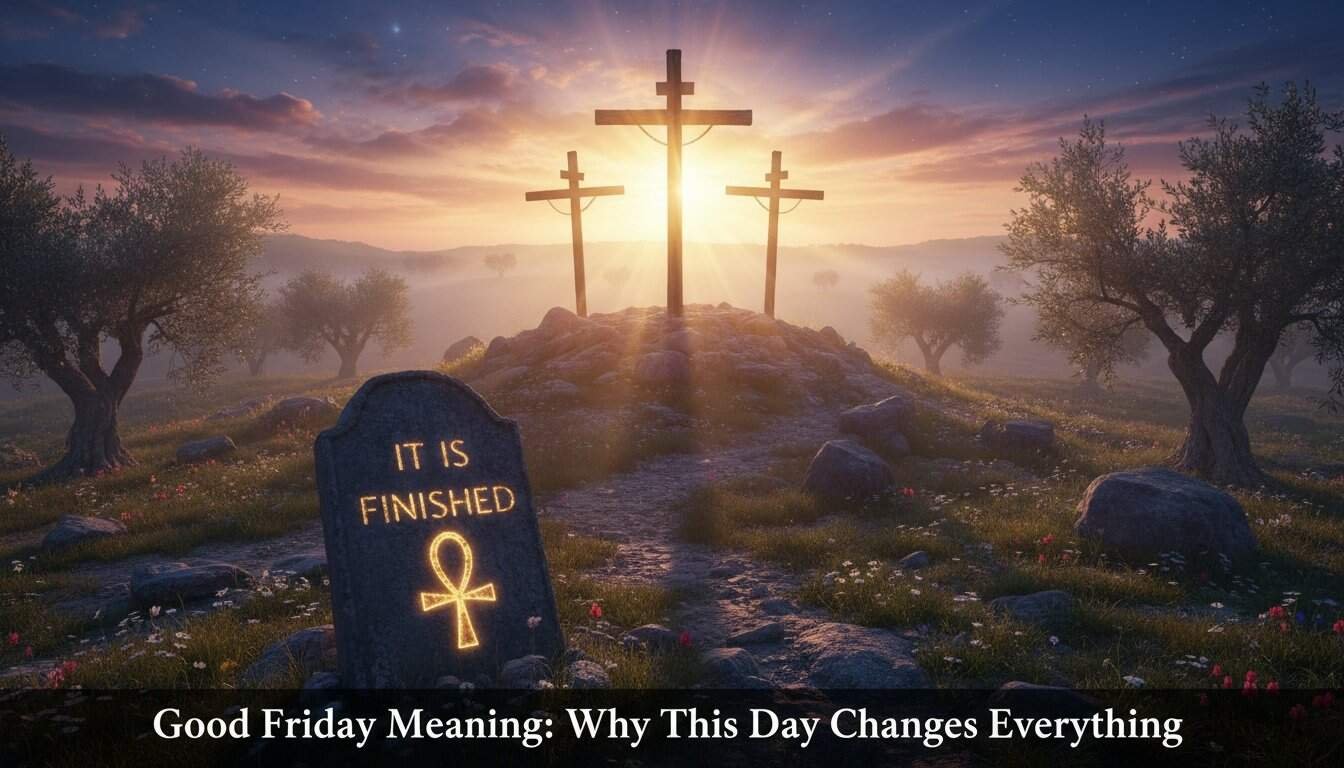
30 Jan Good Friday Meaning: Why This Day Changes Everything
Good Friday marks Christianity’s central paradox—the day Jesus Christ’s crucifixion transformed humanity’s greatest tragedy into ultimate victory. You witness how God’s apparent defeat becomes redemptive triumph, as Christ’s substitutionary atonement provides salvation through faith alone (Ephesians 2:8-9). His death tore the temple veil, granting direct access to God’s mercy while fulfilling dozens of Hebrew prophecies. This “good” Friday changes everything because Christ’s sacrifice offers you forgiveness and eternal life, revealing depths that illuminate Christianity’s foundational truth.
Table of Contents
Key Takeaways
- Good Friday marks Jesus Christ’s crucifixion, which Christians believe provides salvation and eternal life through His sacrificial death.
- The day fulfills dozens of ancient Hebrew prophecies, demonstrating divine plan spanning centuries before Christ’s birth.
- Christ’s death offers substitutionary atonement, meaning He bore humanity’s sins to reconcile people with God through faith.
- The crucifixion tore the Temple veil, symbolically granting all people direct access to God’s mercy and forgiveness.
- Jesus’s final words “It is finished” declared completed redemption, transforming apparent defeat into ultimate victory over death.
What Is Good Friday and Why Is It Called “Good”?
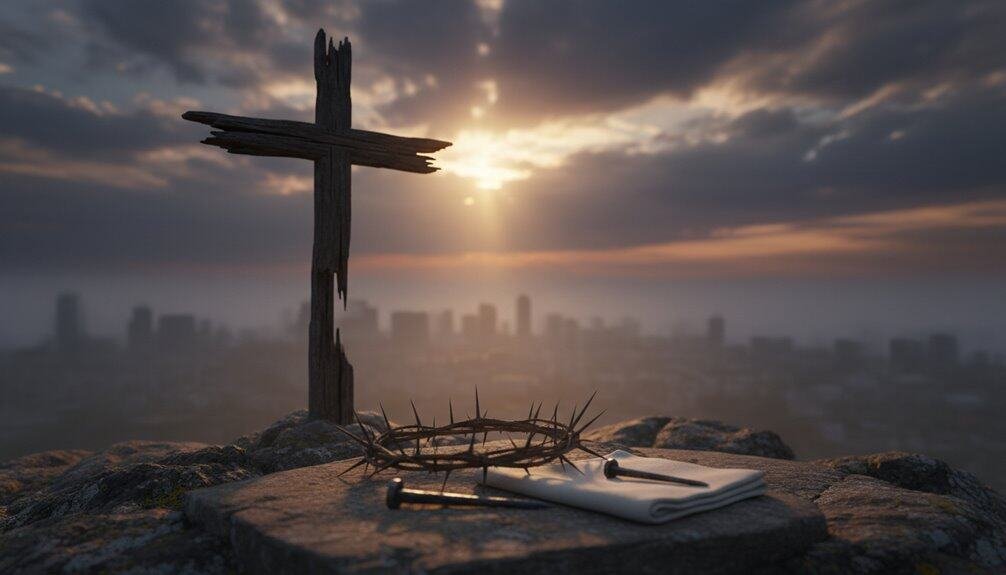
Why would Christians call a day commemorating the brutal crucifixion of their Savior “good”? You’ll find the answer rooted in both theological symbolism and historical linguistics.
Historical linguistics reveals “Good Friday” emerged from “guode Friday” in 1290 Old English texts, possibly deriving from “God’s Friday.” This paradoxical naming reflects profound theological symbolism—though marking Jesus’s death, it’s “good” because His sacrifice conquered sin and death.
The etymology of “Good Friday” from Old English “guode Friday” reveals how linguistic history intertwines with Christianity’s paradoxical theology of redemptive death.
You’re witnessing Christianity’s central truth: apparent defeat becoming ultimate victory. When Jesus died on Calvary, He provided humanity’s path to salvation and restored your relationship with God. His perfect, unblemished life became the ultimate sacrifice for mankind’s redemption. Good Friday initiates Holy Week with the pivotal events that led to Christ’s crucifixion.

The theological symbolism is striking—what appears as history’s darkest moment actually represents God’s greatest act of love. You can’t separate Good Friday’s “goodness” from its redemptive purpose. This day changes everything because through Christ’s death, you receive access to God’s mercy and eternal life.
The Events Leading to Jesus’s Crucifixion and Death
Five pivotal events unfolded during Jesus’s final week, creating an unstoppable sequence that led to His crucifixion on Good Friday.
Your understanding begins with Jesus’s triumphal entry into Jerusalem during Passover, where crowds acclaimed Him as Messiah. The temple cleansing followed immediately, as Jesus overturned merchants’ tables and condemned religious leaders’ hypocrisy—an act that sealed their determination to eliminate Him.
Betrayal dynamics intensified when Judas Iscariot agreed to deliver Jesus to authorities. Thursday evening’s Last Supper marked Jesus’s final teaching moments before His arrest in Gethsemane‘s garden, where Judas’s kiss identified Him to the temple guards.
Friday morning brought rapid-fire trials before the Sanhedrin, Pontius Pilate, and Herod. Despite Pilate finding no fault, political pressure forced Jesus’s crucifixion sentence. At Golgotha around 9:00 a.m., soldiers nailed Him between two criminals. Darkness covered the land from noon until His death at 3:00 p.m.

How Good Friday Offers Salvation and Forgiveness
These historical events culminated in humanity’s greatest theological reality: Christ’s substitutionary atonement that transforms eternal destinies. When Jesus declared “It is finished,” He completed mankind’s redemption through His perfect sacrifice (John 19:30).
You’re offered salvation through faith alone, not works, as Christ bore your sins in His body on the tree (1 Peter 2:24; Ephesians 2:8-9).
Forgiveness themes permeate Good Friday’s narrative. Christ’s death tore the Temple veil, granting you direct access to God’s mercy (Matthew 27:51).
His forgiveness of crucifiers and promise of paradise to the repentant thief demonstrate mercy’s availability even at life’s end (Luke 23:43).
God demonstrated His love while you remained a sinner through Christ’s death (Romans 5:8).
Salvation through faith becomes possible because Jesus satisfied God’s wrath against sin, exchanging your unrighteousness for His perfect righteousness. This substitutionary sacrifice fulfilled justice requirements, enabling your reconciliation with God and securing eternal life.
The Biblical Prophecies That Good Friday Fulfilled
How remarkably did ancient Hebrew prophets foretell Christ’s crucifixion with surgical precision centuries before Rome even practiced this execution method? You’ll discover that prophecy fulfillment reached its zenith on Good Friday through dozens of precise predictions.
Zechariah 11:12 specified the betrayal price of thirty pieces of silver—exactly what Judas received. Psalm 41:9 predicted betrayal by a close friend sharing bread, fulfilled when Jesus identified Judas through dipping bread at Passover.
Psalm 22:16 described pierced hands and feet before crucifixion existed. Psalm 22:18 foretold soldiers dividing garments and casting lots. Isaiah 53:8 prophesied silent suffering without defense.
The mockery details prove stunning: Psalm 22:7-8 predicted head-shaking and scornful challenges centuries before crowds taunted Jesus to descend from the cross.
Even death specifics align perfectly: Exodus 12:46 required unbroken Passover lamb bones—soldiers didn’t break Jesus’ legs. Isaiah 53:9 prophesied burial with the rich—Joseph of Arimathea’s tomb fulfilled this exactly.
How Christians Observe and Celebrate Good Friday Today
These prophetic fulfillments continue to shape how believers worldwide observe Good Friday through solemn worship, sacrificial practices, and communal remembrance. You’ll find churches conducting special services featuring Passion readings from the Gospels, accompanied by hymns and contemplative silence. Many denominations emphasize prayer services during the crucifixion hours, particularly from noon to three o’clock.
Catholic fasting traditions remain central, with believers abstaining from meat as penance symbolizing Christ’s sacrifice. You can participate in Stations of the Cross services or attend the Celebration of the Passion of the Lord, which includes Holy Communion without Mass. Prayer vigils incorporate solemn rituals like extinguishing candles or draping crosses in black cloth.
Traditional customs persist, including eating hot cross buns symbolizing the crucifixion and engaging in charitable acts reflecting Christ’s sacrificial love. You’re encouraged to maintain silence, especially during the crucifixion hours, creating space for meditation on themes of redemption, forgiveness, and divine love through personal devotion and community worship.
Frequently Asked Questions
What Time of Day Did Jesus Actually Die on Good Friday?
Jesus died at the ninth hour, which you’d recognize as 3:00 p.m. according to Jewish timekeeping. All four Gospels consistently record this time of death on Friday afternoon.
Mark 15:34-37 provides the most detailed forensic details, documenting Jesus crying out loudly before expiring.
This precise timing allowed Joseph of Arimathea to request the body and complete burial before the Sabbath began at sunset.
Why Didn’t Jesus’s Disciples Try to Rescue Him From Crucifixion?
You’ll find the disciples lacked courage because they fundamentally misunderstood Jesus’ messianic mission. They expected a conquering king, not a suffering servant, so when arrest came, they fled in terror rather than fight. The crucifixion’s timing caught them unprepared—they hadn’t grasped Jesus’ predictions about necessary death. Their abandonment wasn’t cowardice alone, but theological confusion about God’s redemptive plan.
What Happened to Jesus’s Body Between Friday and Easter Sunday?
Jesus’s body remained in Joseph’s tomb under death’s power while His soul descended to Sheol. You’ll find Scripture doesn’t detail misplaced artifacts or specific movements during festival preparations.
His physical form stayed buried from Friday evening through Sunday dawn, experiencing complete separation of body and spirit. Unlike misplaced artifacts that disciples might recover, Christ’s body required divine resurrection power to reunite with His soul on the third day.
How Do Different Christian Denominations Observe Good Friday Differently?
You’ll find significant interdenominational practices vary dramatically across Christianity’s landscape. Catholics mandate fasting, conduct Three Hours’ Agony services, and offer plenary indulgences through cross veneration. Protestant denominations emphasize contemplative reflection over sacramental requirements, while Lutheran-Methodist traditions practice Tenebrae services and Seven Last Words devotions. These liturgical differences reflect deeper theological distinctions—some groups reject structured observances entirely, viewing them as unbiblical traditions conflicting with sola scriptura principles.
What Is the Historical Evidence for Jesus’s Crucifixion Outside the Bible?
You’ll find compelling historical sources providing non-biblical corroboration for Jesus’s crucifixion. Roman historian Tacitus confirms Christ’s execution under Pontius Pilate, while Jewish historian Josephus records the crucifixion details. Pliny the Younger’s correspondence with Emperor Trajan acknowledges Christ as a historical figure. Archaeological discoveries, including the Pilate inscription and Jehohanan’s crucified remains, strengthen this evidence beyond Scripture’s testimony.
Conclusion
You’ll find that Good Friday isn’t merely historical remembrance—it’s God’s decisive intervention in human history. Through Christ’s substitutionary atonement, you’re offered reconciliation with your Creator. Scripture declares this day fulfilled millennia of prophetic revelation, demonstrating God’s covenant faithfulness. As you observe Good Friday, you’re participating in the church’s proclamation of the gospel’s central truth: Christ’s death conquered sin’s dominion, securing your justification before God’s throne through His perfect sacrifice.










No Comments