

17 Apr 3 Key Eras in the Book of Judges
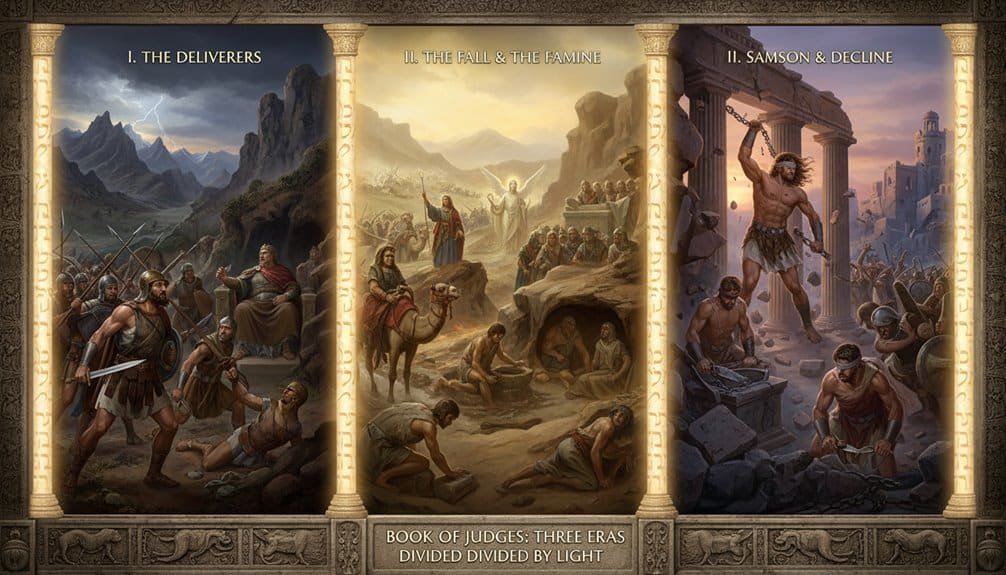
You’ll see three clear eras in Judges. First, Joshua’s conquest leaves a patchwork of tribal lands, and the central authority vanishes, sparking the rise of charismatic leaders. Next, the middle judges—like Deborah, Gideon, and Samson—appear in cycles of apostasy, oppression, and deliverance, each empowered by divine intervention. Finally, the late judges deteriorate morally, prompting the people to demand a king and a stable, centralized rule. Keep going and you’ll uncover how each phase shapes Israel’s destiny.
Table of Contents
Joshua’s Conquest → First Biblical Judges
How did Joshua’s conquest set the stage for the first biblical judges? You see the land’s division created a patchwork of tribal territories, each with its own local leadership. When Joshua died, the centralized authority vanished, leaving the people vulnerable to external threats and internal dissent. You notice that the Canaanite cities, though subdued, lingered in the wilderness, ready to strike when Israel faltered. In this vacuum, charismatic leaders emerged—people like Othniel, Ehud, and Deborah—who rallied the tribes for specific crises. You experience their rise as a direct response to the lack of a king, a need for swift, decisive action against oppressors. Their stories illustrate how the conquest’s initial triumph turned into a cycle of oppression, deliverance, and moral testing, laying the groundwork for the recurring pattern of judges throughout the Book of Judges.
Middle Biblical Judges: Apostasy & Deliverance
The tribal fragmentation left by Joshua’s death soon produced a pattern of back‑and‑forth: the people turned away from Yahweh, fell under foreign oppression, and then a charismatic judge rose to rescue them. In this middle phase, you’ll notice a tighter cycle of sin, suffering, and salvation. The Israelites repeatedly breach the covenant, worshiping Baal or other idols, which provokes raids by the Moabites, Ammonites, or Philistines. Their cries for help summon leaders like Deborah, Gideon, and Samson, whose personal faith and divine empowerment break the oppression. Each judge’s story underscores a theological rhythm: apostasy triggers hardship, repentance summons deliverance, and the temporary peace fades once the judge dies. You can see how these narratives illustrate the covenant’s conditional nature, reminding you that collective fidelity determines national security. The middle judges thus embody both the danger of infidelity and the hope of divine rescue.
Late Biblical Judges: Decline & Monarchy Dawn
What marks the transition from Israel’s heroic judges to the looming monarchy? You see the late judges—Samson, Eli, and the minor figures—exemplify a stark decline. Their stories overflow with personal vendettas, moral lapses, and fragmented tribal leadership. Samson’s tragic end, Eli’s corrupt sons, and the chaotic cycles of oppression reveal a nation losing cohesion.
You notice the people’s repeated cries for a king, echoing earlier pleas for deliverance but now demanding centralized authority. The narrative shifts from divine deliverance to a yearning for political stability.
As you trace the text, the prophetic voice grows louder, warning that without a king, Israel will continue to falter. The decline of the judges thus sets the stage for the monarchy’s dawn, framing the transition as both a loss of charismatic leadership and an inevitable move toward institutional governance.
Frequently Asked Questions
Why Were the Book of Judges the Judges?
You read Judges because it records Israel’s tribal leaders—called judges—who rose during crises. They weren’t legal professionals; they were military commanders, prophets, and deliverers appointed by God to rescue the people from oppression. Each judge rallied a tribe, led battles, and restored order, providing temporary stability until the next cycle of disobedience and rescue began. Their stories illustrate leadership, faith, and the consequences of Israel’s choices.
Written.2. How Does the Judges Period Relate to Israel’s Later Monarchy?
You see the judges period as Israel’s rehearsal for monarchy. Their cyclical failures and occasional victories reveal a need for centralized authority, so when Saul and later David ascend, they’re filling the power vacuum the judges left. The judges’ tribal leadership taught the people that a single ruler could enforce law, unite the tribes, and sustain the nation—exactly what the monarchy promised. This transition mirrors the shift from ad‑hoc tribal governance to a stable, hereditary kingdom.
What Archaeological Evidence Supports the Judges Narratives?
You’ll find pottery shards, settlement layers, and fortified hilltops dating to the Iron II period that match the Judges’ timeline. Excavations at sites like Hazor, Shechem, and Lachish reveal destruction layers and cultic altars that echo the biblical accounts of battles and worship. Inscriptions such as the “Mesha Stele” and “Tel Dan Stele” reference regional leaders and conflicts, supporting the narrative of tribal judges and their military actions.
Why Do the Judges Rarely Mention Women Leaders?
You’ll find that the judges rarely mention women leaders because the text reflects a patriarchal society where male authority was the norm, and the authors focused on male military heroes to convey divine deliverance. Cultural biases, oral tradition preferences, and the political agenda of emphasizing tribal leadership further marginalize female figures, even when women like Deborah played pivotal roles. This selective storytelling shapes the historical record we now read.
How Do the Judges Reflect Ancient Near Eastern Legal Practices?
You see the judges mirror ancient Near Eastern law by enforcing tribal customs, blood‑feud retaliation, and covenant vows. They act as regional enforcers, applying the “lex talionis” principle and adjudicating disputes over land, marriage, and inheritance.
Their decisions often invoke divine authority, yet they follow the same procedural patterns—public oaths, witness testimony, and restitution—that neighboring societies used to resolve conflict and maintain social order.
Conclusion
You’ve seen how Joshua’s conquest set the stage, how the middle judges wrestled with recurring apostasy and deliverance, and how the later judges fell into decline, paving the way for monarchy. Together they trace Israel’s shift from tribal confederacy to centralized rule, highlighting the cyclical pattern of sin, oppression, repentance, and rescue that defined the era of the judges.










No Comments