

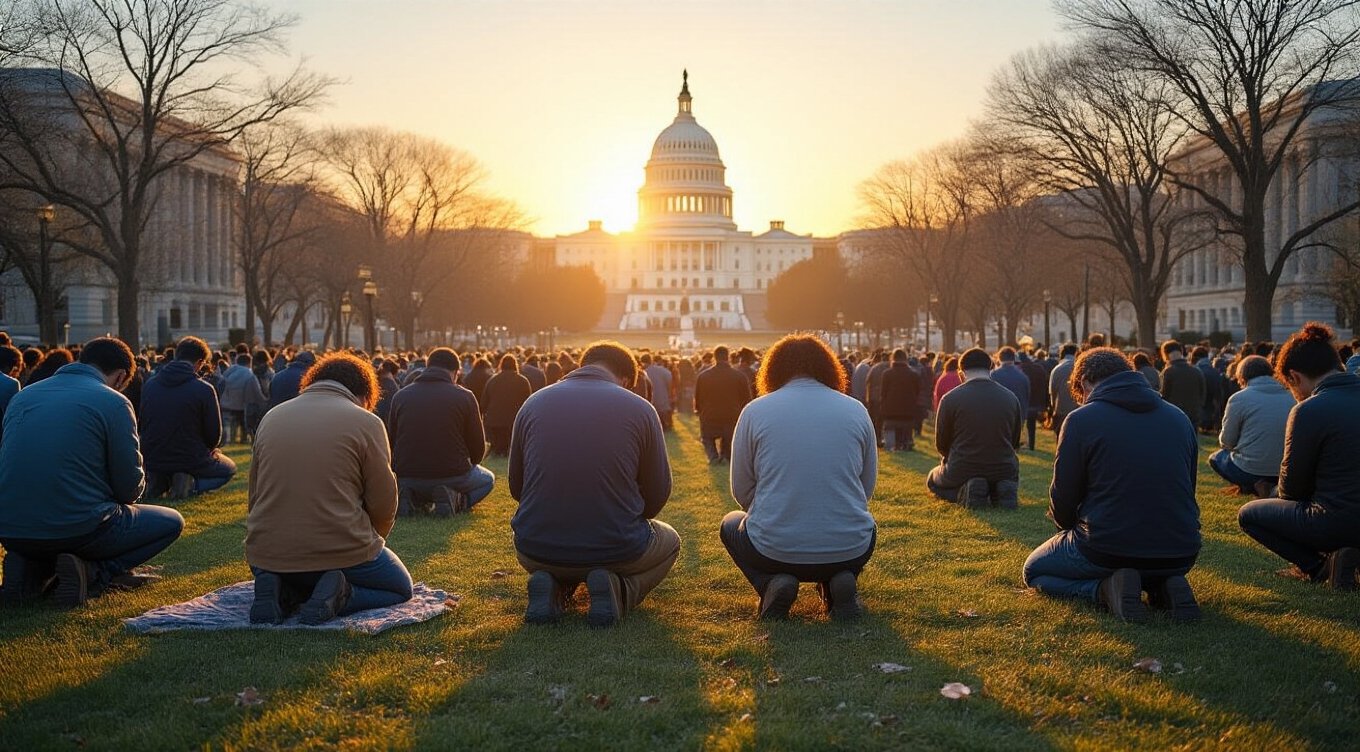
14 Mar National Day of Prayer: 2 Chronicles 7:14 – Humble and Pray National Day of Prayer: 2 Chronicles 7:14 for Healing Today
You observe the National Day of Prayer each first Thursday of May, a moment where citizens pause for divine guidance and unity. Inspired by 2 Chronicles 7:14, the day calls you to humble repentance, collective turning to God, and promises of healing and wisdom when you obey. You can set a personal intention, join a community circle, or share a national hashtag to amplify prayer. Keep an eye on subtle inner shifts and renewed compassion afterward, and discover deeper practices ahead.
Table of Contents
What Is the National Day of Prayer?
What’s the National Day of Prayer? You observe it every first Thursday of May, a moment when citizens across the United States pause to seek divine guidance and intercede for the nation.
The day isn’t tied to any single denomination; it welcomes believers of all faiths to gather in churches, homes, or public spaces and pray for peace, healing, and wisdom. Government leaders often issue proclamations, inviting the public to reflect on shared values and challenges. You might hear sermons that connect current events to biblical promises, or you could join a community vigil that blends music, scripture, and personal petitions. The event emphasizes unity, encouraging you to lift up concerns ranging from personal struggles to national crises. By participating, you become part of a longstanding tradition that blends civic responsibility with spiritual hope, fostering a collective sense of purpose and resilience.
How 2 Chronicles 7:14 Shapes the National Day of Prayer
Why does 2 Chronicles 7:14 resonate so deeply with the National Day of Prayer? You’ll find the verse’s call for humility, repentance, and collective turning to God mirrors the day’s purpose: a nationwide plea for spiritual renewal. Its promise—“if my people, who are called by my name, humble themselves…”—frames the prayer agenda, urging you to examine personal and communal sin while seeking divine healing. The verse also links obedience to tangible blessings, giving the day a concrete theological anchor that motivates you to pray for peace, health, and moral restoration. By invoking this scripture, organizers shape the event’s tone: reverent, earnest, and hopeful. You experience the day not as a ritual, but as a scriptural invitation to align your heart with God’s covenant, trusting that sincere humility will unlock the promised restoration for the nation.
How to Participate in the National Day of Prayer: Personal, Community, and National Practices
Ever wondered how you can turn a single day of prayer into a powerful catalyst for change? Start by setting a personal intention—choose a verse, a need, or a gratitude list, then spend 15‑30 minutes in quiet meditation or spoken prayer. Write your thoughts in a journal to track growth. Next, join a community gathering: attend a local church service, a virtual prayer circle, or a neighborhood park meeting. Bring a candle, a Bible, or a shared song to unify voices. Offer a brief testimony or listen to others, fostering mutual encouragement. Finally, contribute nationally by signing up for the official Day of Prayer website, sharing a hashtag, or donating to a relief organization aligned with the day’s theme. You can also write a letter to a legislator, urging policies that reflect compassion and peace. By weaving personal devotion, communal fellowship, and national outreach, you amplify the day’s impact and embody the promise of 2 Chronicles 7:14.
Identify Post‑Day Spiritual Signs
Notice the shift in your inner landscape after the National Day of Prayer—subtle calm, lingering gratitude, or an unexpected urge to serve. You may notice a heightened sensitivity to small blessings: a sunrise feels richer, a song more resonant. Your thoughts might linger on verses you whispered, and you’ll find yourself returning to them without prompting. Pay attention to an inner urge to reach out—calling a friend, volunteering, or donating spontaneously. Physical sensations can signal spiritual activity: a warm chest, a lightheaded breath, or a sudden tear that feels cleansing. You might also detect a quiet confidence in decision‑making, as if God’s presence steadies your choices. Finally, watch for altered relationships: conversations deepen, conflicts dissolve, and you feel more patient. These signs aren’t dramatic miracles; they’re gentle confirmations that the prayer day has opened a channel for ongoing spiritual growth.
Frequently Asked Questions
Can Non‑Christians Join the National Day of Prayer?
Yes, you can join the National Day of Prayer even if you’re not Christian. The event is a public invitation for anyone who wants to pray, reflect, or simply pause for gratitude and hope. You may use your own language, tradition, or silent meditation. The goal isn’t doctrinal uniformity but collective intention, so feel free to participate in the way that feels authentic to you.
Is There an Official Prayer Script for the Event?
You won’t find a single, government‑issued script; the National Day of Prayer invites you to pray in your own words. Organizers often share sample prayers or themes, but they leave the wording up to you. If you want a structured guide, check the official website or local faith groups—they may provide a suggested outline, but the ceremony remains flexible, encouraging personal, heartfelt petitions.
How Are the Prayer Locations Selected Each Year?
You’ll find that each year the organizers—usually the National Day of Prayer Task Force and local faith‑based partners—pick locations based on three criteria: community need, accessibility, and diversity of worship traditions.
They gather data on recent hardships, map venues that can host large gatherings, and ensure representation from different denominations and cultures.
After consulting with local leaders, they finalize a shortlist and announce the sites publicly.
What Is the Historical Origin of the National Day of Prayer?
You’ll find the National Day of Prayer traces back to the early 20th‑century evangelical movement, when leaders like Billy Graham and the Federal Council of Churches urged a unified day of intercession. In 1952, President Truman issued a proclamation establishing it, and Congress later codified the observance in 1981. The day’s roots blend Protestant revivalism, civic patriotism, and a desire for national moral renewal through collective prayer.
Are There Any Legal Restrictions on Public Prayer Gatherings?
You can hold public prayer gatherings, but you must respect the Establish Clause. The government can’t sponsor or endorse a specific religion, so you can’t require attendance, use public funds for a sectarian event, or let officials lead worship in an official capacity.
Private groups may meet on public sidewalks or parks, provided they follow local permits, noise ordinances, and anti‑discrimination rules. Violations can lead to lawsuits or loss of permits.
Conclusion
Now that you’ve learned the prayer’s roots, its biblical foundation, and ways to join in, you’re ready to turn belief into action. Keep praying, serving, and sharing hope—both locally and nationwide. Let the spirit of 2 Chronicles 7:14 guide your heart today, and watch the signs of renewal unfold across the country. Your faith can spark real change, so stay humble, stay prayerful, and stay engaged.








No Comments