

25 Feb Holy Week Begins: Significance Liturgy Traditions
Holy Week marks the most sacred time of the Christian calendar, commemorating Jesus Christ’s final days, death, and resurrection. You’ll observe solemn liturgies, processions with palms, the veneration of the cross, and the joyous celebration of the Easter Vigil and Easter Sunday. These events reflect the mysteries of faith and invite spiritual renewal – there’s much more to explore.
Key Takeaways
- Holy Week commemorates the final days of Jesus Christ’s life, leading to his crucifixion and resurrection, and invites spiritual renewal and reflection.
- Palm Sunday marks Jesus’ triumphal entry into Jerusalem, with the faithful carrying palms to symbolize victory, honor, and Christ’s kingship.
- Maundy Thursday commemorates the Last Supper, with the washing of feet and the celebration of the Sacrament of communion.
- Good Friday commemorates the Passion and crucifixion of Jesus, with readings, hymns, and the veneration of the cross.
- The Easter Vigil and Easter Sunday celebrate the Resurrection with the lighting of the Paschal candle, the renewal of baptismal vows, and joyful celebrations.
The Origins and Significance of Holy Week
What’s the significance of Holy Week for Christians? It commemorates the final days of Jesus Christ’s life, leading up to his crucifixion and resurrection. This sacred time begins with Palm Sunday, when Jesus entered Jerusalem, and culminates in the most solemn and joyous moments of the Christian faith. Through liturgies, reenactments, and spiritual reflection, believers remember Christ’s suffering, death, and ultimate triumph over sin and death. Holy Week invites Christians to walk with Jesus through his Passion, experiencing the depth of God’s love and the promise of eternal life. It’s a time of profound spiritual renewal, as the faithful reflect on the central mysteries of their faith and prepare to celebrate the Resurrection at Easter.
The Liturgical Observances of Holy Week
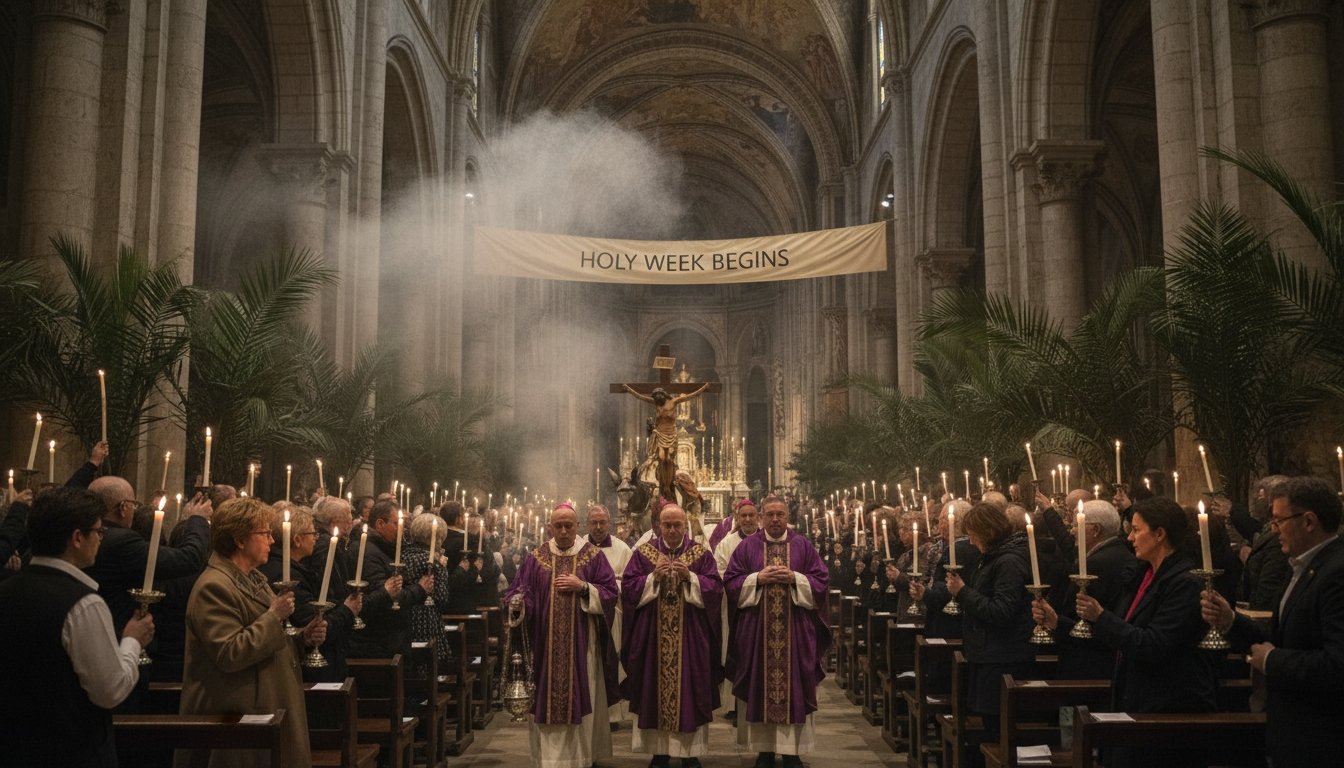
As Holy Week begins, you’ll witness the procession on Palm Sunday, recalling Jesus’ triumphant entry into Jerusalem. The Maundy Thursday service commemorates the Last Supper, while Good Friday devotions solemnly remember Christ’s crucifixion.
Palm Sunday Procession
On Palm Sunday, the Christian faithful observe a solemn processional reenactment of Jesus’ triumphal entry into Jerusalem. Participants carry palm branches and joyfully acclaim Christ as the Messiah, echoing the cries of the crowd who welcomed Him on that first Palm Sunday.
The procession commemorates this pivotal moment, reminding us of Christ’s kingship and the people’s hopeful anticipation of His saving mission. It’s a vivid display of faith, as worshippers take part in this sacred ritual, connecting the present to the momentous events of long ago.
This procession sets the tone for the solemnity and meaning of Holy Week, which culminates in the celebration of Christ’s resurrection.
Maundy Thursday Service
How does the solemn observance of Maundy Thursday mark the beginning of the Easter Triduum? On this day, the church commemorates Christ’s last supper with his disciples. The service centers around the ritual washing of feet, reenacting Jesus’ humble act of service. This somber commemoration prepares worshippers for Good Friday’s remembrance of the crucifixion. After the service, the altar is stripped, symbolizing Christ’s abandonment. The sacrament of communion is celebrated, and the reserved sacrament is processed to an “altar of repose” for adoration until Good Friday. This liturgy sets the stage for the church’s most sacred days, as believers journey with Christ through his passion, death, and resurrection.
Good Friday Devotions
What solemn devotions mark Good Friday, the day Christians solemnly remember Christ’s crucifixion? The most significant observance is the Good Friday Passion service. Worshippers meditate on Jesus’ suffering and death through readings, hymns, and the veneration of the cross. Many churches hold a three-hour service from noon to 3 pm, the hours when Christ hung on the cross. Some congregations enact the Stations of the Cross, recalling Christ’s journey to Calvary. Penitential prayers, the Solemn Intercessions, and the Adoration of the Cross are also common practices. These somber liturgies invite believers to reflect on the meaning of Christ’s sacrifice and its impact on their lives.
The Symbolism of Palm Sunday
The palm branches carried by the faithful on Palm Sunday symbolize Christ’s triumphant entry into Jerusalem, as the people welcomed him as their Messiah. This joyous occasion marks the beginning of Holy Week, the most sacred time of the Christian calendar. The palms represent victory, honor, and glory, and their waving signifies praise and worship of Jesus as the long-awaited King. By carrying these palms, believers participate in this historic event, celebrating Christ’s kingship and foreshadowing his ultimate sacrifice on the cross. The palms are then kept and used to make the ashes for the following year’s Ash Wednesday service, connecting the joy of Palm Sunday to the penitence of Lent.
The Procession of Palms
On Palm Sunday, a joyous procession of the faithful winds through the church, each person proudly carrying a palm frond. This symbolic act commemorates Jesus’ triumphant entry into Jerusalem, where people welcomed Him with palm branches.
As the procession unfolds, the congregation sings hymns and acclamations, celebrating Christ’s kingship. The palms blessed during this ritual are taken home, where they’re often displayed as a reminder of Jesus’ sacrifice.
This solemn yet joyful procession sets the tone for the holiest week in the Christian calendar, preparing hearts and minds for the events of Good Friday and Easter Sunday.
The Solemn Observance of Good Friday
On Good Friday, Christians solemnly remember the Passion of Christ through liturgical observances. Fasting and abstinence are traditionally practiced, as the faithful reflect on the suffering and death of Jesus. This solemn day invites deep personal reflection on the meaning of sacrifice and redemption.
The Passion of Christ
Why does the Passion of Christ hold such profound significance in the solemn observance of Good Friday? On this day, Christians commemorate Jesus’ crucifixion and ultimate sacrifice. They reflect on the depth of His suffering and the magnitude of His love. Jesus’ willing acceptance of death on the cross redeems humanity and offers salvation. The somber liturgy and mournful hymns evoke the gravity of this moment. Believers reverently venerate the cross, the instrument of Christ’s execution yet the symbol of God’s triumphant grace. Through this sacred remembrance, the Passion renews faith, inspires devotion, and instills hope. Its timeless significance continues to profoundly shape the spiritual lives of Christians worldwide.
Fasting and Abstinence
How does the solemn observance of Good Friday involve fasting and abstinence?
On this most sacred day, Catholics are called to fast and abstain from meat. This means limiting oneself to one full meal and avoiding consumption of meat. The purpose is to unite oneself with Christ’s suffering and death on the cross. It’s a day of penance, reflection, and preparation for the joy of Easter.
Many also choose to abstain from other pleasures as an act of self-denial. This spiritual discipline helps deepen one’s appreciation for the Passion and the redemption won for us through Christ’s ultimate sacrifice.
The Joyous Celebration of Easter Vigil and Easter Sunday
The culmination of Holy Week, the Easter Vigil and Easter Sunday, mark the joyous celebration of Christ’s Resurrection. During the Easter Vigil, the church is darkened, then the Paschal candle is lit, symbolizing the light of Christ dispelling the darkness. As the congregation renews their baptismal vows, they’re reminded of their own resurrection through Christ.
On Easter Sunday, the church is filled with an air of festivity – lilies, alleluias, and the proclamation “He is risen!” The faithful gather to commemorate Jesus’ triumph over death, rejoicing in the promise of eternal life. Celebratory Masses, bountiful feasts, and the exchange of Easter greetings emphasize the triumph of hope and new beginnings that Easter represents.
Frequently Asked Questions
How Do Different Christian Denominations Observe Holy Week?
Different Christian denominations observe Holy Week in various ways. Catholics and Episcopalians typically hold daily services and rituals, like Palm Sunday processions, Maundy Thursday foot-washings, and Good Friday passion services. Protestants may focus on sermons and musical performances. Orthodox Christians have solemn liturgies and processions. But regardless of denomination, the faithful commemorate Christ’s passion, death, and resurrection during this sacred time.
What Is the Significance of the Color Purple During Holy Week?
The color purple is significant during Holy Week as it symbolizes penitence, sacrifice, and royalty. It’s used to adorn churches and vestments, reminding you of Christ’s suffering and kingship. The somber hue reflects the solemn nature of the week, as you prepare to commemorate Jesus’ passion, death, and resurrection.
Why Is Good Friday Called “Good” Friday?
Good Friday is called “Good” because it commemorates the day Jesus Christ was crucified and died for the sins of humanity. Though the day of his death was tragic, it’s considered “good” because it paved the way for the salvation and redemption of mankind. It’s a day to reflect on the immense sacrifice and love Christ showed by willingly dying on the cross.
Can Holy Week Be Observed Outside of the Church?
Yes, you can observe Holy Week outside of the church. Many people participate in Holy Week traditions and celebrations at home, such as setting up a palm cross or decorating with lilies. You can also take time for personal reflection and prayer during this sacred season. While the church services are meaningful, you don’t need to be in a church building to commemorate Holy Week.
How Do Secular Traditions Influence Holy Week Celebrations?
Secular traditions can influence Holy Week celebrations in various ways. You might find yourself attending cultural events, spending time with family, or engaging in customary activities that coincide with the religious observances. These secular elements can enhance the overall experience and help you connect with the spirit of the season, even if you’re not strictly following the liturgical calendar.
Conclusion
You’ll find that Holy Week is a deeply meaningful time for Christians, as they commemorate the final days of Jesus’ life, his death, and his triumphant resurrection. The liturgies and traditions of this sacred season invite you to reflect on the profound mysteries of salvation and to celebrate the hope and joy of Easter. Embrace the transformative power of this holiest of weeks.










No Comments