


24 Jan Seventh Sunday After Easter: The Forgotten Holy Day Explained
The Seventh Sunday After Easter doesn’t actually exist in traditional Christian liturgy since Pentecost occurs on that seventh Sunday, marking the Holy Spirit’s descent. However, this “forgotten” observance reflects the biblical ten-day waiting period from Acts 1:4-14, when disciples prayed in the upper room between Christ’s ascension and Pentecost. Early churches may have observed this preparatory time before liturgical reforms streamlined the calendar around major feast days. Understanding this period’s theological significance reveals deeper patterns of divine preparation that illuminate your spiritual journey.
Table of Contents
Key Takeaways
- The Seventh Sunday After Easter is not a recognized holy day in major Christian traditions and lacks historical precedent.
- Pentecost occurs on the seventh Sunday after Easter, making a separate seventh Sunday observance liturgically impossible.
- The authentic liturgical progression moves directly from Pentecost to Trinity Sunday without an additional seventh Sunday.
- Acts 1:4-14 establishes a ten-day waiting period between Ascension and Pentecost, not a separate seventh Sunday observance.
- Modern attempts at seventh Sunday observance lack ecclesiastical authorization and documented ancient church practice.
What Is the Seventh Sunday After Easter?
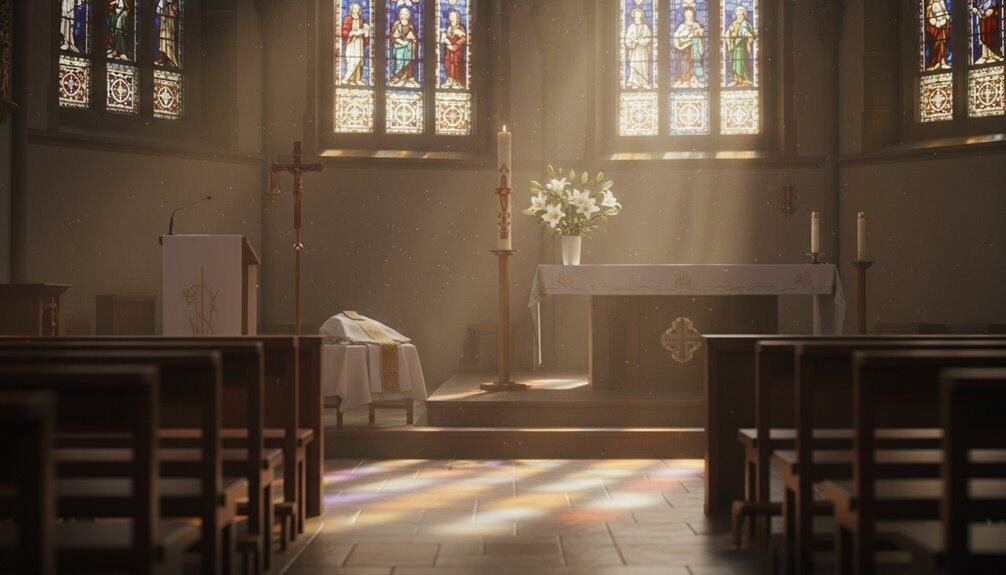
Why does the Christian calendar seemingly skip from Pentecost to Trinity Sunday, leaving what appears to be a liturgical void?
You’re encountering a widespread misconception about post-Paschal liturgical timing. The “Seventh Sunday After Easter” doesn’t exist as a recognized holy day in any major Christian tradition. Easter’s moveable date creates a complex chronological framework where Pentecost consistently falls on the seventh Sunday, making this supposed observance liturgically impossible.
What you’ve likely discovered are modern attempts at tradition renewal—contemporary movements seeking to establish new commemorative practices between established feast days. However, these lack historical precedent and ecclesiastical authorization.
The authentic progression moves directly from Pentecost to Trinity Sunday, reflecting centuries of theological development. Early church fathers deliberately structured this sequence to emphasize the Spirit’s descent and subsequent Trinitarian revelation. Any claims about a “forgotten” seventh Sunday represent either calendrical confusion or unauthorized liturgical innovation rather than recovered ancient practice.
Biblical Foundation: Waiting for the Holy Spirit
How does Scripture frame the period between Christ’s ascension and Pentecost, and what theological significance emerges from this interval? Acts 1:4-14 presents this ten-day span as a deliberate season of waiting spiritual preparation. You’ll find the disciples weren’t passive; they engaged in prayer, worship, and organizational restructuring while anticipating the promised Spirit.
This interval carries profound theological weight. Christ’s command to “wait for the gift my Father promised” (Acts 1:4) establishes a divine timeline that you can’t rush. The waiting spiritual discipline mirrors Old Testament patterns where divine intervention followed periods of expectant preparation—think Moses on Sinai or Israel’s wilderness wandering.
The historic lineage of this observance connects you to early Christian communities who understood this period’s significance. They recognized that between promise and fulfillment lies necessary preparation. The seventh Sunday after Easter thus represents humanity’s posture before divine action: alert, unified, and expectantly waiting.
Why Churches Stopped Observing This Day
Where did this ancient observance disappear within Christian liturgical practice? You’ll find the answer lies in centuries of liturgical reform discussions that gradually shifted emphasis from extended Eastertide contemplation to concentrated feast days. The Protestant Reformation initiated significant calendar revisions, with reformers questioning whether prolonged observances served genuine spiritual purposes or merely perpetuated ceremonial excess.
Catholic Counter-Reformation responses, while preserving more traditional elements, still streamlined many practices. The tension between nostalgia vs tradition became apparent as churches distinguished between historically meaningful observances and accumulated customs lacking clear scriptural warrant.
Modern liturgical movements further accelerated this process. You’ve witnessed how twentieth-century reforms prioritized theological clarity over historical precedent, often eliminating observances deemed redundant or confusing to contemporary worshippers. The seventh Sunday’s quiet character—neither dramatically celebratory nor penitential—made it particularly vulnerable to removal during these systematic revisions, leaving only specialized liturgical scholars aware of its original significance.
How to Observe the Seventh Sunday After Easter Today
Despite its historical obscurity, you can meaningfully restore this ancient observance within your personal or congregational worship practices.
Begin by incorporating the Seventh Sunday into your liturgical calendars, positioning it as a bridge between Pentecost’s celebration and ordinary time’s reflection. You’ll find precedent in early church writings that emphasize continued apostolic witness and spiritual consolidation.
Focus your worship around Acts 1:12-26, examining the disciples’ prayerful preparation and Matthias’s selection. This passage provides theological foundation for themes of patient waiting, communal discernment, and divine guidance. Develop tradition symbols reflecting these motifs: dice or lots representing God’s sovereignty in selection, an upper room icon symbolizing corporate prayer, or twelve stones signifying apostolic completeness.
Structure your observance through extended prayer periods, scriptural meditation on apostolic succession, and communion emphasizing church unity. Consider fasting or special offerings, reflecting early Christian dedication to spiritual preparation before mission work.
Frequently Asked Questions
Which Denominations Historically Observed the Seventh Sunday After Easter?
You’ll find that historical denominations including Eastern Orthodox, Roman Catholic, and early Anglican churches traditionally observed this seventh Sunday through distinct liturgical practices. Eastern churches emphasized Christological themes, while Western traditions focused on post-Pentecost ecclesiastical formation. Lutheran and Reformed communities adopted modified observances, though they’d often subordinate this commemoration to emerging Protestant emphases. These historical denominations’ liturgical practices reflected varying theological priorities regarding the apostolic period’s significance.
How Does This Day Differ From Pentecost Sunday Celebrations?
You’ll find distinct liturgical emphasis separates this observance from Pentecost’s celebratory focus. While Pentecost commemorates the Spirit’s dramatic descent with tongues of fire, the seventh Sunday emphasizes contemplative preparation and anticipation. Your worship centers on Christ’s ascension promises rather than their fulfillment. The day’s scriptural readings typically draw from John’s farewell discourses, contrasting Pentecost’s Acts narratives. You’re experiencing expectant waiting versus triumphant reception.
What Specific Prayers or Liturgies Were Traditionally Used on This Day?
You’ll find traditional prayers centered on Christ’s ascension and the disciples’ waiting period, particularly the Veni Creator Spiritus and specific collects emphasizing preparation for Pentecost. Regional observances varied significantly across ecclesiastical customs, with some traditions incorporating extended Litanies of the Saints. Eastern churches maintained distinct liturgies focusing on Christ’s glorification, while Western practices emphasized the apostolic community’s prayerful anticipation, creating diverse but doctrinally consistent approaches to this transitional Sunday.
Are There Any Saints or Martyrs Associated With This Holy Day?
You’ll find few saints associated or martyrs linked specifically with the Seventh Sunday After Easter due to its post-Pentecost timing and liturgical displacement.
However, you should consider that early martyrologies occasionally referenced saints whose feast days coincided with this period, particularly those who died defending Trinitarian doctrine.
The day’s theological emphasis on the Spirit’s ongoing work means you’re more likely encountering commemorations of pneumatological defenders than specific martyrs.
What Countries or Regions Still Recognize This as an Official Holiday?
You’ll find minimal countries recognition for the Seventh Sunday After Easter as an official state holiday today. Most Western nations don’t formally observe this liturgical date beyond ecclesiastical calendars. However, you’ll discover some regional observance persists in traditionally Orthodox territories and certain European dioceses where ancient calendrical practices remain embedded in local customs. The day’s official status has largely disappeared from contemporary governmental recognition systems.
Conclusion
You’ll find that recovering this forgotten observance deepens your understanding of the church’s pneumatological heritage. When you embrace the seventh Sunday’s contemplative waiting, you’re participating in the apostolic pattern of expectant prayer. Don’t let modern liturgical omissions rob you of this biblical rhythm. You’re called to restore this day’s significance through intentional preparation for Pentecost, thereby enriching your congregation’s doctrinal formation and spiritual discipline within salvation history’s framework.









No Comments