

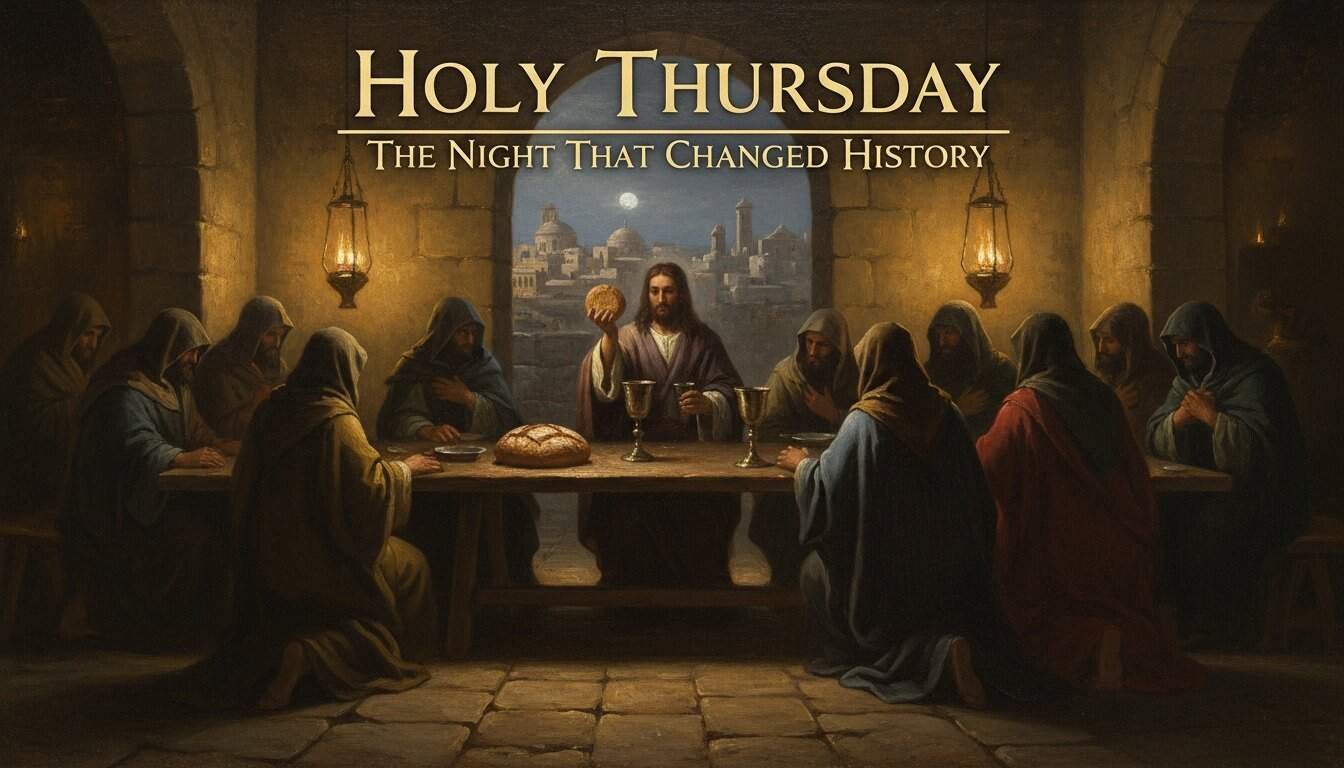
28 Jan Holy Thursday Meaning: The Night That Changed History
You’re witnessing Christianity’s most pivotal evening when Christ transformed a simple Passover meal into the foundation of sacramental worship. During this Upper Room gathering, Jesus instituted the Eucharist declaring “This is my body” and “This is my blood,” establishing Christianity’s central sacrament. He demonstrated servant leadership through foot washing, while Judas’s betrayal set the Passion sequence in motion. This theological watershed moment reshaped Christian liturgy forever, distinguishing it from all other traditions through sacramental encounter with the divine.
Key Takeaways
- Jesus instituted the Eucharist during the Last Supper, transforming ordinary bread and wine into Christianity’s central sacrament.
- Christ demonstrated radical servant leadership by washing his disciples’ feet, establishing the priesthood’s model of humble service.
- Judas Iscariot’s betrayal began the Passion sequence, marking the formal commencement of Jesus’s journey to crucifixion.
- The Upper Room events created the theological foundation for Mass and sacramental worship practiced by Christians worldwide.
- Holy Thursday distinguished Christian liturgical practice from other traditions through the institution of Communion and servant leadership.
The Last Supper: How Jesus Instituted The Eucharist
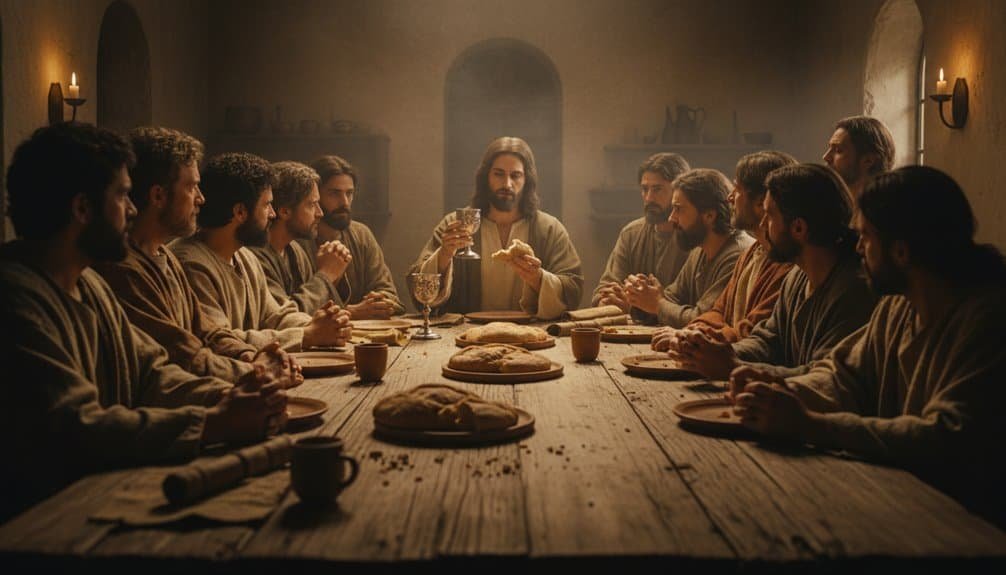
How did a simple Passover meal become the foundation of Christian worship for over two millennia? The Last Supper represents Jesus’s deliberate transformation of Jewish ritual into what would become the Christian Eucharist. When Christ declared “This is my body” and “This is my blood of the covenant,” you’re witnessing the institution of Christianity’s central sacrament. The Eucharist meaning extends beyond symbolic remembrance—it’s Christ’s real presence among believers.
The evening wasn’t merely about bread and wine. Jesus’s foot washing demonstrated radical humble service, establishing priesthood’s servant model. Even amid impending betrayal, Christ focused on love’s ultimate expression. This juxtaposition of Judas’s treachery against sacrificial love intensifies the passion narrative’s drama.
The Holy Thursday legacy continues reshaping Christian worship worldwide. You’re participating in the same sacred meal Jesus shared with his apostles, connecting contemporary believers to that transformative evening when ordinary elements became vehicles of divine grace.
The Foot Washing: Christ’s Lesson In Humble Service
Why would the Son of God kneel before his disciples with a basin and towel? You’re witnessing the most profound demonstration of footwashing humility in Scripture.
The Creator of the universe kneeling with a towel reveals the radical heart of true leadership through humble service.
In John 13:1-17, Christ deliberately reverses social hierarchies, assuming the role typically reserved for the lowest servant. This wasn’t mere symbolism—it was radical theological instruction.
When you examine the Greek verb “niptō” (to wash), you’ll notice it emphasizes careful, deliberate cleansing. Jesus wasn’t simply performing a cultural courtesy; he was establishing a paradigm of servant leadership that would define Christian ministry.
Peter’s initial resistance reflects our natural discomfort with such radical role reversal.
Christ’s words, “I have given you an example,” (Greek: “hypodeigma”) indicate this was intentional modeling, not spontaneous gesture. You’re called to replicate this servant leadership, where authority flows through service rather than domination.
This footwashing becomes the blueprint for authentic Christian leadership—power expressed through sacrificial service.
The Betrayal: How Judas Set The Passion In Motion
While Christ demonstrated perfect love through footwashing, darkness was already infiltrating the upper room through Judas Iscariot’s hardened heart. You witness the stark contrast between divine humility and human treachery unfolding simultaneously. The betrayal dynamics reveal Scripture’s profound understanding of evil’s progression—Judas didn’t suddenly become a traitor but gradually surrendered his soul through repeated compromises.
When Jesus declares “one of you’ll betray me,” you observe how truth penetrates the gathering like a sword. The Judas psychology demonstrates how prolonged exposure to Christ’s presence can either transform or harden hearts further. Satan’s entry into Judas represents the culmination of deliberate resistance to grace.
Christ’s words “what you do, do quickly” reveal His sovereign control even amid betrayal. You see how divine omniscience transforms human evil into redemptive purpose. Judas’s departure marks the Passion’s formal commencement—thirty pieces of silver setting salvation’s wheels in irreversible motion.
Holy Thursday’s Legacy: Transforming Christian Worship Forever
The institution of the Eucharist on Holy Thursday established Christianity’s central sacramental act, fundamentally distinguishing it from all other religious traditions. You’ll find that Christ’s command to “do this in remembrance of me” transformed ordinary bread and wine into vehicles of divine grace, creating an unprecedented sacramental theology.
This moment revolutionized worship by establishing the Mass as Christianity’s defining liturgical expression. When you participate in Eucharistic celebration, you’re engaging in the same memorial Christ instituted that night. The Last Supper elevated sacred meals from mere communal dining to mystical participation in Christ’s sacrifice.
Holy Thursday’s legacy permeates every aspect of Christian liturgy. You experience its influence in contemplative silence before the Blessed Sacrament, in weekly Communion, and in the Church’s sacramental understanding. The Upper Room event didn’t merely establish a ritual—it created Christianity’s theological foundation for encountering the divine through material elements, forever distinguishing Christian worship from purely spiritual or symbolic religious practices.
Frequently Asked Questions
What Date Does Holy Thursday Fall on Each Year?
You’ll find Holy Thursday occurs on a moveable date each year, falling three days before Easter Sunday. What date does Holy Thursday fall on each year depends on the lunar calendar’s paschal computations, typically spanning March to April. How different Christian denominations observe Holy Thursday traditions varies significantly—Western churches follow Gregorian calculations while Eastern Orthodox churches use Julian reckoning, creating distinct observance dates and liturgical practices.
How Do Different Christian Denominations Observe Holy Thursday Traditions?
You’ll find interdenominational practices vary significantly in Holy Thursday observance. Catholics celebrate the Mass of the Lord’s Supper with foot washing ceremonies, while Orthodox churches emphasize the Bridegroom service. Protestant denominations often incorporate Tenebrae services with sacred music traditions including Gregorian chant and contemporary hymns. Anglican churches blend Catholic liturgical elements with Reformed theology, creating distinctive Maundy Thursday worship experiences that reflect their via media ecclesiastical position.
What Foods Are Traditionally Eaten During Holy Thursday Meals?
You’ll find foods traditionally eaten during Holy Thursday meals center on unleavened bread and wine, reflecting Christ’s Last Supper institution. Many observances include lamb, bitter herbs, and Passover elements, as Holy Thursday dates annually commemorate Jesus’s final meal.
Maundy Thursday meaning encompasses foot-washing ceremonies often accompanied by simple fare.
Biblical verses during Holy Thursday services emphasize bread as Christ’s body, wine as blood, establishing communion traditions that inform Holy Thursday traditions across denominations today.
Why Is Holy Thursday Also Called Maundy Thursday?
You’ll find that Maundy Thursday origins trace to the Latin word “mandatum,” meaning commandment. Why is it called Maundy Thursday? Christ issued His new commandment during the Last Supper: “Love one another as I’ve loved you” (John 13:34). The term specifically references Jesus’s foot-washing of the disciples, demonstrating sacrificial love. This liturgical designation emphasizes the theological significance of Christ’s final teachings before His passion.
What Biblical Verses Are Most Commonly Read During Holy Thursday Services?
You’ll encounter John 13:1-17 as the primary reading, detailing Christ’s foot-washing and instituting servant leadership.
First Corinthians 11:23-26 presents the eucharistic institution narrative, while Exodus 12:1-14 establishes Passover typology.
These passages form your Lent reflection’s culmination, emphasizing sacrificial love and covenant renewal.
During Maundy Night rituals, you’ll witness these texts proclaimed to illuminate Christ’s supreme act of humility and redemptive self-offering.
Conclusion
You’ve witnessed how Holy Thursday’s threefold narrative—Eucharistic institution, humble service, and betrayal—fundamentally reshaped salvation history. Through Christ’s sacramental innovation, you’re invited into perpetual communion with his sacrificial love. His washing of the disciples’ feet establishes your call to servant leadership, while Judas’s betrayal paradoxically fulfills God’s redemptive plan. You can’t comprehend Christian worship without understanding this pivotal evening that transformed ritualistic observance into incarnational participation in Christ’s paschal mystery.









No Comments