

25 Feb Easter Triduum: Customs and Liturgical Meaning Explained
The Easter Triduum commemorates Christ’s passion, death, and resurrection over three holy days from Holy Thursday to Easter Sunday. It invites you to deepen your participation in these sacred events through the Eucharist, foot washing, Good Friday observances, the Easter Vigil, and the joy of the Resurrection. Dive deeper into the customs and profound liturgical meaning that guide your prayerful journey through this central mystery of the Christian faith.
Key Takeaways
- The Easter Triduum is a three-day liturgical period from Holy Thursday to Easter Sunday, commemorating Christ’s passion, death, and resurrection.
- Holy Thursday emphasizes the Last Supper, the institution of the Eucharist, and the washing of the disciples’ feet.
- Good Friday observances focus on the veneration of the Cross and the Passion narratives, highlighting Christ’s suffering and death.
- Holy Saturday’s Easter Vigil includes the blessing of the new fire, the lighting of the Easter candle, and the Baptismal Liturgy.
- Easter Sunday celebrates the Resurrection with joyous Masses and the proclamation of the Gospel, inviting continued participation in salvation.
What Is the Easter Triduum?
What’s the Easter Triduum? It’s the three-day period from Holy Thursday to Easter Sunday that commemorates the passion, death, and resurrection of Jesus Christ.
The Easter Triduum is the three-day period from Holy Thursday to Easter Sunday commemorating Christ’s passion, death, and resurrection.
The Triduum begins on Holy Thursday with the Mass of the Lord’s Supper, followed by Good Friday’s Passion of the Lord service.
Holy Saturday is a day of waiting and anticipation, culminating in the Easter Vigil that celebrates Christ’s resurrection.
These three days are the pinnacle of the Church’s liturgical year and the heart of the Christian faith.
The rituals, symbols, and readings deepen our understanding of Christ’s sacrifice and the promise of eternal life.
The Significance of Holy Thursday
On Holy Thursday, you’ll reflect on Jesus’ Last Supper, where He washed the feet of His disciples and instituted the Eucharist.
This day commemorates the institution of the Holy Eucharist and the priesthood.
You’ll celebrate the Eucharistic liturgy, which is the focal point of the Easter Triduum.
The Last Supper
Why does the Last Supper hold such profound significance for Christians? It commemorates Jesus’ final meal with his disciples before his crucifixion. During this sacred event, he instituted the Eucharist, transforming bread and wine into his body and blood. Through this miraculous act, Christ foreshadowed his sacrifice on the cross, offering himself as the Lamb of God.
The Last Supper also demonstrates Jesus’ humility as he washed his disciples’ feet, setting an example of selfless service. Moreover, this poignant gathering signifies the enduring presence of Christ in the sacrament of Holy Communion, which nourishes believers spiritually. The Last Supper’s depth of meaning continues to inspire and sustain Christians in their faith.
Washing of Feet
Though often overshadowed by the events of Good Friday, the ritual of the Washing of Feet holds profound significance on Holy Thursday. It’s a powerful display of humility and service, as Jesus takes on the role of a servant and washes the disciples’ feet. This gesture reminds us that true leadership requires a willingness to serve others. By participating in this ritual, you’re called to emulate Christ’s example, putting the needs of others before your own. It’s a poignant reminder that in God’s kingdom, the first shall be last, and the last shall be first.
Eucharistic Celebration
What makes the Eucharistic Celebration on Holy Thursday so significant? It’s the commemoration of the Last Supper, where Jesus instituted the Eucharist and the priesthood. You’ll witness the consecration of the bread and wine into the body and blood of Christ.
This solemn mass also includes the washing of feet, reenacting Jesus’ humble service to his disciples. After the celebration, the consecrated hosts are processed to an altar of repose, where the faithful can adore the real presence of Christ. This anticipates Good Friday’s commemoration of Christ’s passion and death on the cross, the ultimate sacrifice that the Eucharist makes present.
Good Friday Observances and Commemorations
On Good Friday, you’ll reverently venerate the Cross, hear the Passion narratives proclaimed, and recite solemn intercessions. These poignant observances profoundly commemorate Christ’s suffering and death, and deepen your understanding of this most sacred day.
Veneration of the Cross
The Veneration of the Cross is a solemn Good Friday observance in which the faithful are invited to approach the cross and show reverence.
They may kiss, touch, or kneel before the cross, which symbolizes Christ’s sacrifice and the means of our salvation.
This ritual allows the congregation to personally encounter the wood of the cross and ponder its profound theological significance.
Through this act of veneration, worshippers express their gratitude for Christ’s Passion and their devotion to the redemptive power of the cross.
It’s a moving moment that encapsulates the solemnity and sorrow of Good Friday.
Passion Narratives Proclaimed
As Good Friday marks the solemn commemoration of Christ’s Passion, the Passion narratives are proclaimed during the liturgy to recount the final hours of Jesus’s life. The Gospel accounts of his betrayal, trial, and crucifixion are read, allowing the faithful to prayerfully reflect on Christ’s suffering and death. This ritual recounting of the Passion is a core part of Good Friday observances, inviting participants to encounter anew the mystery of salvation wrought through Jesus’s sacrifice. By listening attentively to these sacred narratives, the faithful commemorate the events that led to Christ’s death on the cross and prepare their hearts to celebrate his resurrection on Easter.
Solemn Intercessions Recited
During the Good Friday service, the solemn intercessions are recited as a vital part of the observance. These prayers feature a litany of petitions for the Church, world leaders, the unbaptized, those in need, and more. The assembly responds to each intercession, asking God to hear and answer the pleas. This ancient practice dates back to the early Church and reminds us to pray for the needs of all people.
The solemn intercessions underscore the universality of Christ’s sacrifice and our call to intercede for the world. Through these powerful prayers, we unite our voices to lift up the concerns of humanity before the throne of God.
The Holy Saturday Vigil and Easter Sunday Celebrations
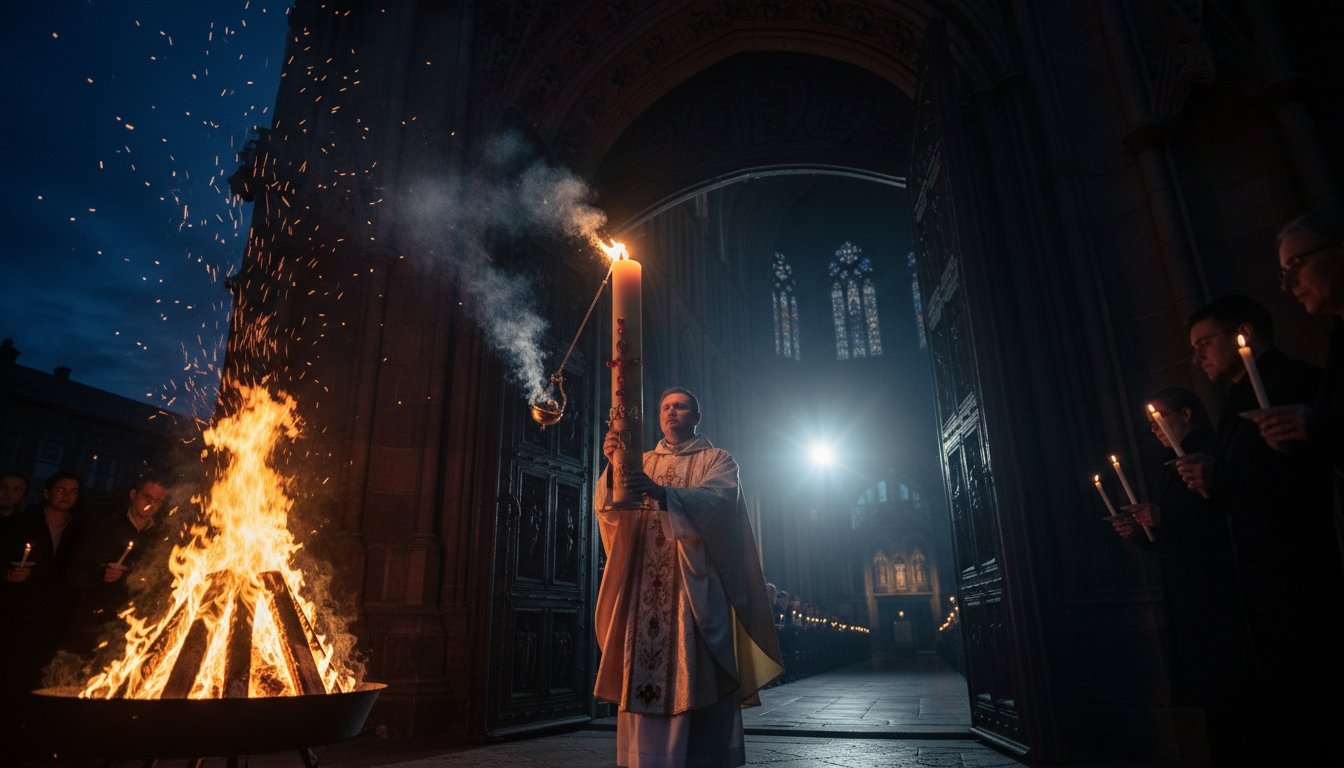
How does the Church continue its Easter celebrations on Holy Saturday and Easter Sunday? On Holy Saturday, the Church gathers for the Easter Vigil, the most important liturgy of the year. It begins in darkness, then the new fire is blessed, and the Easter candle is lit, symbolizing Christ, the Light of the world. The Exsultet, a joyful hymn, is sung. Readings recall God’s saving acts, and the Baptismal Liturgy welcomes new members.
On Easter Sunday, the Church celebrates Christ’s resurrection with great joy. Masses are held throughout the day, and the faithful greet each other with “Alleluia! He’s risen!” Families gather for festive meals and egg hunts, continuing the joy of the Resurrection.
Traditional Customs During the Easter Triduum
What’re some of the traditional customs observed by Christians during the Easter Triduum? One custom is the washing of feet, which reenacts Jesus’ washing of the disciples’ feet at the Last Supper.
Another is the veneration of the cross, where the faithful kneel and kiss the crucifix. On Holy Saturday, some Christians maintain a solemn vigil, awaiting the resurrection.
When the Easter Vigil begins, the church is dark, then the Easter candle is lit, symbolizing Christ’s triumph over darkness. The faithful renew their baptismal vows and celebrate the first Mass of Easter.
These customs connect believers to the central events of Christ’s passion, death, and resurrection.
The Liturgical Symbolism of the Easter Triduum
The liturgical symbolism of the Easter Triduum reflects the pivotal events of Christ’s passion, death, and resurrection. On Holy Thursday, the Mass of the Lord’s Supper commemorates the institution of the Eucharist and the priesthood. Good Friday’s solemn liturgy venerates the Cross, reminding us of Christ’s sacrificial death. The Easter Vigil celebrates the Resurrection, with the lighting of the Paschal Candle symbolizing Christ as the light of the world. These three days form the heart of the Christian calendar, drawing us into the central mystery of our faith. Through the rich symbolism of the Triduum, we’re invited to enter more deeply into the saving work of our Lord.
Frequently Asked Questions
Is the Easter Triduum the Same as Easter?
No, the Easter Triduum isn’t the same as Easter. The Triduum is the three-day period from Holy Thursday through Easter Sunday, which commemorates the Passion, death, and Resurrection of Jesus.
Easter, on the other hand, is the single day that celebrates Jesus’ Resurrection and is the most important feast in the Christian calendar.
Do I Have to Attend All Three Triduum Services?
You don’t have to attend all three Triduum services, but it’s recommended to experience the full spiritual journey.
The Triduum consists of Holy Thursday, Good Friday, and the Easter Vigil, each with its own unique liturgy and significance.
While attending all three isn’t mandatory, doing so can deepen your understanding and appreciation of the Easter celebration.
Why Is Good Friday Called “Good” Friday?
Good Friday is called “Good” because it commemorates the day Jesus Christ was crucified and died for the sins of humanity. Though the events of that day were tragic, they ultimately led to the salvation of mankind, which is why it’s considered a “good” and holy day in the Christian tradition. The suffering and death of Jesus paved the way for his resurrection and the promise of eternal life.
Can I Eat Meat on Good Friday?
No, you can’t eat meat on Good Friday.
On this day, Catholics are expected to abstain from eating meat as part of the church’s fast and abstinence practices during the Easter Triduum.
The tradition of not consuming meat on Good Friday is a way to commemorate the Crucifixion of Jesus and reflect on the sacrifices made during this holy time.
Is the Easter Vigil Mass Obligatory?
No, the Easter Vigil Mass isn’t obligatory. It’s a beautiful and meaningful celebration, but Catholics aren’t required to attend it. You can choose to go if you want to, but it’s not considered a holy day of obligation like Sunday Mass or certain other feast days. The choice is up to you.
Conclusion
You’ve explored the profound significance of the Easter Triduum – the three sacred days commemorating Christ’s passion, death, and resurrection. Through the rituals and traditions, you’ve witnessed the profound mysteries of our faith come alive. As you journey through this holy season, may the profound liturgical symbolism deepen your understanding and strengthen your faith in the risen Lord.









No Comments