

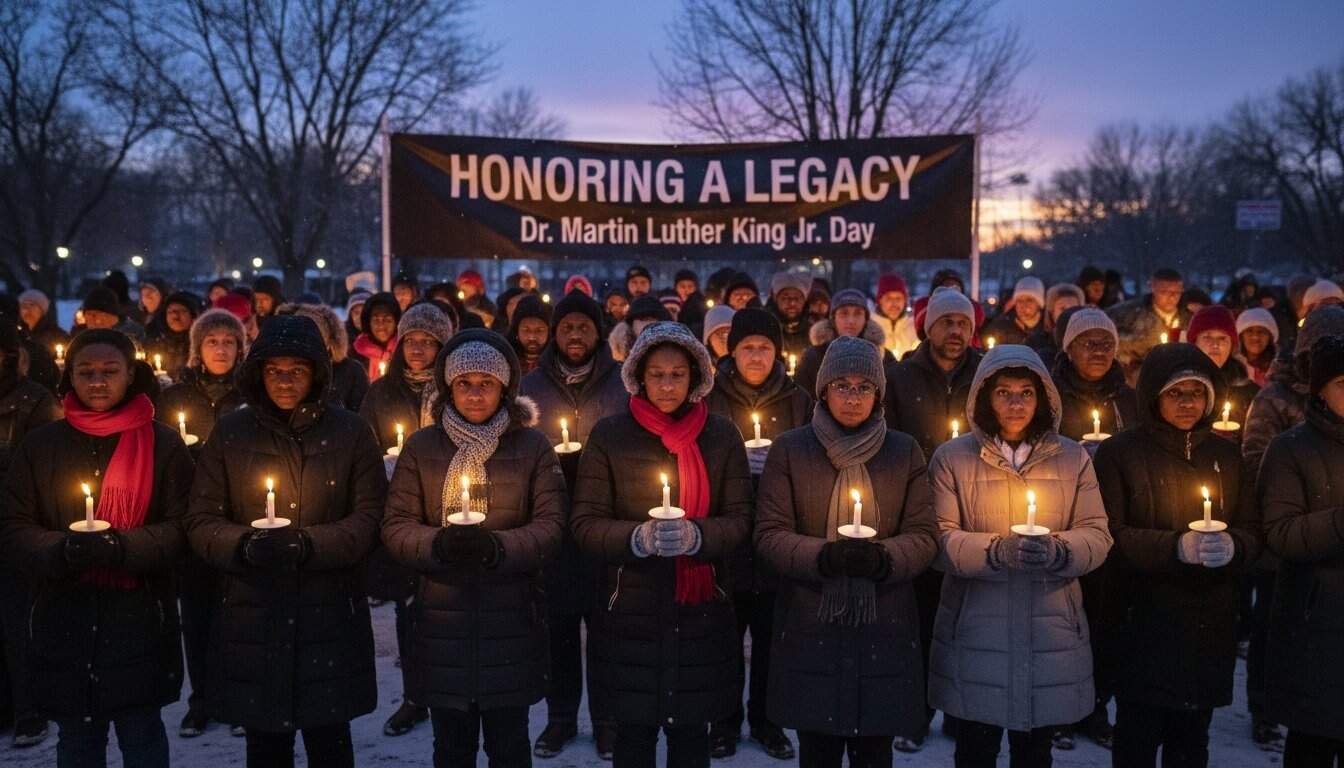
19 Jan Dr. Martin Luther King Jr. Day
Dr. Martin Luther King Jr. Day transforms the federal holiday into a “day on, not a day off,” encouraging you to participate in meaningful service projects that honor King’s legacy of racial equality and social justice. You’ll find volunteer opportunities at local food banks, homeless shelters, community gardens, and blood drives, while educational institutions organize literacy programs and mentorship initiatives. Official city websites list commemorative events, museums host civil rights exhibitions, and churches coordinate interfaith services that combine reflection with action planning to continue King’s vision.
Key Takeaways
- MLK Day is a federal holiday designated as a National Day of Service, promoting “a day on, not a day off.”
- Volunteer opportunities include food banks, homeless shelters, blood drives, environmental cleanups, and youth mentorship programs.
- Communities organize parades, museum exhibitions, interfaith services, educational workshops, and civil rights discussions.
- The holiday honors Dr. King’s legacy of nonviolent resistance, racial equality, and social justice advocacy.
- Events encourage civic engagement and building King’s vision of the Beloved Community across diverse populations.
MLK Day 2024: Service Projects and Volunteer Opportunities

As communities across America prepare to honor Dr. Martin Luther King Jr.’s legacy, you’ll find countless volunteering opportunities that embody his vision of service. MLK Day 2024 transforms the federal holiday into a “day on, not a day off,” encouraging active participation in meaningful service projects.
You can engage with local food banks, homeless shelters, and community gardens that desperately need volunteers. Educational institutions organize literacy programs and mentorship initiatives targeting underserved youth. Environmental cleanup efforts in parks and neighborhoods offer hands-on community improvement.
National organizations like AmeriCorps coordinate nationwide service projects, while faith-based groups sponsor interfaith dialogue sessions. You’ll discover opportunities ranging from blood drives to senior citizen assistance programs. These volunteering opportunities directly reflect Dr. King’s commitment to justice, equality, and community uplift through collective action.
MLK Day Events and Celebrations in Your Community
Where can you find the most impactful MLK Day celebrations that truly honor Dr. King’s legacy? Start by checking your city’s official website, which typically lists commemorative events weeks in advance.
Local museums often host exhibitions highlighting civil rights history and your area’s local history connections to the movement.
Churches frequently organize interfaith services that combine reflection with action planning.
Community centers coordinate parades, educational workshops, and youth programs that demonstrate volunteer impact through hands-on activities.
Universities and colleges sponsor lectures, film screenings, and panel discussions featuring civil rights scholars and activists.
Don’t overlook neighborhood organizations and nonprofits—they often host smaller, intimate gatherings that focus on continuing Dr. King’s work through community organizing and social justice initiatives in your specific area.
Why MLK Day Became America’s Newest Federal Holiday?
How did Martin Luther King Jr. Day become America’s newest federal holiday? You’ll find the journey began immediately after King’s 1968 assassination, when Congressman John Conyers introduced legislation just four days later.
Despite initial resistance, persistent advocacy from civil rights leaders, labor unions, and ordinary citizens maintained pressure on Congress for fifteen years.
The breakthrough came in 1983 when President Reagan signed the bill, though opposition remained strong—the Senate passed it by only five votes.
States gradually adopted the holiday, with South Carolina becoming the last in 2000.
This designation reflects growing history awareness of King’s transformative impact on American society.
The holiday now serves as a catalyst for civic engagement, encouraging you to participate in community service and reflect on continuing struggles for equality and justice.
Dr. King’s Legacy and the MLK Day Mission Today
What does Martin Luther King Jr.’s legacy mean for America today, and how does MLK Day fulfill its mission as more than just a federal holiday?
You’ll find King’s vision of racial equality and social justice remains deeply relevant as America continues addressing systemic inequalities. His philosophy of nonviolent resistance provides a framework for contemporary civil rights movements.
MLK Day’s legacy impact extends beyond commemoration—it’s designated as a National Day of Service. You’re encouraged to volunteer in your community, transforming the holiday into what King called “a day on, not a day off.” This service collaboration model connects diverse Americans through shared civic engagement.
King’s “Beloved Community” concept challenges you to build bridges across racial, economic, and political divides, making MLK Day a living testament to democratic ideals.
Frequently Asked Questions
What Date Is MLK Day Observed Each Year?
You’ll find MLK Day observed on the third Monday in January each year. This date observance was established when Congress passed legislation in 1983, creating the federal holiday status that honors Dr. King’s legacy. You can trace this timing back to King’s actual birthday on January 15th. The holiday’s federal holiday status ensures consistent nationwide recognition, though some states initially resisted implementation before full adoption occurred.
Are Schools and Government Offices Closed on MLK Day?
Yes, you’ll find most federal government offices and public schools closed on MLK Day, as it’s a federal holiday. However, you should expect closing time adjustments and service interruptions to vary significantly by state and locality. Many state governments, municipalities, and school districts don’t uniformly observe the holiday. You’ll need to check with your specific institutions, as some maintain regular operations while others provide modified services or complete closures.
Do All States Recognize MLK Day as a Holiday?
Yes, you’ll find that all states now recognize MLK Day as a holiday, though this wasn’t always the case.
While federal recognition occurred in 1983, some states resisted adopting it into their state holidays systems. Arizona and New Hampshire were among the last holdouts, with Arizona finally recognizing it in 1992 and New Hampshire in 1999.
Today, you can verify through official state government websites that all fifty states observe this federal holiday.
What Was the First Year MLK Day Was Federally Observed?
You’ll find that MLK Day was first federally observed in 1983, though implementation varied by state. President Reagan signed the legislation in 1983 establishing the holiday, honoring King’s civil rights legacy and his advocacy for First Amendment freedoms.
However, you should note that full national observance didn’t occur until 2000, when all fifty states finally recognized the federal holiday commemorating the civil rights leader’s contributions to American society.
Is MLK Day Always on a Monday?
Yes, you’ll always find the King holiday falls on a Monday.
Congress specifically designated Martin Luther King Jr. Day as the third Monday in January when they established the federal holiday.
This Monday timing ensures you get a three-day weekend while honoring Dr. King’s legacy.
The consistent scheduling means you can count on this important observance occurring every third Monday of January annually.
Conclusion
You’ll find MLK Day offers meaningful ways to honor Dr. King’s vision through direct action. You can participate in community service projects that address local needs, attend commemorative events celebrating his achievements, and reflect on why Congress established this federal holiday in 1983. You’re continuing Dr. King’s mission when you engage in activities promoting equality, justice, and community solidarity. His dream lives through your commitment to service and social progress.












No Comments