


24 Jan Daniel Fast Bread Rules: What’s Actually Allowed
You can eat Daniel Fast bread made from whole, unprocessed grains like spelt, barley, or wheat without any leavening agents, sweeteners, or preservatives. Commercial yeast, baking powder, and baking soda are prohibited, so you’ll need naturally fermented sourdough starters or unleavened preparations. Avoid refined flour, sugar, honey, dairy, and hidden additives like dough conditioners or emulsifiers. Most store-bought breads won’t meet these strict requirements, making compliance more challenging than you’d expect.
Table of Contents
Key Takeaways
- Daniel Fast compliant bread must contain only whole grains, water, salt, and approved seasonings without any leavening agents.
- Commercial yeast, baking powder, baking soda, sugar, honey, dairy products, and enriched flour are strictly prohibited ingredients.
- Naturally fermented sourdough starters or unleavened preparations are the only acceptable methods for bread preparation during the fast.
- Hidden non-compliant ingredients like dough conditioners, emulsifiers, lecithin, and artificial flavor enhancers must be avoided completely.
- Approved whole grain flours include wheat, spelt, barley, oats, and brown rice from organic, unprocessed sources without additives.
What Makes Bread Daniel Fast Compliant?
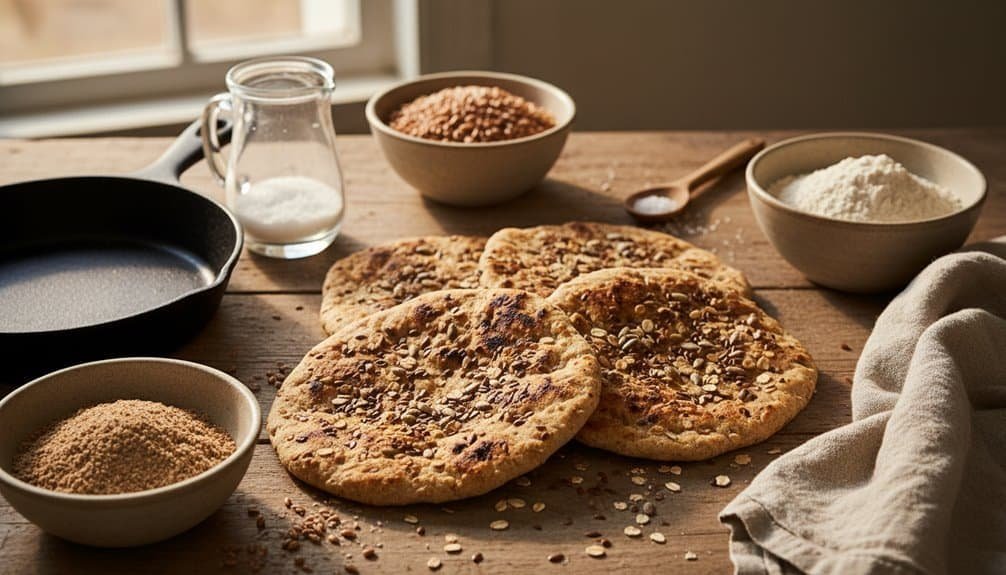
How do you determine whether your bread meets Daniel Fast requirements? You’ll need to scrutinize every ingredient against strict compliance standards that eliminate processed foods, sweeteners, and leavening agents.
Your bread compliance depends on using only whole grains like wheat, spelt, barley, or oats. You can’t include commercial yeast, baking powder, or baking soda. Instead, you’ll rely on naturally fermented sourdough starters or unleavened preparations.
Ingredient sourcing matters significantly. You’ll want organic, unprocessed grains without additives or preservatives. Avoid any bread containing sugar, honey, artificial sweeteners, or dairy products. Even seemingly innocent ingredients like enriched flour violate Daniel Fast principles.
Check labels carefully for hidden non-compliant ingredients such as dough conditioners, emulsifiers, or flavor enhancers. Your safest approach involves making bread from scratch using verified whole grain flour, water, salt, and approved seasonings like herbs or seeds.
5 Daniel Fast Bread Options That Actually Taste Good
Why do most people assume Daniel Fast bread lacks flavor when properly prepared options can satisfy your taste preferences while maintaining strict compliance?
You can create satisfying Daniel Fast bread by focusing on approved ingredients that enhance natural flavors. Whole grain flours like spelt, oat, and brown rice provide complex bread textures while delivering essential nutrients. Adding mashed bananas, unsweetened applesauce, or dates serves as effective sugar substitutes that maintain sweetness without compromising compliance.
Ezekiel-style sprouted grain breads offer dense, nutty flavors with superior nutritional profiles. You’ll find that incorporating seeds like flax, chia, or sunflower creates interesting textures while boosting omega-3 content. Herbs such as rosemary, thyme, or garlic powder add savory depth without violating restrictions.
Research indicates that properly hydrated whole grain doughs develop better flavors through extended fermentation periods. You can improve taste by allowing natural enzymes to break down starches, creating more complex flavor compounds while maintaining Daniel Fast guidelines.
Making vs. Buying Daniel Fast Bread (Cost and Time Breakdown)
When considering Daniel Fast bread options, you’ll face a fundamental decision between purchasing commercial varieties or preparing homemade loaves. This bread making vs bread buying choice significantly impacts both your budget and time investment.
Commercial Daniel Fast breads typically cost $4-7 per loaf, while homemade versions average $1.50-2.50 in ingredients. Over a 21-day fast consuming one loaf weekly, you’ll spend approximately $12-21 for store-bought versus $4.50-7.50 for homemade options.
Homemade Daniel Fast bread costs 60-65% less than commercial varieties, saving $7.50-13.50 over a typical 21-day fasting period.
Time requirements differ substantially. Purchasing requires minimal effort—just reading labels carefully to verify compliance. Homemade bread demands 2-3 hours total time, including active preparation (30-45 minutes) and baking periods.
Consider your schedule constraints and kitchen skills when conducting this cost comparison. If you’re inexperienced with yeast-free baking, initial attempts may require additional time for troubleshooting. However, batch preparation can maximize efficiency, allowing you to freeze portions for convenient daily use throughout your fasting period.
Daniel Fast Bread Mistakes That Ruin Your Fast
Whether you’re making bread from scratch or selecting store-bought options, certain missteps can inadvertently break your Daniel Fast commitment. The most common error involves choosing bread substitutions that contain prohibited ingredients like refined flour, sugar, or yeast. Many gluten free options marketed as “healthy” actually include sweeteners, preservatives, or dairy derivatives that violate fasting guidelines.
Another critical mistake involves misunderstanding which grain banned items apply to your fast interpretation. Some practitioners incorrectly assume all grains are forbidden, while others permit refined wheat products thinking they’re acceptable.
Fermentation techniques present additional challenges. Traditional sourdough starters often contain commercial yeast or sugar, making them non-compliant. Additionally, many people overlook hidden ingredients in seemingly simple breads—like lecithin, vital wheat gluten, or flavor enhancers.
Always read ingredient labels thoroughly and stick to whole, unprocessed grains when preparing compliant bread options.
Frequently Asked Questions
Can I Eat Daniel Fast Bread During the Entire 21-Day Fast Period?
You can eat Daniel Fast Bread throughout the entire 21-day period, provided it’s made with approved ingredients like whole grain flours, water, and allowed seasonings.
However, you shouldn’t consider bread essential for nutritional completeness during this fast. Focus on incorporating diverse whole foods like fruits, vegetables, legumes, and nuts to ensure you’re meeting your body’s nutritional needs adequately.
Is Sourdough Starter Allowed if It Only Contains Flour and Water?
Yes, you can use sourdough starter containing only flour and water during your Daniel Fast. The sourdough chemistry involves natural fermentation through wild yeasts and bacteria, which doesn’t introduce prohibited ingredients. However, ensure your flour sourcing meets Daniel Fast guidelines—choose whole grain, unprocessed varieties without additives. The fermentation process actually enhances nutrient availability and digestibility while maintaining compliance with the fast’s principles.
What’s the Maximum Number of Bread Slices Recommended per Day?
There aren’t officially established daily limits for bread portions during the Daniel Fast. You’ll want to practice moderation, typically 2-3 slices per day, depending on your individual caloric needs and activity level. Focus on nutrient-dense whole grain options when possible.
Since the fast emphasizes vegetables, fruits, and legumes as primary foods, you shouldn’t make bread your main calorie source throughout the day.
Are Bread Crumbs From Daniel Fast Bread Okay for Coating Other Foods?
You can use breadcrumbs from compliant Daniel Fast bread for coating foods, ensuring bread crumb safety by confirming your original bread contains only approved ingredients. These coating uses work well for vegetables or approved proteins. However, you’ll want to monitor portion sizes since breadcrumbs concentrate calories and carbohydrates. Always verify the base bread follows Daniel Fast guidelines before creating breadcrumbs for coating applications.
Can I Freeze Daniel Fast Bread to Extend Its Shelf Life?
You can freeze Daniel fast bread for frozen storage, extending its shelf life up to three months. However, you’ll experience texture changes after thawing – the bread typically becomes denser and may lose some moisture. To minimize quality loss, wrap portions tightly in freezer-safe materials and thaw gradually at room temperature. Consider slicing before freezing for convenient portioning and faster defrosting.
Conclusion
You’ll maintain nutritional balance during your Daniel Fast by choosing whole grain, yeast-free breads with minimal ingredients. Research shows that sprouted grain options provide enhanced nutrient absorption, while homemade varieties give you complete control over ingredients. However, consult your healthcare provider before starting any restrictive eating plan, especially if you have underlying health conditions. Remember that successful fasting isn’t just about food compliance—it’s about creating sustainable habits that support your spiritual and physical well-being throughout the process.











No Comments