


20 Dec Christmas Traditions 2025: What’s New, What’s Back, and What to Try With Family
Christmas 2025 blends cutting-edge technology with nostalgic revivals as you’ll discover families using AI for gift planning while simultaneously crafting popcorn garlands by hand. You’re seeing 75% of younger generations rely on digital recommendations, yet communities are reviving door-to-door caroling to combat isolation. Social commerce drives mobile purchases through TikTok Shop’s $1.29 billion November sales, while handwritten recipe cards get digitized to preserve culinary heritage. This cultural pivot reveals deeper patterns emerging across modern celebrations.
Table of Contents
Key Takeaways
- Digital-first planning dominates as 75% of younger generations use AI for holiday coordination and social media for gift inspiration.
- TikTok Shop and mobile commerce transform gift discovery, with major purchases increasingly completed on smartphones during holiday season.
- Traditional tactile activities return: popcorn garlands, salt-dough ornaments, caroling revivals, and multi-generational baking sessions gain popularity.
- Light hunts with photo challenges and drive-through multigenerational events offer structured family discovery experiences in neighborhoods.
- DIY craft kits for gingerbread trains and custom ornaments reduce preparation barriers while encouraging collaborative family participation.
Digital-First Holiday Celebrations: How Technology Is Reshaping Christmas 2025
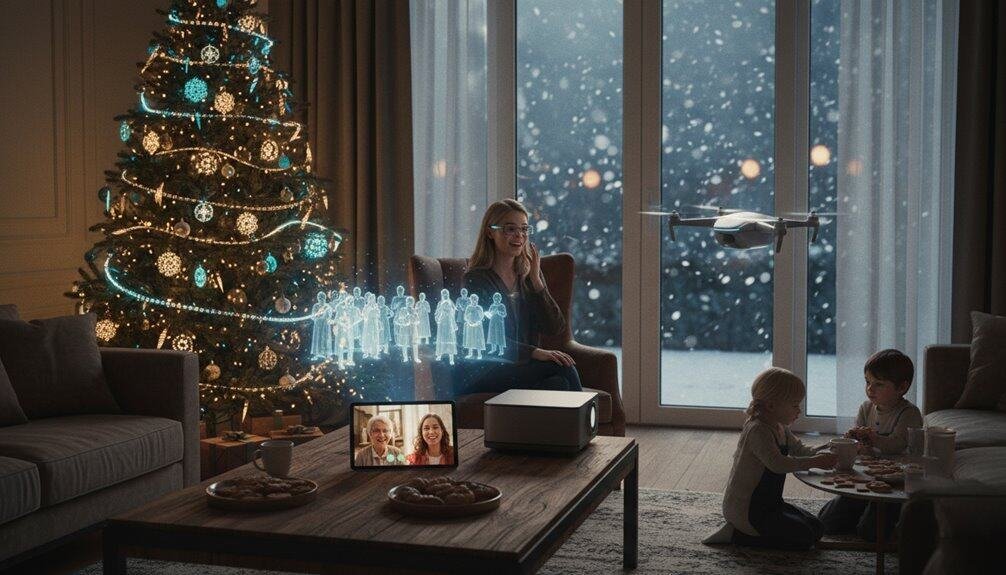
As digital connectivity becomes the backbone of modern celebrations, Christmas 2025 emerges as a fundamentally transformed cultural event where technology doesn’t merely supplement traditional practices—it redefines them entirely.
Christmas 2025 represents a complete digital reimagining of celebration where technology fundamentally redefines rather than simply enhances traditional holiday practices.
You’re witnessing a shift where 75% of younger generations integrate AI recommendations into their holiday planning, fundamentally altering gift-giving customs across cultures.
Social commerce platforms like TikTok Shop, generating $1.29 billion in November alone, transform discovery rituals.
You’ll find 51% of Gen Z using social media as their primary gift inspiration source, replacing traditional window shopping or catalog browsing.
This digital-first approach transcends geographical boundaries, with 304 million people living outside their birth countries maintaining cultural connections through shared virtual spaces. Holiday coordination increasingly happens through group chats and messaging apps, which have overtaken traditional SMS for many younger families since the mid-2010s.
Your holiday photography habits reflect this transformation—averaging 69 photos and videos, with over a third shared digitally.
Traditional greeting card exchanges decline from 3 billion to 2.9 billion as instant digital communication reshapes how you maintain holiday relationships across distances. Major purchases previously reserved for desktop computers now happen seamlessly through mobile devices, reflecting the growing confidence consumers have in completing significant transactions via smartphones during the holiday season.
Smart retailers recognize that early campaigns starting in November capture consumers before the competitive festive rush intensifies.
Timeless Traditions That Families Are Bringing Back This Year
While digital platforms reshape how you discover and share holiday experiences, families across cultures are simultaneously rediscovering tactile, communal traditions that anchor Christmas in physical presence and shared labor.
This counter-movement manifests through revived home-crafting practices like popcorn garlands and salt-dough ornaments, which enable multi-generational participation while creating heirloom pieces that outlast mass-produced alternatives.
Caroling revivals represent another dimension of this restoration, as door-to-door singing and organized community events combat digital isolation through live musical exchange.
These practices often integrate charitable drives, transforming celebration into civic engagement.
Seasonal baking has regained prominence through multi-generational cookie sessions and neighborhood exchanges that distribute labor while preserving culinary heritage. Cookie exchange traditions, which gained popularity in the 1960s in America, created efficient systems for families to enjoy diverse homemade treats without the burden of preparing every variety themselves.
Families are digitizing handwritten recipe cards to safeguard these traditions for future generations.
Advent rituals, particularly wreath lighting and handmade calendar activities, provide structured countdown experiences that emphasize reflection over consumption, offering contemplative alternatives to commercial holiday acceleration. Simple traditions like creating clove-studded oranges require minimal investment but deliver authentic seasonal fragrance that transforms entire rooms through natural preservation methods.
Fresh Holiday Activities to Start With Your Loved Ones
How do families create meaningful holiday memories that extend beyond inherited traditions? Contemporary households are designing participatory experiences that blend technology, creativity, and community engagement to establish fresh seasonal rituals.
Light Hunts have evolved into structured neighborhood activities where families use printable checklists and photo challenges to explore synchronized displays together. These scavenger-hunt formats adapt by age group, transforming passive light-viewing into interactive discovery missions.
Drive-through events accommodate multigenerational participation while maintaining accessibility for varying mobility levels.
Multi-station Craft Stations replicate “Santa’s Workshop” environments where household members rotate through ornament-making, card-decorating, and gift-wrapping zones. DIY kits—gingerbread trains, snow globes, custom ornaments—reduce preparation barriers while encouraging collaborative building projects.
These stations extend into weather-resistant outdoor spaces, creating year-round craft zones.
Both approaches emphasize process over product, allowing families to establish traditions rooted in shared creation rather than consumption. The resulting crafts and photographs become artifacts of collective experience, building cultural memory through active participation.
Frequently Asked Questions
How Much Should I Budget for Christmas Gifts This Year?
You should budget around $900-$1,200 for Christmas gifts, depending on your household income and family contributions expected from you.
Analyze your spending categories by prioritizing clothing, electronics, and gift cards, which dominate gift-giving across cultures.
Consider your age demographic—mid-life adults typically spend most, while younger adults average $650.
Factor in recent price inflation affecting electronics and practical items when planning your ethnographically-informed budget allocation.
When Is the Best Time to Start Christmas Shopping?
You’ll find optimal shopping timing varies across cultural and economic lines, but early November emerges as the strategic sweet spot.
Create a calendar checklist starting then—you’ll capture pre-Black Friday deals while avoiding December’s frenzied rush.
This timing reflects broader consumer behavior shifts, with two-thirds now shopping before traditional peak periods. Millennials particularly embrace this approach, while different generations maintain distinct purchasing rhythms throughout the season.
What Are the Most Popular Christmas Gifts People Want This Year?
You’ll find clothes and shoes dominating wish lists at 37-53% across demographics, reflecting universal desires for personal expression. Tech gadgets like Apple AirPods Pro 3 and smartphone-controlled devices appeal especially to younger generations, while eco gifts gain traction among environmentally conscious consumers.
Gift cards remain paradoxical—given frequently but less desired. Cultural patterns emerge through generational preferences: Gen Z gravitates toward fashion, Millennials choose health products, while Boomers favor practical electronics.
How Many Americans Actually Celebrate Christmas Traditions?
You’ll find that 88% of Americans celebrate Christmas traditions, though there’s significant regional participation variation across states. Generational differences emerge in how you frame the holiday—51% celebrate religiously while 41% observe culturally.
You’re most likely engaging in music listening (75%), movie watching (72%), and gift exchanges (70%) regardless of your religious perspective. Parents maintain Santa traditions for 56% of children, showing cross-generational cultural transmission patterns.
What Percentage of People Prefer Shopping Online Versus in Stores?
Your shopping patterns reveal a cultural shift toward digital commerce.
Online preference dominates at 71% for major events like Black Friday, while store preference maintains strength at 59% for holiday gifts overall.
You’re witnessing generational divides—younger cohorts embrace mobile platforms while Baby Boomers favor physical locations.
Cross-culturally, you’re adopting hybrid approaches, with 45% using both channels, reflecting evolving consumer anthropology.
Conclusion
You’re witnessing Christmas evolving into a hybrid celebration where digital innovations merge with ancestral practices across cultures. Whether you’re livestreaming gift exchanges with distant relatives, reviving your grandmother’s recipe traditions, or creating new rituals that blend global influences, you’re participating in a dynamic cultural shift. Your family’s 2025 Christmas reflects broader patterns of technological adaptation while maintaining deep human needs for connection, meaning, and shared identity across generations.








No Comments