

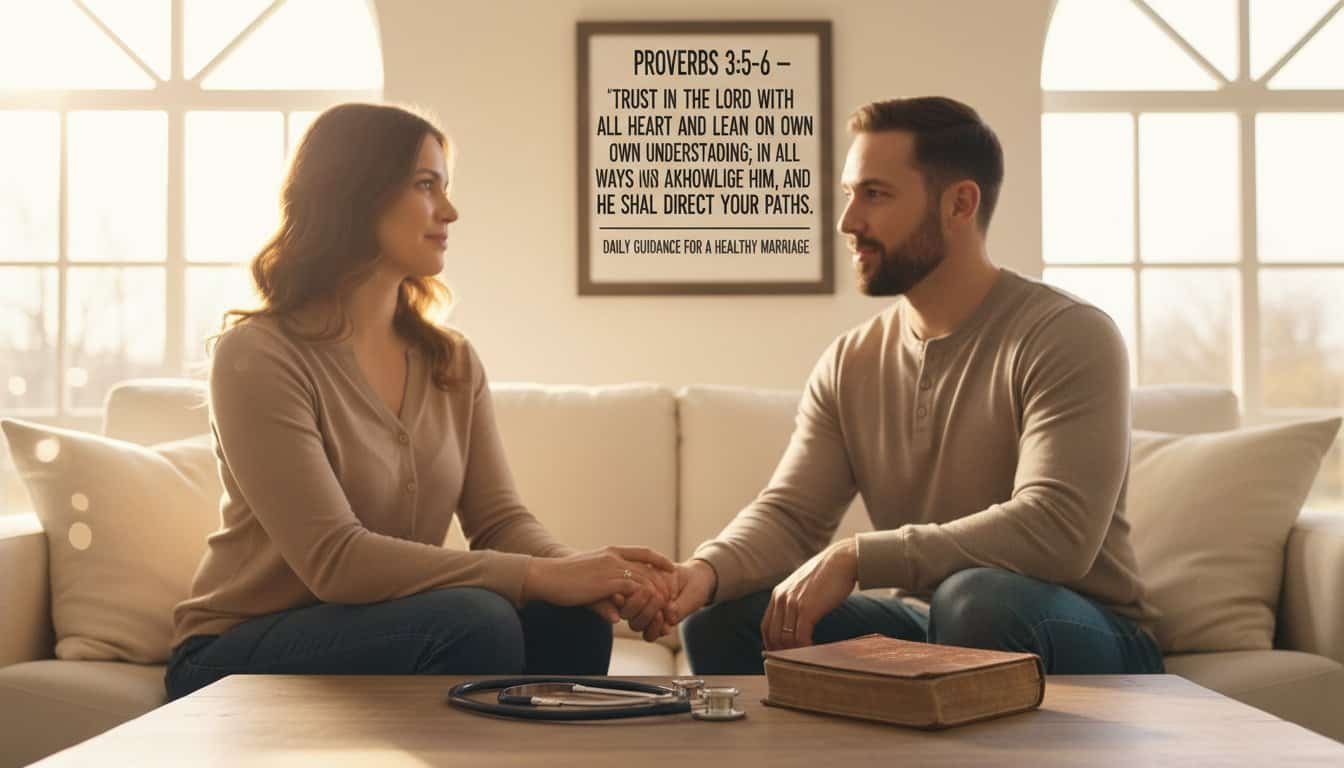
29 Jan Biblical Health Promise Why Marriage Counselors Quote This Daily
Marriage counselors quote Ecclesiastes 4:12’s “three-strand cord” promise because it reveals marriage’s true strength formula. When you’re facing difficult times, interdependence—not independence—creates unbreakable resilience. You’ll discover that two whole people interweaving their strengths build something far more powerful than individual effort. This biblical principle transforms surface-level support into deep partnership where mutual vulnerability becomes your greatest asset. Understanding how to implement this wisdom will revolutionize how you navigate life’s challenges together.
Table of Contents
Key Takeaways
- Biblical health promises provide couples with shared spiritual foundation during relationship challenges and difficult seasons.
- Marriage counselors reference scripture to validate that interdependence and mutual support reflect divine design for partnership.
- Daily spiritual practices create consistent touchpoints that strengthen emotional connection and communication between spouses.
- Biblical principles encourage reciprocal vulnerability and service, transforming individual burdens into manageable collective challenges.
- Scripture-based guidance offers practical framework for daily habits that build resilience through faith-centered relationship practices.
Simple Ways to Support Your Partner Through Difficult Times

When your partner faces challenging moments, your response can either strengthen or strain your relationship’s foundation. Marriage counselors consistently emphasize that effective support requires intentional actions, not just good intentions.
Start with emotional support through active listening. Put away distractions and create space for your partner to express their feelings without judgment. Validate their experience by saying, “I understand this is really difficult for you.”
Implement daily check ins to maintain connection during tough seasons. A simple “How are you feeling today?” or “What do you need from me right now?” demonstrates consistent care and availability.

Offer practical assistance by identifying specific ways to lighten their load. Whether it’s handling household tasks, coordinating childcare, or managing appointments, concrete actions communicate love effectively.
Remember that supporting someone through difficulties isn’t about fixing everything. Sometimes your presence and patience matter more than solutions.
What Marriage Counselors Know About Mutual Support
How does a relationship maintain its strength when both partners face simultaneous challenges? Marriage counselors consistently observe that couples who thrive during adversity share one crucial trait: they’ve mastered mutual resilience through intentional practices.
You’ll notice successful couples don’t view support as one-directional. Instead, they recognize that both partners can simultaneously give and receive strength, even during their darkest moments. This reciprocal dynamic creates a stabilizing force that individual coping strategies simply can’t match.
Daily check ins become essential during these periods. You’re not just asking “How was your day?” but rather “What do you need from me right now?” and “How can we face this together?” These conversations, though brief, create consistent touchpoints for emotional connection.

Transform surface-level conversations into meaningful exchanges by asking what your partner truly needs in challenging moments.
When you actively listen to your partner’s struggles while sharing your own vulnerabilities, you’re building something counselors call “shared resilience.” This partnership approach transforms individual burdens into manageable, collective challenges.
Why Partnership Beats Independence (Even for Strong People)
Many high-achieving individuals enter relationships with a fierce commitment to self-reliance, believing that needing their partner somehow diminishes their personal strength. You’ve likely witnessed this pattern in your practice—successful clients who struggle to embrace partnership over independence.
However, research consistently shows that even the most capable people thrive when they allow mutual vulnerability into their relationships. When you choose interdependence over isolation, you’re not weakening your position; you’re multiplying your resources and resilience.
Partnership creates a feedback loop where both individuals become stronger through shared burdens and celebrated victories. Your willingness to be vulnerable with your partner doesn’t expose weakness—it demonstrates emotional intelligence and courage.
The strongest marriages aren’t built on two independent people living parallel lives, but on two whole individuals who consciously choose to interweave their strengths, creating something more powerful than either could achieve alone.
Creating Daily Habits That Strengthen Your Bond
Building connection isn’t something that happens automatically—it’s cultivated through intentional, consistent actions that demonstrate love in practice. Your marriage thrives when you establish daily habits that prioritize your relationship above competing demands.
Start with simple two word discussion ideas during morning coffee: “Today’s priority?” or “Feeling grateful?” These brief exchanges create touchpoints that maintain emotional intimacy throughout busy schedules.
Implement daily habits like phone-free dinners, ten-minute evening check-ins, or shared prayer time. You’re building a foundation where both partners feel heard and valued consistently.
Create rituals around appreciation—express one specific thing you noticed about your spouse each day. This shifts focus from criticism to gratitude, reinforcing positive patterns.
Small, consistent investments compound over time. You don’t need grand gestures; you need reliability. When couples commit to these daily practices, they’re literally rewiring their relationship toward connection rather than disconnect, proving that consistency trumps intensity in building lasting intimacy.
Frequently Asked Questions
Which Specific Bible Verse Do Marriage Counselors Quote Most Often?
Marriage counselors most frequently quote Jeremiah 29:11: “For I know the plans I’ve for you, declares the Lord, plans to prosper you and not to harm you, to give you hope and a future.” This verse offers hopeful optimism during relationship crises, helping couples believe their marriage can heal. It’s particularly powerful for trust restoration, reminding you that even broken relationships can be rebuilt with faith and commitment.
How Did This Biblical Promise Become Popular in Modern Counseling Practices?
You’ll find this biblical promise gained traction through creative writing by pioneering therapists who bridged faith and psychology in the 1950s. Social history shows couples increasingly sought meaning beyond clinical techniques. Modern counselors discovered these ancient words offer hope when relationships feel broken. They’ve proven effective because they address both emotional healing and spiritual connection, creating a holistic approach that resonates with couples seeking deeper restoration.
Do Non-Religious Couples Benefit From Biblically-Based Marriage Advice?
Yes, you’ll find that nonreligious couples can absolutely benefit from biblically-based marriage advice. While you mightn’t connect with the spiritual aspects, the underlying principles—like forgiveness, commitment, and selfless love—are universally valuable. Many biblical health claims about relationships align with modern psychology research. You can extract the practical wisdom while setting aside religious elements that don’t resonate with your worldview.
What Training Do Marriage Counselors Receive About Incorporating Biblical Principles?
You’ll find most marriage counselors receive limited formal training in biblical principles during their academic programs. However, many pursue additional certification through faith-based organizations or continuing education courses that emphasize therapeutic ethics and religious adaptability. If you’re seeking biblically-informed counseling, look for therapists who’ve completed specialized training in Christian counseling or hold credentials from organizations that integrate psychological principles with scriptural wisdom effectively.
Are There Scientific Studies Supporting This Particular Biblical Health Promise?
You’ll find limited peer-reviewed research specifically validating biblical health promises, though studies do support principles like forgiveness and gratitude for relationship wellness. When discussing evidence with clients, ethical counselors distinguish between faith-based guidance and empirical research. Counseling ethics require transparency about treatment approaches. You can benefit from both spiritual wisdom and evidence-based techniques working together in your healing journey.
Conclusion
You don’t have to navigate life’s challenges alone. When you choose to lean into your partnership rather than retreating into independence, you’re building something stronger than either of you could create separately. Start small—check in daily, listen without fixing, and celebrate small wins together. Your marriage isn’t just surviving difficult times; it’s becoming the foundation that helps you both thrive through whatever comes next.










No Comments