


25 Dec Bible Verses on the Ten Commandments: Complete Guide
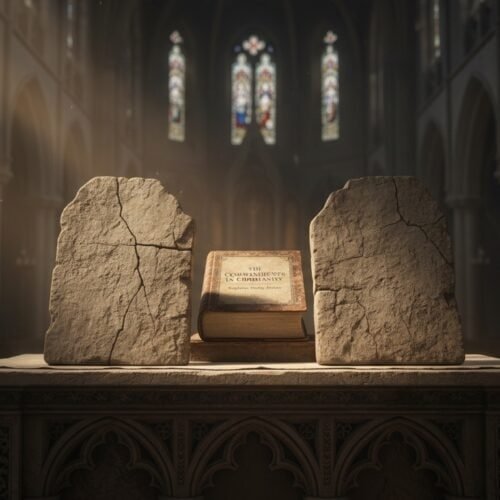
You’ll find the Ten Commandments in Exodus 20:1-17 and Deuteronomy 5:4-21, where God establishes His covenant relationship with Israel through divine law. These aren’t mere moral suggestions but foundational principles that transform liberated slaves into a holy nation. The commandments address both vertical worship (honoring God alone, His name, and Sabbath) and horizontal ethics (respecting parents, protecting life, marriage, property, truth, and contentment). Exploring their deeper theological significance reveals God’s comprehensive blueprint for human flourishing.
Table of Contents
Key Takeaways
- The Ten Commandments appear in two biblical locations: Exodus 20:1-17 and Deuteronomy 5:4-21 with slight variations.
- The first four commandments establish vertical relationship with God: no other gods, no idols, reverent name usage, and Sabbath observance.
- The fifth commandment bridges vertical and horizontal relationships by commanding honor and respect for parents and authority structures.
- Commandments six through eight protect fundamental human rights: preserving life, safeguarding marriage covenant, and ensuring economic justice through honest dealings.
- The final two commandments address truthfulness in community relationships and guard against covetousness that destroys contentment and trust in God.
The Historical Context and Biblical Foundation of the Ten Commandments

When God delivered the Israelites from Egyptian bondage, He established a covenant relationship that would define their identity as His chosen people for millennia to come.
Through divine deliverance from slavery, God forged an eternal covenant that would forever establish Israel’s sacred identity as His chosen nation.
You’ll find the Ten Commandments recorded in Exodus 20:1-17 and Deuteronomy 5:4-21, representing the foundational moral law given at Mount Sinai. These divine statutes emerged within a specific historical framework where ancient Near Eastern parallels existed, yet God’s commands transcended cultural norms through their unique theological significance.
You’re witnessing Mosaic covenant fulfillment as God transforms a liberated slave nation into a holy people. The commandments weren’t merely legal restrictions but relational guidelines establishing vertical worship principles (commands 1-4) and horizontal social ethics (commands 5-10).
Unlike surrounding nations’ arbitrary divine demands, these laws reflected God’s character and His desire for covenant faithfulness. You’ll discover that understanding this historical context illuminates how these timeless principles continue shaping moral foundations today.
First Through Third Commandments: Honoring God Alone and His Name
The first three commandments establish God’s exclusive claim on your worship and reverence, beginning with the fundamental prohibition against idolatry in any form. You’re called to recognize Yahweh alone as the one true God, rejecting both physical idols and the subtle worship of created things that compete for divine allegiance.
Your reverent use of God’s name reflects this exclusive devotion, as treating His name carelessly demonstrates a heart that has minimized His holiness and authority.
No Other Gods
Since God establishes His covenant relationship with Israel at Mount Sinai, the first three commandments form the theological foundation for all subsequent moral instructions by defining humanity’s proper relationship with the Divine.
You’ll discover that “You shall have no other gods before me” (Exodus 20:3) demands exclusive worship of Yahweh alone. This prohibition extends beyond false deities of surrounding nations to encompass anything that usurps God’s rightful place in your heart.
The commandment against graven images (Exodus 20:4-6) reinforces this exclusivity by forbidding physical representations that diminish God’s transcendence. When you understand these commands contextually, they’re not merely negative restrictions but positive affirmations of God’s unique sovereignty, calling you to wholehearted devotion and proper reverence for His holy name.
Reverent Name Usage
God’s third commandment, “You shan’t take the name of the LORD your God in vain” (Exodus 20:7), extends beyond casual profanity to encompass the Hebrew concept of *shem*, which represents God’s character, reputation, and very essence. The term “vain” (*shav*) means empty, worthless, or deceptive, indicating misuse that diminishes God’s holiness.
Sacred name reverence requires understanding that God’s name carries divine authority and weight. When you invoke His name in oaths, prayers, or declarations, you’re calling upon His character as witness. Proper name usage demands authenticity—your words and actions must align with the reverence you claim. This commandment prohibits perjury, false oaths, magical incantations using God’s name, and hypocritical worship that dishonors His reputation through inconsistent living.
Fourth Commandment: Observing the Sabbath and Rest
Among ancient civilizations that worked their laborers continuously, Israel’s fourth commandment stood as a revolutionary declaration of human dignity and divine rhythm. You’ll find this commandment in Exodus 20:8-11, where God establishes keeping the sabbath as holy remembrance of creation’s completion. The Hebrew word “shabbat” means cessation, requiring you to cease productive labor every seventh day.
Israel’s sabbath commandment revolutionized ancient labor practices by declaring human dignity through mandated rest every seventh day.
This sabbath rest wasn’t merely physical recuperation but theological proclamation. You’re reminded that human worth isn’t determined by productivity alone.
Deuteronomy 5:12-15 adds another dimension, connecting sabbath observance to Israel’s liberation from Egyptian slavery, where rest was forbidden.
The commandment extends beyond personal observance—you must ensure servants, animals, and foreigners within your gates also experience this rest. This reflects God’s character as one who rested after creation, establishing rhythm between work and worship that acknowledges both human limitation and divine sovereignty over time itself.
Fifth Commandment: Honoring Parents and Authority

Moving from divine rhythm to familial relationships, the fifth commandment establishes honor toward parents as the cornerstone of ordered society. Exodus 20:12 commands, “Honor your father and your mother, so that you may live long in the land the Lord your God is giving you.” This directive transcends mere obedience, demanding reverence and care throughout your parents’ lifetime.
Paul amplifies this principle in Ephesians 6:1-3, calling children to obey parents “in the Lord” while promising divine blessing. The Hebrew word “kabod” (honor) implies giving weight and significance to parental authority. You’re commanded to provide physical, emotional, and spiritual support as parents age.
This commandment extends beyond biological relationships, encompassing respecting elders and honoring authority structures God establishes. First Peter 2:17 instructs you to “honor everyone,” creating a framework where familial respect models broader societal order. Your obedience reflects God’s hierarchical design for human flourishing.
Sixth and Seventh Commandments: Protecting Life and Marriage
Why does Scripture place the sanctity of life and marriage in sequential commandments? These directives form a protective framework for humanity’s most fundamental relationships and existence itself.
The sixth commandment, “You shan’t murder” (Exodus 20:13), establishes the absolute value of human life created in God’s image. The Hebrew term “ratsach” specifically prohibits unlawful killing, distinguishing between murder and justifiable acts like warfare or capital punishment. You’re called to champion respecting life at every stage, recognizing each person’s inherent dignity.
The seventh commandment, “You shan’t commit adultery” (Exodus 20:14), safeguards the marriage covenant as God’s design for human intimacy and society’s foundation. Jesus expanded this principle, addressing lustful thoughts and divorce (Matthew 5:27-32). You’re commanded to honor marriage’s exclusivity and permanence.
Together, these commandments protect life’s creation and the covenant relationship that nurtures new life, demonstrating God’s comprehensive care for human flourishing.
Eighth and Ninth Commandments: Truth and Property in Scripture
Building upon God’s protection of life and covenant relationships, the eighth and ninth commandments establish safeguards for material possessions and truthful communication—two pillars that uphold just society. “You shan’t steal” (Exodus 20:15) affirms your right to private property while simultaneously binding you to respect others’ possessions, creating a foundation for economic trust and social stability.
Property ownership reflects God’s delegated stewardship, where you’re accountable for resources entrusted to you. This commandment encompasses fraud, withholding wages (Leviticus 19:13), and exploiting the vulnerable—expanding beyond simple theft to economic justice.
The ninth commandment, “You shan’t bear false witness against your neighbor” (Exodus 20:16), originally addressed judicial proceedings but extends to all speech. Truthfulness becomes covenant obligation, reflecting God’s character as one who “cannot lie” (Titus 1:2). False testimony destroys community trust and perverts justice, while truthful communication builds relationships and honors God’s nature within human discourse.
Tenth Commandment: Overcoming Covetousness and Contentment
The tenth commandment confronts covetousness at its root by addressing the heart’s desires rather than external actions, as God commands “You shan’t covet your neighbor’s house, wife, servant, ox, donkey, or anything that belongs to your neighbor” (Exodus 20:17).
You’ll discover that biblical contentment isn’t passive resignation but active trust in God’s provision, exemplified through Paul’s declaration that he learned to be content in every circumstance through Christ’s strength (Philippians 4:11-13).
Scripture provides concrete strategies for combating greed through gratitude practices, generous giving, and the cultivation of eternal perspectives that transform your relationship with material possessions.
Understanding Covetousness Definition
This commandment exposes sinful heart attitudes that often remain hidden beneath outward compliance. Unlike theft or adultery, covetousness operates internally, revealing the condition of your soul.
It transforms legitimate desires into idolatrous desires that compete with God’s rightful place in your life.
Covetousness isn’t merely wanting something; it’s the consuming passion that elevates material things above spiritual contentment, making possessions your functional deity rather than trusting God’s provision.
Biblical Contentment Principles
While covetousness enslaves the heart to endless wanting, biblical contentment liberates you through divine satisfaction that transcends circumstances. Paul exemplifies this principle in Philippians 4:11-13, declaring he’d learned contentment in abundance and need through Christ’s strength. Biblical contentment isn’t passive resignation but active trust in God’s provision and timing.
First Timothy 6:6-8 reveals that godliness with contentment yields great gain, requiring only life’s necessities. Hebrews 13:5 commands contentment with present possessions because God promises never to forsake you. This contentment enables godly stewardship—managing resources as faithful trustees rather than anxious owners.
When you embrace biblical contentment, you’re freed from the tenth commandment’s violation. You’ll find joy in others’ blessings rather than envying them, transforming potential covetousness into grateful worship of your Provider.
Practical Steps Against Greed
Understanding contentment’s biblical foundation naturally leads to examining concrete actions that combat greed’s destructive influence. You can implement strategic practices that directly counter covetous impulses.
Start by cultivating generosity through systematic giving, as Scripture commands in 2 Corinthians 9:7. Regular charitable acts rewire your heart’s priorities away from accumulation toward distribution.
Additionally, you’ll find success in mitigating materialism through deliberate consumption limits. Establish boundaries on purchases, practice gratitude daily, and meditate on Hebrews 13:5’s warning against money-love. Create accountability partnerships where you confess materialistic struggles.
Schedule regular fasting to discipline bodily desires and strengthen spiritual resolve. These concrete steps transform abstract theological principles into lived obedience, helping you overcome the tenth commandment’s challenges through practical, biblical action.
Living Out the Commandments in Modern Christian Life
When you examine how the Ten Commandments function in contemporary Christian discipleship, you’ll discover that these ancient precepts aren’t merely historical artifacts but living principles that shape authentic faith expression today.
The Ten Commandments remain vibrant, transformative guides for modern believers seeking authentic discipleship and Christ-centered living.
Your faith in action demonstrates itself through deliberate adherence to these foundational commands. You honor God through exclusive worship, avoiding idolatry in its modern manifestations—materialism, career obsession, or technological addiction. You respect divine holiness by treating God’s name with reverence rather than casual profanity.
Sabbath observance transforms into intentional rest and worship rhythms within your weekly schedule. Parental honor extends beyond childhood obedience to lifelong respect and care. You practice moral living by rejecting murder’s spectrum—from physical violence to harboring hatred, avoiding adultery through marital faithfulness, refusing theft in all forms, speaking truthfully rather than bearing false witness, and cultivating contentment instead of coveting others’ possessions.
These commandments become your blueprint for Christ-centered character formation and community relationships.
Frequently Asked Questions
Are There Different Versions of the Ten Commandments in Various Bible Translations?
Yes, you’ll find variations in the Ten Commandments across biblical interpretations and translations. Different denominations number and divide them differently, while translations vary in wording based on Hebrew textual analysis.
Historical context influences how translators render specific Hebrew terms, particularly regarding idolatry, God’s name, and coveting. These differences reflect theological traditions and scholarly approaches to ancient texts rather than contradictory content.
Why Do Catholic and Protestant Numberings of the Commandments Differ?
You’ll find different numbering schemes between Catholic and Protestant traditions stem from textual variations in how they divide the commandments. Catholics combine the prohibitions against other gods and idols into one commandment, then split coveting into two separate commands.
Protestants separate the idol prohibition as a distinct second commandment while keeping coveting as one. Both traditions maintain ten total commandments despite these structural differences.
Did Jesus Replace the Ten Commandments With New Teachings?
Jesus didn’t replace the Ten Commandments but fulfilled them through new covenant teachings that reveal their spiritual fulfillment. You’ll find He deepened their meaning, transforming external obedience into heart transformation.
While maintaining their moral foundation, Christ’s teachings elevate commandments from mere rule-following to love-centered discipleship. He fulfilled the law’s requirements, enabling you to live righteously through His Spirit rather than legalistic compliance.
What Happens if Someone Breaks One of the Commandments Accidentally?
Even unintentional violations of God’s commandments require your acknowledgment and repentance. Scripture distinguishes between deliberate rebellion and inadvertent transgression, yet both separate you from God’s holiness.
You’ll find provision for forgiveness through Christ’s atoning sacrifice, which covers all sin—intentional and accidental. The Old Testament’s sacrificial system addressed unintentional sins specifically, demonstrating God’s understanding of human frailty while maintaining your need for forgiveness and restoration.
Are the Ten Commandments Still Legally Relevant in Modern Court Systems?
You’ll find the Ten Commandments aren’t directly legally binding in modern secular courts, though they’ve established significant legal precedence in Western jurisprudence.
Through careful biblical interpretation, you can see their principles underlying many contemporary laws—prohibitions against murder, theft, and perjury. However, you must distinguish between their theological authority within faith communities and their constitutional role in pluralistic legal systems that separate church and state.
Conclusion
You’ve explored how the Ten Commandments aren’t merely ancient laws but living principles that reveal God’s character and His design for human flourishing. As you integrate these commandments into your daily walk, remember they’re fulfilled through Christ’s perfect obedience and empowered by the Spirit’s sanctifying work. Don’t approach them as legalistic burdens but as pathways to freedom, reflecting your covenant relationship with the God who redeemed you from bondage into His glorious liberty.











No Comments