


16 Dec Worship Songs and Lyrics Singable Sets for Every Sunday
Creating singable worship sets starts with understanding your congregation’s vocal abilities and musical preferences across different age groups. Choose songs with melodies that stay within a comfortable octave range, featuring repetitive phrases and simple chord progressions that encourage confident participation. Plan strategic key transitions and thematic connections that tell a cohesive spiritual story from gathering through commitment. Balance contemporary worship anthems with beloved hymns while considering seasonal liturgical needs. Master these foundational principles to transform chaotic Sunday mornings into unified worship experiences.
Table of Contents
Key Takeaways
- Choose songs with melodies spanning no more than an octave and staying between C4-D5 for comfortable congregation singing.
- Balance contemporary worship songs with traditional hymns based on your congregation’s demographics and observed participation patterns.
- Plan strategic key and tempo transitions between songs to create natural flow and cohesive storytelling throughout worship.
- Select thematically connected songs that reinforce the sermon message and complement seasonal emphases like Advent or Lent.
- Use worship planning software and master spreadsheets to track song usage, keys, and themes for efficient set preparation.
Understanding Your Congregation’s Musical Preferences and Abilities
Selecting worship songs that resonate with your congregation requires knowing who sits in your pews each Sunday. You’ll need to conduct a thorough congregational demographics analysis to understand age ranges, cultural backgrounds, and musical experiences within your community.
Start by observing which songs generate enthusiastic participation versus polite silence. Notice when people struggle with melodies or seem disengaged during certain musical styles. Your musical culture assessment should include informal conversations with members about their favorite hymns and contemporary songs.
Consider surveying different age groups about their preferences. Younger families might gravitate toward modern worship anthems, while older members may prefer traditional hymns with familiar melodies. Don’t forget about vocal ranges—songs that sit too high or low will discourage participation.
Pay attention to your congregation’s musical abilities. If most members aren’t trained singers, choose songs with simple melodies, repetitive choruses, and comfortable keys that encourage confident, joyful participation rather than hesitant mumbling.
Essential Elements of Singable Worship Songs
Melody forms the backbone of every memorable worship song, determining whether your congregation will sing with confidence or struggle in silence. You’ll want melodies that stay within a comfortable vocal range—typically spanning no more than an octave and avoiding extreme highs or lows that strain voices.
Focus on melody structure that’s intuitive and easy to follow. Repetitive phrases and predictable patterns help congregants learn quickly and sing confidently. Choose songs with clear, stepwise motion rather than large interval jumps that challenge untrained singers.
Chord progressions should support the melody without overwhelming it. Simple progressions using familiar chord movements create a solid foundation that doesn’t compete with vocal lines. Avoid complex harmonic changes that confuse musicians or distract from worship.
Remember that singability trumps sophistication. Your goal isn’t to impress with musical complexity but to create an environment where everyone can participate fully in worship through song.
Building Cohesive Sets That Flow Naturally
You’ve crafted singable songs, but now you need to arrange them into sets that carry your congregation smoothly from one moment to the next. The secret lies in planning your key and tempo transitions, creating a thematic progression that tells a story, and designing an energy arc that guides people through worship naturally.
When you master these three elements, your song sets won’t just be collections of individual pieces—they’ll become unified worship experiences that help people connect with God more deeply.
Key and Tempo Transitions
When you’re crafting a worship set, smooth transitions between songs can make the difference between a choppy experience and a unified journey of praise. Strategic key and tempo planning keeps your congregation engaged rather than jarring them between songs.
Start by mapping out your keys. Moving between related keys creates natural flow—try transitioning from C major to G major, or use modulation techniques like moving up a half-step for energy. Avoid dramatic key jumps that’ll leave singers stranded.
Tempo matters equally. Gradually shift rhythm patterns rather than jumping from ballad to rock anthem. Bridge songs with similar tempos, or use instrumental interludes to ease transitions. Your goal is seamless movement that supports the worship experience, not disrupts it.
Thematic Song Progression
Beyond technical considerations like key and tempo, the lyrical and spiritual themes of your songs create the emotional backbone of worship. You’ll want to craft song order that tells a cohesive story, moving your congregation through a meaningful spiritual journey.
Start with songs of gathering and praise, then progress toward intimacy and reflection, before concluding with commitment or celebration.
Look for thematic connections between lyrics—songs about God’s faithfulness naturally flow into declarations of trust. Consider the emotional arc: energetic praise songs can transition into contemplative worship, then build toward a powerful response. Don’t jump randomly between themes. Instead, let each song prepare hearts for the next, creating seamless bridges that enhance rather than disrupt the worship experience you’re facilitating.
Energy Arc Planning
Managing the energy flow throughout your worship set requires intentional planning that mirrors how people naturally engage with God in corporate worship. You’ll want to create dynamic pacing that builds momentum gradually, avoiding jarring transitions that disconnect your congregation.
Start with accessible invitation songs, then move toward higher-energy celebration before settling into intimate reflection. Pay attention to vocal phrasing between songs—choose keys and tempos that allow smooth transitions without awkward pauses. Consider your congregation’s emotional journey: they need time to arrive, engage, and respond.
Map out energy peaks and valleys beforehand, but remain flexible during the service. Watch for moments when the Spirit moves unexpectedly. Your goal isn’t rigid adherence to a plan, but creating natural flow that supports genuine worship experiences.
Seasonal and Liturgical Song Selection Strategies
Your congregation’s worship experience deepens when you align song choices with the church calendar’s natural rhythms and seasons.
You’ll find that Advent’s anticipatory hymns, Lent’s reflective melodies, and Ordinary Time’s celebratory songs each serve distinct spiritual purposes in your community’s journey.
Strategic seasonal planning helps you create meaningful connections between the liturgical year and your people’s hearts through carefully chosen music.
Advent and Christmas Planning
The Advent and Christmas seasons present worship planners with unique opportunities to guide congregations through one of the church calendar’s most emotionally resonant periods. You’ll need to balance traditional carols with contemporary Advent songs while considering your congregation demographics. Families with young children often prefer familiar melodies, while multigenerational services benefit from blending classic hymns with modern arrangements.
Plan for seasonal variations by creating distinct musical atmospheres for each Advent week, building anticipation toward Christmas Eve. Start with contemplative, minor-key songs emphasizing waiting and hope, then gradually incorporate brighter keys and fuller arrangements.
Don’t overwhelm Christmas Eve with too many carols—choose three or four beloved favorites that your congregation can sing confidently. Include instrumental moments that allow for reflection between the celebration’s joyful peaks.
Lenten Journey Songs
While Christmas celebrations fill sanctuaries with triumphant joy, Lent calls worship planners to craft an entirely different musical landscape that honors this season of preparation and penitence. You’ll want to select lenten prayer songs that invite contemplation rather than celebration. Consider pieces like “Create in Me a Clean Heart” or “Be Thou My Vision” that encourage inward reflection.
Lenten introspection themes should guide your musical choices throughout these forty days. Focus on songs addressing repentance, spiritual discipline, and drawing closer to God. “Jesus, I Come” and “Nothing but the Blood” work beautifully during this reflective period.
Balance somber moments with hope-filled selections that point toward Easter’s promise. Your congregation needs both confession and comfort as they journey toward the cross and resurrection together.
Ordinary Time Selections
How do you maintain musical vitality during Ordinary Time‘s extended weeks when no major holidays anchor your planning? You’ll need strategic rotation and intentional variety to keep congregations engaged through these longer liturgical seasons.
Focus your musical style considerations on alternating between contemporary, traditional, and blended approaches weekly. This prevents monotony while serving diverse worship preferences within your community.
Your lyrical content focus should emphasize spiritual growth themes: discipleship, service, community, and daily faithfulness. These topics resonate during Ordinary Time’s emphasis on Christian living and formation.
Create monthly themes like “Songs of Trust,” “Community Worship,” or “Faithful Living” to provide structure without rigid constraints. You’ll also want to incorporate scripture-based selections that complement lectionary readings, ensuring your music reinforces rather than competes with sermon messages and seasonal emphases.
Balancing Contemporary Hits With Timeless Hymns
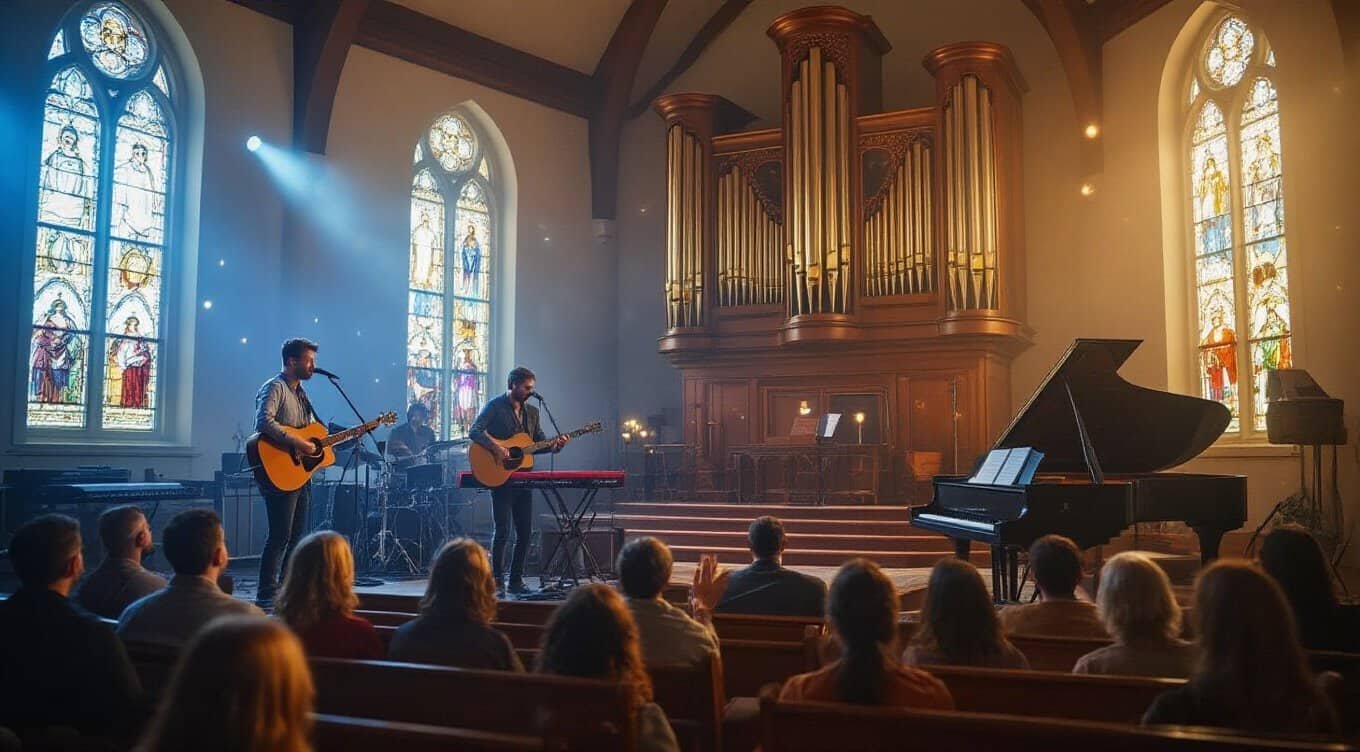
When you’re planning your worship set, you’ll face one of the most common challenges in modern church music: creating the right mix between today’s popular worship songs and the rich heritage of traditional hymns.
Effective song selection balance requires understanding your congregation’s demographics and spiritual maturity. Start by observing which songs generate authentic congregational engagement. Don’t assume age determines preference – many young worshipers connect deeply with hymns, while older members embrace contemporary melodies.
Consider pairing complementary themes rather than alternating styles randomly. A modern song about grace flows beautifully into “Amazing Grace.” This creates theological continuity while offering musical variety.
Test your balance weekly. If you’re consistently choosing three contemporary songs and one hymn, experiment with different ratios. Some Sundays might call for hymn-heavy sets, while others benefit from contemporary focus.
Key Considerations for Vocal Range and Melody
Vocal range can make or break congregational participation in your worship service. When selecting songs, prioritize melodies that sit comfortably between C4 and D5 for most singers. Avoid extremes that leave half your congregation silent during high or low passages.
Choose songs with clear, memorable melodic lines that don’t require vocal gymnastics. Simple stepwise motion and small intervallic jumps create singable melodies that encourage participation rather than performance. Your goal isn’t showcasing talent but fostering community worship.
Be mindful of harmonic complexity when teaching new songs. While rich harmonies enhance worship, overly complex chord progressions can confuse singers and musicians alike. Start with straightforward progressions, then gradually introduce more sophisticated elements as your congregation becomes familiar with the melody.
Test songs with your team before introducing them. If your experienced musicians struggle with vocal clarity or find the melody challenging, your congregation definitely will. Remember: accessible doesn’t mean boring—it means inclusive.
Creating Thematic Unity Throughout Your Worship Set
While selecting singable melodies forms the foundation of congregational worship, weaving your songs together with intentional thematic connections transforms individual pieces into a cohesive worship experience.
Start by identifying your service’s central message or scripture focus. Choose songs that reinforce this theme through their lyrics, whether you’re exploring God’s faithfulness, celebrating redemption, or emphasizing surrender. You’ll create thematic continuity by selecting pieces that build upon each other’s theological concepts.
Consider melodic connection between songs as well. Transitioning from a contemplative ballad in A minor to an upbeat celebration in the same key creates seamless flow. You can also link songs through similar chord progressions or rhythmic patterns.
Arrange your set to tell a story—perhaps beginning with praise, moving through confession or reflection, and concluding with commitment. This progression helps your congregation journey together rather than jumping between disconnected musical moments.
Practical Tools and Resources for Song Planning
Building meaningful worship sets requires organizational systems that help you track songs, plan services, and collaborate with your team effectively. You’ll want to invest in worship planning software like Planning Center, SongSelect, or MultiTracks to streamline your process.
Create a master spreadsheet tracking your congregation’s familiar songs, recent usage, keys, and themes. This prevents overusing favorites while ensuring you don’t neglect powerful songs your people know well. Strategic song repetition builds congregational engagement—people sing with confidence when they know the words.
Develop seasonal templates outlining common themes for different church calendar periods. Keep a “new song introduction” schedule, limiting yourself to one unfamiliar song per month maximum.
Build collaboration tools your team can access—shared folders with charts, audio recordings, and planning notes. Consider creating simple surveys to gauge congregational response to new additions. These practical systems transform chaotic planning into intentional, congregation-focused worship experiences that truly serve your community’s spiritual growth.
Frequently Asked Questions
How Do I Handle Copyright Permissions for Worship Songs?
You’ll need to obtain copyright licensing through services like CCLI, LicenSing, or OneLicense before using worship songs in services. These organizations handle permissions for thousands of songs and make it easy to respect songwriter rights.
Don’t assume songs are free to use—even traditional hymns may have copyrighted arrangements. Purchase annual licenses that cover projection, printing, and streaming to protect your church legally.
What Should I Do When Musicians Can’t Learn New Songs Quickly?
You’ll need to adjust your approach when musicians struggle with new material. Give them sufficient practice time by introducing songs weeks ahead of performance dates.
Break down song arrangement complexity by simplifying chord progressions and removing intricate instrumental parts. Focus on teaching one section at a time during rehearsals.
Consider using familiar chord patterns and keys your team already knows well.
How Many New Songs Should I Introduce per Month?
You should introduce one new song per month maximum. This steady pace allows your congregation to truly learn each song before adding another.
Build your song selection process around familiarity—spend three to four weeks teaching the new song alongside established favorites. Your song learning strategies should include repetition, simple melodies, and clear lyrics. This approach ensures everyone can participate confidently rather than feeling overwhelmed by constant changes.
Should I Repeat the Same Songs Across Multiple Services?
Yes, you should repeat the same songs across multiple services. This builds familiarity and confidence in your congregation’s singing. Consistent song selection helps people learn melodies and lyrics, creating stronger participation.
Pay attention to congregation feedback between services—you might notice improved engagement during second or third services. Repetition also reduces preparation time for your team while maximizing the impact of your carefully chosen worship songs.
How Do I Get Song Suggestions From Congregation Members?
You’ll foster open communication by creating multiple feedback channels for your congregation. Set up suggestion boxes near entrances, send digital surveys through email or church apps, and recruit volunteer feedback teams from different age groups.
Host quarterly listening sessions where members can share song requests directly. Make it easy by providing song request cards in bulletins and encouraging spontaneous suggestions after services.
Conclusion
You’ve got the tools to create meaningful worship experiences that connect your congregation with God through song. Start with what you know about your people’s voices and hearts, then build sets that serve both the music and the message. Remember, you’re not just selecting songs—you’re crafting moments where heaven meets earth. Trust the process, stay flexible, and watch how the right songs at the right time can transform your Sunday mornings into powerful encounters with the divine.








No Comments