

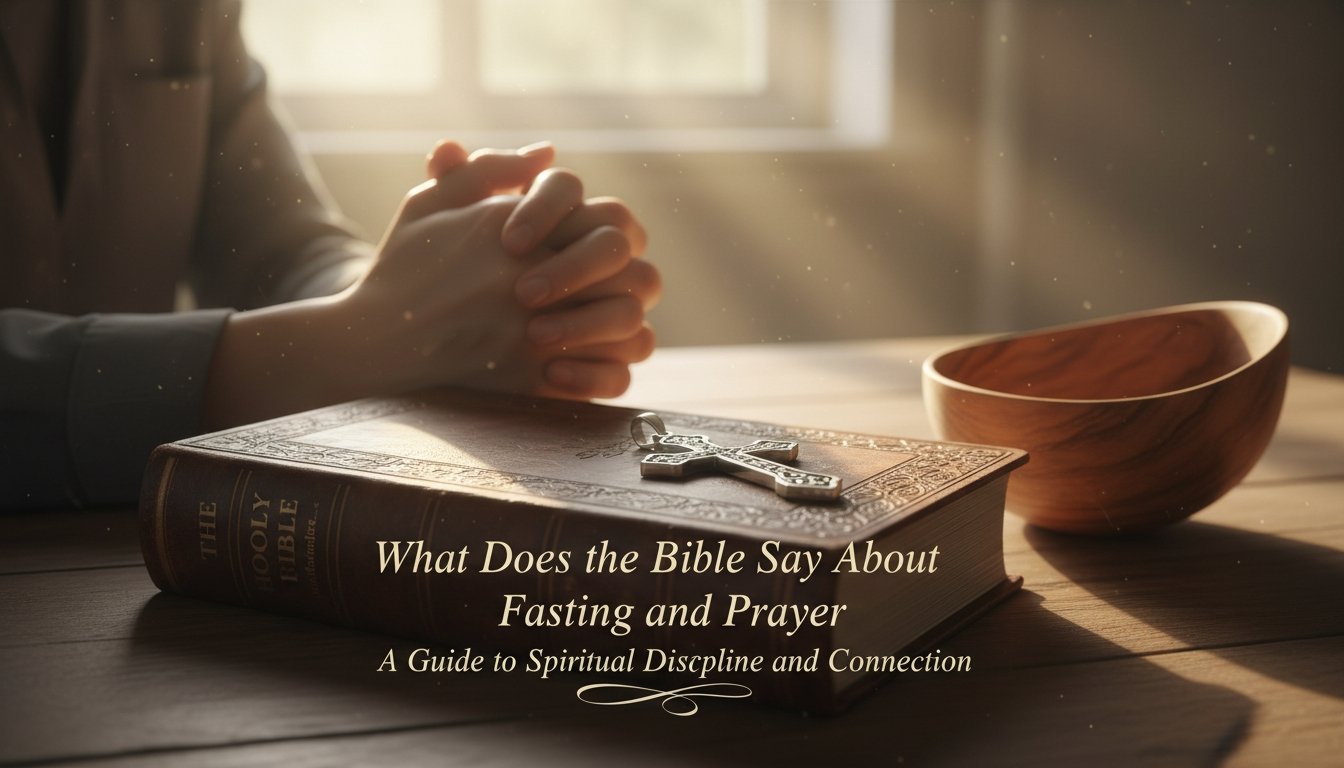
08 Feb What Does the Bible Say About Fasting and Prayer
Biblical fasting strengthens your prayer life by adding urgency and focus to your communion with God. You’ll find that fasting expresses genuine repentance, seeks divine guidance in crucial decisions, and demonstrates complete dependence on God rather than earthly sustenance. Jesus taught that fasting should be done secretly, avoiding public recognition while drawing near to the Father. Whether through normal, absolute, or partial fasts, you’re positioning yourself for deeper spiritual breakthrough and divine intervention.
Key Takeaways
- Biblical fasting strengthens prayer by adding urgency and focus to intercession, making communion with God more intense.
- Jesus taught that fasting should be done secretly to God rather than for public recognition or praise.
- Fasting expresses complete spiritual dependence on God as our primary source of sustenance and provision.
- Scripture records various fast types: normal (food only), absolute (food and water), and partial (restricted foods).
- Biblical examples show corporate and individual fasting leading to divine guidance, deliverance, and miraculous intervention.
What Are the Biblical Purposes for Fasting?

Why did believers throughout Scripture choose to deny themselves food and drink in pursuit of God? The purposes of fasting reveal five key spiritual motivations that demonstrate complete dependence on the Almighty.
First, prayerful fasting strengthens your prayer life. Ezra 8:23 shows how fasting adds urgency and importunity to intercession, changing your praying rather than God’s hearing.
Fasting transforms the intensity and earnestness of your prayers, deepening your spiritual focus rather than changing God’s willingness to listen.
Second, you’ll seek divine guidance more effectively, as Judges 20:26 demonstrates when leaders needed God’s direction for crucial decisions.
Third, fasting expresses genuine repentance. First Samuel 7:6 and Joel 2:12 connect fasting with heart-rending mourning over sin, demonstrating your seriousness about returning to God.
Fourth, you’ll seek deliverance during crises, following examples like Jehoshaphat’s prayer in 2 Chronicles 20:3-4 and Esther’s communal fast. This corporate act of seeking safety typically involves joining with other believers in unified petition.
Finally, fasting expresses humility and worship, as seen in 1 Kings 21:27-29, acknowledging God as your primary source of sustenance and demonstrating complete spiritual dependence.
How Jesus Taught About Biblical Fasting
When Christ addressed fasting in the Sermon on the Mount, He revolutionized how believers should approach this ancient spiritual discipline. Jesus exposed pharisaic hypocrisy by condemning those who disfigured their faces and wore tattered clothing to gain public recognition for their fasting. He rejected external religious obligation without genuine heart motivation.
Instead, Jesus taught secret fasting—washing your face, anointing your head with oil, and maintaining normal appearance so no one detects you’re fasting. Your Father who sees in secret will reward proper motives. Jesus emphasized that fasting must center on drawing near to God, not winning human applause.
Significantly, Jesus said “when you fast,” not “if you fast,” indicating He expected His followers to practice this discipline. His own forty-day fast demonstrated fasting’s spiritual power to strengthen faith and overcome temptation. This practice transforms hunger into an opportunity for spiritual focus on God’s provision and mercy. True biblical fasting expresses that Jesus is better than food.
Types of Biblical Fasts and Their Duration
Understanding Jesus’s heart for fasting naturally leads us to explore the practical forms this discipline takes throughout Scripture. Biblical fasts offer three primary approaches, each with specific duration guidelines suited to different spiritual needs.
The normal fast abstains from food while allowing water. You’ll find common durations ranging from one day to extended periods like Daniel’s 21-day fast or Jesus’s 40-day example. This form provides sustainable spiritual focus for most situations.
Absolute fasts eliminate both food and water, typically lasting up to three days. Esther’s crisis required this intensity, as did Paul’s Damascus road encounter. These biblical fasts address urgent spiritual battles requiring maximum consecration.
Partial fasts restrict certain foods rather than eliminating everything. Daniel chose vegetables and water for ten days, later avoiding meat and rich foods for 21 days. This approach works well for extended seasons of seeking God’s guidance while maintaining daily responsibilities.
Key Biblical Examples of Fasting and Prayer
Throughout Scripture, powerful testimonies reveal how God’s people combined fasting with fervent prayer to witness extraordinary divine intervention. When examining fasting vs prayer, you’ll discover they work synergistically—fasting amplifies prayer’s intensity while prayer provides fasting’s spiritual direction.
Jehoshaphat proclaimed corporate fasting throughout Judah when enemy armies approached. The people gathered, sought God’s help, and experienced miraculous victory as divine intervention confused their enemies. Esther called a three-day fast for all Jews facing genocide, resulting in their preservation and Haman’s downfall.
Daniel’s extended fasts brought prophetic revelation and angelic visitation. His twenty-one-day partial fast unlocked understanding of end-time visions. Even pagan Nineveh experienced God’s mercy through corporate fasting and repentance.
Jesus’ forty-day wilderness fast prepared Him for public ministry, demonstrating supernatural authority over demons and disease. Each example shows fasting combined with prayer creates spiritual breakthroughs that transform circumstances and release God’s power.
Frequently Asked Questions
Can Children and Elderly People Participate in Biblical Fasting?
Yes, but you’ll need wisdom for safe children participation and thoughtful elderly inclusion.
Children can fast from sweets, screens, or unkind words while joining your prayer times.
The elderly should consider health limitations, focusing on spiritual disciplines rather than food restriction.
Both groups can participate meaningfully through prayer, Scripture reading, and acts of service, building spiritual foundations without physical harm.
What Foods and Drinks Are Permitted During Different Types of Fasts?
Different biblical fasting foods depend on your chosen fast type. During regular fasts, you’ll consume only water exceptions like plain water. Absolute fasts permit nothing—no food or drink. Partial fasts allow specific foods like vegetables, while Daniel fasts include fruits, vegetables, nuts, and whole grains. You’ll exclude meat, dairy, and processed foods. Choose your fast prayerfully, seeking God’s guidance for which approach serves your spiritual journey best.
Should Married Couples Fast Together or Can They Fast Individually?
You can practice marital fasting together or pursue individual devotion separately—both approaches honor God. While 1 Corinthians 7:5 encourages mutual consent for prayer and fasting, it doesn’t prohibit personal fasting.
Joint fasting strengthens unity and creates powerful spiritual breakthroughs in your marriage.
Individual fasting allows personal growth and seeking God’s guidance.
Choose what fits your spiritual needs and circumstances while maintaining love and respect.
How Do I Know When God Wants Me to Break My Fast?
You’ll know through personal discernment and mindful timing as God speaks to your heart during prayer. He may indicate completion when your predetermined period ends, spiritual breakthrough occurs, or you’ve received divine guidance through Scripture. Don’t ignore genuine physical weakness—God’s strength is perfected in weakness (2 Corinthians 12:9). Seek His direction through prayer and Scripture reading to discern when He’s calling you to break your fast.
Is It Sinful to Stop a Fast Early Due to Health Concerns?
No, it’s not sinful to stop a fast early due to health considerations. God values your well-being over legalistic adherence to fasting.
Scripture shows God desires obedience and wisdom, not actions that harm your body—His temple.
When health concerns arise, breaking your fast demonstrates stewardship of the body He’s given you. Prioritize your physical health; God honors wise decisions that protect your well-being.
Conclusion
You’ll find that fasting and prayer aren’t just spiritual disciplines—they’re powerful tools God’s given you to draw near to Him. When you fast with genuine humility and seek His face, you’re following Jesus’s example and the practices of faithful believers throughout Scripture. Don’t approach fasting as a ritual, but as an opportunity to align your heart with God’s will and experience His presence more deeply.










No Comments