

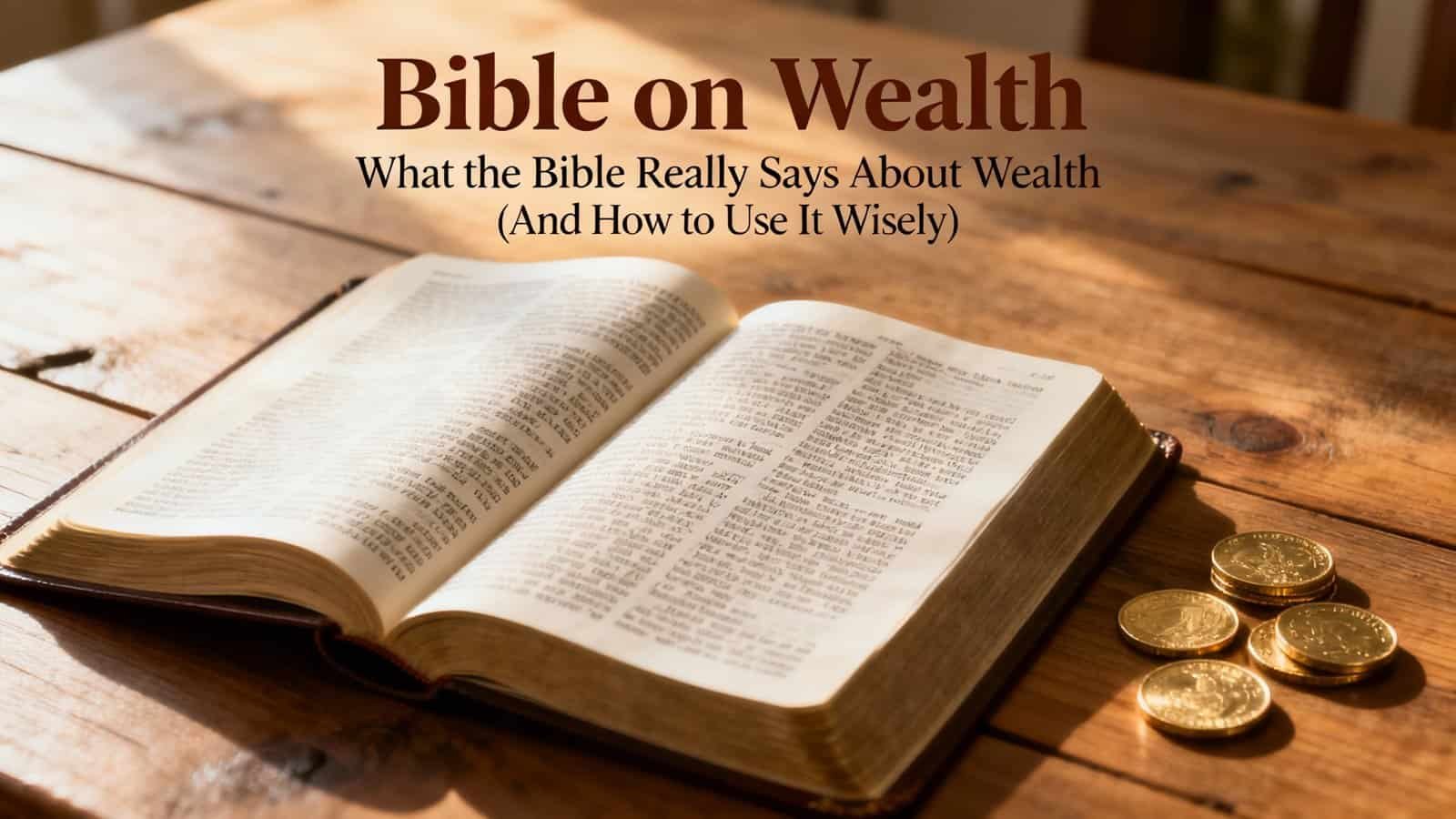
01 Dec Bible on Wealth: What the Bible Really Says About Wealth (And How to Use It Wisely)
The Bible presents wealth as God’s entrustment requiring faithful stewardship, not personal achievement or security. You’re called to recognize money’s power to compete with God for your heart’s allegiance, as Jesus warned you can’t serve both God and wealth. Scripture affirms prosperity can reflect divine blessing when tied to covenant obedience and generous care for the vulnerable. Yet riches often become idolatrous traps that harden hearts and create false security. Biblical wisdom transforms your financial perspective from accumulation to Kingdom investment through sacrificial giving and contentment.
Table of Contents
Key Takeaways
- The Bible presents wealth as God’s blessing requiring faithful stewardship, generosity toward the vulnerable, and covenant obedience rather than personal accumulation.
- Jesus taught that divided allegiance between God and money is impossible, warning that wealth can obstruct Kingdom entry and spiritual growth.
- Scripture warns against wealth creating false security, becoming an idol, and hardening hearts against God’s purposes and people’s needs.
- Biblical wisdom emphasizes contentment over accumulation, honest work, proportional giving, and using resources as tools for Gospel advancement and community service.
- True riches are measured by heavenly treasures and Christ’s inheritance, not earthly possessions which moths, rust, and time ultimately destroy.
The Old Testament Foundation: Prosperity as Blessing and Responsibility

When you examine the Hebrew Scriptures, you’ll discover that material prosperity often appears as a tangible sign of God’s favor, yet it invariably comes bound with divine expectations.
Abraham’s wealth, Solomon’s riches, and Job’s restoration demonstrate Covenant Prosperity—God’s provision linked directly to faithfulness and obedience.
You’ll notice prosperity isn’t merely personal gain; it’s communal responsibility.
The Mosaic Law establishes this through Jubilee Principles, where you’d release debts, return ancestral lands, and liberate servants every fiftieth year.
These revolutionary economic resets prevented permanent poverty and excessive wealth concentration.
You’re seeing God’s design for cyclical restoration and economic justice.
Throughout Deuteronomy, you’ll find prosperity conditional upon covenant keeping.
The prophets consistently denounce those who’ve accumulated wealth through oppression, reminding you that riches without righteousness invite judgment.
The Old Testament doesn’t condemn wealth itself but demands you recognize it as God’s entrustment, requiring wise stewardship and generous distribution among the vulnerable.
Jesus’ Revolutionary Teaching on Money and the Kingdom of God
Christ’s arrival marked a seismic shift in how God’s people understood wealth and poverty.
Where the Pharisees equated riches with righteousness, Jesus declared the poor blessed and warned that wealth could block entry to God’s kingdom.
The Pharisees measured righteousness in riches, but Jesus blessed the poor and warned wealth could bar heaven’s gates.
You can’t miss His radical reorientation: “You can’t serve both God and money” (Matthew 6:24).
Jesus exposed the Mammon Allegiance that grips the human heart.
When you store up earthly treasures, moths and rust destroy them—but heavenly investments remain eternal.
He didn’t condemn possession but exposed obsession.
The rich young ruler walked away grieved because his Treasure Priorities were inverted; he loved his wealth more than eternal life.
Christ’s teaching doesn’t romanticize poverty or demonize prosperity.
Instead, He calls you to revolutionary generosity, sacrificial giving, and complete dependence on the Father’s provision.
Your wealth becomes dangerous when it becomes your security.
It becomes blessed when it serves the Kingdom’s advance.
The Apostolic Perspective: Paul’s Principles for Financial Contentment
Though Paul never met Jesus during His earthly ministry, the apostle’s encounter with the risen Christ transformed his understanding of material wealth from privilege to tool.
You’ll find Paul’s Tentmaking Ethic revolutionary—he worked with his hands to support himself, refusing to burden churches financially while establishing God’s kingdom.
His manual labor wasn’t merely practical; it demonstrated gospel freedom.
Through his Epistolary Counsel, Paul teaches you that godliness with contentment is great gain.
He doesn’t condemn wealth itself but warns against its pursuit becoming idolatry.
You’re called to learn contentment in abundance and need alike, recognizing that Christ’s strength enables both states.
Paul’s financial principles aren’t about accumulation but stewardship.
He instructs you to work honestly, share generously, and support ministry faithfully.
His own example shows how financial independence can advance the gospel while his teachings reveal that true riches aren’t measured in denarii but in Christ’s inheritance.
Biblical Warnings Against the Dangers of Wealth and Greed
While Scripture acknowledges wealth as a potential blessing from God, it repeatedly warns you that riches can become spiritual snares that entangle the soul. Jesus’s parable of the rich fool (Luke 12:16-21) reveals how wealth breeds false security, leading to Heart Hardening against God’s voice.
Wealth breeds false security, hardening hearts against God’s voice and entangling souls in spiritual snares.
You’re cautioned that “where your treasure is, there your heart will be also” (Matthew 6:21).
The Idolatry Risk inherent in wealth can’t be overstated. Money promises what only God provides—security, identity, and purpose.
Paul warns that “those who want to get rich fall into temptation and a trap” (1 Timothy 6:9). Wealth’s deceptive nature makes you trust in uncertain riches rather than the living God.
Scripture doesn’t condemn possession but obsession. When riches increase, don’t set your heart on them (Psalm 62:10).
You must guard against greed’s subtle infiltration, recognizing that contentment with godliness is great gain.
Practical Wisdom for Modern Stewardship and Generous Living
As you navigate today’s complex financial landscape, biblical stewardship principles offer timeless wisdom for managing resources and practicing radical generosity. You’re called to be a faithful manager of God’s provision, recognizing that everything you possess ultimately belongs to Him.
Start with budgeted generosity—don’t give from leftovers but prioritize giving in your financial planning. Scripture teaches proportional giving that’s deliberate and sacrificial, not merely convenient. You’ll find freedom when generosity becomes systematic rather than sporadic.
Consider impact investing as modern stewardship. You can align your investments with Kingdom values, supporting businesses that serve communities and honor biblical ethics. Your portfolio can advance God’s purposes while generating returns.
Practice contentment while pursuing excellence in your vocation. You’re working for the Lord, not merely earning a paycheck. Create margin in your finances for spontaneous generosity. When you encounter needs, you’ll be positioned to respond as God’s hands and feet in real-time ministry.
Frequently Asked Questions
Is Tithing 10% Still Required for Christians Today?
You’re not bound by the 10% tithe requirement today.
Tithe Origins trace back to Old Testament law, specifically given to Israel to support the Levites and temple worship.
Under the New Covenant, Christ fulfilled the law, and you’re called to generous, cheerful giving led by the Spirit.
Scripture doesn’t mandate a percentage but encourages sacrificial generosity that reflects God’s grace.
Your giving should flow from worship, not obligation.
Should Christians Invest in the Stock Market or Cryptocurrency?
You’re free to invest in stocks or cryptocurrency, but Scripture calls you to wisdom and stewardship.
Consider your risk tolerance carefully—don’t gamble with money you can’t afford to lose.
Practice ethical investing by avoiding companies that exploit others or promote sin.
Remember, “whoever gathers money little by little makes it grow” (Proverbs 13:11).
Whether investing traditionally or in crypto, you’re accountable to God for how you manage His resources.
Is It Wrong for Christians to Play the Lottery?
You’ll find scriptural perspectives don’t explicitly forbid lottery participation, but they warn against get-rich-quick schemes and loving money.
Playing occasionally with expendable funds isn’t inherently sinful, but you’re called to be a wise steward.
Consider the risks of gambling addiction and how it might affect your witness.
If you’re hoping the lottery will solve financial problems or becoming obsessed with winning, you’ve crossed into dangerous spiritual territory that dishonors God.
How Do I Know if God Wants Me to Be Wealthy?
You’ll discern God’s will for wealth through several calling indicators: your spiritual gifts align with opportunities that create value, doors open consistently despite obstacles, and wise counselors confirm your direction.
Most importantly, examine your heart motives—God may prosper you if you’re genuinely seeking His kingdom first, demonstrating faithful stewardship, and maintaining contentment regardless of circumstances.
Scripture shows He entrusts resources to those who’ll advance His purposes, not personal ambition.
Can Christians Declare Bankruptcy if They Have Overwhelming Debt?
Yes, you can declare bankruptcy as a Christian when facing insurmountable debt, though it shouldn’t be your first choice.
Scripture calls you to honor debts when possible, but God offers moral forgiveness for financial failures.
Before filing, you should exhaust alternatives like negotiating with creditors and seeking community aid through your church. Bankruptcy laws exist as merciful provisions, reflecting biblical principles of jubilee and fresh starts for the overwhelmed.
Conclusion
You’ve discovered that Scripture doesn’t condemn wealth itself but challenges how you acquire, view, and steward it. God’s Word calls you to hold possessions loosely, pursue contentment, and practice radical generosity. Whether you’re blessed with much or little, you’re accountable for faithful management of God’s resources. Let these biblical truths transform your relationship with money—from ownership to stewardship, from accumulation to distribution, from temporal security to eternal investment. Your wealth becomes worship when wielded wisely.









No Comments