


22 Apr Strong Women in the Bible Who Still Inspire Today
You’ll find that the stories of Deborah, Esther, Ruth, Zipporah, Shiphrah, Puah, Miriam, Abigail, and Hannah aren’t just ancient tales—they’re blueprints for modern leadership. Each woman blends courage, wisdom, and compassion in ways that still echo in boardrooms, families, and communities. Their choices reshaped nations, saved lives, and forged lasting legacies. As you explore their lives, you’ll see how their strengths can inform the challenges you face today.
Table of Contents
How Deborah’s Leadership Defines Biblical Women’s Power
When you read Deborah’s story, you see a leader who unites a fragmented nation, commands an army, and settles disputes—all while sitting under the Palm of Deborah. You notice her authority isn’t derived from a throne but from prophetic insight and practical wisdom. She summons Barak, directs a 10,000‑man force, and then leads them into battle, trusting God’s promise.
Her judgments under the palm settle tribal quarrels swiftly, showing that justice can be administered without violence. You recognize that her dual role as judge and prophet models a collaborative leadership style; she empowers Barak while retaining ultimate decision‑making power. This balance of counsel and command illustrates that biblical women wield influence through strategic vision, moral authority, and communal service.
How Esther’s Courage Shows Biblical Women’s Influence
What can a single queen’s daring act teach us about influence? You see Esther stepping into a perilous court, knowing that approaching King Ahasuerus unsummoned could cost her life. Yet she fasted three days, gathered allies, and timed her plea precisely, turning a personal risk into a national salvation. Her courage shows that influence isn’t about titles alone; it’s about leveraging position with strategic humility.
You learn that boldness, when paired with prayer and preparation, can shift political tides. Esther’s story invites you to recognize your own sphere of impact—whether in a boardroom, a family, or a community—and to act with conviction, even when the odds seem stacked against you. By embracing vulnerability and decisive timing, you can transform fear into a catalyst for change, echoing Esther’s legacy of courageous influence.
How Ruth’s Loyalty Demonstrates Relational Leadership
Ever wondered how a simple act of loyalty can reshape a community? When you follow Ruth’s example, you see relational leadership in motion. She chooses to stay with Naomi, leaving her own comfort and security behind. By gleaning in the fields of Boaz, she earns trust through hard work, humility, and perseverance. Her loyalty isn’t passive; it creates a network of mutual support. Boaz notices her integrity, offers protection, and eventually integrates her into his household. This partnership extends beyond personal gain, influencing the lineage of David and, ultimately, the Messiah. You learn that leadership rooted in relational loyalty builds bridges, transforms social structures, and inspires collective resilience. Ruth’s story shows that steadfast devotion to people, not just tasks, cultivates influence that reverberates through generations.
How Zipporah’s Quick Decision Saved the Exodus
Ruth’s loyalty shows how personal commitment can reshape a community; Zipporah’s split‑second choice does the same on a national scale. You’re standing at the edge of a life‑changing moment: Moses, the future leader of Israel, is struck by divine wrath on the road to Egypt. The text says God sought to kill him, but Zipporah intervenes. She quickly performs a circumcision on their son, declares, “You are a bridegroom of blood,” and the threat recedes. Her swift, decisive act prevents the death of Moses, preserving the man who’ll lead the Israelites out of bondage. By recognizing the gravity of the situation and acting without hesitation, Zipporah demonstrates crisis leadership that saves an entire nation’s destiny. Her example teaches you that a single, courageous decision can alter history, turning potential disaster into divine deliverance.
How Shiphrah & Puah Defied Pharaoh for Moral Courage
How could two midwives—Shiphrah and Puah—brace a king’s decree and still protect the future of a nation? You read their story in Exodus 1:16‑21 and feel the tension between law and conscience.
Pharaoh demanded that every newborn Hebrew boy be killed, yet you see Shiphrah and Puah choosing a different path. They claim fear of God as their motive (Exodus 1:17), and you recognize that fear as reverence, not terror. By letting the boys live, they defy a tyrant without overt rebellion, trusting that divine justice outweighs mortal threats.
Their quiet resistance saves countless lives, ensuring the lineage that will later lead Israel out of bondage. You can admire their moral courage: they act within their roles, yet subvert a murderous order. Their example teaches that ethical conviction can flourish even under oppressive regimes, shaping history through steadfast, compassionate defiance.
How Miriam’s Red‑Sea Song Boosted Troop Morale
The midwives’ quiet defiance shows how moral courage can reshape destiny, and the next example of fearless leadership appears on the shores of the Red Sea. You stand with the Israelites, trembling after the miraculous crossing, and Miriam lifts her voice. She leads the women in a triumphant song, proclaiming God’s power and the defeat of Pharaoh’s army. Her melody turns fear into confidence, reminding you that the same hand that split the waters still protects you. The rhythm syncs your steps, the lyrics echo through the camp, and the collective chant builds a shared identity of deliverance. As you chant, you feel unity surge, doubts dissolve, and a renewed resolve to face the wilderness ahead. Miriam’s song becomes a rallying cry, a spiritual morale booster that transforms a fleeting victory into lasting perseverance for the whole people.
How Abigail’s Wisdom Prevented Violence and Modeled Peacemaking
Ever wondered how a single, well‑timed word can halt a brewing war? When David learned that Nabal had insulted his men, he gathered a force of 400 men, ready to strike. You step into Abigail’s shoes and see her assess the danger instantly. She gathers provisions, rides out, and meets David before his soldiers arrive. Her calm voice acknowledges his honor, then offers generous gifts, saying, “If the Lord has blessed you, let my actions please you.” She refrains from blaming Nabal, focusing on preventing bloodshed. David’s anger cools; he accepts the peace offering and thanks her wisdom. By choosing humility over confrontation, Abigail transforms a potential massacre into a diplomatic resolution. Her example teaches you that thoughtful communication, timely generosity, and respect for the opponent’s dignity can defuse conflict and set a lasting precedent for peacemaking.
How Hannah’s Persistent Prayer Exemplifies Faith‑Driven Action
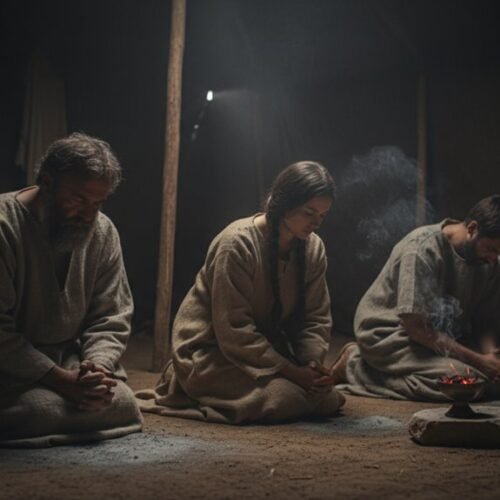
When Hannah entered the sanctuary, she poured out her heart in relentless prayer, trusting that God would answer her deepest longing for a child. You can picture her kneeling, tears streaming, yet refusing to give up. Each day she returned, offering vows and petitions, embodying a faith that moves beyond words into action.
Her persistence wasn’t passive; it sparked a concrete response—she kept her promise to dedicate Samuel to the Lord’s service, turning personal anguish into communal blessing.
Frequently Asked Questions
What Cultural Contexts Shaped Deborah’s Leadership Style?
You see Deborah’s leadership shaped by a patriarchal, tribal Israel where judges ruled and warlords commanded.
The Judges period demanded decisive, charismatic authority to unite fragmented clans, so she stepped into a prophetic‑judicial role that blended spiritual legitimacy with political power.
Her position as a woman forced her to negotiate male dominance, using divine endorsement and wisdom to command respect, while the constant threat of Canaanite aggression pushed her toward bold, collaborative tactics.
How Did Esther’s Fasting Influence Her Diplomatic Tactics?
You’ll see that Esther’s three‑day fast sharpened her resolve, letting her approach the king with calm confidence. The hunger heightened her spiritual focus, so she prayed for wisdom and courage. When she entered the throne room, she used that inner peace to speak persuasively, timing her request precisely after gaining the king’s favor. The fast also signaled humility, making the monarch more receptive to her diplomatic plea.
What Economic Factors Enabled Ruth’s Gleaning Success?
You’ll find Ruth’s gleaning thrived because the Israelite law required landowners to leave the edges of their fields unharvested for the poor, and the famine‑driven economy forced many to seek supplemental food.
The seasonal harvest cycle meant plenty of grain during barley and wheat months, while the communal support network in Bethlehem ensured she could work the fields without rent, turning modest gleanings into a reliable livelihood.
Why Did Zipporah’s Circumcision Matter for Israel’s Identity?
You should know that Zipporah’s circumcision saved Moses from divine wrath, which in turn kept the Exodus narrative on track.
By performing the rite, she affirmed the covenant sign that defined Israel’s identity, showing that even a Midianite woman could uphold God’s law.
This act preserved the lineage of the nation, prevented a catastrophic judgment, and reinforced the covenant’s central role in shaping Israel’s destiny.
How Did Shiphrah and Puah’s Defiance Affect Later Biblical Law?
You’ll see that Shiphrah and Puah’s defiance set a precedent for civil disobedience that later law codified as “protecting life.” Their refusal to obey Pharaoh’s decree inspired the Mosaic commandment prohibiting infanticide (Exodus 22:2‑3) and reinforced the principle that human dignity outweighs human law. This moral hierarchy underpins the Torah’s later statutes on justice and compassion.
Conclusion
You see how each of these women—Deborah, Esther, Ruth, Zipporah, Shiphrah, Puah, Miriam, Abigail, and Hannah—turns faith into action, blending courage, wisdom, and compassion. Their stories remind you that leadership isn’t limited by gender or era; it’s about stepping up, speaking out, and serving others. Let their examples guide you as you lead, inspire, and make a lasting impact in your own community today.











No Comments