

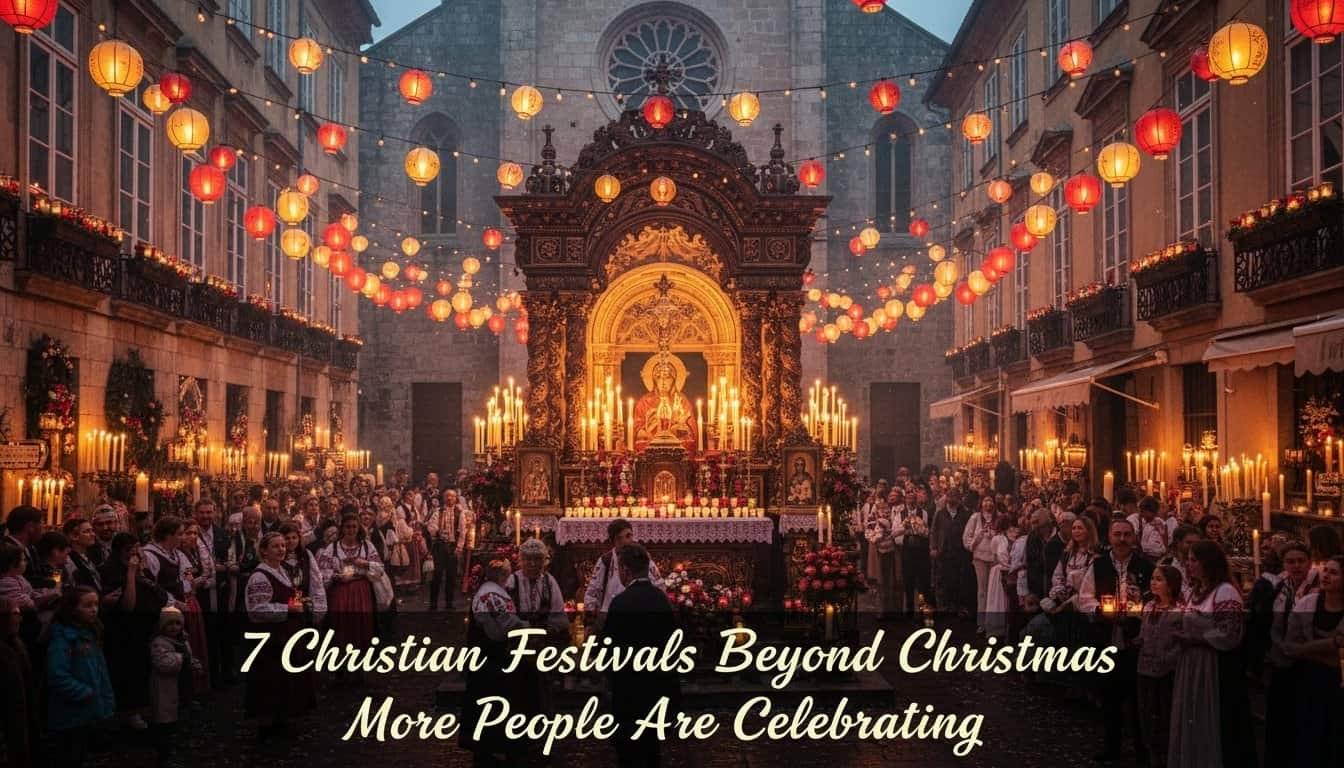
19 Apr 7 Christian Festivals Beyond Christmas More People Are Celebrating
You’ll find that many Christians now celebrate seven vibrant festivals beyond Christmas—Passover Sunday links the Seder to the Last Supper, Unleavened Bread Week swaps leavened loaves for a “Bread of Purity” service, First Fruits Services honor the resurrection with Leviticus‑based imagery, Pentecost ignites the Holy Spirit’s gifts, Ascension Day marks Christ’s return and intercession, Sukkot‑inspired Tabernacle Sundays create temporary sacred spaces, and emerging Easter extensions stretch worship into a full Easter Week. Keep going to discover how each tradition deepens faith and community.
Table of Contents
Passover Sunday: How Christians Connect the Seder to Christ
Why does Passover Sunday matter to you as a Christian? It links the ancient Seder meal to the Last Supper, framing the unleavened bread and bitter herbs as symbols of Christ’s body and the suffering He endured. You’ll notice the table set with matzah, wine, and horseradish, each echoing a New Testament truth. When you break the bread, you remember Jesus as the Passover Lamb, whose sacrifice frees you from sin’s bondage. The bitter herbs remind you of his agony on the cross, while the wine points to the new covenant sealed in his blood.
Many congregations read Exodus 12 alongside the Gospels, highlighting continuity between Israel’s deliverance and redemption in Christ. This liturgical practice deepens your faith, connects you to the Jewish roots of Christianity, and prepares your heart for the upcoming Easter climax.
Unleavened Bread Week: Christian Easter Tradition Explained
After reflecting on the Passover Seder’s Christ‑centered symbols, you’ll notice the natural move to the week that follows—Unleavened Bread Week. You’ll see churches replace leavened loaves with plain, yeast‑free bread to echo the Israelites’ haste and sin’s removal. The liturgy often reads 1 Cor 5:6, reminding you that sin spreads like leaven, so the bread symbolizes purity and Christ’s sin‑less sacrifice. Many congregations hold a “Bread of Purity” service on the first day, inviting you to break and share the unleavened loaf as a communal reminder of the cross. Throughout the seven days, sermons focus on the New Covenant, linking the ancient feast to Jesus as the true Passover Lamb. You might also notice a subtle shift in worship music toward simple, unadorned melodies, reinforcing the theme of stripped‑down holiness that defines this Easter tradition.
First Fruits Services: A Christian Easter Tradition
When Easter rolls around, many churches add a First Fruits service that celebrates the new harvest of life believers receive through Christ’s resurrection. You’ll hear a brief sermon that ties Leviticus 23:10‑14 to 1 Cor 15:20, declaring that each believer is a living first‑fruit of the risen Lord. The worship team often sings “Christ the Lord Is Risen” while the pastor invites you to symbol a symbolic offering—typically a piece of fruit or grain—representing your renewed vitality in Christ. You might also experience a candle‑lighting rite, where each light signifies the hope of resurrection spreading through the congregation. This service usually occurs on Easter Sunday or the following week, giving you a tangible reminder that the resurrection isn’t a one‑time event but an ongoing harvest of spiritual growth. By participating, you affirm your identity as part of the living, resurrected community.
Pentecost: Celebrating the Holy Spirit’s Power
Pentecost bursts onto the liturgical calendar fifty days after Easter, marking the moment the Holy Spirit descended on the disciples and ignited the church’s mission. You’ll notice the color red draping altars, symbolizing the fire that sparked tongues of praise and bold proclamation. Congregations often lift their voices in vibrant hymns, while pastors emphasize spiritual gifts—prophecy, healing, and service—that empower everyday witness. Attendance spikes, with many churches reporting a 30 % surge compared to regular Sundays, reflecting a collective hunger for divine empowerment. You can join a “fire‑and‑flesh” service, where personal testimonies echo the apostolic experience of speaking in new languages. Expect communal prayers for bold evangelism, outreach projects, and church‑planting initiatives that echo the early believers’ zeal. By embracing Pentecost, you tap into the Holy Spirit’s transformative power, allowing faith to move beyond ceremony into dynamic, mission‑driven living.
Ascension Day: Christ’s Return and Ongoing Intercession
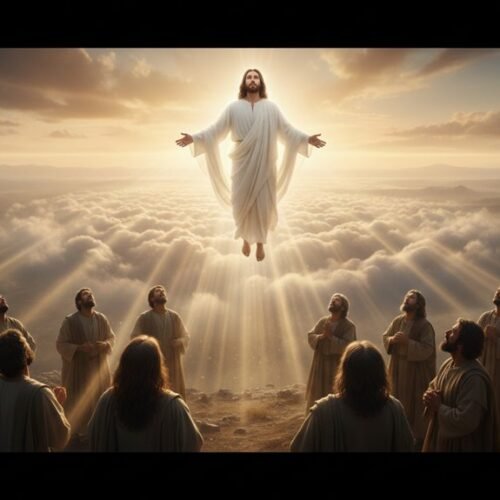
Even though it falls just six weeks after Easter, Ascension Day commands a distinct reverence as it marks Christ’s return to heaven and his ongoing intercession for believers. You’ll notice churches often schedule a special service, featuring the Gloria and Alleluia chants, and many display a banner depicting Christ Ascended. The liturgy reminds you that, after his earthly ministry, he took his seat at the right hand of the Father, interceding on your behalf.
This promise fuels hope, encouraging you to pray with confidence that he advocates before God. In many traditions, the day is a Holy Day of Obligation, so you might find schools and businesses closed, allowing you to attend the procession or a communion meal. As you reflect, remember that the Ascension isn’t an ending but a transition—Christ’s presence now spans heaven and earth, guiding your daily walk and pointing toward his promised return.
Sukkot‑Inspired Tabernacle Sundays
Building on the Ascension’s focus on Christ’s ongoing presence, many churches now create “Tabernacle Sundays” during Sukkot, erecting temporary shelters in their yards to echo the biblical feast of Tabernacles. You’ll see simple wooden frames draped with vines, fabric, or reclaimed pallets, each corner marked with a candle or a Scripture plaque. The space becomes a visual reminder that God dwells among His people, just as the Israelites lived under booths in the wilderness. You lead worship with psalms of gratitude, share testimonies of provision, and invite families to eat meals inside the shelter, reinforcing the theme of divine hospitality.
Children decorate the walls with harvest symbols, and congregants often bring fresh fruit or grain as a tangible offering. By holding these gatherings on Sundays, you connect the ancient festival to the weekly rhythm of church life, fostering a lived experience of God’s continual presence and care.
Emerging Christian Easter Traditions: Extending Celebration After Good Friday
What if Easter didn’t end on Sunday, but stretched into a week of fresh celebrations? You could start Monday with a “Resurrection Reflection” service that blends gospel reading with contemporary worship, then move to Tuesday for a “Bread‑Without‑Yeast” dinner echoing the Unleavened Bread rite. Wednesday might host a “First Fruits” gathering, where participants bring seasonal harvests to symbolize new life. Thursday, the day before Good Friday, could feature a “Passover Seder” re‑imagined for Christians, linking the Last Supper to Israel’s deliverance. After the solemnity of Good Friday, many churches now extend joy through a “Easter Week” series: Saturday night candlelight vigils, Sunday sunrise masses, and Monday “Hope Huddles” that invite testimonies. This emerging pattern lets you linger in the resurrection narrative, deepening faith while fostering community across the entire Easter season.
Frequently Asked Questions
How Can Churches Incorporate Passover Symbolism Without a Full Seder?
You can weave Passover symbols into worship by serving unleavened bread and bitter herbs during Communion, reading the Exodus narrative, and linking the Passover Lamb to Christ.
Light a single red candle to represent the blood, and display a simple “ram’s horn” emblem on the altar.
Include a brief prayer about liberation, and invite congregants to reflect on the covenant without staging a full Seder.
What Biblical Basis Supports a Modern “Unleavened Bread” Celebration?
You can ground a modern “unleavened bread” celebration in Scripture by citing Exodus 12, where God commands the Israelites to eat bread without leaven during the Passover, and Leviticus 23:6‑8, which establishes the Feast of Unleavened Bread as a seven‑day rite.
The New Testament reinforces the symbolism: 1 Cor 5:6 calls sin “leaven,” and Jesus’ “bread of life” discourse (John 6) links purity to spiritual nourishment.
Together, these passages give you a clear biblical foundation for the observance.
Do First Fruits Services Differ Between Denominations?
Yes, first‑fruits services vary by denomination. Catholics often tie them to Easter, emphasizing resurrection hope in a liturgical setting with special prayers and hymns.
Protestants, especially evangelicals, may keep them brief, focusing on sermons about Christ as the “first‑fruits” and personal testimony.
Orthodox churches sometimes blend the rite with Pentecost, adding incense and iconography.
Each tradition shapes the worship style, music, and theological emphasis differently.
Why Is Red the Liturgical Color for Pentecost?
Red’s the liturgical color for Pentecost because it symbolizes the fire of the Holy Spirit that fell on the disciples in Acts 2. You’ll see red banners, vestments, and candles representing that divine flame and the power that ignites believers’ hearts.
The hue also recalls the biblical imagery of tongues of fire, emphasizing spiritual renewal, bold witness, and the transformative energy that Pentecost celebrates across denominations.
Are Sukkot‑Inspired “Tabernacle Sundays” Biblical or Purely Cultural?
You’ll find that “Tabernacle Sundays” draw on biblical imagery but aren’t a direct command.
The Old‑Testament Sukkot festival describes temporary shelters, and the New Testament likens Christ to a tabernacle among believers.
Churches adapt that symbol, creating modern worship spaces for fellowship.
Conclusion
So, when you explore these festivals—Passover Sunday, Unleavened Bread Week, First Fruits, Pentecost, Ascension Day, Sukkot‑Inspired Tabernacle Sundays, and the emerging Easter extensions—you’ll see how rich and varied Christian celebration can be. Each tradition deepens your connection to Scripture, community, and the divine, proving that faith isn’t confined to Christmas but thrives throughout the year.




No Comments