

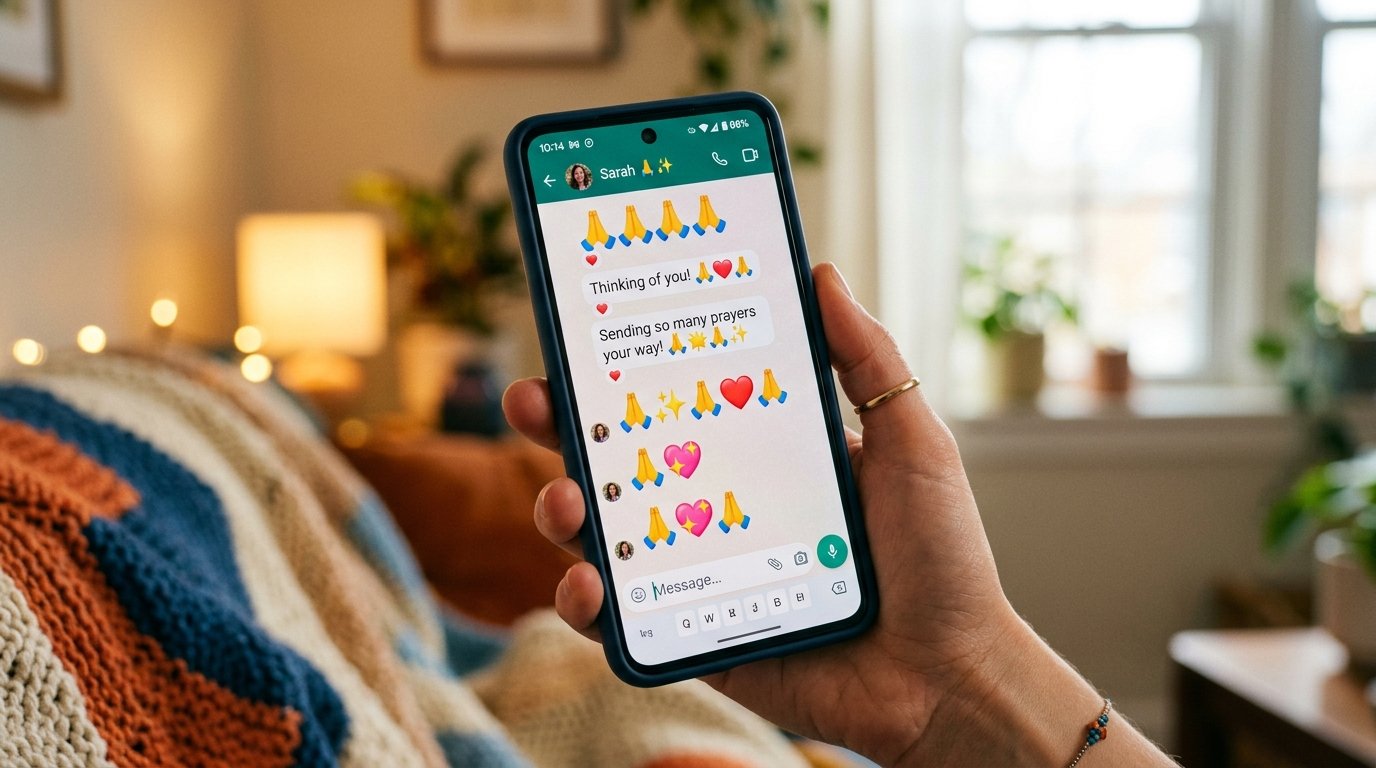
18 Mar Why Christian Prayer Emojis Are the New Way Believers Share Faith Online
You see Christian prayer emojis everywhere because they let you express reverence, ask for help, or share gratitude in a single, instantly recognizable image. Their stylized symbols—crosses, folded hands, doves—bypass language translation, so your brain registers the meaning faster than reading a sentence. This visual shortcut bridges generational gaps and creates a shared shorthand across platforms. If you keep going, you’ll discover how churches and influencers turn these emojis into powerful community tools.
Table of Contents
Define Christian Prayer Emojis and Their Core Purpose
What exactly are Christian prayer emojis, and why are they gaining traction? You’ll find them to be stylized icons that blend traditional Christian symbols—crosses, praying hands, doves—with the visual language of modern messaging. Their core purpose is to let you express reverence, request divine assistance, or share gratitude in a single, instantly recognizable image. By tapping a prayer emoji, you convey spiritual intent without typing a full sentence, preserving the emotional nuance of a heartfelt plea. These symbols also bridge generational gaps, allowing younger believers to integrate faith into everyday digital conversations. They serve as shorthand for worship, solidarity, and encouragement, reinforcing community bonds across platforms. In essence, Christian prayer emojis distill complex theological sentiments into compact graphics, making it easier for you to broadcast devotion, ask for blessings, and celebrate shared belief in a fast‑paced online world.
Explain Why Christian Prayer Emojis Communicate Faster Than Text
Why do emojis seem to cut straight to the point? You notice a prayer emoji and instantly grasp the sentiment without parsing a sentence. The tiny image packs a universally recognized symbol—hands clasped, a candle, a cross—into a single visual cue. Your brain processes that cue faster than reading words because it bypasses language translation and taps directly into visual memory.
When you scroll through a feed, the emoji stands out, drawing attention in milliseconds, while a text line competes for eye‑movement. Moreover, emojis eliminate ambiguity; a 🙏 conveys reverence, gratitude, or a request for intercession without extra qualifiers. You can string several emojis together, creating a concise narrative that conveys complex prayer intentions in a glance. This speed of comprehension lets you respond quickly, share more often, and keep the conversation flowing without the lag of typing full sentences.

List the Most Popular Christian Prayer Emojis and Their Exact Meanings
Ever wondered which emojis you should reach for when you want to convey prayer in a single tap? The 🙏 Folded Hands emoji signals a simple “please, Lord, hear my prayer.” The 🕊 Dove represents the Holy Spirit’s peace and a request for divine guidance. The ✝ Latin Cross conveys a direct appeal to Christ’s intercession. The 📿 Prayer Beads emoji hints at a longer, contemplative prayer session. The 🙌 Raising Hands suggest gratitude after a answered prayer. The 🛐 Place of Worship icon denotes a communal or church‑based prayer. The 💒 Church building emoji signals a request for blessings on a gathering. The 🕯 Candle emoji implies a prayer for remembrance or mourning. The 🌟 Glowing Star stands for a prayer of hope and divine illumination. Finally, the 🧎♂ Person Kneeling emoji shows humility and earnest pleading. Use these symbols to convey precise spiritual intent instantly.
Show How Churches and Influencers Use Christian Prayer Emojis to Build Community
After spotting the most popular prayer emojis and their exact meanings, churches and influencers are now weaving them into daily posts, stories, and livestream chats to spark instant connection. You’ll notice them dropping 🙏 at the end of a sermon teaser, turning a simple caption into a shared moment of reverence. Influencers pair the folded‑hands icon with personal testimonies, inviting followers to comment with the same emoji as a silent “Amen.” Live‑stream hosts flash the 🙏 emoji during prayer segments, prompting viewers to tap it in real time, which creates a visual pulse of collective worship.
Small groups use the emoji in group chats to signal when someone needs support, and the consistent symbol builds a recognizable language across platforms. By integrating these icons into challenges, giveaways, and Q&A sessions, you help turn fleeting scrolls into sustained community engagement, turning each emoji into a bridge between faith and fellowship.
Provide Respectful Best‑Practice Tips for Using Christian Prayer Emojis Across Platforms
How can you keep your use of Christian prayer emojis respectful and effective across different platforms? First, know the context: each platform—Twitter, Instagram, TikTok, Discord—has its own culture and character limit. Match the emoji’s tone to the post’s purpose; a simple 🙏 works for brief prayers, while a more elaborate 🙏🏽✝ fits longer reflections. Second, consider your audience. If you’re addressing believers, the emoji reinforces shared faith; if you’re speaking to a mixed crowd, pair it with clear language to avoid misunderstanding. Third, avoid overuse. One or two emojis per message keep the focus on the words, not the symbols. Fourth, respect copyright and trademark rules; use the standard Unicode emoji rather than custom graphics that could infringe. Finally, stay sensitive to timing—don’t pair prayer emojis with jokes about tragedy or controversial topics. By following these guidelines, you’ll convey reverence, foster community, and keep your digital ministry authentic.
Frequently Asked Questions
Do Christian Prayer Emojis Have Trademark Protection?
You can’t rely on a blanket trademark for Christian prayer emojis; only specific designs that meet distinctiveness and are registered can be protected. If a creator files a trademark for a particular stylized emoji, they can enforce it, but generic or widely used symbols aren’t automatically covered. So, check the USPTO database or relevant jurisdiction’s register to see whether a specific prayer emoji has been granted trademark rights.

Can Prayer Emojis Be Used in Formal Liturgical Documents?
You can’t use prayer emojis in formal liturgical documents.
Church guidelines require clear, reverent language and symbols that have theological precision; emojis are informal, ambiguous, and lack official sanction.
Even if a specific emoji were trademarked, its visual simplicity and secular origin make it unsuitable for sacramental texts, worship rubrics, or doctrinal statements.
Stick to traditional iconography and approved liturgical fonts to maintain reverence and legal compliance.
Are There Cultural Sensitivities When Combining Emojis With Sacred Symbols?
Yes, you should be aware of cultural sensitivities when you blend emojis with sacred symbols. Many believers treat holy icons with reverence, so a casual or playful emoji could feel disrespectful. Different traditions interpret symbols uniquely, and some might see the combination as trivializing faith. To avoid offense, consider your audience, use emojis sparingly, and respect the solemnity of the religious imagery you’re pairing them with.
How Do Emoji Platforms Handle Accessibility for Visually Impaired Believers?
You’ll find that most emoji platforms embed descriptive alt‑text and ARIA labels, so screen readers can announce each symbol’s meaning. Developers also map Unicode names to concise phrases like “folded‑hands” or “prayer‑beads,” letting visually impaired believers hear the intended intent. Some apps let you customize descriptions, ensuring cultural nuance and theological accuracy. By adhering to WCAG standards, these platforms make emoji‑based faith expressions accessible to everyone.
Do Emoji Usage Analytics Affect Church Outreach Strategies?
You’ll find that emoji usage analytics directly shape your church’s outreach strategies. By tracking which prayer emojis spike during services or social posts, you can pinpoint moments that resonate most with your community. Those insights let you tailor content, schedule live streams, and allocate ad spend toward the most engaging visual cues. In short, data‑driven emoji trends become a feedback loop, sharpening your messaging and expanding your reach.
Conclusion
You’ve seen how Christian prayer emojis let you share faith quickly, clearly, and with a touch of personality. By using the right symbols, you can join global conversations, support your church community, and express devotion without typing long messages. Keep them respectful, match the tone of each platform, and stay consistent with the meanings you’ve learned. When you blend tradition with modern tech, you help your faith stay vibrant and connected online.










No Comments