

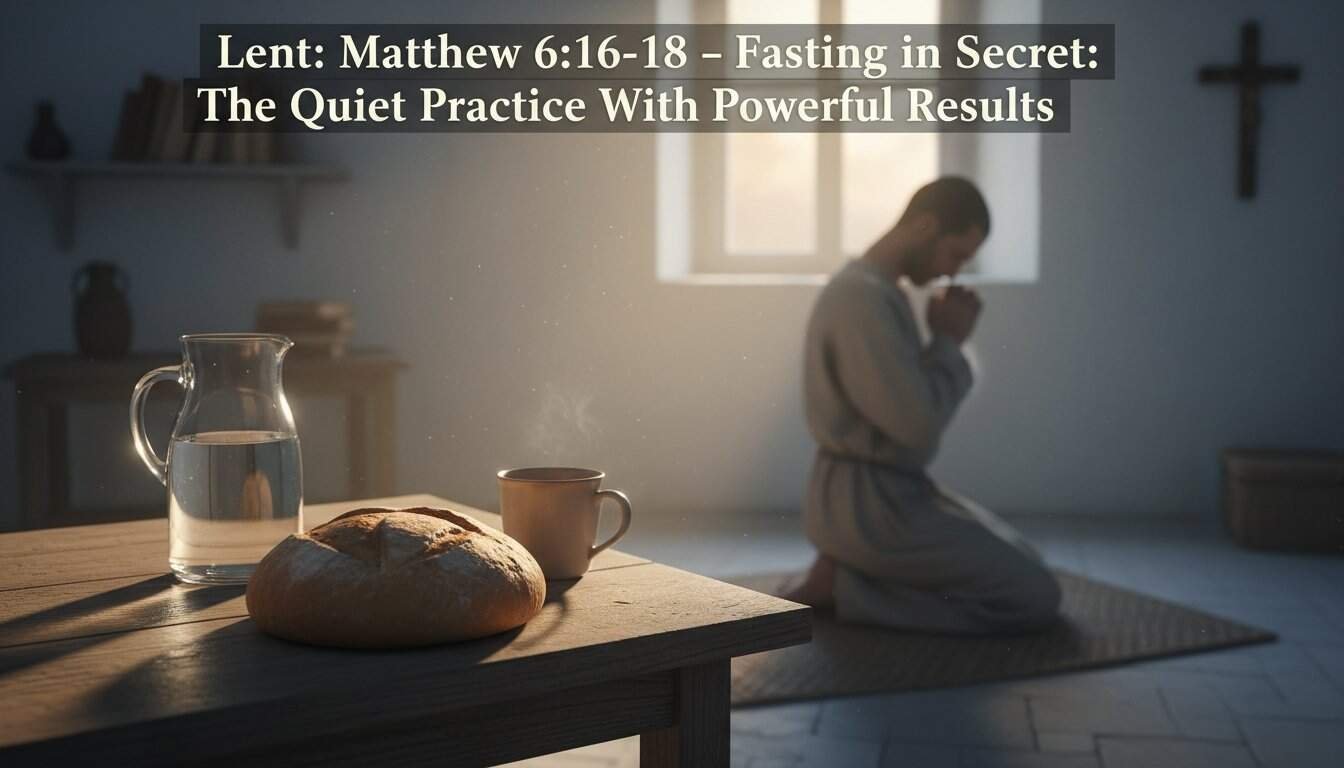
04 Feb Lent: Matthew 6:16-18 – Fasting in Secret: the Quiet Practice With Powerful Results
When you fast according to Matthew 6:16-18, you’re choosing spiritual hunger over physical appearance—and God notices your secret devotion. Unlike modern diet culture that targets weight loss, biblical fasting cultivates your appetite for divine communication and breakthrough. Jesus warns against public displays that seek human applause, instructing you to anoint your head and wash your face instead. Your hidden sacrifice between you and God unlocks supernatural rewards that transform your soul in ways visible results never could.
Table of Contents
Key Takeaways
- Biblical fasting prioritizes spiritual hunger for God over physical benefits like weight loss or health improvements.
- Jesus condemns public fasting displays, warning that seeking human approval eliminates heavenly rewards from the Father.
- Secret fasting involves maintaining normal appearance while focusing inwardly on prayer, humility, and dependence on Christ.
- Biblical heroes like Moses, Jesus, and Daniel used extended fasting to receive divine revelation and breakthrough.
- Hidden fasting yields supernatural rewards including spiritual insight, renewed vision, and deeper communion with God.
What Makes Biblical Fasting Different From Modern Diet Culture?

Why do so many Christians struggle to distinguish between biblical fasting and today’s wellness trends? The difference lies in your heart’s orientation. When you fast biblically, you’re cultivating spiritual appetite for God rather than pursuing modern health benefits. Your intent matters—are you responding to divine prompting or chasing physical results?
Biblical fasting expresses hunger for God over bodily needs, demonstrating biblical humility before Him. You’re not improving yourself; you’re positioning your heart to hear His voice through prayer and desperation. Modern diet culture, however, targets weight loss, metabolic flexibility, and disease prevention—focusing on your body rather than your soul.
True biblical fasting replaces physical cravings with spiritual nourishment. You’re seeking God’s guidance, expressing grief, or responding to His call. When you fast in secret as Matthew 6 instructs, you avoid the pride that accompanies public displays, allowing genuine transformation through dependence on Christ alone. Jesus expects disciples to fast regularly, as evidenced in His teaching “when you fast” rather than “if you fast.”

How Biblical Heroes Used Fasting For Spiritual Breakthrough
Throughout Scripture, God’s most faithful servants turned to fasting when they faced impossible circumstances and desperately needed divine intervention. Unlike today’s fasting trends driven by modern marketing and celebrity endorsements, biblical heroes fasted for profound spiritual purposes.
Biblical fasting emerged from desperate faith, not modern trends—God’s servants sought divine intervention through profound spiritual hunger.
Moses fasted forty days while receiving God’s commandments, demonstrating complete dedication to divine communication. Jesus prepared for Satan’s temptations through forty days of wilderness fasting, showing spiritual strength through physical weakness. When facing national extinction, Esther called for three days ofCorporate fasting, resulting in divine favor and her people’s salvation.
David’s seven-day fast revealed fasting’s role in humility and reconciliation with God, while Daniel’s extended fasting combined with prayer brought divine understanding about God’s prophetic timetable. Ezra’s fast while mourning over sin showed how fasting connects to communal repentance when confronting widespread spiritual failure among the people.
You’ll notice each biblical fast targeted specific spiritual breakthroughs: receiving revelation, overcoming temptation, gaining divine favor, achieving reconciliation, and understanding God’s plans. Their examples show fasting’s power when pursued with genuine spiritual hunger.
Why Jesus Warned Against Fasting For Show
When Jesus addressed fasting in the Sermon on the Mount, He didn’t question whether His followers should fast—He warned against turning this sacred discipline into spiritual theater.

You’ve likely seen it—the deliberate disfiguring of faces, somber expressions worn like badges, and unwashed appearances designed to broadcast devotion. The Pharisees mastered this performance, fasting twice weekly while ensuring everyone noticed their affliction. Their visible devotion became spiritual pride disguised as righteousness.
Jesus confronted these displays because He saw their secret motives: seeking human applause over divine approval. When you fast for public recognition, you’ve already received your complete reward—temporary human praise. God won’t add heavenly compensation to earthly acclaim.
The warning echoes through centuries: authentic fasting flows from God-centered hearts, not man-centered pride. Your Father sees what you do in secret and rewards accordingly. Don’t trade eternal recognition for fleeting human applause.
How To Practice Secret Fasting That God Rewards
Jesus didn’t just warn against performative fasting—He provided a clear blueprint for the kind of secret practice that captures your Father’s attention.
When you fast, anoint your head and wash your face. Maintain your normal appearance so others can’t detect your spiritual discipline. This isn’t deception; it’s protecting your private devotion from public scrutiny.
Your fasting should remain between you and God alone. Avoid somber expressions or behaviors that signal your sacrifice to observers. Instead, engage in private prayer and meditation during your fast, channeling your focus toward divine connection rather than physical discomfort.
This genuine approach positions your heart to receive God’s conviction and assurance of His presence. When your fasting flows from heartfelt alignment with God’s purpose rather than spiritual merit-seeking, you’ll experience the hidden rewards He promises—spiritual insight, renewed vision, and supernatural refreshing that transforms both you and your circumstances.
Frequently Asked Questions
Can I Drink Water or Other Beverages During a Biblical Fast?
Yes, you can drink water during most biblical fasts. Regular fasts permit water intake for health and hydration—drink at least half your body weight in ounces daily. Beverage alternatives like juice are acceptable in complete fasts. However, absolute fasts exclude all liquids and shouldn’t exceed three days. Daniel’s partial fast included water with vegetables. Choose your fast type prayerfully, prioritizing both spiritual growth and physical wellbeing.
How Long Should a Beginner Fast for Their First Time?
Start your beginner fasting journey with 12 hours, as most occurs during sleep when you’re naturally not eating. This first time guidance allows your body to adapt gently while experiencing God’s grace in discipline. After one week, gradually extend by one hour if comfortable. Remember, the Lord sees your heart’s intention more than duration. Focus on prayer and Scripture during hunger pangs, letting spiritual nourishment replace physical desires.
Are There Medical Conditions That Make Fasting Unsafe or Inadvisable?
Yes, several medical conditions make fasting unsafe. You must consider important safety considerations before fasting if you have heart disease, diabetes, liver problems, or digestive disorders. Medical precautions are essential for pregnant women, those with eating disorders, and anyone taking medications. God calls us to be wise stewards of our bodies, so consult your physician first. Honor Him through responsible fasting that protects your health.
Should I Tell My Spouse or Family About My Fasting Commitment?
Yes, you should tell your spouse about your fasting commitment. Sharing goals with your spouse creates accountability partners who can unterstützen your spiritual discipline. Discuss plans beforehand per 1 Corinthians 7, establishing boundaries and gaining understanding. This supports commitments while maintaining healthy family dynamics. Your spouse can provide practical help during meals and offer encouragement. Spousal awareness supports you without publicizing your fast to others.
What Should I Do if I Accidentally Break My Fast Early?
Don’t let unintended slip ups derail your spiritual journey. Breaking fast grace covers accidents—God values your heart’s intention over perfect performance. Consider fasting confession to trusted accountability partners for support and prayer. Evaluate whether you’re led to resume or conclude your fast. Reintroduce food gradually to avoid digestive distress. Remember, this isn’t about legalistic perfection but growing closer to Christ through discipline and dependence.
Conclusion
When you fast in secret, you’re following Christ’s example of intimate communion with the Father. Don’t seek applause or recognition—seek God’s face. Your hidden discipline won’t go unnoticed by Him. He sees your sacrifice, your hunger for His presence, and your willingness to deny flesh for spiritual gain. Trust that what’s done in secret will be rewarded openly. Let your fasting draw you deeper into God’s heart, not man’s approval.










No Comments