

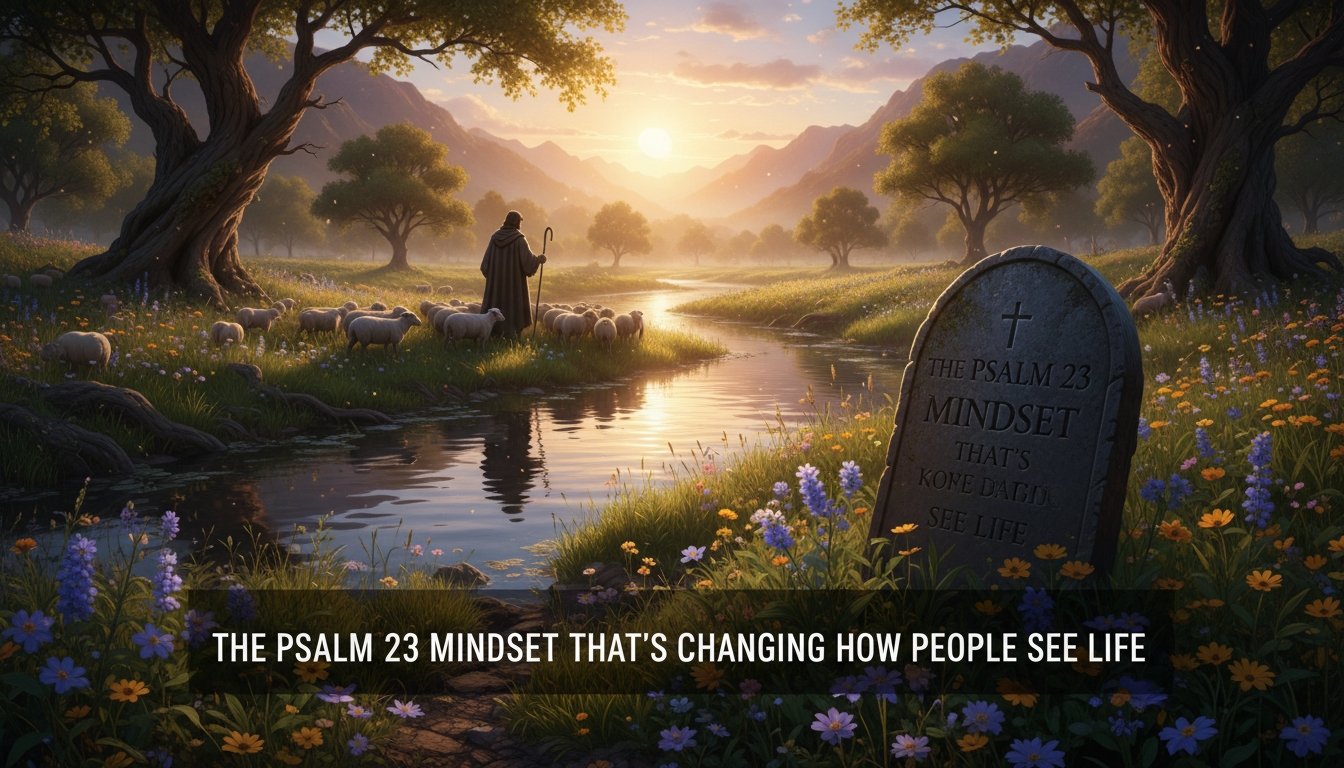
30 Jan The Psalm 23 Mindset That’s Changing How People See Life
The Psalm 23 mindset transforms how you see life by shifting your perspective from fear-based thinking to shepherd-guided peace. You’re no longer carrying life’s burdens alone—instead, you’re trusting in divine guidance through every valley and challenge. This ancient wisdom replaces anxiety with breathable moments of “still waters” and “green pastures,” even amid chaos. You’ll discover daily practices that anchor your identity in God’s unchanging care rather than circumstances, creating unshakeable inner strength that changes everything ahead.
Table of Contents
Key Takeaways
- People are reframing fear as unshakeable peace by viewing God as their shepherd who guides through life’s valleys.
- Daily anxiety practices include mindful breathing with “The Lord is my shepherd” and faith-based journaling for restoration.
- Morning routines now begin with “goodness and mercy follow me” instead of checking devices or anticipating problems.
- Relationships improve by applying shepherd leadership principles, creating safe spaces and setting compassionate boundaries during conflicts.
- Inner strength develops through supernatural confidence rooted in God’s unchanging presence, not mere positive thinking or circumstance avoidance.
How Psalm 23 Transforms Your Mindset From Fear To Peace

When anxiety grips your heart and uncertainty clouds your thoughts, Psalm 23 offers a profound shift that replaces fear with unshakeable peace. This ancient prayer rewires your thinking by establishing God as your shepherd—someone who leads, protects, and provides for you completely.
The fear transformation begins when you embrace the truth that you’re not navigating life’s valleys alone. Instead of focusing on what might go wrong, you’re guided to trust in divine care. Your shepherd knows the path ahead, even when you can’t see beyond today’s challenges.
This mindset shift creates inner peace because it transfers your burdens from your shoulders to God’s capable hands. You’re no longer required to have all the answers or control every outcome. When you truly believe “The Lord is my shepherd,” fear loses its grip, and peace becomes your natural state of being.

Daily Practices That Apply Psalm 23 To Modern Anxiety
Today’s anxieties demand practical tools that ground you in Psalm 23’s timeless wisdom. When worry overwhelms, practice mindful breathing while reciting “The Lord is my shepherd.” Let each inhale draw in God’s peace, each exhale release your fears.
When anxiety rises, breathe deeply and declare “The Lord is my shepherd”—let His peace enter, let your worries go.
Start faith based journaling by writing one verse from Psalm 23 daily, then reflect on how it applies to your current struggles. When facing uncertainty, journal about green pastures in your life—moments where God provided rest and restoration.
Create a “still waters” ritual during stressful moments. Pause, breathe deeply, and remind yourself that God leads you beside peaceful waters, not raging storms. He’s preparing a table before you, even in the presence of your enemies—including anxiety itself.
Transform your morning routine by declaring “surely goodness and mercy shall follow me” before checking your phone. This simple practice shifts your perspective from expecting problems to anticipating God’s faithfulness throughout your day.
Using Psalm 23 Wisdom In Relationships And Conflict
How does ancient shepherd wisdom transform your most challenging relationships? When conflict erupts, Psalm 23’s shepherd model offers faithful leadership principles that change everything.

“He leads me beside quiet waters” reveals how you can guide difficult conversations toward peace rather than escalation. Instead of reacting defensively, you create safe spaces where others feel heard and valued.
The psalm’s “rod and staff” imagery teaches compassionate conflict resolution. Your “rod” protects boundaries with love, while your “staff” gently guides relationships back on track. You’re not weaponizing scripture but embodying Christ’s gentle strength.
“You prepare a table before me in the presence of my enemies” transforms how you view opposition. You can extend hospitality even to those who’ve hurt you, creating opportunities for reconciliation rather than retaliation.
When you embrace the shepherd’s heart, your relationships become places of restoration. You lead with patience, speak truth in love, and trust God’s timing for healing broken connections.
Why Psalm 23 Principles Create Lasting Inner Strength
What makes some people unshakeable while others crumble under pressure? The answer lies in where you anchor your identity and strength.
Psalm 23 builds hopeful resilience from the inside out. When you truly believe “The Lord is my shepherd,” you’re not depending on circumstances for stability. You’re rooted in something unchanging. This isn’t positive thinking—it’s supernatural confidence.
Consider how the psalm addresses fear: “Even though I walk through the valley of the shadow of death, I’ll fear no evil, for you’re with me.” Notice it doesn’t say you’ll avoid valleys. It promises divine presence within them.
This creates inner serenity that external storms can’t disturb. You’re not trying to control everything because you trust Someone who can. When relationships fail, dreams shatter, or health declines, your foundation remains solid.
That’s the difference between surface optimism and biblical strength—one depends on circumstances, the other transcends them.
Frequently Asked Questions
What Is the Historical Context Behind When Psalm 23 Was Written?
You’ll find Psalm 23’s historical context rooted in ancient Israel’s shepherd culture, likely written during King David’s reign around 1000 BCE. While authorship debates continue among scholars, David’s personal experience as both shepherd and king provides authentic foundation for this beloved passage. You can trust that whether he penned it during pastoral youth or royal challenges, God’s shepherding heart shines through every verse, offering you timeless comfort.
How Does Psalm 23 Compare to Similar Passages in Other Religions?
You’ll find interfaith parallels across many traditions that echo Psalm 23’s shepherd imagery. Buddhist texts speak of compassionate guides leading followers to peace, while Hindu scriptures describe divine protection through life’s valleys. Islamic prayers invoke Allah’s guidance and provision similarly. These comparative origins reveal humanity’s universal longing for divine care, protection, and spiritual direction. God’s shepherding love transcends religious boundaries, offering hope to all seeking souls.
Can Non-Religious People Benefit From Psalm 23 Principles Without Believing in God?
You can absolutely embrace Psalm 23’s principles regardless of your beliefs. The nonreligious benefits include cultivating inner peace, finding comfort during difficult times, and developing resilience through life’s valleys. These secular applications—trusting the process, practicing gratitude, and believing in restoration—don’t require faith in God. You’re simply adopting timeless wisdom about hope, guidance, and abundance that’s transformed countless lives throughout history.
What Do Biblical Scholars Say About the Original Hebrew Meanings?
Biblical scholars reveal that Hebrew etymology unveils deeper meanings you’ll find transformative. The word “shepherd” (ro’eh) implies intimate, watchful care, while “restores” (shub) means complete restoration of your soul. Biblical linguistics shows “green pastures” represents abundant provision, and the historical context reveals shepherding as the most tender relationship ancient people understood. These original meanings intensify the psalm’s comfort and assurance for your journey.
Are There Different Interpretations of Psalm 23 Across Christian Denominations?
Yes, you’ll find interpretation differences across denominational perspectives, though the psalm’s core message remains beautifully consistent. Catholics emphasize sacramental imagery in “you prepare a table,” while Protestants often focus on personal relationship aspects. Orthodox traditions highlight mystical union with the Shepherd. Pentecostals may emphasize the Spirit’s guidance, while liturgical churches connect it to communion. Despite these nuances, you’re united in experiencing God’s protective love and provision.
Conclusion
You don’t have to carry life’s burdens alone. When you embrace Psalm 23’s truths, you’ll discover God’s presence transforms your darkest valleys into pathways of peace. Let His shepherd’s heart guide your relationships, calm your anxieties, and build unshakeable strength within you. You’re not walking this journey by yourself—the Good Shepherd goes before you, beside you, and prepares good things ahead. Trust His leading today.









No Comments