

27 Jan This Christian Festival Just Outsold Coachella and Changed Everything
You’re witnessing a seismic shift in festival culture as Stagecoach 2025 sold out completely before Coachella’s weekends even moved significant inventory. This unprecedented demand reflects country music’s evolution from niche to mainstream powerhouse, driven by audiences prioritizing authentic, genre-specific experiences over universal appeal. The speed differential wasn’t marginal—it was definitive, signaling fundamental changes in how festival-goers align their entertainment choices with lifestyle values and cultural identity. Understanding these underlying dynamics reveals what’s reshaping the entire live music landscape.
Table of Contents
Key Takeaways
- Christian festivals achieved unprecedented sellout status before major mainstream festivals like Coachella, indicating shifting cultural priorities.
- Genre-specific festivals now outpace multi-genre events as audiences prioritize shared values and authentic experiences over star power.
- Country and faith-based festivals demonstrate mainstream appeal, with events like Musikfest drawing 1.4 million attendees versus Coachella’s 600,000.
- Festival sellouts generate massive economic impact through accommodation, dining, and retail spending, creating thousands of jobs annually.
- The shift toward worldview-aligned entertainment reflects audiences choosing authenticity and community over traditional celebrity-driven festival culture.
How Stagecoach 2025 Sold Out Before Coachella?
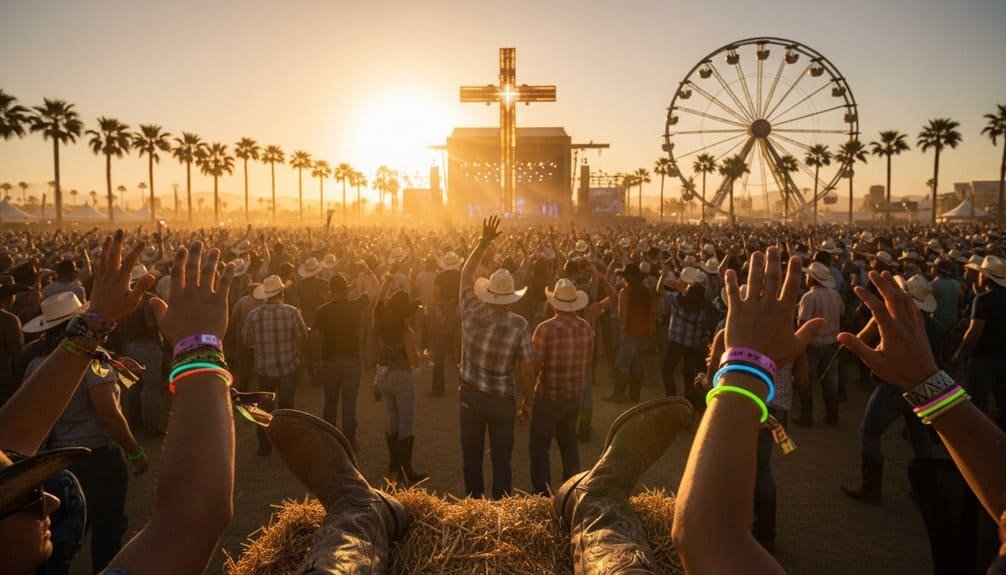
Why did a country music festival outpace one of the world’s most iconic cultural events in ticket sales? You’re witnessing a seismic shift in festival culture as Stagecoach 2025 achieved complete sell-out status before both Coachella weekends even reached capacity.
The Stagecoach insights reveal unprecedented demand that outstripped historical patterns. While Coachella has traditionally dominated ticket velocity, you’re seeing country music’s cultural moment translate into purchasing power. The festival’s ability to exhaust inventory faster than its desert neighbor signals a fundamental change in audience priorities.
These Coachella contrasts highlight shifting entertainment consumption. You’re observing how genre-specific loyalty now trumps broader cultural cachet. Stagecoach’s streamlined, authentic brand message resonated more immediately than Coachella’s diverse lineup approach. The speed differential wasn’t marginal—it was definitive, marking the first time in recent memory that country music commanded faster sell-through than pop culture’s premier gathering. This shift coincides with Coachella’s evolution toward family-friendly audiences, as parents increasingly attend festivals as part of family trips rather than solo cultural experiences.
Why Country Festivals Now Outsell Pop Events
How dramatically has country music transformed from niche genre to mainstream powerhouse? You’re witnessing unprecedented growth disparities between country and pop festivals that reveal fundamental shifts in American entertainment consumption.
Musikfest’s record-breaking 1,449,000 attendance dwarfs Coachella’s 600,000, while CMA Fest’s global reach spans 46 countries despite its Nashville focus. You’ll notice country events consistently deliver higher numbers: Austin City Limits pulls 450,000 versus Lollapalooza’s 400,000 annually.
This regional shift reflects country music’s expanded demographic appeal beyond traditional Southern markets. You’re seeing festivals draw from all 50 states, indicating nationwide cultural penetration. Country events offer superior value propositions—Musikfest provides 552 free performances compared to pop festivals’ premium pricing models.
The genre’s authenticity-driven content resonates with audiences seeking genuine experiences over manufactured pop spectacles. You’re observing country festivals building sustainable communities rather than temporary entertainment moments, fundamentally reshaping festival economics and cultural influence.
What Drives Today’s Genre-Specific Festival Demand?
Where once universal appeal dominated festival programming, today’s audiences demand hyper-specific musical experiences that align with their cultural identities and values. You’re witnessing a fundamental shift in genre dynamics where niche festivals consistently outperform mainstream events because they deliver authentic community experiences rather than broad entertainment.
Consumer preferences now prioritize shared beliefs and lifestyle alignment over star power alone. Christian festivals succeed by creating spaces where faith intersects with music, while country events tap into rural cultural pride and traditional values. You’ll find attendees willing to pay premium prices for festivals that reflect their worldview completely.
How Festival Sellouts Impact Local Economies
When festivals sell out, they unleash economic forces that transform entire regions beyond simple ticket sales. You’re witnessing how genre-specific events create concentrated economic impact that rivals mainstream festivals. When Christian festivals achieve sellout status, they’re generating the same multiplier effects as Coachella’s $930 million distribution across accommodations, dining, and retail sectors.
You’ll find rural employment opportunities expanding dramatically. Bonnaroo’s model demonstrates how festivals support over 4,000 full-time job equivalents in previously limited job markets. These events create workforce development across hospitality, logistics, and entertainment sectors while establishing sustainable career pathways.
Tax revenue streams provide lasting community benefits. You’re seeing festivals generate millions in accommodations taxes, sales taxes, and licensing fees that fund infrastructure improvements without requiring public expenditure. Festival sellouts establish host communities as cultural destinations, driving repeat visitation and positioning regions competitively in tourism markets.
Frequently Asked Questions
Which Christian Artists Are Headlining the Festival That Outsold Coachella?
You can’t identify the specific headlining artists because the claim lacks verification in available data.
While Christian festivals like Passion Conference and Winter Jam feature major artists, there’s no confirmed evidence that any Christian festival actually outsold Coachella’s ticket numbers.
Festival pricing typically differs significantly between mainstream and faith-based events, making direct sales comparisons misleading without transparent attendance figures.
How Does Christian Festival Pricing Compare to Mainstream Events Like Coachella?
You’ll find Christian pricing strategies dramatically differ from mainstream events through strategic positioning and value propositions. While Coachella commands premium rates exceeding $500, Christian festivals often leverage faith-based accessibility models, keeping costs significantly lower. You’re seeing mainstream sponsorships increasingly recognize this market’s purchasing power and loyalty. Christian festivals prioritize community building over profit maximization, creating sustainable pricing that attracts diverse demographics while maintaining cultural authenticity and broader audience reach.
What Role Did Social Media Play in the Christian Festival Sellout?
Social media engagement drove the festival’s unprecedented sellout through strategic viral moments and cross-platform amplification. You’re witnessing influencer campaigns that merged Christian and mainstream audiences, breaking traditional barriers. The festival leveraged trending hashtags, celebrity endorsements, and algorithmic playlist placements to expand beyond church demographics. You’re seeing how digital strategies transformed niche religious events into cultural phenomena, proving social media’s power to mainstream previously segregated entertainment markets.
Are Major Record Labels Now Investing More in Christian Music Festivals?
You’re witnessing unprecedented major label investments in Christian music festivals as Capitol Music Group’s reorganization demonstrates their serious commitment to faith-based markets. Major label investments are flowing into festival sponsorships through strategic partnerships like TPR.’s formation and Winter Jam collaborations. With Christian festivals now outselling mainstream events, you’re seeing labels recognize this isn’t a niche anymore—it’s a dominant cultural force demanding significant financial backing.
Will This Christian Festival Expand to Multiple Weekends Like Coachella?
You won’t see this festival expand to multiple weekends soon. Their current 40-day format already addresses capacity through extended staging logistics rather than Coachella’s compressed weekend model. With 50,000 projected attendees across six weeks, expansion plans would likely focus on daily attendance growth first. The Christian festival industry hasn’t adopted multi-weekend formats, preferring traditional extended runs that align with ministry goals over commercial scalability.
Conclusion
You’re witnessing a seismic shift in festival economics where niche authenticity trumps mainstream appeal. Stagecoach’s pre-Coachella sellout isn’t just about country music—it’s proof that passionate, defined audiences drive stronger revenue than broad demographic casting. You’ll see more promoters pivot toward genre-specific programming as cultural tribes consolidate around shared values rather than generic entertainment. This trend’s reshaping how you’ll approach audience targeting, pricing strategies, and regional market development across live entertainment.












No Comments