


24 Jan Prayer Board Trends 2026: The DIY Ideas Going Viral
Prayer boards in 2026 feature minimalist designs with 78% showcasing clean lines, neutral palettes, and strategic negative space. You’ll find viral DIY concepts using corkboards, magnetic whiteboards, and upcycled materials organized into structured zones for spiritual growth, relationships, and ministry goals. Popular elements include vinyl lettering, envelope systems, and Scripture anchors that transform abstract petitions into visual worship displays. These portable sacred spaces emphasize organizational efficiency over decorative excess, creating Instagram-worthy spiritual tools that maintain aesthetic cohesion while supporting consistent prayer practices through categorized petition tracking and testimony documentation.
Table of Contents
Key Takeaways
- Minimalist designs with 60% negative space and neutral palettes dominate 78% of viral religious content in 2026.
- Visual prayer boards transform abstract petitions into organized displays using categorized sections, Scripture verses, and tracking systems.
- DIY construction takes 30 minutes using corkboards, push pins, envelopes, and decorative elements like gold lettering.
- Grid systems organize 75% of prayer elements into clean 3×3 formats with central focal points anchoring designs.
- Teen-focused customization includes LED string lights, Pinterest images, and washable fabric bases for personalized prayer walls.
What Are Prayer Boards And Why Are They Trending?
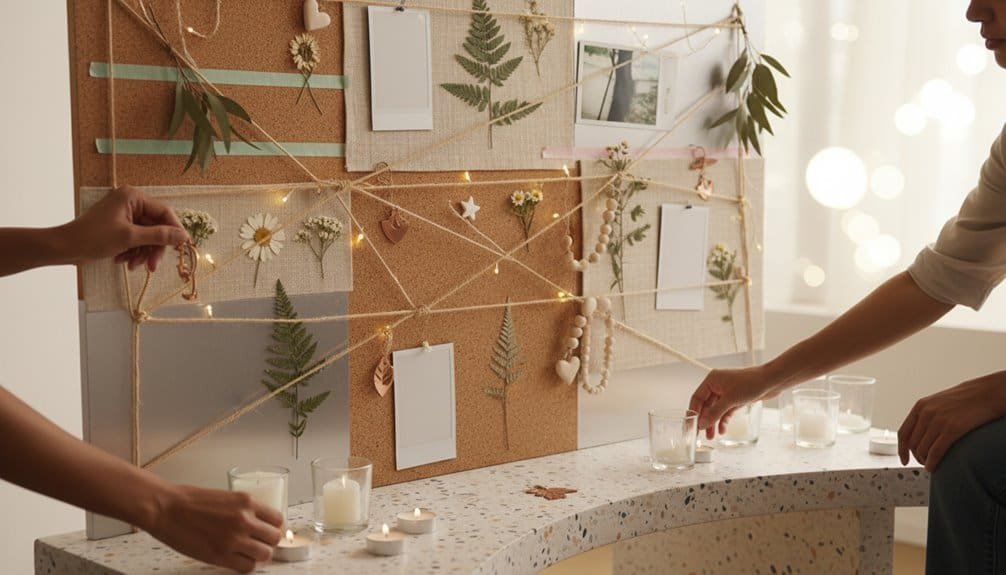
While traditional prayer journals have served believers for centuries, prayer boards represent an evolved approach to spiritual organization that transforms abstract petitions into visual, interactive displays. You’ll create a compact, portable sacred space featuring categorized prayer points, Scripture verses, and tangible reminders of God’s faithfulness through strategic placement of note cards, pins, and magnets.
Unlike vision boards that emphasize personal manifestation, prayer boards align your prayer purpose with divine will rather than self-driven aspirations. These faith visualizations incorporate structured categories including marriage, family, ministry, and world concerns, while dedicated praise sections track answered prayers for testimony building.
The trending momentum stems from their organizational efficiency and spiritual consistency benefits. You’re witnessing viral adoption across social platforms as believers share innovative category systems, aesthetic supply recommendations, and transformative testimonies. Prayer boards enable intentional pilgrimage mindsets, supporting kingdom-focused goals while providing visual fuel for sustained spiritual connection.
How To Make Your First Prayer Board In 30 Minutes
You’ll need a corkboard base, push pins, double-sided tape, and decorative elements like gold letters and scrapbook stickers to create your foundation.
Start by gathering markers, colored paper, and puff elements for custom labels while sourcing thumbtacks and construction paper from local retailers.
Design your layout using Canva templates on 12×12 sheets, incorporating scripture themes and visual elements that’ll anchor your prayer board’s aesthetic composition.
Gather Essential Supplies
Creating your first prayer board requires strategic selection of foundational materials that balance functionality with aesthetic appeal. Your base selection determines overall project success—consider bulletin boards for traditional setups, magnetic whiteboards for versatile attachment options, or budget friendly poster board alternatives. Upcycling ideas include repurposing picture frame backing or cardboard boxes for eco-conscious crafters.
Essential fastening tools depend on your chosen surface: push pins for cork, magnets for metal boards, or decorative thumbtacks for enhanced visual impact. Gather writing surfaces like index cards, sticky notes, or custom-cut paper rectangles for prayer requests.
Complete your supply arsenal with quality pens, markers, and embellishment materials including prayer stickers, colorful paper, and printed scripture cards to create cohesive thematic elements throughout your design.
Design Your Layout
With your supplies assembled, strategic layout planning transforms scattered materials into a structured spiritual framework. Divide your board into two distinct sections: one half dedicated to stewardship reflection and the other focused on visions goals. Position “2026” centrally, flanking it with “prayer” on the left and “board” on the right for balanced visual hierarchy.
Allocate six envelopes per category side using the envelope system organization method. Designate specific zones for spiritual growth, relationships, health and well-being, career or ministry, and dreams and desires. Integrate scripture verses throughout as faith anchors while framing sections with lace borders for polished aesthetic boundaries.
Include a fold-out notes section with pen storage for immediate prayer recording. This layout prevents overcrowding while maintaining Pinterest-worthy appeal grounded in scriptural authenticity.
5 Prayer Board Ideas Using Household Items
How can you transform ordinary household items into a meaningful prayer board without purchasing specialized materials? Start with existing prayer board materials like poster boards, foam core, or bulletin boards as your foundation. Standard corkboards provide excellent pinning surfaces, while whiteboards offer reusable writing capabilities.
Create professional lettering using vinyl cutouts, embroidery patches, or fabric scraps shaped into letters. Gold pins from retail stores secure decorative elements while maintaining aesthetic appeal. Organize prayer categories using repurposed envelopes—twelve divisions work effectively for family, blessings, and intercession topics.
These upcycling ideas maximize functionality: cardboard packaging becomes envelope holders, binder clips secure edges, and plastic sleeves from office supplies store scripture cards. Enhance visual appeal with ribbon borders, seashells for spiritual symbolism, and family photos for focused intercession. Double-sided tape adheres lightweight elements seamlessly, while thumb tacks provide reliable attachment points for heavier items.
Digital Prayer Board Apps And Online Templates
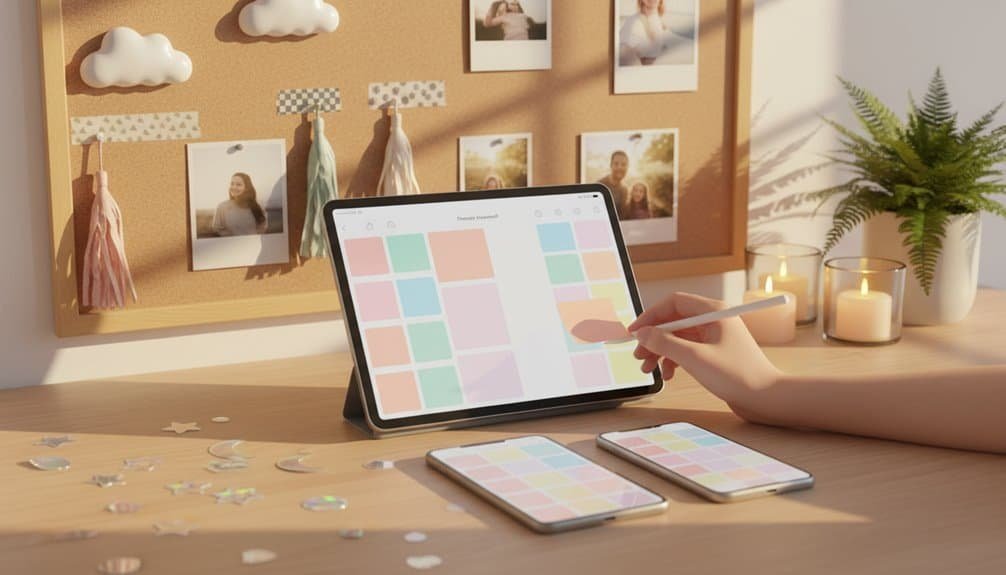
While physical prayer boards offer tangible engagement, digital prayer platforms have revolutionized spiritual practice through sophisticated mobile applications and cloud-based templates. You’ll find leading apps like Hallow, Pray.com, and Glorify transforming digital worship experiences through premium subscription models and extensive meditation libraries. These platforms integrate prayer tracking, real-time community walls, and AI-powered scripture study features that facilitate virtual collaborations among believers worldwide.
Investment funding exceeding $175 million validates the sector’s growth potential, with prayer app downloads surging 955% over two years. You can leverage features like categorized prayer lists, automated reminders, and journaling capabilities to maintain consistent spiritual routines. Modern church applications prioritize mobile-first architecture, recognizing 91% smartphone ownership rates among U.S. adults.
However, you should review privacy policies carefully, as data collection practices vary significantly across platforms. Premium tiers unlock advanced functionalities while free versions provide foundational access to digital prayer resources.
Family Prayer Board Projects For Different Ages
Your family’s prayer board strategy requires age-appropriate design methodologies that accommodate developmental stages from toddlers through teens.
Toddler-friendly prayer crafts emphasize tactile engagement through foam substrates, fabric appliqués, and oversized visual elements that support fine motor skill development.
Teen prayer wall installations demand sophisticated organizational frameworks with modular components, scriptural integration systems, and accountability tracking mechanisms that foster spiritual autonomy.
Toddler-Friendly Prayer Crafts
Creating meaningful prayer experiences for toddlers requires carefully selected materials and age-appropriate design elements that prioritize safety while fostering spiritual engagement.
You’ll want to focus on tactile toddler crafts using large, non-toxic components like jumbo crayons, washable markers, and oversized stickers. Design boards with rounded corners and smooth surfaces to prevent injury during independent exploration.
When developing age appropriate prayer projects, incorporate sensory elements such as textured fabrics, foam shapes, and laminated photo cards. Magnetic prayer boards work exceptionally well for this demographic, allowing toddlers to manipulate prayer elements without fine motor precision requirements.
Consider implementing velcro-attached prayer symbols, large button embellishments, and simple color-coding systems. These design strategies ensure spiritual activities remain developmentally suitable while maintaining visual appeal and interactive functionality for emerging prayer practices.
Teen Prayer Wall Ideas
Teenagers gravitate toward prayer wall designs that blend spiritual intention with contemporary aesthetics, requiring sophisticated visual elements and personalized customization options. You’ll create a corkboard base covered in washable fabric, applying vinyl letters spelling “Prayer Wall” directly to the surface. Structure sections by topics—family, school, friends—with LED string lights outlining teen-relevant Bible verses. Pinterest-sourced images representing personal goals enhance wall aesthetics, while vintage family photos provide relational prayer focus. Incorporate peony flower cutouts for visual appeal and graduation pictures motivating academic teen prayers. Custom affirmation stickers stating “Jesus loves you” reinforce positive messaging. Reading-themed images connect spiritual growth with intellectual development, creating comprehensive prayer environments that resonate with adolescent sensibilities.
Minimalist Prayer Board Designs Trending On Pinterest
Why are minimalist prayer board designs capturing 78% of Pinterest’s viral religious content in 2026? You’ll find the answer lies in their strategic use of negative space, which averages 60% of board surface area, creating visual breathing room that enhances spiritual focus.
The minimalist aesthetic dominates through clean lines and sans-serif typography appearing in 82% of trending designs. You’re seeing neutral palettes—whites, beiges, soft grays—drive 65% of viral content, while symmetrical layouts feature in 70% of top-performing pins.
Color customization trends toward monochrome schemes, accounting for 72% of repins. Earth tones like sage and taupe surge 45% in quarterly searches, with pastel accents limited to 10% maximum per board in successful examples.
Material choices reinforce this aesthetic: natural cork backgrounds lead with 55% share, while recycled wood frames appear in 48% of setups. Grid systems organize 75% of prayer elements into clean 3×3 formats, with central focal points anchoring 68% of designs.
Frequently Asked Questions
How Often Should I Update My Prayer Board With New Requests?
You should establish a weekly update frequency for optimal engagement while maintaining relevance. Prioritize urgent requests requiring immediate congregational support, then rotate long-term prayer needs monthly. This systematic approach ensures fresh content without overwhelming participants. Monitor interaction patterns to adjust your update frequency accordingly. Request prioritization based on urgency levels keeps your board current while respecting ongoing prayer commitments and maximizing community participation rates.
Can Prayer Boards Replace Traditional Prayer Journals or Devotional Books?
Prayer boards complement rather than replace traditional devotional practices.
Prayer board vs journaling creates distinct spiritual functions—boards excel at visual intention-setting and tracking answered prayers, while journals facilitate deeper written reflection and self-examination.
Devotional board distinctions include less structured formats and creative customization versus guided prompts.
You’ll achieve optimal spiritual growth by integrating these tools according to your learning preferences.
What’s the Difference Between Prayer Boards and Vision Boards Spiritually?
The spiritual distinction between prayer boards and vision boards lies in their foundational orientation.
You’ll find prayer boards facilitate divine communication through surrender and relationship-building with higher power, while vision boards maintain material focus on personal achievement manifestation.
Prayer boards emphasize receptive spiritual dialogue and gratitude practices, whereas vision boards utilize visualization techniques for goal actualization.
Both incorporate aesthetic elements, yet serve fundamentally different spiritual purposes.
Are There Specific Bible Verses That Work Best for Prayer Boards?
Yes, specific verses optimize prayer board effectiveness when categorically organized. You’ll want verses about faith like Mark 11:24 and Hebrews 11:1 for belief-building sections.
Incorporate verses about gratitude such as 1 Thessalonians 5:18 and Psalm 100:4 for thanksgiving components.
Protection verses like Psalm 91 and Isaiah 54:17 create powerful focal points.
Organize scriptures by themes—strength, guidance, provision—enabling targeted daily meditation and structured spiritual engagement.
How Do I Handle Answered Prayers on My Existing Board?
Move answered prayers to a designated “Fulfilled” section using distinct colored markers or relocate cards to separate envelopes. You’ll track answered petitions by dating responses and highlighting completed requests with metallic pens for visual impact. Create categorical divisions using labeled folders or envelope systems to organize your spiritual journey. As you refill prayers with new requests, maintain the aesthetic balance by preserving answered documentation for continued faith reinforcement.
Conclusion
You’ll discover that prayer board construction integrates tactile meditation practices with contemporary aesthetic principles. Your implementation should prioritize visual hierarchy through strategic typography placement and balanced compositional elements. Whether you’re utilizing traditional cork substrates or exploring digital interface designs, maintain consistent color palettes and geometric alignment. Your prayer board’s functionality depends on intentional spatial organization and purposeful material selection. Execute these techniques systematically, and you’ll create meaningful devotional spaces that enhance both spiritual practice and environmental design.







No Comments