


20 Dec Wise Men Say Sunderland: Why “Wise Men Say” Still Echoes at Sunderland—The Anthem Every Fan Sings Proudly
You’re witnessing football’s most unlikely anthem when Sunderland fans transform Elvis Presley’s “Can’t Help Falling in Love” into their thunderous “Wise Men Say” chant. Born spontaneously at Hull City in August 1977—just four days after Elvis’s death—this melody became the club’s most enduring symbol of defiance. Through relegations, struggles, and Netflix fame, it’s transcended generations as fans teach their children this adaptation that turns romantic ballad into fierce belonging. There’s much more behind this remarkable transformation from tragedy to triumph.
Table of Contents
Key Takeaways
- The chant originated spontaneously on August 20, 1977, when 10,000 Sunderland fans sang Elvis’s melody as tribute after his death.
- Fans transformed “Can’t Help Falling in Love” into their own anthem, replacing romantic lyrics with fierce collective “Sunderland” chants.
- The song provides emotional continuity across generations, surviving relegations and stadium moves from Roker Park to Stadium of Light.
- “Wise Men Say” functions as supporter armor during hardship, strongest during relegation battles and away end solidarity moments.
- Netflix’s “Sunderland ‘Til I Die” exposed the chant globally, creating international fanbase drawn to its raw passion.
The Hull City Match That Started It All: August 1977 and the Elvis Connection
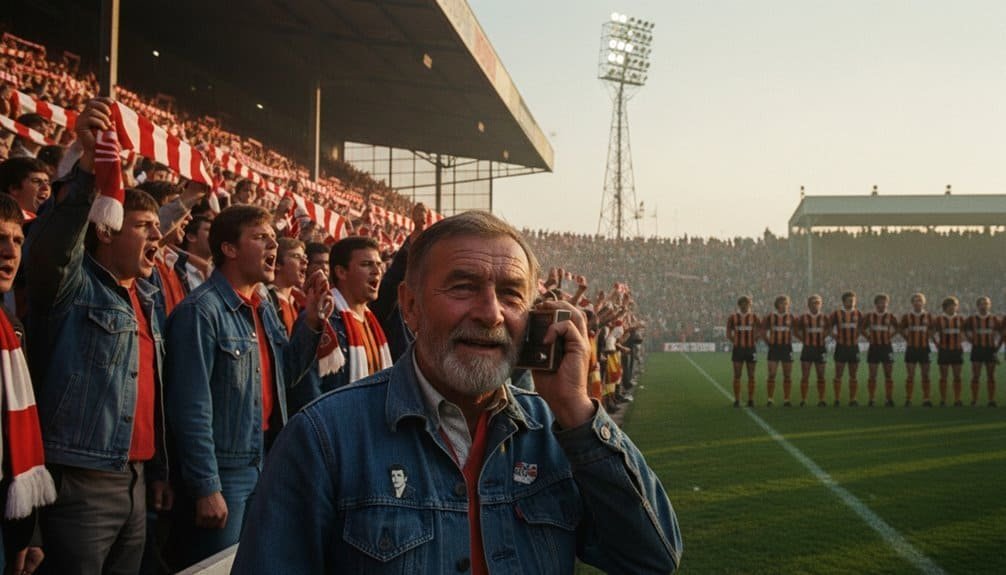
Four days after the King’s death, 10,000 heartbroken Sunderland fans made the trek to Hull City’s Boothferry Park, carrying more than just disappointment from relegation—they brought grief for Elvis Presley, who’d died on August 16, 1977.
The season opener on August 20th became legendary, though not for the football.
You’d witness Sunderland lose 3-0, with John Hawley scoring for Hull before attendance figures reached 16,000.

But something extraordinary happened in the stands—those traveling supporters began singing “Wise Men Say,” transforming Elvis’s “Can’t Help Falling in Love” into an emotional tribute.
Police clashes marred the day, adding tension to an already charged atmosphere. A police dog even bit one supporter, ripping their trousers during the chaos.
Yet amid the trouble and defeat, you were witnessing history.
The tune that fans had whistled daily throughout the 1970s suddenly found new purpose, evolving from casual melody into passionate anthem. The story later captured American attention, highlighting the universal nature of football fandom across continents.
That Hull match marked the moment when grief, football, and music collided, creating Sunderland’s most enduring chant.

From “Can’t Help Falling in Love” to Club Identity: How Fans Made It Their Own
How does a moment of collective grief transform into decades of unwavering identity? You’re witnessing football alchemy at its finest—the organic transformation of Elvis’s tender ballad into Sunderland’s thunderous war cry.
What started spontaneously in 1977 became your club’s defining anthem through pure fan determination. You’ve maintained melodic recognition while completely reshaping meaning. Where Elvis crooned about romantic surrender, you’ve created something fiercer—collective belonging that reverberates through the Stadium of Light.
The genius lies in lyric variation that’s both simple and profound. You’ve replaced “falling in love” with repeated chants of “Sunderland,” creating an instantly singable hook.
Different terraces developed their own timing, their own extensions, but the core remained sacred.
You didn’t need official sanction or commercial recordings. This anthem spread organically—from small sections to whole-stadium participation, from casual supporters to lifelong devotees. The song’s power has endured through the club’s journey from Roker Park to their current Stadium of Light home, maintaining its emotional resonance across different venues and generations of supporters.
You’ve taken a popular melody and made it unmistakably yours, converting entertainment into identity, song into symbol.
Singing Through Relegation and Glory: The Anthem’s Role in Sunderland Culture
You’ll find this anthem at its most powerful during relegation battles, when travelling supporters pack away ends and reproduce that familiar chant with fierce Away Solidarity.
When backs are against the wall, travelling fans unite through song with unbreakable solidarity.
The song transforms into emotional armor, protecting fan identity when everything else feels uncertain.
You’ve seen it after crushing defeats, when supporters use those opening notes as a collective reset button.
Whether you’re teaching the melody to your kids or joining the pre-kickoff ritual at the Stadium of Light, you’re participating in something deeper than football—you’re preserving cultural continuity.
It transcends league tables and is surviving through shared song.
Beyond the Stadium: Netflix Fame and the Global Reach of a Local Song
When Netflix cameras captured Sunderland’s darkest hours in “Sunderland ‘Til I Die,” they inadvertently documented something profound—how a local football chant could resonate across continents.
Though the cameras missed fans and players singing “Wise Men Say” post-game, that emotional moment became central to discussions about the series’ impact.
The documentary’s global success transformed a Wearside tradition into international fascination. Players like George Honeyman described the filming experience as uncomfortable, with contractual obligations requiring participation in interviews that captured the club’s most vulnerable moments.
You’ll find American viewers, who’d never watched football, drawn to the raw passion behind those Elvis-adapted lyrics.
This digital fandom extends far beyond traditional supporter bases, with podcasts analyzing episodes and international audiences discovering Sunderland’s unique culture. The Wise Men Say podcast maintains a twice weekly schedule, providing regular commentary on football culture and supporting the ongoing conversation about the club’s journey.
The song’s global resonance proves authentic emotion transcends geographical boundaries.
What started as stadium defiance during relegation became Netflix-fueled inspiration worldwide.
Through streaming platforms, “Wise Men Say” now echoes in living rooms from Los Angeles to Tokyo, spreading Sunderland’s unwavering spirit to audiences who understand that some songs capture more than melody—they capture soul.
Frequently Asked Questions
Why Do Sunderland Fans Call It “Wise Men Say” Instead of the Real Title?
You’re witnessing pure fan culture in action—Sunderland supporters don’t care about Elvis’s official title.
They’ve created their own chant shorthand from the opening lyric, ignoring pedantic corrections about “Can’t Help Falling in Love.”
This isn’t lyric mishearing; it’s deliberate ownership. You’ll hear “Wise Men Say” exclusively at the Stadium of Light because that’s how real fans claim their anthem, building unique identity through passionate defiance.
Are There Any Other Football Clubs That Sing This Elvis Song?
You’ll find Global Variants across British football, with Crystal Palace claiming they’ve sung it since the late 1970s at Selhurst Park. Hull City’s 24,000 fans belt it out magnificently, while historically Swindon Town, Huddersfield Town, and Swansea City adopted it in the 1960s.
These Rival Traditions create fascinating debates about ownership, but Sunderland’s “Wise Men Say” version remains the most passionate and widely recognized interpretation today.
What Other Songs Do Sunderland Fans Regularly Sing at Matches?
You’ll hear the thunderous “Red and White Army” echoing through stadiums, alongside “Niall Quinn’s Disco Pants” as victory anthems that define matchday atmosphere.
Rival taunts include “Dirty Smoggies” aimed at Middlesbrough and “Monkey Hangers” for Hartlepool.
Player-specific songs celebrate heroes like Asamoah Gyan’s “One Chance” chant, while newer additions feature Elizer Mayenda’s popular anthem.
You’ll witness “Haway the Lads” creating spine-tingling moments that showcase Sunderland’s passionate vocal traditions.
How Did the Song Spread From One Match to Becoming the Club Anthem?
You witnessed organic chant evolution as “Wise Men Say” spread through pure emotion after that Hull match tribute to Elvis.
Supporter rituals naturally embraced the song’s haunting melody—fans couldn’t resist singing it again and again.
Over thirty years, you’ve seen it grow from spontaneous moment to sacred tradition.
The melody’s universality made it stick where other songs failed, becoming embedded in Sunderland’s DNA.
Do Players and Managers Know About the Significance of “Wise Men Say”?
Player Awareness runs deep—you’ll find squad members acknowledging the chant during celebrations and joining in after victories.
Manager Perspectives vary, though most quickly grasp its emotional power through matchday exposure and club induction.
You won’t find many formal interviews about it, but the song’s presence since the 1970s means incoming staff encounter it immediately. They understand it’s not official club music—it’s pure supporter identity that demands respect.
Conclusion
You’ve witnessed how a simple Elvis song became Sunderland’s heartbeat. You’ve seen it survive relegations, celebrate promotions, and unite generations of Black Cats. When you’re at the Stadium of Light and those opening notes ring out, you’re not just singing—you’re carrying forward decades of tradition. Whether you’re a lifelong supporter or discovered it through Netflix, “Wise Men Say” isn’t just a song anymore. It’s who you are as Sunderland.










No Comments