

04 Mar Why Easter Monday Is Celebrated: 7 Key Insights
Easter Monday celebrates the resurrection of Jesus Christ, symbolizing renewal, hope, and the resilience of the human spirit. It’s a time for personal reflection, community gatherings, and blending religious and cultural traditions worldwide. You’ll find public holiday festivities, family activities, and opportunities to contemplate the profound significance of this sacred occasion. Explore further to uncover the deeper roots and enduring legacy of Easter Monday.
Table of Contents
Key Takeaways
- Easter Monday is celebrated as it extends the Easter Sunday observance of Christ’s resurrection, a central Christian belief and source of hope.
- The day encourages personal reflection on the meaning and significance of the Resurrection, complementing the festive elements of Easter celebrations.
- Easter Monday is observed as a public holiday in many countries, integrating religious observances with communal gatherings and cultural traditions.
- Observances on Easter Monday blend Christian and pagan spring festival elements, reflecting the holiday’s evolution and incorporation of diverse cultural influences.
- The celebration of Easter Monday emphasizes themes of renewal, community, and the triumph of life over death, transcending religious boundaries.
The Significance of Easter
What’s the significance of Easter? Easter is one of the most important Christian festivals, commemorating the resurrection of Jesus Christ. It’s a time to reflect on the sacrifice and triumph of Christ, and the promise of salvation. For believers, Easter symbolizes the triumph of life over death, hope over despair, and the power of faith. It’s a celebration of renewal, rebirth, and the eternal promise of redemption. The observance of Easter includes solemn religious services, festive gatherings, and beloved traditions like egg decorating and Easter egg hunts. Whether you’re a devout Christian or simply appreciate the cultural significance, the essence of Easter lies in its timeless message of love, forgiveness, and the resilience of the human spirit.
The Christian Tradition of Easter
How is the Christian tradition of Easter celebrated? For Christians, Easter is the most important celebration of the year, commemorating Jesus Christ’s resurrection from the dead. Celebrations typically begin on Good Friday, the day of Jesus’ crucifixion, and culminate on Easter Sunday.
Many Christians attend special church services, such as sunrise services, and partake in symbolic rituals like the Eucharist.
Families often gather for festive meals and exchange gifts like chocolate eggs and bunnies.
Children may participate in Easter egg hunts and other fun activities.
Throughout Christendom, the joyous observance of Easter affirms the Christian belief in eternal life and God’s triumph over death.
The Celebration of the Resurrection
The resurrection celebration within Christianity is a joyous occasion marked by special church services, reverent traditions, and festive gatherings. Churches hold sunrise services to commemorate the moment Christ rose from the grave, while families gather for Easter meals and egg hunts. Christians take this time to reflect on the significance of the resurrection, which represents the triumph of life over death and the promise of eternal life. The celebration is a time of renewal, hope, and fellowship as the faithful come together to worship and give thanks. Through these rituals and traditions, the resurrection is kept alive in the hearts and minds of believers, reminding them of the transformative power of Christ’s victory over the grave.
The Evolution of Easter Monday
The origins of Easter Monday can be traced back to pagan spring festivals that were later adopted by Christians. Over time, the observance of this day has evolved, with modern celebrations taking place worldwide.
From its early roots to its contemporary manifestations, the evolution of Easter Monday reflects the dynamic interplay between ancient traditions and modern cultural practices.
Pagan Spring Festivals
Before the Christian celebration of Easter, many ancient cultures held their own spring festivals to honor the renewal of nature and the arrival of the new season. These pagan festivals, like the Germanic festival of Ostara, celebrated the spring equinox and the goddess associated with it. They featured fertility symbols like eggs and rabbits, elements that were later incorporated into the Christian Easter celebration. The springtime rituals and traditions of these ancient cultures paved the way for the modern observance of Easter Monday, blending pagan and Christian beliefs and practices.
Christian Adoption of Holiday
How did the Christian church come to adopt the pagan spring festivals and incorporate them into the celebration of Easter? The early Christian church recognized the popularity of these ancient spring festivals and strategically aligned the celebration of Easter with them. This allowed the church to attract more converts by incorporating familiar pagan traditions. Over time, the Christian meaning of Easter overshadowed the pagan origins, but vestiges of the old spring festivals, like the Easter bunny and eggs, remained. Today, Easter Monday continues this blending of pagan and Christian elements, serving as a bridge between the sacred and secular aspects of the holiday.
Modern Observances Worldwide
How have the modern observances of Easter Monday evolved worldwide? Today, the holiday is celebrated in various ways across the globe. In the United Kingdom, it’s a bank holiday marked by parades, community events, and family gatherings. Many European nations, like Germany and France, also observe it as a day off work. In parts of Australia and Canada, Easter Monday is recognized as a public holiday. Elsewhere, the day may be more low-key, with some countries focusing on religious services or simply enjoying a day of rest. Regardless of the specific customs, the common thread is a celebration of the Easter season and the renewal it represents.
How Easter Monday Is Observed Today
Today, Easter Monday is observed in various ways across the globe. Many countries grant a national holiday, allowing people to rest and spend time with family.
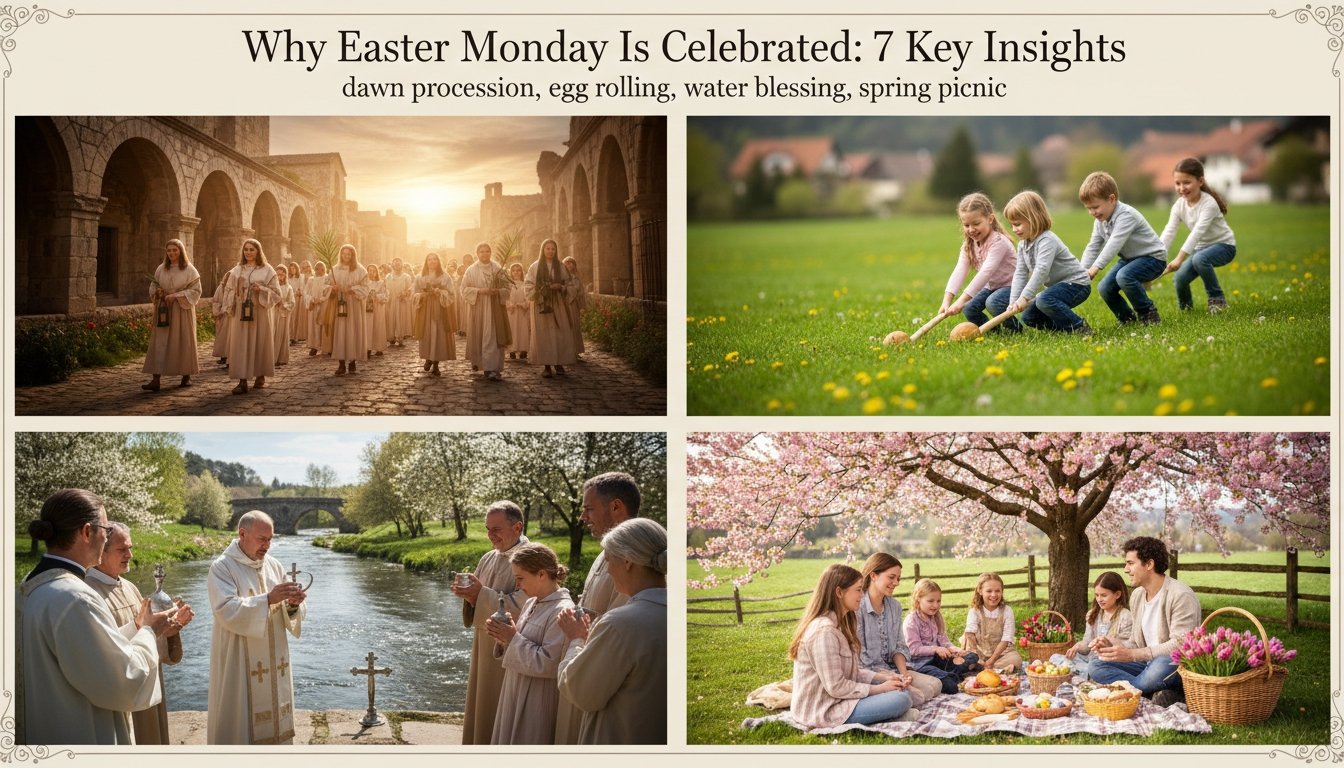
In the United Kingdom, egg-rolling competitions and Easter parades are common traditions. Families might embark on Easter egg hunts or enjoy a leisurely meal together.
In Poland, some people engage in a water-throwing custom, known as Śmigus-dyngus. Elsewhere, outdoor activities like picnics, concerts, and carnivals take center stage.
Regardless of the specifics, the day is an opportunity to continue celebrating the resurrection of Jesus Christ and the arrival of spring. These observances help communities come together and create meaningful shared experiences.
The Enduring Legacy of Easter Monday
Even today, the legacy of Easter Monday endures, as people commemorate this longstanding tradition.
You’ll discover that its impact has been far-reaching, shaping cultural and religious practices across the globe.
From its humble beginnings to its current significance, Easter Monday’s enduring legacy is a testament to the power of community and faith.
The Lasting Impact
Why does the legacy of Easter Monday endure even today? It’s the lasting impact the holiday has had on society. Easter Monday grants workers a day off, allowing them to spend more time with loved ones. This tradition fosters community and strengthens familial bonds. Additionally, the holiday’s religious significance reminds people of their faith and the importance of spiritual reflection. Even secular celebrations, like parades and festivals, preserve cultural heritage. Ultimately, Easter Monday transcends its origins, evolving into a cherished observance that brings people together, promotes well-being, and safeguards timeless values. Its enduring legacy ensures this holiday will continue inspiring joy and unity for generations.
Commemorating Tradition
How has the enduring legacy of Easter Monday shaped our cultural traditions? Through the centuries, the observance of this holiday has become deeply ingrained in our collective consciousness. We continue to commemorate the resilience and renewal represented by this day, passing down cherished rituals and celebrations from generation to generation. Whether it’s gathering with loved ones, indulging in festive treats, or participating in time-honored activities, the traditions of Easter Monday endure as a testament to our shared history and the power of community. This holiday serves as a reminder to embrace the cyclical nature of life, honoring the past while looking toward the future with hope and reverence.
Understanding the Roots of Easter Monday
What’re the roots of Easter Monday’s observance? The origins date back to the early days of Christianity when the day after Easter Sunday was dedicated to commemorating Christ’s resurrection. Over time, this evolved into a public holiday celebrated across many Christian-majority countries.
The day’s observance is linked to the Christian belief in Jesus rising from the dead, which is the central tenet of the faith.
Today, Easter Monday is a time for reflection, community gatherings, and enjoying springtime festivities. Its religious significance remains, but the holiday has also taken on cultural traditions unique to different regions and societies.
Frequently Asked Questions
Why Is Easter Monday Celebrated Differently Across Countries?
Easter Monday is celebrated differently across countries because cultural and religious traditions vary.
While some nations emphasize religious observances, others focus on family gatherings, parades, or festive activities.
The way Easter Monday is commemorated reflects the unique history, beliefs, and customs of each region.
The diverse celebrations showcase the richness of global Easter traditions.
What Is the Historical Significance of Easter Monday?
Easter Monday holds historical significance as it commemorates the resurrection of Jesus Christ, a central event in Christianity. In many countries, it’s celebrated as a public holiday, allowing people to observe religious traditions and spend time with their loved ones.
The observance of Easter Monday dates back to the early days of the Christian church and continues to hold cultural and spiritual importance for believers worldwide.
How Does the Celebration of Easter Monday Vary Among Denominations?
The celebration of Easter Monday varies among denominations. Some churches hold special services or events, while others treat it as a regular day.
Catholics and Anglicans may observe it as a religious holiday, while Protestants may not. The level of observance depends on the denomination’s traditions and beliefs regarding the significance of the day after Easter Sunday.
What Is the Connection Between Easter Monday and Spring Festivals?
The connection between Easter Monday and spring festivals is that both celebrate the renewal and rebirth of nature. Many spring festivals, like Ostara, also honor the vernal equinox and the return of warmer weather. The observance of Easter Monday is linked to these ancient pagan celebrations as the Christian holiday was timed to coincide with existing spring festivals.
Why Is Easter Monday a Public Holiday in Some Countries?
Easter Monday is a public holiday in some countries because it’s a significant day in the Christian calendar, marking the day after Easter Sunday when Jesus Christ is believed to have risen from the dead. The holiday allows people to celebrate and reflect on this important religious event, often with family gatherings, community events, and traditional customs.
Conclusion
You’ve now explored the rich history and significance of Easter Monday. From its origins in Christian tradition to its modern celebrations, this holiday continues to hold a special place in many cultures. By understanding its roots, you can appreciate how Easter Monday’s enduring legacy reflects the deep spiritual and communal values that have shaped it over the centuries.










No Comments