

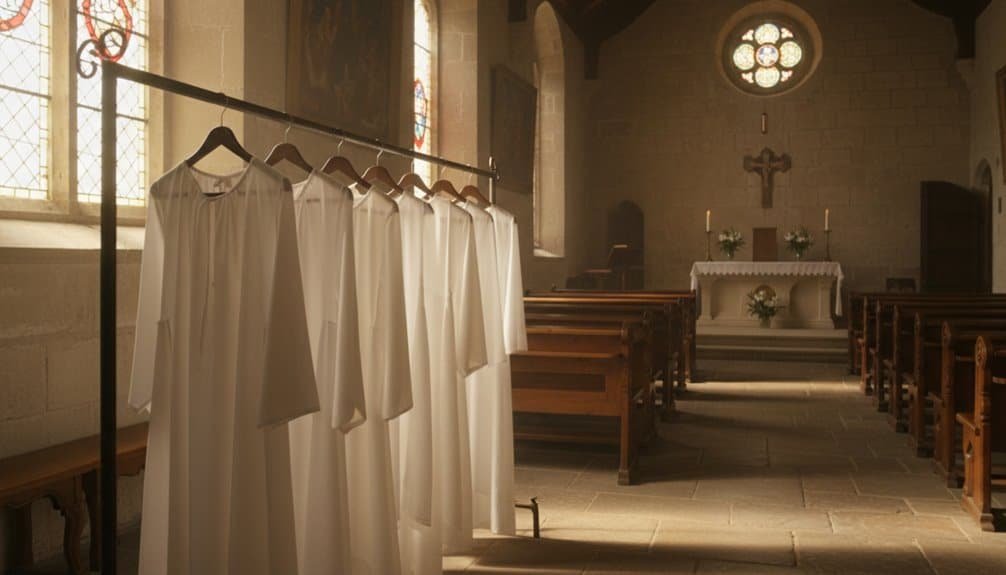
24 Apr Traditional White Baptismal Robes for Whit Sunday
You’ll find a traditional white Whit‑Sunday baptismal robe symbolizes purity, new life, and the Holy Spirit’s presence, while the crisp cotton‑poplin, breathable linen, or luminous silk ensures comfort and a radiant look. Choose a fabric that drapes smoothly, fits the child’s measurements without dragging, and pairs with modest accessories like a gold St. George cross or a simple white cuff. Proper care—hand‑washing in cool water and storing flat in a breathable bag—keeps it pristine, and the next sections reveal how to pick the perfect robe and avoid common pitfalls.
Table of Contents
What Whit Sunday Baptismal Robes Symbolize
The white baptismal robes you wear on Whit Sunday embody purity, new life, and the Holy Spirit’s presence, signaling your entry into the Christian community and the cleansing of past sins.
You feel the fabric’s brightness echo the divine light that now surrounds you, a visual reminder that you’ve been washed clean.
The robe’s simplicity strips away worldly distractions, focusing attention on the sacred rite.
Its unadorned hue represents the blank page of a new spiritual chapter, inviting you to write a life guided by faith.
As you stand before the congregation, the robes proclaim your commitment to follow Christ’s teachings, reinforcing the bond between you and the church family.
The symbolism extends beyond personal transformation; it unites you with believers across generations who’ve undergone the same rite, creating a shared narrative of redemption and hope.
Choose the Right Fabric for Whit Sunday Robes
Which fabric will best convey the purity and reverence of Whit Sunday? You’ll want a material that reflects light, drapes gracefully, and feels soft against delicate skin. Cotton poplin offers crisp, breathable fibers that hold a bright white hue without yellowing.
Linen provides a natural luster and a subtle texture, ideal if you prefer a slightly rustic look. Silk, though pricier, adds a luminous sheen and a luxurious weight that elevates the ceremony’s solemnity.
For families seeking easy care, a high‑quality polyester‑cotton blend mimics natural fibers while resisting stains and wrinkles. When choosing, consider the climate: lightweight cotton or linen works best in warm weather, while silk keeps the wearer comfortable in cooler settings. Test a swatch against the child’s skin to ensure no irritation. Ultimately, the fabric should enhance the robe’s symbolic purity while remaining practical for the day’s celebrations.
Measure and Fit a Child’s Baptismal Robe
Where do you start when fitting a child’s baptismal robe? First, lay the garment flat on a clean surface and measure the child’s chest circumference, just under the arms, using a flexible tape. Record that number, then measure the length from the base of the neck to the desired hem—typically just above the knees for toddlers.
Next, check sleeve length by measuring from the shoulder seam to the wrist, allowing a slight ease for movement. Compare these figures to the pattern’s size chart; if the child falls between sizes, choose the larger to accommodate growth.
Pin the robe onto a dress form or the child’s body, ensuring the shoulders sit evenly and the hem hangs straight. Adjust seams as needed, then mark any alterations with tailor’s chalk. Finally, stitch a temporary seam, try the robe on again, and make final tweaks before sealing the stitch. This precise process guarantees a comfortable, graceful fit for the ceremony.
Style the Robe With Liturgical Accessories
How can you elevate a child’s baptismal robe with liturgical accessories without overwhelming its simple elegance? Choose one or two pieces that echo the robe’s purity—think a modest gold St. George cross or a delicate embroidered stole.
Slip the stole over the shoulders, letting it fall just above the knees; its subtle color or motif adds meaning without clutter.
A thin, white lace cuff around the wrists frames the hands and ties the look to the ceremony’s reverence.
If you prefer a headpiece, a simple white veil or a small crown of thorns replica, placed gently on the brow, signals the child’s entry into the faith.
Keep the belt or cincture narrow and plain, perhaps a silk ribbon in the liturgical color of the day.
Care for and Preserve Your White Baptismal Robe
You’ll keep your white baptismal robe looking pristine by storing it flat in a breathable cotton bag away from direct sunlight.
When it needs cleaning, spot‑treat stains with cool water and a mild detergent, then hand‑wash gently to avoid fabric damage.
If tears or frays appear, mend them promptly with matching thread or seek a professional restoration to maintain its sacred appearance.
Proper Storage Techniques
Ever wondered how to keep your white baptismal robe pristine between services? Store it in a breathable garment bag—cotton or muslin works best—so moisture can escape. Hang the robe on a padded hanger to maintain its shape and avoid creases; avoid wire hangers that dent the fabric. Keep the bag in a cool, dry closet away from direct sunlight, which can yellow the fibers. If you must fold, place tissue paper between layers to prevent friction marks. Rotate the storage location periodically to let the fabric “air out.” Check for pests regularly; a lavender sachet or cedar block deters moths without harming the cloth. By following these steps, your robe stays fresh, bright, and ready for the next Whit Sunday ceremony.
Gentle Cleaning Methods
After storing your robe properly, the next step is gentle cleaning. Begin by filling a basin with cool water and a small amount of mild, fragrance‑free detergent. Submerge the robe briefly, then agitate lightly with your hands—avoid wringing or scrubbing. Rinse in cool water until suds disappear, then press out excess moisture by laying the fabric flat on a clean towel and rolling it gently. Air‑dry the robe on a padded hanger away from direct sunlight to prevent yellowing. If stains linger, spot‑treat with a diluted solution of white vinegar and water, dabbing sparingly. Store the dry robe in a breathable cotton bag to keep it fresh until the next Whit Sunday ceremony.
Repair and Restoration Tips
When a stitch loosens or a seam frays, address the issue promptly to prevent further damage. First, gather matching thread, a fine‑point needle, and a small pair of scissors. Gently pull the thread to expose the frayed edge, then re‑stitch using a tight back‑stitch, keeping each pass even. For larger tears, patch the interior with a thin, white cotton swatch, securing it with a few discreet stitches.
Avoid iron directly on the fabric; instead, place a clean cloth between the robe and a low‑heat iron to smooth wrinkles. Store the robe flat in a breathable garment bag, away from sunlight and moisture. Periodically inspect seams and hems, repairing any new wear before it spreads. This routine keeps your baptismal robe pristine for years.
Buy Authentic Whit Sunday Baptismal Robes Online
Looking for authentic Whit Sunday baptismal robes that truly honor tradition? You’ll find reputable vendors that specialize in handcrafted, 100 % cotton or linen garments, often embroidered with subtle lace trims. Start by checking the retailer’s product photos for close‑up detail on stitching and hem finish; this confirms quality before you click “Add to cart.” Read customer reviews that mention durability and how the robes drape during the ceremony—real feedback beats generic marketing copy. Verify that the site offers a clear sizing chart and easy returns, so you can exchange if the fit isn’t perfect. Look for certifications like “hand‑stitched by certified artisans” or “sourced from ethical mills,” which signal authentic craftsmanship. Compare prices, but remember that a higher price usually reflects better material and labor. When you place the order, keep the confirmation email and tracking number handy; they’ll help you monitor delivery and ensure the robes arrive in time for Whit Sunday.
Common Mistakes When Selecting Whit Sunday Robes
You might pick a robe that looks great but doesn’t fit your body, leading to uncomfortable adjustments during the service.
Choosing a fabric that isn’t breathable or too heavy can make you feel overly warm or restrict your movements.
Finally, ignoring proper length and proportions often results in a robe that drags or looks uneven, breaking the ceremony’s visual harmony.
Fit Suit Fabric Choice
Do you know which fabric will keep your Whit Sunday robe both elegant and comfortable? You’ll want a material that drapes smoothly, breathes well, and resists wrinkling. Cotton‑linen blends offer a crisp look while staying breathable, but they can crease if you sit too long.
Silk feels luxurious and glides over the skin, yet it stains easily and may slip in humid weather.
High‑quality polyester‑rayon mixes mimic silk’s sheen, are more durable, and hold shape better.
When you choose, test the fabric’s weight—too light feels flimsy, too heavy restricts movement.
Also, check the weave; a tight weave prevents transparency under bright lighting.
Prioritize comfort and durability to ensure your robe looks flawless throughout the service.
Improper Length Proportions
Why do many Whit Sunday robes look off‑balance? You often choose a length that doesn’t match your body’s proportions, causing the hem to drag or the sleeves to overwhelm. If the robe is too long, it pools at your feet, creating an uneven silhouette and making movement awkward. Too short, and the hem cuts off your stride, exposing shoes and breaking the ceremonial flow. Pay attention to the distance from shoulder to floor; a well‑fitted robe should just kiss the ground when you stand upright. Also, ensure the sleeves end at the wrist, not the hand. By measuring carefully and trying the robe on before purchase, you’ll avoid these common length errors and maintain a graceful, balanced appearance.
Frequently Asked Questions
Can the Robe Be Personalized With Embroidery?
Yes, you can personalize the robe with embroidery. Most manufacturers offer custom stitching options, letting you add names, dates, or symbols. You’ll choose the thread color, font, and placement, then provide the design details. Some shops require a minimum order or additional cost, but the process is straightforward. Just confirm the embroidery guidelines early to ensure the final piece meets your expectations and stays within the ceremony’s aesthetic.
Are There Eco‑Friendly Fabric Options for Baptismal Robes?
Yes, you can choose eco‑friendly fabrics for baptismal robes. Look for organic cotton, hemp, or bamboo fibers, which grow without harmful pesticides and use less water.
Recycled polyester and Tencel (lyocell) also offer sustainable alternatives, providing softness and durability while reducing waste.
Many suppliers certify their materials with GOTS or OEKO‑Tex standards, ensuring the robe remains both gentle on the planet and suitable for sacred ceremonies.
How Long Does a White Robe Stay Pristine After Multiple Washes?
You’ll find that a white robe can stay pristine for about three to five washes if you treat it gently. Use cold water, mild detergent, and avoid bleach, which weakens fibers. Air‑dry flat or tumble on low heat, and store it in a breathable bag. After the fifth wash, expect slight yellowing or thinning, so consider a fresh robe or a gentle spot‑cleaning routine to preserve its brightness.
Is It Acceptable to Wear a Robe With a Slightly Different Shade of White?
Yes, you can wear a robe with a slightly different shade of white, as long as it still looks clean and cohesive with the rest of the liturgical attire. Most congregations focus on the overall impression rather than exact color matching, so a subtle variation won’t distract worshippers. Just ensure the fabric is appropriate, the robe is in good condition, and it respects any specific guidelines your church may have.
What Is the Typical Price Range for High‑Quality Whit Sunday Robes?
You’ll typically spend between $120 and $350 for a high‑quality Whit Sunday robe.
The lower end covers simple cotton or polyester blends, while the higher end includes fine linen, silk, or custom tailoring with hand‑stitched details.
Expect the price to rise if you add embroidered symbols, a fitted cut, or a designer label.
Shop reputable liturgical suppliers and compare materials, because a well‑made robe can last many years and justify the investment.
Conclusion
By now you know exactly why white baptismal robes matter on Whit Sunday, how to pick the perfect fabric, measure a child’s fit, and accessorize with liturgical pieces. You’re also equipped to care for the robe and avoid common buying errors. With this knowledge, you can confidently select, preserve, and showcase a beautiful, authentic Whit Sunday baptismal robe that honors tradition and celebrates the occasion.












No Comments