

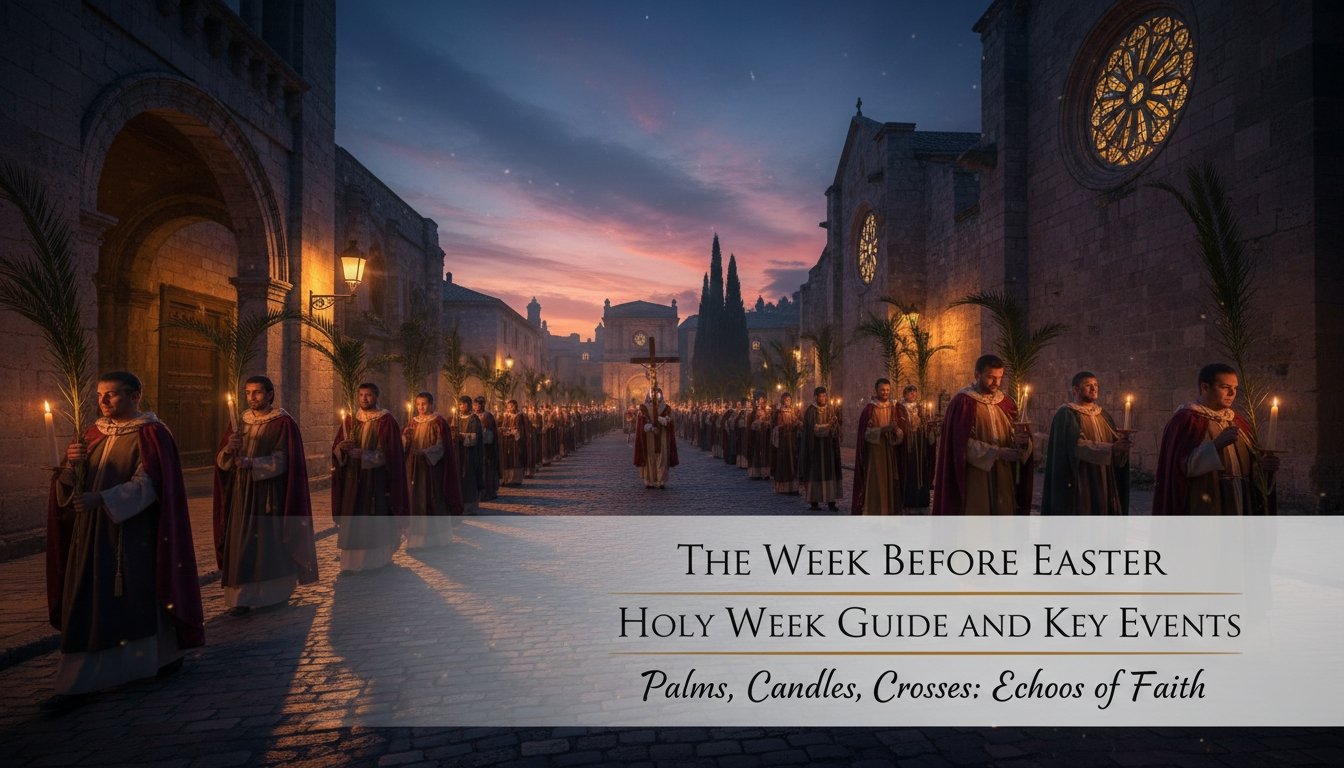
27 Feb The Week Before Easter: Holy Week Guide and Key Events
Holy Week is the final stretch before Easter, when Christians commemorate the life, death, and resurrection of Jesus Christ. It begins with Palm Sunday’s triumphal entry into Jerusalem and continues through Maundy Thursday’s Last Supper, Good Friday’s crucifixion, and Holy Saturday’s waiting. The week culminates in the joyous celebration of Easter Sunday and the resurrection. To discover more about the significance and observances of this sacred time, keep reading.
Key Takeaways
- Holy Week is the final week before Easter, commemorating Jesus’ life, death, and resurrection.
- Palm Sunday marks Jesus’ triumphal entry into Jerusalem, with crowds celebrating him but foreshadowing his suffering.
- Maundy Thursday commemorates the Last Supper, where Jesus instituted communion and modeled humble service.
- Good Friday remembers Jesus’ crucifixion, which is central to Christian belief and salvation.
- Holy Saturday is a time of solemn silence, anticipating the Easter Vigil and the joy of Christ’s resurrection.
What Is Holy Week?
What’s Holy Week? It’s the final week before Easter, the most sacred time in the Christian calendar. It commemorates the final days of Jesus’ life, death, and resurrection.
The week begins with Palm Sunday, when Jesus entered Jerusalem to cheers from the crowds. It continues through Maundy Thursday, when he shared the Last Supper with his disciples. Good Friday marks the day of his crucifixion. Holy Saturday is a day of quiet reflection before the joy of Easter Sunday, when Christians celebrate Jesus‘ resurrection.
Each day has its own unique observances and traditions that help the faithful walk with Jesus through his final days. Holy Week is a time of deep spiritual reflection, as Christians remember the sacrifice and triumph at the heart of their faith.
The Triumphal Entry on Palm Sunday
Although Palm Sunday marks the triumphant entry of Jesus into Jerusalem, it also foreshadows the suffering and death he’d soon face. As Jesus rode into the city on a donkey, the crowds welcomed him with palm branches and shouts of “Hosanna!” This joyous celebration was short-lived, however, as the religious leaders began plotting to have Jesus arrested and crucified. The same people who lauded him one day would soon call for his execution. This dramatic shift underscores the fickle nature of human allegiance and the heavy burden Jesus willingly took upon himself to secure our salvation.
The Last Supper on Maundy Thursday
Why does Maundy Thursday mark the observance of the Last Supper? On this day, Jesus shared a final meal with his disciples, knowing he’d soon be betrayed and crucified. During this intimate gathering, he instituted the sacrament of communion, breaking bread and passing the cup as a remembrance of his sacrifice.
Jesus also washed his disciples’ feet, modeling humble service. This Passover meal foreshadowed his death, the new covenant in his blood, and the calling of his followers to love and serve one another. Maundy Thursday commemorates these profound events, reminding us of Christ’s selfless love and the meaning behind the holy communion we still celebrate today.
The Crucifixion on Good Friday
The crucifixion of Jesus Christ on Good Friday is the pivotal moment in the Passion, where He suffered and died for the sins of humanity.
This act of profound sacrifice is the core of Christian belief, as it symbolizes God’s infinite love and the path to redemption.
Reflect on the profound significance of this event and its enduring impact on the Christian faith.
Significance of Crucifixion
Why is the Crucifixion on Good Friday considered so significant in Christian theology? It’s the pivotal event where Jesus Christ, the Son of God, was crucified and died to atone for the sins of humanity.
His death on the cross is believed to have provided salvation and eternal life for those who believe in him. The Crucifixion symbolizes Christ’s ultimate sacrifice, his triumph over sin and death, and his promise of forgiveness and redemption for all who’ve faith.
It’s the climactic moment in the Easter story, the foundation of Christian beliefs, and the source of hope, grace, and transformation for millions of believers worldwide.
Passion of Jesus Christ
What makes the Passion of Jesus Christ – the dramatic events leading up to and including his Crucifixion on Good Friday – so central to Christian faith? It’s the belief that Jesus’ suffering and death on the cross were a sacrifice to atone for humanity’s sins. Christians see the Passion as the fulfillment of God’s plan for salvation, with Jesus taking on the punishment that humans deserved. The anguish, humiliation, and crucifixion Jesus endured are seen as the ultimate expression of God’s love and the means by which believers can attain eternal life. For Christians, the Passion narrative is a powerful testament to Jesus’ divinity and the transformative power of his sacrificial death.
The Waiting on Holy Saturday
On Holy Saturday, you’ll find many churches observing a solemn silence, inviting you to contemplate the profound waiting and uncertainty between Good Friday’s crucifixion and Easter Sunday’s resurrection. It’s a day to reflect on the depths of Jesus’ suffering and the hope that lies ahead. Take this time to ponder the meaning of this sacred pause in the Christian calendar.
Observance of Silence
After the somber events of Good Friday, Holy Saturday is a day of quiet reflection and anticipation. You’ll find churches observe a period of silence, as the faithful await the resurrection. No Mass is celebrated, and the church remains bare, with no decorations or flowers. It’s a time to ponder the gravity of Christ’s death and the hope of his promised return. Though the day may feel empty, it’s an opportunity to deepen your spiritual connection, meditating on the mysteries of your faith. As the sun sets, the church prepares for the Easter Vigil, the first celebration of the Resurrection.
Contemplation and Solemnity
In the stillness of Holy Saturday, the faithful are invited to contemplate the solemnity of Christ’s entombment. This day of waiting is marked by a somber reflection on the sacrifice made and the promise of resurrection to come. It’s a time to ponder the weight of sin and the triumph of grace. The church remains quiet, stripped of its usual furnishings, as the world holds its breath, awaiting the joyous celebration of Easter. In the silence, believers find space to grieve, to hope, and to prepare their hearts for the new life that awaits.
The Resurrection on Easter Sunday
What’s the significance of the Resurrection on Easter Sunday? It’s the most joyous celebration in Christianity, marking Jesus’ triumph over death and the promise of eternal life. After the solemnity of Good Friday, when Jesus was crucified, his followers are overjoyed to discover his tomb is empty on the third day. The Resurrection affirms Jesus’ divinity and validates his teachings. It’s a time of rebirth and renewal, when Christians renew their faith and commitment to living according to Jesus’ example. Families gather to worship, feast, and exchange gifts, celebrating the promise of salvation. The Resurrection symbolizes hope, redemption, and the possibility of transformation, inspiring believers to embrace the light of Christ in their lives.
Frequently Asked Questions
How Do Different Churches Observe Holy Week Traditions?
Different churches observe Holy Week traditions in various ways. You’ll find some observe Maundy Thursday with a reenactment of the Last Supper and foot-washing. On Good Friday, some hold solemn services reflecting on Christ’s crucifixion. Many churches have Easter vigil services on Holy Saturday, then joyful Easter Sunday celebrations. Traditions may differ, but the focus remains on commemorating Jesus’ final days, death, and resurrection.
What Is the Significance of the Palm Branches on Palm Sunday?
The palm branches carried on Palm Sunday symbolize Jesus’ triumphant entry into Jerusalem. They represent people’s joyful welcome and recognition of Him as the Messiah. This tradition dates back to the biblical account when crowds laid palm branches on the road as Jesus rode a donkey into the city, fulfilling prophecies about the coming King.
Why Is Maundy Thursday Called “Maundy”?
Maundy Thursday is called “Maundy” because it commemorates the day Jesus washed his disciples’ feet and instituted the Eucharist. The word “Maundy” comes from the Latin word “mandatum,” meaning “commandment,” referring to Jesus’ command to his disciples to love one another as he’d loved them.
What Is the Significance of the Empty Tomb on Easter Sunday?
The empty tomb on Easter Sunday represents the resurrection of Jesus Christ, signifying his victory over death.
It’s a powerful symbol of hope, new life, and the promise of eternal life for all who believe in him.
The empty tomb affirms that Jesus is the Son of God and that his sacrifice has redeemed humanity from sin.
How Do the Events of Holy Week Connect to the Rest of the Year?
The events of Holy Week connect to the rest of the year by reminding you of God’s unwavering love and the promise of eternal life.
Jesus’ death and resurrection represent the ultimate sacrifice and triumph over sin and death.
This message of redemption and hope resonates throughout the Christian calendar, shaping the faithful’s spiritual journey and guiding them towards a deeper relationship with the divine.
Conclusion
You’ve now walked through the key events of Holy Week, from Jesus’ triumphal entry to his resurrection on Easter Sunday. Reflect on the significance of these events and how they can deepen your faith. May this sacred time draw you closer to the heart of God and the promise of new life in Christ.









No Comments