

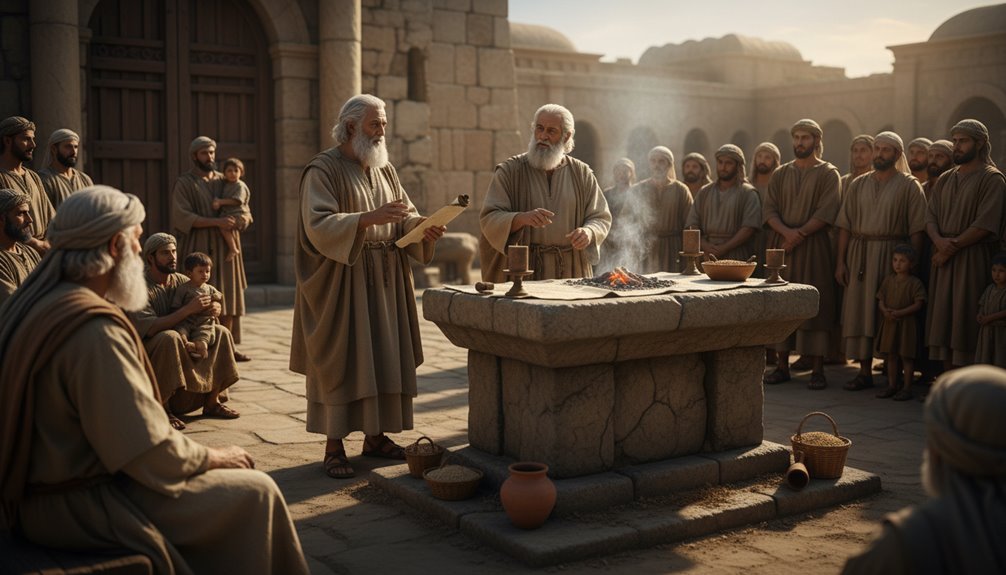
19 Apr 3 Best Ways Leviticus Laws Shaped Ancient Culture
You’ll see that Leviticus built daily purity rituals—washing, blessings, and incense—that turned ordinary moments into sacred acts. It also erected a strict hierarchy, giving priests, Levites, and laypeople distinct roles and a shared sense of identity. Finally, it wove economics and law together, mandating tithes, Sabbath‑year debt relief, and honest‑weight commerce that kept society fair and holy. Keep going and you’ll discover even deeper impacts.
Table of Contents
What Daily Religious Rituals Came From Leviticus
Ever wondered how Leviticus still shapes your everyday spiritual routine? You wake up, wash your hands, and recite a brief blessing—an echo of the purity laws that demanded ritual cleansing before prayer.
Throughout the day, you might offer a small incense stick or light a candle, mirroring the daily grain and oil offerings prescribed for the altar.
When you share a meal, you separate sacred from profane, avoiding forbidden foods and observing the Sabbath rest, a practice rooted in Leviticus’ command to cease work every seventh day.
These habits—cleanliness, modest offerings, and weekly rest—are not merely traditions; they’re living extensions of ancient statutes that taught reverence, discipline, and community cohesion.
How Leviticus Set Social Hierarchy and Community Identity
When Leviticus codified purity, priesthood, and sacrifice, it also forged a clear social hierarchy that still defines community identity. You’ll notice that priests sit at the top, granted exclusive rights to perform rituals and interpret law. Below them, Levites handle temple duties, while ordinary Israelites follow dietary and purity rules that signal their status. You’re reminded of the caste‑like divisions: priests, Levites, and laypeople each receive distinct responsibilities and privileges. This structure shapes identity; you recognize yourself by the tribe and role assigned at birth, and you’re judged by how faithfully you observe the prescribed rites. You also see how the law enforces separation between the clean and the unclean, reinforcing group cohesion and external distinction. By internalizing these layers, you help maintain order, ensure continuity of tradition, and cement a shared sense of belonging that persists across generations.
Economic Practices and Legal Systems Shaped by Leviticus
Leviticus’ economic rules turn daily commerce into a moral ledger, binding every transaction to concepts of holiness and fairness.
You’ll notice that tithes, firstfruits, and the sabbatical year aren’t just religious duties; they enforce wealth redistribution and protect smallholders.
When you sell produce, you must weigh it honestly, and you’re reminded that dishonest scales offend the Divine.
The law of the gleaning field obliges you to leave leftovers for the poor, turning surplus into social safety net.
Property boundaries are sacred, and violating them triggers restitution, not just punishment.
Debt forgiveness every the seventh year releases borrowers, preventing perpetual servitude.
You’ll see that these statutes shape a legal system where contracts carry ethical weight, and marketplaces function as communal sanctuaries.
Frequently Asked Questions
Did Leviticus Influence Ancient Art and Symbolism?
Yes, Leviticus shaped ancient art and symbolism. You’ll see its purity rituals reflected in temple reliefs, where sacrificial animals and priestly garments appear in stylized forms.
You’ll notice the emphasis on clean versus unclean in mosaics, using contrasting colors to signal holiness.
You’ll recognize the symbolic use of the seven‑day creation motif in frescoes, reinforcing covenantal themes.
These visual cues helped convey religious law to a largely illiterate populace.
How Did Leviticus Affect Dietary Customs Beyond Religious Rites?
You’ll find that Leviticus reshaped everyday eating habits, not just temple meals. Its clean‑and‑unclean animal list dictated which meats you could buy, cook, and serve, turning dietary choices into daily moral decisions. You avoided pork, shellfish, and certain birds, while embracing lamb, beef, and fish deemed “pure.” These rules seeped into market regulations, household recipes, and social gatherings, making food a constant reminder of covenantal identity.
Were There Any Leviticus‑Based Educational Practices in Schools?
You’ll find that Leviticus didn’t create formal schools, but its teachers shaped education in the temple and community. Elders used the priestly codes to teach children purity, ritual, and moral behavior during daily instruction and apprenticeship.
They read aloud the law, demonstrated clean‑food practices, and required memorization of key statutes. This informal curriculum reinforced social norms, preparing youths for adult responsibilities and religious duties.
Did Leviticus Shape Ancient Medical or Health Beliefs?
You’ll find that Leviticus directly shaped ancient medical and health beliefs. It presented purity laws that linked cleanliness to divine favor, so you avoided leprous skin, bodily fluids, and certain foods, thinking they caused disease. You adopted ritual cleansing, quarantine, and dietary restrictions as preventative medicine. Priests acted as health officials, interpreting symptoms through a theological lens, and you trusted prescribed herbs and incense to ward off illness.
How Did Leviticus Impact Family Inheritance Traditions?
You’ll see that Leviticus set primogeniture as the default, so the eldest son inherited land and leadership, keeping property within the paternal line. It also required levirate marriage, forcing a brother to wed a childless sister to preserve the deceased’s estate.
These rules reinforced patriarchal authority, limited women’s inheritance rights, and cemented family cohesion through communal obligations and ritual purity.
Conclusion
You’ve seen how Leviticus still daily worship, cemented social roles, and guided economic and legal norms. By shaping rituals, hierarchy, and commerce, it forged a cohesive identity that endured for generations. Understanding these three pillars lets you appreciate the profound, lasting imprint of those ancient laws on culture and community.











No Comments