

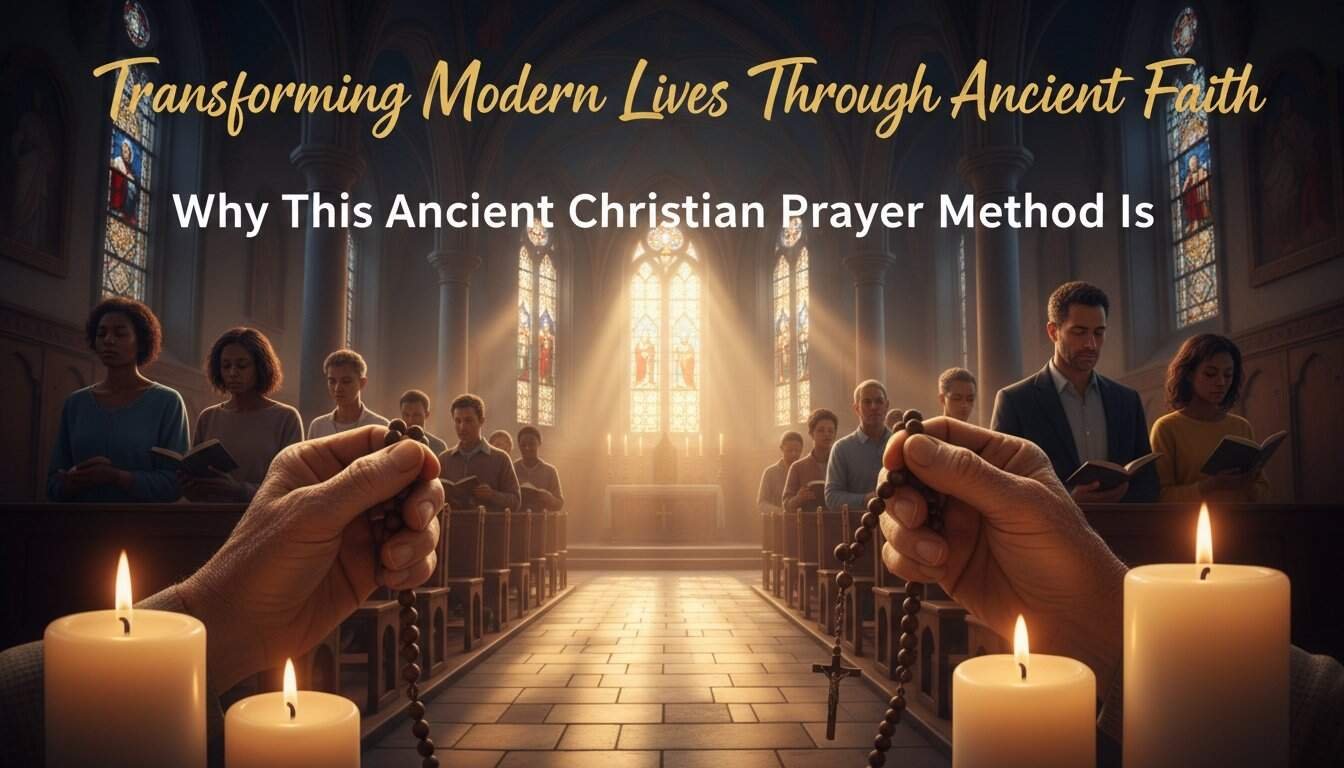
09 Jan Why This Ancient Christian Prayer Method Is Transforming Modern Lives
Lectio divina transforms modern lives because it addresses contemporary anxiety through Scripture’s transformative power rather than secular mindfulness techniques. You’ll engage God’s Word through four contemplative stages—lectio, meditatio, oratio, contemplatio—that activate your parasympathetic nervous system while fostering genuine divine dialogue. This 1,600-year-old practice doesn’t merely empty consciousness but fills your spirit with revelatory truth, creating sustained peace through intimate communion with Christ. Continue exploring how this ancient method can revolutionize your spiritual formation.
Key Takeaways
- Lectio divina’s four-stage structure transforms anxious overwhelm into contemplative stillness through slow, deliberate Scripture reading and meditation.
- The practice activates the parasympathetic nervous system, naturally reducing cortisol levels and slowing heart rate for improved well-being.
- Unlike secular mindfulness, lectio divina fills the spirit with divine truth while fostering transformative dialogue with God.
- This 1,600-year-old method requires only Scripture and fifteen minutes, making ancient wisdom accessible to modern practitioners.
- Regular practice loosens anxiety’s grip and restores spiritual equilibrium by synchronizing breath awareness with sacred phrases.
What Is Lectio Divina? The Ancient Practice Transforming Modern Prayer

While contemporary believers often struggle with distracted, hurried prayer lives, lectio divina offers a time-tested pathway to deeper communion with God through Scripture. This contemplative method, whose origins explained trace back to the Desert Fathers of the 4th century, revolutionizes how you encounter God’s Word.
Ancient lectio divina transforms hurried modern prayer into deep, contemplative communion with God through unhurried Scripture engagement.
Lectio divina—literally “divine reading”—comprises four progressive stages: lectio (reading), meditatio (meditation), oratio (prayer), and contemplatio (contemplation). You don’t rush through verses seeking information; instead, you slowly absorb Scripture, allowing the Holy Spirit to illuminate specific passages.
Benedict of Nursia formalized this practice in his Rule, making it central to monastic spirituality. Unlike academic study, lectio divina prioritizes spiritual transformation over intellectual comprehension. You read with your heart, not just your mind.
This ancient discipline counters modern prayer superficiality by fostering sustained attentiveness to God’s voice through His written Word, creating space for genuine spiritual encounter.
The Four Simple Steps of Lectio Divina Anyone Can Learn
Each stage flows organically into the next, though you shouldn’t feel pressured to complete all four during every session.
This ancient method’s genius lies in its accessibility—requiring only Scripture, an open heart, and willingness to encounter the divine through patient, attentive reading.
How Lectio Divina Calms Anxiety and Restores Spiritual Peace
When anxiety overwhelms your mind with racing thoughts and spiritual unrest, lectio divina offers a profound antidote through its deliberate rhythm of sacred reading and contemplative silence.
Lectio divina transforms anxious overwhelm into sacred stillness through the gentle rhythm of contemplative Scripture reading.
This ancient practice activates your parasympathetic nervous system, naturally slowing your heart rate and reducing cortisol levels through sustained focus on Scripture’s transformative words.
As you engage each step—lectio, meditatio, oratio, contemplatio—you’ll discover breath awareness becoming deeper and more intentional.
The meditative repetition of sacred phrases synchronizes your breathing with divine truth, creating physiological calm while opening spiritual pathways to God’s peace.
The practice cultivates God’s compassionate presence within your consciousness, replacing anxious rumination with contemplative receptivity.
Scripture’s promises penetrate beyond intellectual understanding into your soul’s deepest chambers, where Christ’s peace transcends human comprehension.
Through consistent lectio divina, you’ll experience anxiety’s grip loosening as divine tranquility becomes your default spiritual state, restoring equilibrium between mind, body, and spirit.
Lectio Divina vs. Mindfulness: Why Scripture-Based Prayer Goes Deeper
Scripture-centered contemplation fundamentally differs from secular mindfulness practices through its theocentric orientation and revelatory foundation. While mindfulness emphasizes present-moment awareness through detached observation, lectio divina engages you in transformative dialogue with divine revelation. Your Scriptural focus establishes direct communion with God’s Word, transcending mere psychological benefits.
This contemplative depth emerges from Christianity’s theological roots, where Scripture isn’t simply text but God’s living voice speaking personally to you. You’re not practicing generic awareness but entering covenant relationship through biblical meditation. Your prayerful attention becomes sanctified encounter rather than self-improvement technique.
Mindfulness typically seeks mental clarity through emptying consciousness, while lectio divina fills your spirit with divine truth. You receive God’s particular word for your circumstances, allowing Scripture to penetrate beyond surface emotions into spiritual transformation.
This prayer method connects you with two millennia of Christian contemplatives who’ve discovered Scripture’s inexhaustible capacity to reveal God’s heart and reshape human consciousness through grace-filled encounter.
Your First Week: Starting a Daily Lectio Divina Practice
Beginning your lectio divina journey requires deliberate commitment to sacred rhythm rather than sporadic spiritual impulses. You’ll establish transformative habits through structured consistency during these foundational seven days.
Your week checklist should include selecting identical prayer times, choosing appropriate Scripture passages, and maintaining realistic expectations. Start with fifteen-minute sessions, focusing on quality over duration. Don’t attempt lengthy biblical texts; instead, select 3-5 verses from Psalms, Gospels, or Pauline epistles.
Establish your morning rhythm by preparing your heart through brief silence before opening Scripture. Read your chosen passage four times: first for familiarity, second for specific words that resonate, third for personal application, and fourth for prayerful response. You’ll notice initial resistance or wandering thoughts—this represents normal spiritual formation.
Document insights without forcing profound revelations. God’s voice often emerges through seemingly mundane observations. Your consistency matters more than mystical experiences during this initial week.
Frequently Asked Questions
Can Non-Christians Practice Lectio Divina Effectively?
You can practice lectio divina effectively as a non-Christian if you approach it with genuine spiritual curiosity, though you’ll encounter theological tensions.
The method’s contemplative framework transcends denominational boundaries, yet its Christocentric hermeneutics and scriptural presuppositions remain inherently Christian.
Your participation might enrich interfaith dialogue while challenging traditional boundaries, but you’d need to navigate the practice’s doctrinal foundations thoughtfully to maintain both authenticity and respect.
What Bible Translation Works Best for Lectio Divina?
You’ll find the NRSV accessible for lectio divina because it balances scholarly rigor with readability.
Dynamic equivalents like the NIV or NLT can enhance contemplative understanding by clarifying ancient idioms and cultural references. However, avoid paraphrases that obscure textual nuances.
Consider using multiple translations comparatively—the NRSV for precision, dynamic equivalents for clarity.
Your contemplative practice benefits when you’re not wrestling with archaic language but engaging Scripture’s transformative depth.
How Long Should Each Lectio Divina Session Last?
You’ll find lectio divina sessions typically range from 15-30 minutes for beginners, allowing sufficient time for each stage without overwhelming your contemplative capacity.
Advanced practitioners often extend sessions to 45-60 minutes, developing deeper scriptural penetration.
Short sessions maintain consistency in daily practice, while extended retreats of several hours permit profound immersion in God’s word, following monastic traditions that emphasize gradual spiritual formation through sustained biblical meditation.
Is It Normal to Fall Asleep During Lectio Divina?
Yes, you’ll occasionally experience sleeping distraction during lectio divina, and it’s entirely normal.
Your body rest needs can interfere with contemplative practice, particularly during evening sessions or when you’re physically exhausted.
The Desert Fathers acknowledged this reality, distinguishing between acedia (spiritual laziness) and genuine fatigue.
When drowsiness occurs, you shouldn’t view it as spiritual failure but rather adjust your timing or posture accordingly.
Can Lectio Divina Be Practiced in Groups or Only Individually?
You can practice lectio divina both individually and in groups, as monastic communities have demonstrated for centuries.
In communal settings, you’ll engage in group listening as one person reads the selected passage aloud, followed by periods of shared silence for meditation.
This corporate approach fosters spiritual unity while maintaining the contemplative essence that’s characterized this ancient practice since the patristic era.
Conclusion
You’ve discovered lectio divina‘s transformative power through its fourfold movement of reading, meditation, prayer, and contemplation. Unlike secular mindfulness practices, you’re engaging directly with God’s revealed Word, allowing Scripture’s inherent authority to shape your spiritual formation. As you establish this daily discipline, you’ll experience deepening communion with Christ through His written revelation. Your consistent practice won’t merely reduce anxiety—it’ll cultivate authentic spiritual maturity rooted in biblical truth and orthodox Christian tradition.








No Comments