

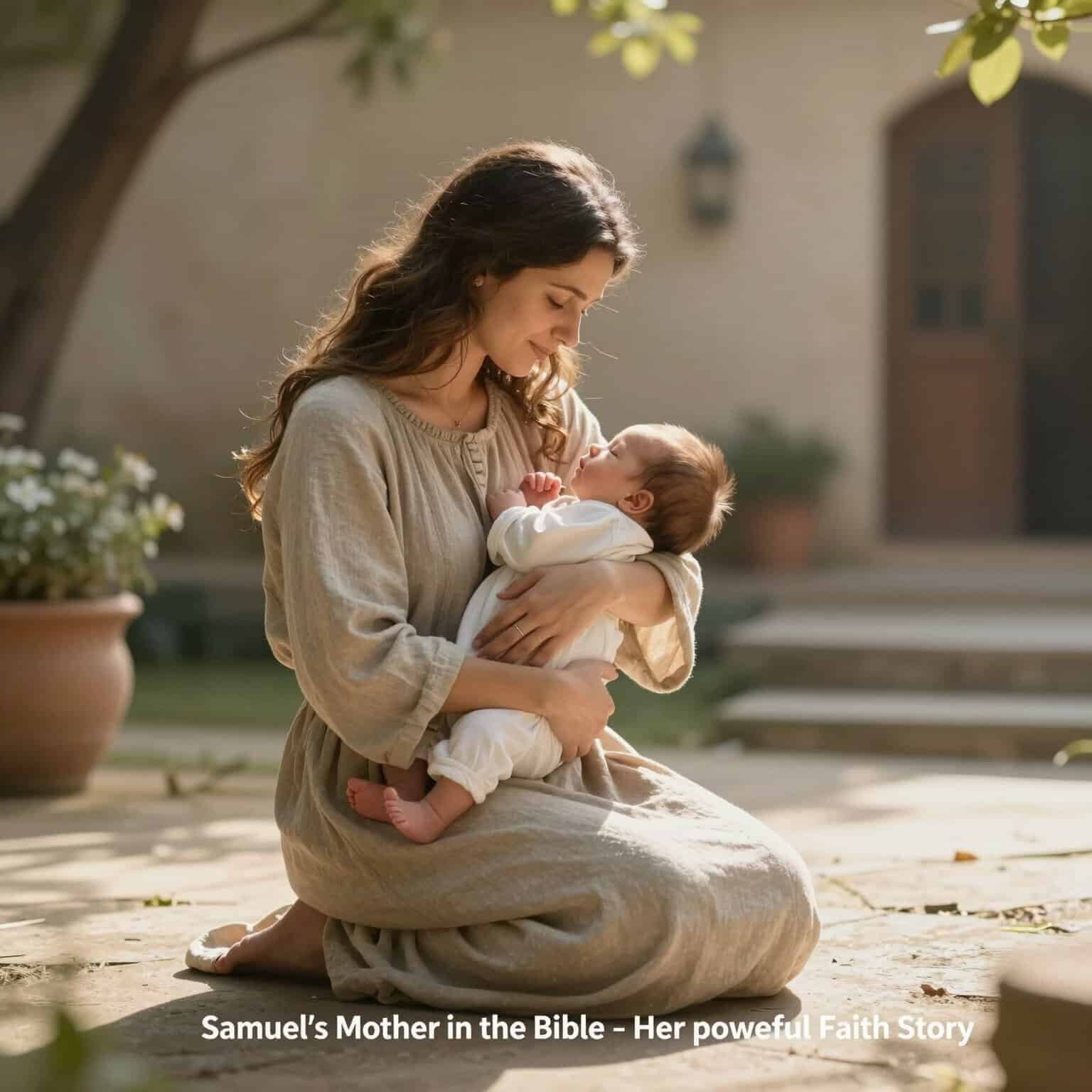
24 Apr Samuel’s Mother in the Bible: Her Powerful Faith Story
You’ll discover Hannah, a Shiloh woman once mocked for childlessness, who prayed silently with tears before Eli and was misunderstood as drunk. Her heartfelt vow to dedicate any son to God’s service led to the miraculous birth of Samuel, whose name means “God has heard.” Her song celebrates divine reversal—humble lifted, proud humbled—and shows how steadfast prayer reshapes destiny. Keep going to see how her legacy shapes women’s roles and modern faith.
Table of Contents
Who Is Hannah? The Mother of Samuel
Who was Hannah, the mother of Samuel? You meet her in the late‑Judges period, living in Shiloh while Israel worshiped at the tabernacle. She’s Elkanah’s devoted wife, and Peninnah, his other wife, constantly taunts her for being childless. Her name means “grace” or “favor,” yet her life feels marked by sorrow and longing. You’ll find her praying silently, tears streaming, pleading for a child, and promising to devote any son to God’s service. When Eli misreads her anguish as drunkenness, you see her clarify, and he blesses her. God “remembers” her, and she conceives Samuel, whose name means “heard by God.” After weaning, she fulfills her vow, bringing Samuel to the tabernacle for lifelong dedication. Hannah’s story showcases personal anguish turning into faithful obedience, setting the stage for Samuel’s pivotal role in Israel’s history.
Why Does Hannah’s Prayer Stand Out?
Why does Hannah’s prayer stand out? You feel its power because she pours raw anguish into a silent, desperate plea at Shiloh, refusing to mask grief behind ritual. Unlike the formal petitions of priests, her words tumble from a heart bruised by childlessness, and she openly admits her soul’s torment. You notice the stark contrast when Eli first mistakes her fervor for drunkenness—her prayer is so intense it shatters expectations. Yet she swiftly clarifies, turning personal sorrow into a vow that binds her future son to God’s service. This blend of personal pain, honest confession, and unwavering trust creates a model of prayer that resonates across centuries. You also see how her subsequent hymn in 1 Samuel 2 flips the narrative, celebrating divine reversal and justice. In short, her prayer stands out for its authenticity, emotional depth, and the way it transforms private lament into communal worship.
How Did the Vow Shape Samuel’s Life?
Hannah’s heartfelt vow didn’t end with her prayer; it set the course for Samuel’s entire life. You see, the promise to dedicate her son to God forced you to place Samuel in the tabernacle the moment he could walk, shaping his identity as a servant before any secular influence. That early immersion under Eli’s mentorship gave him a prophetic ear and a reverent heart, steering him toward the role of judge and king‑anointer.
Because the vow demanded lifelong service, you never allowed Samuel to drift into private ambitions; his decisions always reflected divine counsel. The commitment also modeled obedience for Israel, showing that a single vow could steer national destiny. As Samuel grew, the weight of his mother’s pledge reminded him of humility, prompting the famous “listen, people” address that united the nation. In short, the vow forged his purpose, his character, and his lasting impact on Israel’s history.
What Is the Miracle of “Remembering” for Hannah and Samuel?
Ever wonder how a single divine act can reshape a life? You see God’s “remembering” as a miracle that flips Hannah’s desperation into hope. After she pours out her anguish at Shiloh, God notes her plea, “I have heard your prayer,” and the womb that seemed barren finally stirs. That moment isn’t just a biological event; it’s a divine acknowledgment that she’s not forgotten. You feel the weight of that promise when Samuel is born, his name meaning “heard by God.”
The miracle continues as Hannah fulfills her vow, dedicating Samuel to the sanctuary, where he grows into the nation’s greatest prophet. Each step—prayer, conception, dedication—shows how God’s remembrance transforms personal grief into communal blessing, turning a silent sorrow into a legacy that shapes Israel’s destiny.
What Themes Run Through Hannah’s Song of Praise?
The miracle of God’s “remembering” sets the stage for Hannah’s prayer of thanksgiving, where she turns personal deliverance into a hymn that reshapes the whole community’s outlook.
As you read her song, you hear a vivid contrast between the lowly and the exalted. She declares that the humble will be lifted while the proud will be humbled, echoing a divine reversal of fortunes. You notice her emphasis on God’s justice: the hungry are satisfied, the barren become fruitful, and the wicked are chastened.
The song also celebrates God’s sovereignty, portraying Him as the source of life, strength, and provision for all generations. You sense a forward‑looking hope, as she envisions future blessings for those who trust. In this concise prayer, Hannah weaves personal gratitude with communal assurance, underscoring that divine intervention reshapes social order and restores balance.
How Does Hannah’s Story Define Women’s Roles?
When you read Hannah’s narrative, you see a woman who moves from silent anguish to bold petition, then fulfills a solemn vow—showing that faith, perseverance, and public devotion weren’t limited to men.
You notice how she enters the tabernacle, prays openly, and receives Eli’s blessing, demonstrating that a woman can engage directly with sacred authority.
Her vow to dedicate Samuel illustrates that a mother can shape national destiny through personal sacrifice.
By singing a prophetic hymn, she becomes a voice of theological insight, proving that women can articulate divine justice and hope.
You also observe that her fulfillment of the vow, despite social pressure and rivalry, models obedience and agency within covenant community.
Together, these actions define a role where women actively participate in worship, prayer, and covenant fulfillment, challenging any notion that spiritual leadership belongs solely to men.
What Legacy Did Hannah Leave for Faith Communities?
Because Hannah’s prayer was answered, her story still fuels worship today: churches and synagogues cite her relentless petition as a model for personal prayer, while her vow‑fulfillment inspires believers to honor commitments to God. You’ll find her song echoing in liturgies that celebrate the humble and the faithful, and her dedication of Samuel shaping how faith communities view child‑bearing promises.
Her example teaches you to trust God’s timing, to pray persistently, and to keep vows even when the cost seems high. In Jewish tradition she’s remembered as a prophetess, and in Christian hymnody her words anticipate the Magnificat, linking her legacy to broader biblical praise.
When you reference Hannah, you draw on a narrative that validates women’s spiritual agency, underscores the power of heartfelt prayer, and models a life wholly devoted to divine service. This enduring influence guides worship, teaching, and personal devotion across centuries.
How Can Modern Readers Apply Hannah’s Faith?
If you’re feeling stuck, Hannah’s story shows that honest, persistent prayer paired with concrete action can reshape outcomes. You can begin by naming your deepest need to God, just as Hannah poured out her anguish at Shiloh. Then set a tangible vow—whether it’s a habit, a service, or a relationship—and commit to it, trusting that God hears you. When doubts arise, remember Eli’s initial misunderstanding; keep the dialogue open, seek counsel, and stay patient.
Celebrate small signs of progress, for they echo God’s “remembering” of Hannah. Incorporate gratitude into daily prayer, echoing her song of praise that turns hardship into hope. Finally, model obedience by following through on your promise, allowing your life to become a testimony that faith, prayer, and action together transform circumstances.
Frequently Asked Questions
Did Hannah’s Prayer Influence Later Biblical Prayers?
Yes, Hannah’s prayer set a pattern for later biblical prayers. You’ll see its structure—personal lament, heartfelt petition, and a vow—mirrored in David’s Psalms, Solomon’s dedication in 1 Kings 8, and Mary’s Magnificat. Its themes of God hearing the humble, reversing fortunes, and promising future blessings echo throughout Scripture, shaping the language and theology of worship and thanksgiving for generations.
How Did Hannah’s Vow Affect Eli’s Priesthood?
You’ll see that Hannah’s vow pushed Eli to recognize genuine prayer, reshaping his ministry.
When Hannah clarified her silent lament, Eli stopped accusing her of drunkenness and blessed her, showing his humility.
This encounter reminded Eli of the importance of listening to God’s people, prompting him to be more attentive and reverent in his priestly duties, which later influenced how he mentored Samuel.
What Cultural Customs Surrounded Hannah’s Dedication Ceremony?
You’d see Hannah’s dedication follow Israel’s Nazirite‑type rite: she brought Samuel to Shiloh, placed him under Eli’s care, and offered a burnt offering on the altar.
The family would have shaved the child’s head, given him a sacred name, and vowed lifelong service to Yahweh.
The ceremony required a public vow, a priestly blessing, and the community’s acknowledgment of the child’s consecrated status.
How Is Hannah Commemorated in Liturgical Calendars?
You’ll find Hannah’s feast day on the Eastern Orthodox calendar on December 9, and the Roman Catholic calendar commemorates her together with the Prophet Samuel on July 1. In the Anglican and Lutheran traditions, she’s remembered in the “Women of the Old Testament” observances, often on the same day as Samuel. These commemorations include readings of her prayer (1 Samuel 2) and hymns celebrating her steadfast faith.
Conclusion
So, when you reflect on Hannah’s story, you see a woman whose fierce faith turned a promise into a legacy that still inspires. Her prayer, her vow, and her song all show how trusting God can reshape lives and communities. Let her courage remind you that sincere devotion, even in hardship, can echo through generations—encouraging you to pray boldly, keep your vows, and let your faith shape the world around you.











No Comments