

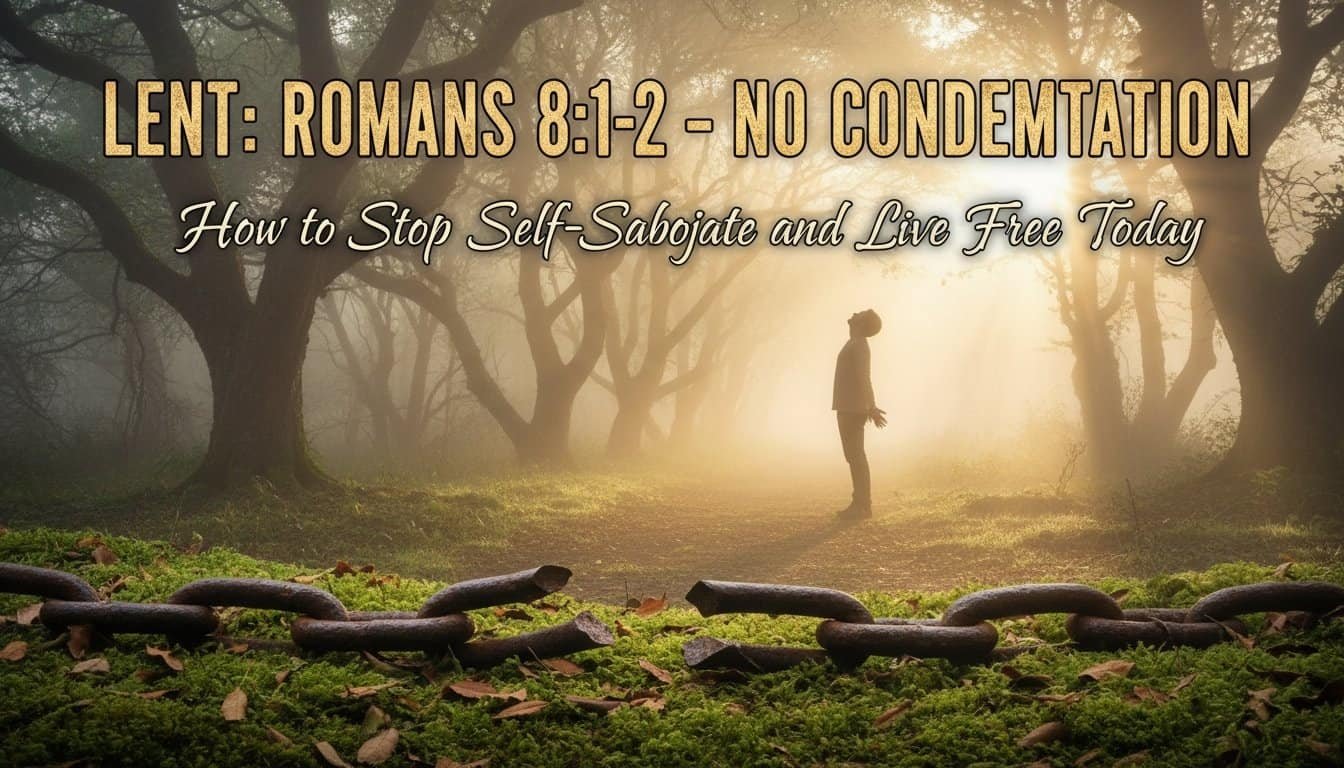
05 Feb Lent: Romans 8:1-2 – No Condemnation: How to Stop Self-Sabotage and Live Free Today
Romans 8:1-2 declares you’re completely free from condemnation—not just forgiven, but legally acquitted with no debt remaining. Christ’s perfect obedience fulfilled what you couldn’t, and His Spirit now empowers you with eternal life that supersedes sin’s enslaving power. When self-sabotaging thoughts whisper failure, remember your righteous status never changes based on performance. You’re secure in Christ’s finished work, not your efforts. This freedom transforms how you approach daily struggles and spiritual growth.
Table of Contents
Key Takeaways
- Condemnation means complete freedom from debt, not just “not guilty” – it’s an irreversible acquittal available now.
- Christ’s perfect obedience and sinless life fulfilled what we cannot, condemning sin itself on the cross.
- The Spirit’s law of life provides eternal vitality that supersedes the enslaving law of sin and death.
- Your righteous status remains secure regardless of performance; obedience stumbles don’t alter your position in Christ.
- Replace self-criticism with gospel truth – let Spirit-led living, not condemning thoughts, govern your daily behavior.
What “No Condemnation” Means in Romans 8:1

The word “condemnation” here isn’t just disapproval—it’s a legal term meaning complete freedom from debt or penalty. You’re not merely “not guilty”; you’re absolutely acquitted. This goes beyond legal justifications; it’s God declaring that no charge can stand against you.
Notice the word “now”—this freedom isn’t waiting for heaven. It’s your present reality. When Christ bore your punishment, He didn’t partially cover your sins; He completely removed them. God’s omnipotent favor has replaced His opposition toward you.
You don’t have to earn this position or maintain it through performance. Your standing is defined solely by Jesus, and that verdict is irreversible. The law of sin and death that once dominated your life has been overthrown by the law of the Spirit of life in Christ Jesus.

How Christ Fulfilled the Law of Sin and Death
How did Christ break the cycle that trapped humanity for millennia? He accomplished what seemed impossible – perfect obedience to God’s commands when you couldn’t manage even one day without falling short.
Christ fulfilled every moral requirement internally and externally, becoming the first human to live sinlessly. Through His obedience, Romans 5:19 declares many are made righteous. But He didn’t stop there. Sent in sinful flesh’s likeness as a sin offering, He condemned sin itself on the cross – not as your substitute, but as sin’s destroyer.
This victory makes any irrelevant comparison between your past failures and present freedom meaningless. The law’s weakness through human flesh has been overcome. Contemporary applications flow naturally when you understand that Christ’s sacrifice ended the ceremonial system while enabling real righteousness through the Spirit. God’s love for humanity is demonstrated through sending the Son to accomplish what the Law could never achieve. You’re no longer trapped in sin’s death cycle – Christ shattered those chains completely.
The Spirit’s Law of Life in Romans 8:2 Explained
When you grasp what Paul means by “the law of the Spirit of life,” you’ll discover a principle that operates with divine power to impart eternal vitality to your spirit. This isn’t referring to the Mosaic Law, but rather a superior spiritual principle that functions through Christ’s person and work.
The Greek word “zoe” describes the kind of life this law brings—eternal, Spirit-connected vitality that flows like a spring within you. This divine vitality supersedes the law of sin and death that once enslaved you through your flesh and soul.

You experience this law’s liberty when the Holy Spirit activates within your spirit, delivering you from sin’s cosmic powers. Instead of serving under condemnation, you’re freed to serve God joyfully. This transformative principle doesn’t just justify you legally—it provides practical freedom from daily enslavement to sin, enabling Spirit-led living that fulfills God’s righteous requirements.
Walking in Romans 8 Freedom Without Guilt
Since Christ has already paid sin’s penalty in full, you’re free to walk without the crushing weight of guilt that once defined your daily experience. Your stumbles in obedience don’t alter your righteous status—God’s verdict remains “not guilty” because of Jesus.
Stop letting self-criticism dictate your daily living. When condemnation whispers lies about your failures, remember these two word ideas: “no condemnation.” Your position in Christ can’t be lost or separated, regardless of performance.
You don’t need perfect sanctification to maintain your justified standing. God’s omnipotent mercy has replaced His condemning wrath toward you. The Spirit’s indwelling proves your secure position.
Explore freedom from the law of sin and death that once enslaved you. Replace guilt-driven motivation with gospel truth. You’re defined by Christ’s work, not personal achievements. Walk confidently knowing God is always for you, omnipotently assisting your journey forward.
Frequently Asked Questions
Does Romans 8:1-2 Mean Christians Can Sin Without Any Consequences?
No, Romans 8:1-2 doesn’t mean you can sin without consequences. While you experience no condemnation and true spiritual freedom from eternal judgment, sin still brings earthly repercussions—damaged relationships, broken trust, and light corruption of your inner peace. God’s discipline remains for your growth. This passage offers freedom from sin’s ultimate penalty, not license to sin. You’re called to walk in the Spirit’s transforming power.
How Does Lent Relate to the Concept of No Condemnation?
Your Lent reflections become powerful when you practice No Condemnation by releasing self-judgment and shame. Instead of using these 40 days to punish yourself, you’ll embrace God’s grace while growing spiritually. You’re not fasting or praying to earn forgiveness—you’re already forgiven through Christ. Let Lent transform your heart through grateful discipline, not guilt-driven performance, experiencing true freedom in God’s unconditional love.
What’s the Difference Between Conviction and Condemnation for Believers?
When you experience conviction vs condemnation, you’ll notice conviction comes from God’s Spirit to lovingly guide you toward growth and freedom. It’s corrective, not punitive.
Condemnation, however, comes from the enemy and produces shame and bondage.
As a believer, you’re promised no condemnation through Christ (Romans 8:1).
Conviction transforms you; condemnation traps you.
Embrace believer freedom by recognizing God’s loving correction.
Can Someone Lose Their “No Condemnation” Status After Salvation?
You can’t lose your “no condemnation” status once you’re truly saved. Forgiveness misconceptions often make believers doubt their security, but Romans 8:1 declares permanent freedom from condemnation for those in Christ.
Your grace assurance doesn’t depend on perfect performance—it rests on Jesus’ finished work. While you’ll face conviction for growth, condemnation is forever removed. Trust God’s unchanging promise over your changing feelings.
Why Do Some Christians Still Struggle With Guilt Despite Romans 8:1?
You experience guilt recurrence because old patterns die hard, and your emotions haven’t caught up with God’s truth yet. Grace struggle happens when you’re learning to walk in freedom—it’s part of spiritual growth, not spiritual failure. Your feelings don’t change your standing with God. Keep renewing your mind with Scripture, reminding yourself that condemnation isn’t from Him, and you’ll gradually experience the emotional freedom that’s already yours.
Conclusion
You don’t have to live under condemnation’s weight anymore. Christ’s finished work has set you free from sin’s deadly grip, and the Spirit’s life now flows through you. When guilt tries to sabotage your peace, remember you’re walking in Romans 8 freedom. You’re not defined by your failures but by God’s unchanging love. Step boldly into each day knowing you’re accepted, forgiven, and empowered to live the abundant life Christ died to give you.









No Comments