

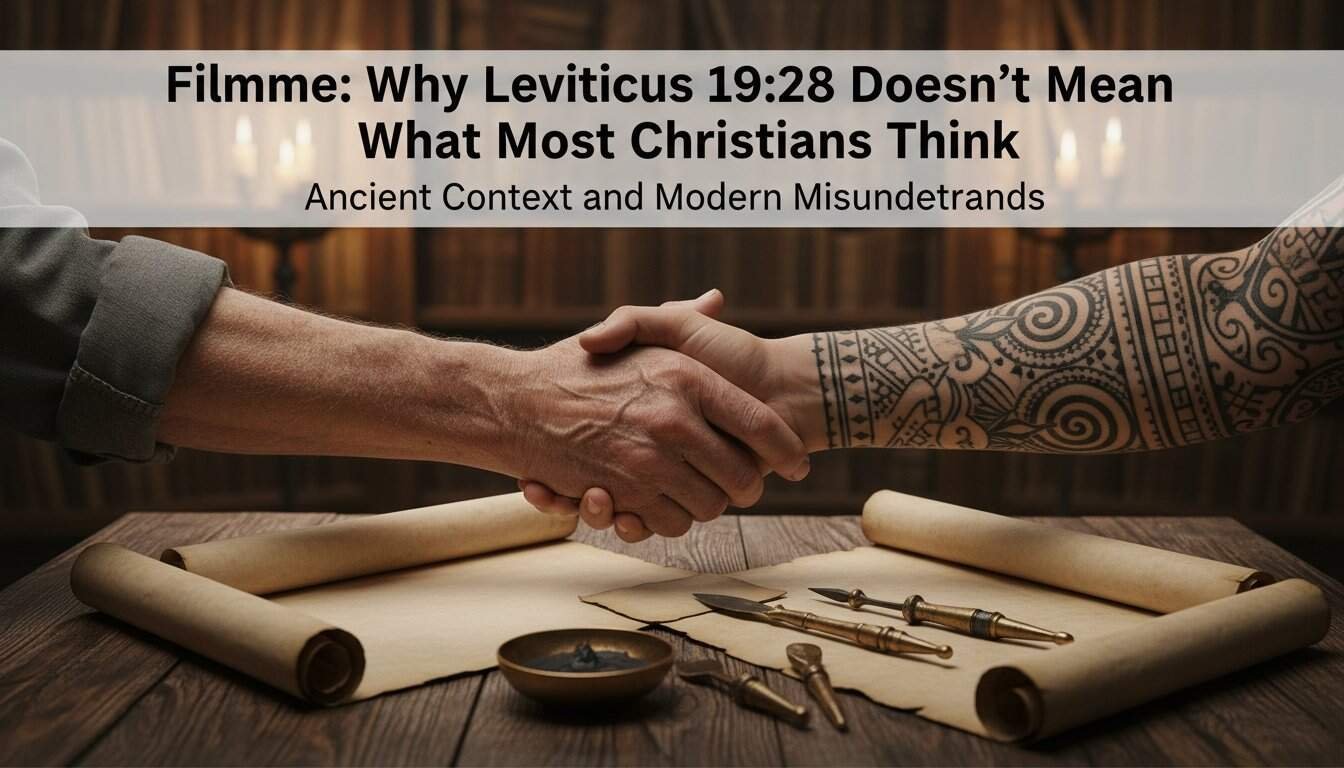
04 Feb Why Leviticus 19:28 Doesn’t Mean What Most Christians Think
Leviticus 19:28’s prohibition isn’t about all tattoos—it specifically targets ritual markings connected to pagan mourning practices and idolatrous funeral rites. The Hebrew context reveals this passage addresses “cuts for the dead” and emblems of pagan deities carved during mourning rituals, not decorative body art itself. You’ll find that rabbinical scholars connect these markings to memorial carvings of the deceased, emphasizing the idolatrous context rather than generic body modification. Understanding this distinction completely transforms how you’d apply this verse to modern tattoo decisions.
Table of Contents
Key Takeaways
- Leviticus 19:28 specifically targets pagan mourning rituals and idolatrous funeral practices, not decorative body art.
- The Hebrew context emphasizes “cuts for the dead” and memorial carvings of deceased persons, not general tattoos.
- No New Testament passage explicitly prohibits tattoos, with Romans 14 treating such decisions as matters of conscience.
- Jesus fulfilled Old Testament ceremonial law, and the new covenant replaced binding Old Testament restrictions like this.
- Modern tattoo decisions should focus on motives, cultural context, and honoring God rather than blanket prohibition.
What Does Leviticus 19:28 Actually Prohibit About Tattoos?

The key lies in understanding tattoo origins within ancient Canaanite culture. This verse specifically targets ritual markings linked to mourning context—practices aimed at honoring the dead or warding off spirits. The prohibition connects directly to “cuts for the dead,” revealing its focus on pagan funeral rituals rather than decorative body art.
Rabbinical scholars consistently interpret these markings as memorial carvings of names or images commemorating deceased relatives. The concern wasn’t skin modification itself, but participation in idolatrous mourning practices that compromised Israelite religious distinctiveness. These restrictions likely included emblems of pagan deities carved into the skin as part of ancient religious ceremonies.
Why The Original Hebrew Context Matters For Modern Christians
When you ignore the mourning context and Hebrew linguistics, you’re applying a blanket interpretation that the original text doesn’t support.

Understanding ancient language prevents modern misapplication.
The Hebrew word nefesh in this passage may refer to a corpse rather than a living person, further emphasizing the mourning ritual context.
Do New Testament Principles Allow Tattoos Today?
Understanding Hebrew context naturally leads to examining what New Testament teachings reveal about body modifications. You’ll find no explicit commands prohibiting tattoos, placing them squarely in Romans 14’s “matters of conscience” framework. Jesus fulfilled Old Testament law (Romans 10:4), and Ephesians 2:14-16 confirms He abolished the dividing wall of commandments.
The “body as temple” principle from 1 Corinthians 6:19-20 requires careful consideration without subtopic tangents into unrelated specifics. This passage emphasizes stewardship rather than prohibition, leaving modification decisions to individual prayer and conviction. Your heart motive determines acceptability under the New Covenant.
Colossians 2:13-14 indicates Old Covenant commands aren’t binding today, while Hebrews 8:7-13 describes the new covenant replacing the old. Since Scripture remains silent on modern tattoos, you must evaluate whether your choice honors God and bears fruit for His kingdom rather than following legalistic interpretations.

Making A Biblical Decision About Tattoos For Your Life
How should you approach the personal decision about tattoos given Scripture’s nuanced teaching? First, examine your motivations. Leviticus 19:28’s prohibition targeted pagan mourning rituals and servitude markings, not decorative body art with unrelated symbolism. You’re free from Old Testament ceremonial laws through Christ, but wisdom still applies.
Consider your testimony and cultural context. Will your tattoo glorify God or cause others to stumble? Evaluate the permanence—unlike ancient needle-ink methods, modern cosmetic tattooing offers various options from temporary to permanent.
Ask yourself: Does this express devotion to God like Isaiah 44:5’s arm marking “of the LORD,” or does it compromise your witness? Pray about your specific situation rather than applying blanket prohibitions. Your body belongs to God, so honor Him whether you choose tattoos or not.
Frequently Asked Questions
Are There Any Other Bible Verses That Mention Tattoos or Body Modifications?
Beyond Leviticus 19:28, you’ll find scattered references that create overlooked tension in this two word discussion. Isaiah 44:5 mentions hand-marking for God’s ownership, while Deuteronomy 15:17 permits ear piercing for servants. Revelation 13:16-17 describes beast marks, and Revelation 7:3 references God’s seal on foreheads. These passages show body modification appears throughout Scripture with varying contexts and purposes, complicating simple prohibitions.
How Do Different Christian Denominations Officially View Tattoos Today?
Denominational perspectives on tattoos vary significantly across Christianity today. You’ll find the Catholic Church doesn’t oppose tattoos in principle, requiring only appropriate imagery. Protestant evangelicals show mixed views – conservatives cite body sanctity concerns while others emphasize contextual interpretation. Mormons allow tattoos but may restrict missionary roles. Most denominations now evaluate tattoo ethics case-by-case rather than issuing blanket prohibitions, reflecting broader cultural acceptance.
What Did Ancient Pagan Mourning Rituals With Tattoos Actually Look Like?
You’d find ancient pagans cutting themselves with razors rather than tattooing during mourning rituals. Canaanites lacerated their cheeks, arms, and chests when grieving for Baal, while temple worship symbols appeared as sacred marks on devotees like fugitive slaves at Greek temples. However, there’s no evidence linking tattoos to mourning practices in ancient Levant, Egypt, or Mesopotamia—this wasn’t about dietary law vs. ritual purity distinctions.
Should Christians Remove Tattoos They Got Before Becoming Believers?
You don’t need to remove pre-conversion tattoos. There’s no biblical mandate requiring removal since Leviticus 19:28 specifically targeted pagan mourning rituals, not general body modification. Under the New Covenant, tattoo ethics focus on heart motives rather than physical appearance. Historical Christians often kept their tattoos after conversion. Your body stewardship should prioritize spiritual growth over costly, painful removal procedures that aren’t scripturally necessary.
Do Jewish People Today Follow the Leviticus 19:28 Tattoo Prohibition?
Orthodox and Conservative Jews strictly follow Leviticus 19:28‘s tattoo prohibition, viewing it as clear Torah violation regardless of mourning symbolism context. However, you’ll find increasing tattoo evidence among younger Jews in Israel and America, despite rabbinical opposition. Reform Judaism generally maintains the prohibition but applies it less rigidly. Interestingly, some Jews now get Hebrew tattoos or Holocaust remembrance ink, showing how traditional interpretations clash with contemporary identity expression.
Conclusion
You’ve seen that Leviticus 19:28’s prohibition addressed specific pagan mourning practices, not modern artistic tattoos. The Hebrew context reveals concerns about idolatrous rituals rather than body art itself. Since you’re under the New Covenant, Old Testament ceremonial laws don’t directly bind you. However, you should still consider New Testament principles about honoring God with your body, avoiding stumbling blocks, and making decisions that glorify Christ in your specific cultural context.











No Comments