

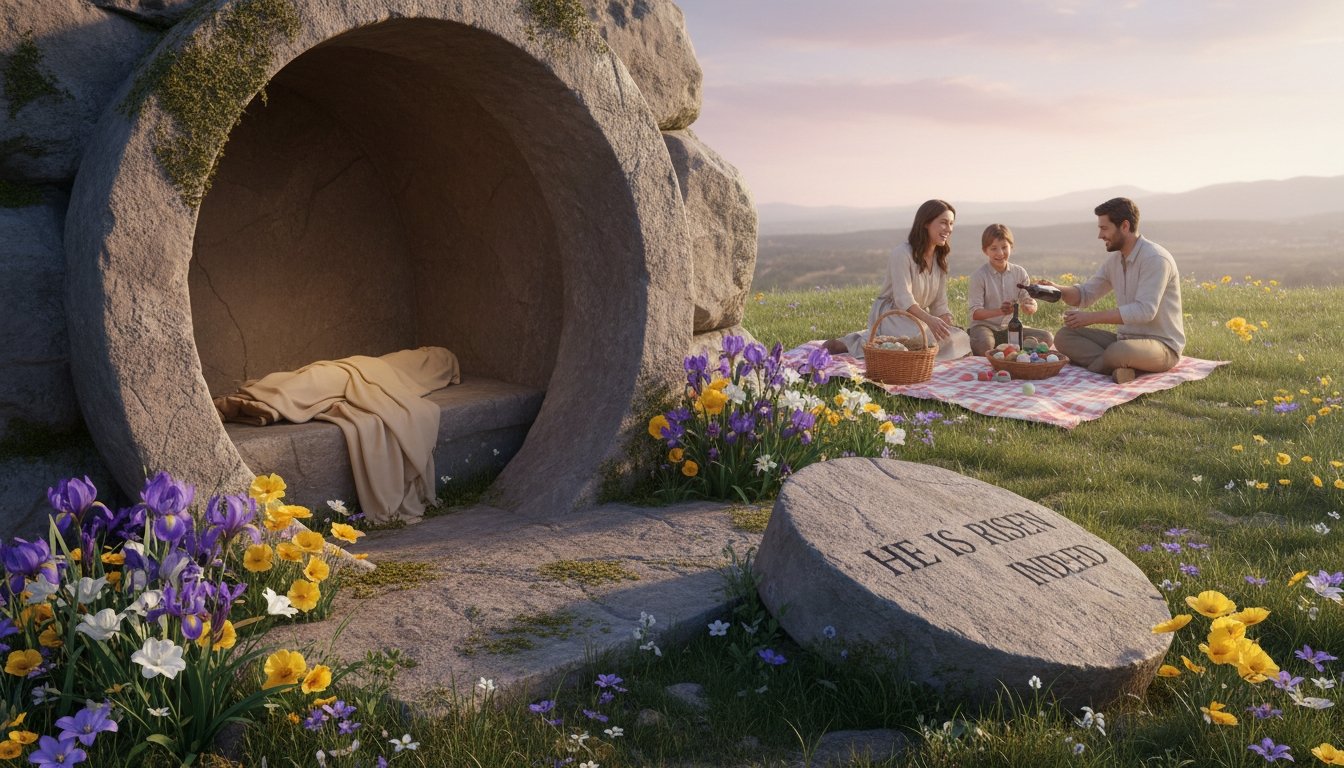
28 Feb Post Resurrection Events and Monday Traditions
After Jesus’ resurrection, he appeared to his disciples, commissioned them to spread the gospel, and ascended into heaven. At Pentecost, the Holy Spirit empowered the disciples to boldly proclaim the good news, leading thousands to believe and the birth of the church. Many Christians today continue these post-resurrection traditions on Easter Monday, but there’s much more to explore about the significance of these events.
Key Takeaways
- The post-resurrection events include the appearances of the risen Christ to his disciples, his ascension, and the coming of the Holy Spirit at Pentecost.
- The disciples were commissioned to make disciples of all nations and were empowered by the Holy Spirit for bold proclamation of the gospel.
- The establishment and growth of the early Church is marked by the devotion of believers to teaching, fellowship, breaking of bread, and prayer.
- There is no mention of specific Monday traditions related to the post-resurrection events in the background information provided.
- The key focus of the post-resurrection events is on the triumph of Christ over death, the forgiveness of sins, and the birth and growth of the Christian Church.
The Resurrection: Christ’s Triumph Over Death
How did Christ triumph over death through his resurrection? By rising from the dead, he demonstrated his power over the grave. His empty tomb proved he’d defeated the finality of death, conquering the forces that had bound humanity. You can now rejoice, for Christ’s resurrection offers you eternal life. No longer must you fear the grave – your sins are forgiven, and you’ve been promised a glorious future. Through faith in the risen Savior, you’ve been given the hope of heaven. Christ’s triumph means death has lost its sting. You need not dread the end, for the resurrection guarantees your own future resurrection and the restoration of all things.
Appearances to the Disciples: Spreading the Good News
After his resurrection, where did Jesus appear to his disciples?
Jesus appeared to his disciples in various places, including the upper room and by the Sea of Tiberias. On one occasion, he met with them on a mountain in Galilee, where he commissioned them to make disciples of all nations. The disciples were overjoyed to see their risen Lord, and Jesus encouraged them, reminding them of his authority and the promise of his ongoing presence.
Through these appearances, the disciples received the good news of Jesus’ victory over death and their marching orders to share this message with the world. Filled with the Holy Spirit, the disciples went forth boldly, preaching the gospel and performing miracles in Jesus’ name.
The Ascension: Jesus Returns to Heaven
Jesus’ appearances to his disciples didn’t last forever. After 40 days, it was time for him to return to heaven. He gathered his closest followers and instructed them to wait in Jerusalem for the Holy Spirit. Then, as they watched, he rose into the sky until a cloud obscured him from view. The disciples stood there, awestruck, until two angels appeared and assured them that Jesus would one day return in the same way.
Filled with joy, they returned to Jerusalem, worshiping and praising God. From that day forward, they dedicated themselves to spreading the good news about Jesus. The Ascension marked the end of his earthly ministry, but it also signaled the beginning of a new chapter – the growth of the early Church.
The Coming of the Holy Spirit: Pentecost and the Birth of the Church
After Jesus’ ascension, the disciples gathered in Jerusalem awaiting the promised Holy Spirit. On the day of Pentecost, the Spirit descended, empowering the Church’s establishment.
From that miraculous moment, the new community of believers grew, spreading the good news of Christ.
Descent of Holy Spirit
The Holy Spirit descended upon the disciples on the day of Pentecost, fulfilling Jesus’ promise to send the Comforter. Tongues of fire rested on each of them, and they spoke in foreign languages, empowered to proclaim the gospel. The crowd, bewildered, accused the disciples of being drunk. But Peter stood up and explained that this was the outpouring of the Holy Spirit, ushering in a new era. Three thousand people believed and were baptized that day, marking the birth of the Christian church. From then on, the disciples met regularly, devoting themselves to the apostles’ teaching, fellowship, the breaking of bread, and prayer.
Establishment of the Church
How did the church become established in the days following the outpouring of the Holy Spirit at Pentecost? The apostles boldly proclaimed the gospel, and thousands were added to the new community of believers. They devoted themselves to the apostles’ teaching, fellowship, the breaking of bread, and prayer. Believers shared their possessions, sold their property, and gave to those in need. The church grew rapidly, and the Lord added to their number daily those who were being saved. Empowered by the Spirit, the early Christians met regularly, worshipped together, and cared for one another. This was the beginning of Christ’s church, which continues to impact the world today.
Celebrating the Easter Season: Traditions and Observances
After the joy of Easter Sunday, the Easter season continues with meaningful traditions. You might observe Lent and fast, decorate Easter eggs and baskets, and attend special Easter services and celebrations. These customs help you commemorate the resurrection and its ongoing significance.
Observing Lent and Fasting
What does observing Lent and fasting entail during the Easter season? For many Christians, it’s a time of spiritual reflection, self-denial, and preparation for the resurrection. You’ll likely forgo certain foods or activities, dedicating that time and energy to prayer and repentance. It’s about more than just giving up treats – it’s about centering your heart on Christ’s sacrifice. Though the specifics vary, the goal is to create space for deeper communion with God. Whether you fast fully or partially, Lent invites you to examine your priorities and rely more on divine sustenance.
Decorating Easter Eggs and Baskets
As the Easter season unfolds, decorating eggs and baskets becomes a delightful tradition for many. You’ll gather family and friends to dye eggs in a rainbow of colors, using natural dyes or vibrant store-bought kits. Carefully, you’ll design intricate patterns, dotting and swirling the shells.
Next, you’ll turn your attention to the baskets, lining them with shredded paper and filling them with fragrant spring flowers, chocolate candies, and small toys. This yearly ritual celebrates the joy and renewal of the Easter holiday. With each brushstroke and basket arrangement, you create cherished memories that’ll be passed down through generations, keeping the Easter traditions alive.
Attending Easter Services and Celebrations
How do you honor the Easter season beyond decorating eggs and baskets? You attend festive services at your local church or cathedral. You may rise early for a special sunrise service, celebrate with an Easter procession, or partake in joyous choir performances. After worship, you gather with family and friends for a lavish Easter brunch or dinner, indulging in traditional dishes and desserts. Throughout the day, you engage in lively conversations, share memories, and create new traditions. The Easter season is a time to renew your faith, strengthen connections, and embrace the promise of new beginnings.
The Global Significance of Easter: Celebrations Around the World
Easter, one of the most important Christian celebrations, holds global significance, with diverse traditions and customs observed worldwide. From the iconic egg hunts in the United States to the vibrant parades in the Philippines, the festivities reflect the rich cultural tapestry of different nations.
In the United Kingdom, families enjoy the long Easter weekend with roast lamb dinners, while in Greece, the air is filled with the aroma of traditional Easter breads.
In Latin America, the passion plays reenacting Christ’s crucifixion captivate audiences, while in Russia, the resurrection is celebrated with the decorating of intricate pysanky eggs.
Regardless of location, Easter’s universal message of hope and renewal resonates across the globe, uniting believers in a shared spiritual journey.
Frequently Asked Questions
What Happened to Jesus’s Physical Body After the Resurrection?
After his resurrection, Jesus’s physical body was transformed and glorified. He appeared to his disciples and others, but he was no longer bound by the physical constraints of this world.
The Gospels describe how Jesus could appear and disappear, walk through walls, and ascend into heaven, indicating his body had been supernaturally changed.
Did the Disciples Believe the Resurrection at First?
No, the disciples didn’t immediately believe the resurrection at first. They were skeptical and had a hard time accepting that Jesus had risen from the dead.
It wasn’t until they saw him in person and interacted with him that they truly believed he’d been resurrected. Even then, some still doubted until Jesus proved himself to them.
How Long Did Jesus Remain on Earth After Rising?
Jesus remained on earth for 40 days after rising from the dead. During this time, He appeared to His disciples and taught them about the kingdom of God. He encouraged them to wait in Jerusalem for the promise of the Holy Spirit, then He ascended into heaven in their sight.
What Was the Significance of the Holy Spirit’s Arrival?
The arrival of the Holy Spirit was highly significant, as it empowered the disciples to spread the gospel message and perform miracles. It marked the birth of the Church, providing believers with the spiritual gifts and guidance needed to carry out Jesus’ Great Commission. The Holy Spirit’s presence enabled the disciples to boldly proclaim the truth of Christ’s resurrection and establish the Christian faith worldwide.
Are Easter Traditions Celebrated the Same Way Worldwide?
Easter traditions aren’t celebrated identically worldwide. While many share common elements like egg hunts and bunnies, traditions vary by region and culture.
In some places, people decorate eggs, attend special church services, or enjoy festive meals. The way Easter is observed reflects the diverse beliefs and customs of communities across the globe.
Conclusion
You’ve just learned about the post-resurrection events and Monday traditions. Now, you can reflect on the enduring significance of Christ’s triumph over death and the birth of the Church. Cherish the global celebrations of Easter, and let its message of hope and renewal inspire you throughout the year.









No Comments