

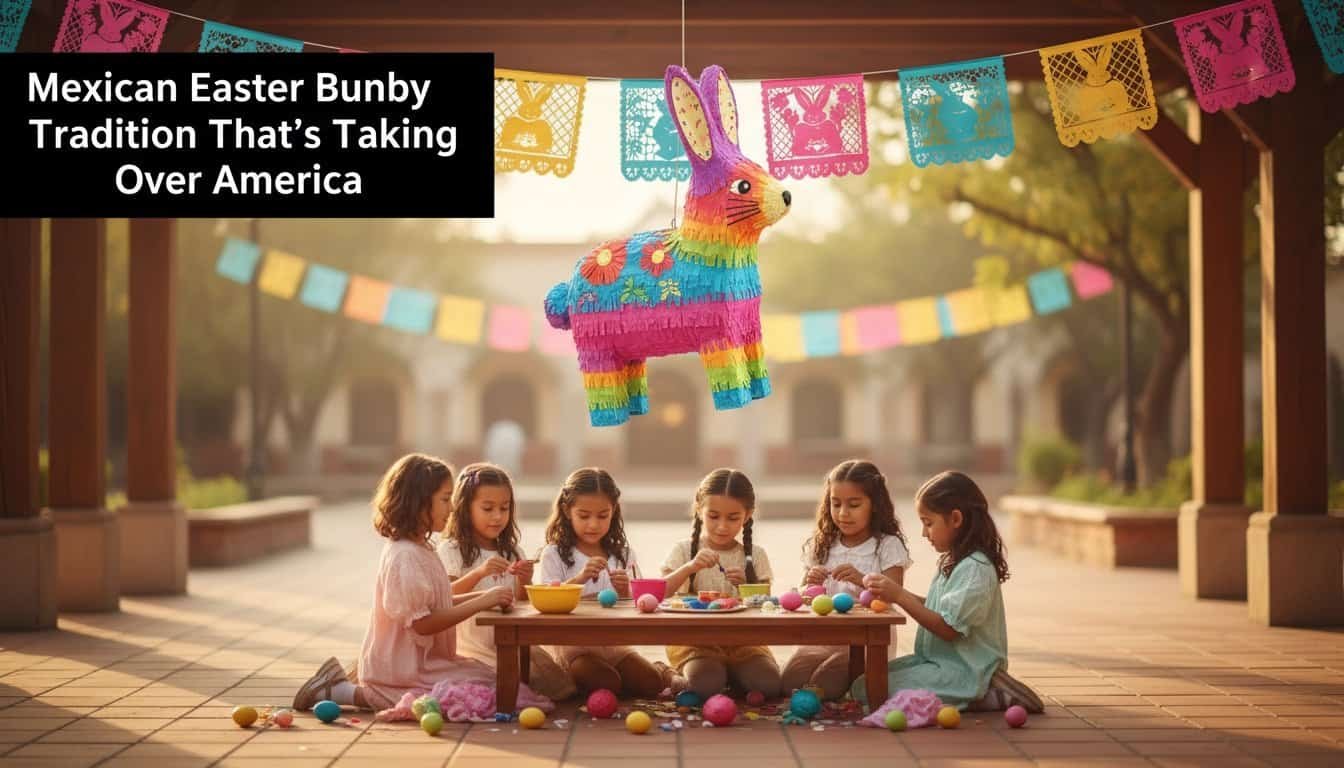
26 Jan Mexican Easter Bunny Tradition That’s Taking Over America
You’re witnessing “La Búsqueda Del Conejo,” a Mexican Easter tradition that’s transforming American neighborhoods through community-centered celebrations. Unlike competitive egg hunts, this practice involves weeks of collaborative preparation where families create hand-woven grass clues, natural-dyed eggs from onion skins and annatto seeds, and wooden trail markers for mixed-age storytelling adventures. Cities like Los Angeles, Phoenix, and Chicago now host public events that emphasize cross-generational bonding over individual competition, drawing non-Mexican families seeking more meaningful holiday connections than commercialized alternatives offer.
Table of Contents
Key Takeaways
- “La Búsqueda Del Conejo” emphasizes community collaboration and storytelling over individual competition in traditional Easter bunny hunts.
- Natural dye workshops using onion skins and annatto seeds replace commercial egg decorating kits in Mexican-American celebrations.
- Cities like Los Angeles, Phoenix, and Chicago host public La Búsqueda events through cultural centers and churches.
- Multi-generational participation includes abuelitas teaching children to weave grass bunny clues and collaborative trail marker construction.
- The tradition prioritizes collective spiritual reflection and cross-cultural understanding over individual gift-giving and commercial elements.
What Makes Mexican Easter Traditions Different?
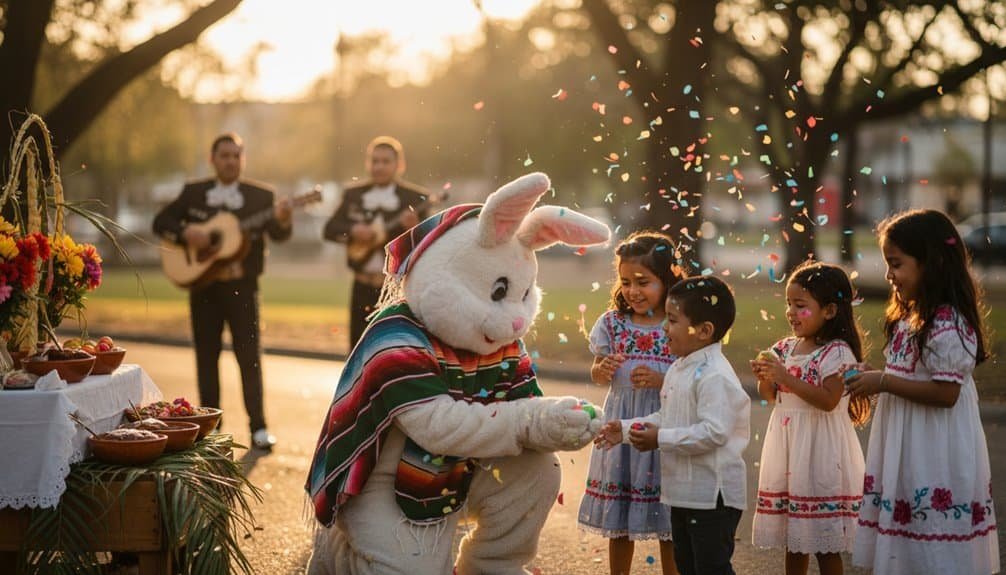
How do Mexican Easter celebrations diverge from the pastel-colored, commercialized traditions you’ll find across most of America? The tradition contrasts are striking. While American Easter centers on egg hunts and chocolate bunnies, Mexican Semana Santa emphasizes profound religious observance through elaborate processions, theatrical reenactments of Christ’s crucifixion, and community-wide fasting.
You’ll discover that ritual symbolism runs deeper in Mexican celebrations. Purple-draped churches replace bright spring decorations. Families create intricate sawdust carpets called alfombras for religious processions rather than decorating plastic eggs. The Easter bunny, if present at all, shares space with more significant symbols like crosses, thorns, and religious icons.
Mexican traditions prioritize collective spiritual reflection over individual gift-giving. You’ll witness entire communities participating in passion plays, where neighbors portray biblical figures. These celebrations span the entire Holy Week, transforming towns into living religious theaters that emphasize sacrifice, redemption, and communal faith rather than commercial consumption.
How La Búsqueda Del Conejo Brings Neighborhoods Together
Why does La Búsqueda Del Conejo create such powerful community bonds where traditional American Easter egg hunts often leave neighbors as strangers? You’ll notice the difference lies in collaborative preparation versus individual competition.
Unlike American hunts where families arrive with pre-purchased baskets, La Búsqueda requires weeks of neighborhood crafts sessions. You’ll see abuelitas teaching children to weave grass bunny scavenger clues while fathers construct wooden trail markers together. These preparation gatherings transform strangers into extended family networks.
The hunt itself operates through collective storytelling rather than competitive searching. You’ll observe how each discovered clue triggers shared neighborhood memories—Mrs. Rodriguez’s rose garden becomes “where the bunny learned to dance,” while the corner bakery transforms into “the bunny’s favorite café.”
Children work in mixed-age groups spanning multiple households, creating lasting bonds across cultural and generational lines. You’re witnessing community formation through shared narrative rather than mere prize acquisition.
Why Families Choose Natural Dyes Over Store-Bought Kits
When families embrace La Búsqueda Del Conejo traditions, they’re abandoning commercial Easter egg kits for ingredient-based dyeing methods passed down through generations. You’ll find households boiling onion skins for golden yellows, extracting deep purples from red cabbage, and creating vibrant reds using annatto seeds. This shift reflects deeper cultural values where color symbolism carries specific meaning—red represents life’s vitality, while yellow honors the sun’s strength.
Unlike mass-produced tablets that dissolve in vinegar, these natural processes become family rituals themselves. Children learn to identify plants, understand seasonal harvesting, and participate in multi-step preparations that can span entire afternoons. You’re witnessing families reclaim time together, transforming egg decoration from a quick activity into meaningful cultural transmission.
The contrast with American convenience culture is striking. While store-bought kits prioritize speed and uniformity, Mexican-influenced families choose labor-intensive methods that produce unique, earth-toned results connecting them to ancestral knowledge and environmental awareness.
Where To Join Mexican Easter Celebrations Near You
Mexican-American communities across the United States now host public La Búsqueda Del Conejo celebrations, offering non-Mexican families direct access to these authentic traditions beyond home experimentation with natural dyes.
Mexican-American communities nationwide open their authentic La Búsqueda Del Conejo celebrations to families seeking genuine cultural experiences beyond commercial traditions.
You’ll find established celebrations in cities with significant Mexican populations like Los Angeles, Phoenix, San Antonio, and Chicago. Cultural centers, churches, and community organizations typically coordinate these events through their websites and social media channels. The reaction to Mexican Easter celebrations among non-Mexican attendees has been overwhelmingly positive, with many families returning annually.
These public gatherings emphasize community involvement through collaborative preparation. You’ll participate in natural dye workshops, traditional food preparation, and storytelling sessions explaining the celebration’s origins. Unlike commercialized Easter egg hunts, these events integrate extended family structures and multigenerational participation.
Search local Mexican cultural associations, Catholic parishes in Latino neighborhoods, and community colleges offering cultural programming. Many celebrations welcome newcomers specifically to share their heritage and build cross-cultural understanding.
Frequently Asked Questions
What Is the Historical Origin of Mexican Easter Bunny Traditions?
You’ll find Mexican Easter bunny traditions stem from colonial-era syncretism, where Spanish Catholic Easter customs merged with indigenous Mexican folklore celebrating fertility and renewal. Unlike European traditions emphasizing chocolate gifts, Mexican practices blend pre-Columbian rabbit symbolism with Catholic Easter symbolism. You’re observing how indigenous communities adapted foreign religious practices, creating distinct cultural expressions that honor both ancestral beliefs and imposed Christian celebrations through unique ritualistic interpretations.
Are There Specific Foods Traditionally Prepared During Mexican Easter Celebrations?
You’ll find that foods during easter in Mexican tradition center on capirotadas, a bread pudding symbolizing Christ’s sacrifice, alongside fresh seafood preparations during Lent’s final week.
These spring celebration foods contrast sharply with American chocolate-focused customs, emphasizing communal meals over individual treats.
Mexican families prioritize religious symbolism through ingredients like cinnamon and piloncillo, while American Easter foods typically emphasize commercial confections and decorated eggs rather than spiritually significant preparations.
What Age Groups Typically Participate in La Búsqueda Del Conejo?
You’ll find children aged 3-12 are the primary participants in la búsqueda del conejo, though participation roles vary by family structure.
Younger children (3-6) require adult guidance during the search, while older kids (7-12) hunt independently.
Unlike American Easter egg hunts that often separate age groups, Mexican families typically create age appropriate challenges within mixed groups, allowing siblings to collaborate rather than compete, reflecting collectivist cultural values.
How Long Do Mexican Easter Celebrations Typically Last?
Mexican Easter celebrations typically span two weeks, contrasting with America’s shorter cultural timelines of weekend observances. You’ll find families beginning festivities on Palm Sunday, extending through Easter Sunday with daily religious activities.
Unlike American traditions focused on single-day events, Mexican communities integrate extensive culinary traditions throughout this period, preparing special foods like capirotadas and empanadas. These extended celebrations reflect deeper community bonds and religious devotion than typical American Easter practices.
What Materials Are Commonly Used to Make Natural Easter Egg Dyes?
You’ll find natural dyes for egg coloring across cultures using remarkably similar materials. Red cabbage produces blues and purples, while onion skins create golden yellows and deep oranges. You can extract vibrant reds from beets, gentle yellows from turmeric, and earthy browns from coffee grounds. Mexican traditions often incorporate hibiscus flowers and annatto seeds, while European methods favor spinach for greens and blueberries for purples, demonstrating universal botanical knowledge.
Conclusion
You’ll notice these Mexican Easter traditions offer deeper community bonds than typical American celebrations. When you participate in La Búsqueda del Conejo, you’re experiencing collective neighborhood engagement rather than isolated family activities. The natural dye preparation process connects you to pre-Columbian practices while building intergenerational knowledge transfer. As you observe this cultural shift, you’re witnessing how immigrant communities don’t just assimilate—they transform American holiday practices through their own meaningful traditions.












No Comments