

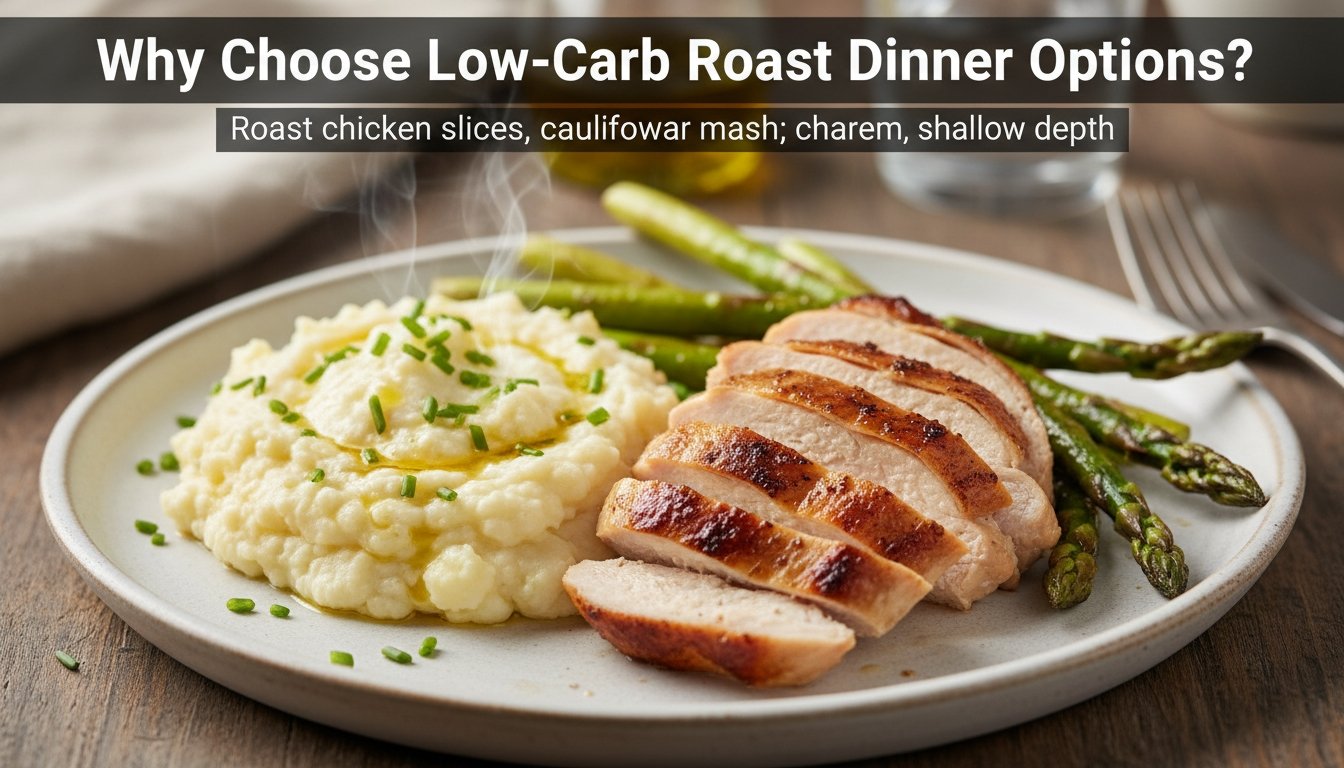
15 Mar Why Choose Low Carb Roast Dinner Options?
Low-carb roast dinner options are a great choice because they’re naturally low in carbs to help manage your blood sugar, while providing satisfying protein and nutrients to support your weight loss goals. The juicy, tender meats and savory caramelized vegetables deliver delectable flavors and textures that will leave you feeling full and energized. Plus, roasts offer versatile serving ideas for festive meals and leftovers that extend your options throughout the week. Curious to learn more?
Table of Contents
Key Takeaways
- Low-carb roast dinners help manage blood sugar levels and support weight loss goals by being naturally low in carbohydrates.
- The combination of protein-rich roasted meats and nutrient-dense vegetables promotes satiety and steady energy levels.
- Roasted meats and vegetables provide a variety of vitamins, minerals, and antioxidants for overall health and well-being.
- Low-carb roast dinners offer versatility in preparation and serving, making them suitable for various healthy eating plans.
- Leftover roast meats and vegetables can be repurposed in a variety of low-carb meals throughout the week.
Nutritional Benefits of Low-Carb Roast Dinners
Why opt for low-carb roast dinners? They provide a wealth of nutritional benefits. First, they’re naturally low in carbs, which can help manage blood sugar levels and support weight loss goals. The roasted meats and vegetables are also rich in protein, vitamins, and minerals, keeping you feeling full and satisfied. Plus, low-carb roast dinners are highly versatile – you can mix and match different proteins, produce, and seasonings to suit your taste buds. Whether you’re following a keto, paleo, or simply a healthier eating plan, low-carb roast dinners are a nutritious and delicious option that’ll leave you feeling energized. With their nutrient density and ability to support various dietary needs, it’s no wonder more people are choosing low-carb roast dinners.
Satisfying Flavors and Textures in Low-Carb Roast Dishes
Wondering what makes low-carb roast dishes so satisfying? It’s the juicy, tender meats complemented by the savory, caramelized vegetables. Low-carb roasts like beef, pork, or lamb offer rich, satisfying flavors that tantalize your taste buds. Perfectly seasoned, the meat develops a delectable crust while remaining moist and flavorful inside. Roasted vegetables like Brussels sprouts, cauliflower, and zucchini lend wonderful textures – slightly crisp on the outside, soft and creamy on the inside. The combination of succulent protein and nutrient-dense veggies creates a harmonious, filling meal that leaves you feeling satisfied, not sluggish.
Low-carb roast dinners provide the comfort of a classic Sunday supper with the added benefits of being nutritious and low in carbohydrates.
Versatile Serving Ideas for Low-Carb Easter Roasts
How can you get the most out of your low-carb Easter roast? Serve it alongside versatile, low-carb sides like roasted vegetables, cauliflower rice, or zucchini noodles. These sides complement the savory flavors of the roast and provide a satisfying texture. For a festive touch, garnish your plate with fresh herbs or a tangy lemon-garlic sauce. Don’t forget the leftovers! Shredded roast meat makes a great addition to low-carb salads or wraps throughout the week. You can even repurpose it in frittatas or casseroles. With some creative serving ideas, your low-carb Easter roast can be the star of the show and provide multiple satisfying meals.
Frequently Asked Questions
How Do Low-Carb Roasts Fit Into a Balanced Diet?
Low-carb roasts can be a great addition to a balanced diet. They provide protein, healthy fats, and minimal carbs, making them a filling and nutritious option. You can pair them with low-carb veggies for a complete meal that keeps you feeling satisfied without spiking your blood sugar. The key is to watch your portion sizes and balance it with other nutrient-dense foods throughout the day.
What Are the Common Mistakes When Cooking Low-Carb Roasts?
Common mistakes when cooking low-carb roasts include overcooking the meat, not using enough seasoning, and not accounting for the lack of carbs in the side dishes.
To avoid these, monitor the cooking time closely, experiment with bold spices and herbs, and pair the roast with low-carb veggies like roasted Brussels sprouts or cauliflower mash.
How Can I Incorporate Low-Carb Roasts Into Meal Prepping?
To incorporate low-carb roasts into meal prepping, you can roast a large cut of meat like a pork shoulder or beef brisket on the weekend.
Slice or shred the cooked meat and store it in the fridge.
Throughout the week, you can use the low-carb protein in salads, wraps, or as the main dish with low-carb sides like roasted vegetables or cauliflower rice.
Are There Any Special Considerations for Reheating Low-Carb Roasts?
When reheating low-carb roasts, ensure you don’t overcook them. Slowly reheat at a low temperature to maintain moisture and tenderness. Avoid microwaving, as it can dry out the meat. Consider slicing the roast before reheating to help it heat through evenly. You might also want to add a bit of broth or sauce to keep the meat from drying out.
How Do I Shop for the Right Low-Carb Roast Ingredients?
When shopping for low-carb roast ingredients, look for cuts of meat like beef, pork, or lamb without added sugars or breading. Choose fresh, seasonal veggies like broccoli, cauliflower, and leafy greens. Opt for healthy fats like olive oil or avocado oil for roasting. Avoid high-carb sides like potatoes, rice, or stuffing. Focus on building a nutritious, filling meal that aligns with your low-carb dietary needs.
Conclusion
You’ll love the nutritional benefits and satisfying flavors of low-carb roast dinner options. They’re versatile too, so you can serve them in various ways for your Easter feast. Ditch the high-carb dishes and opt for a healthier, more fulfilling roast dinner that’ll leave you feeling satisfied without the guilt.












No Comments