

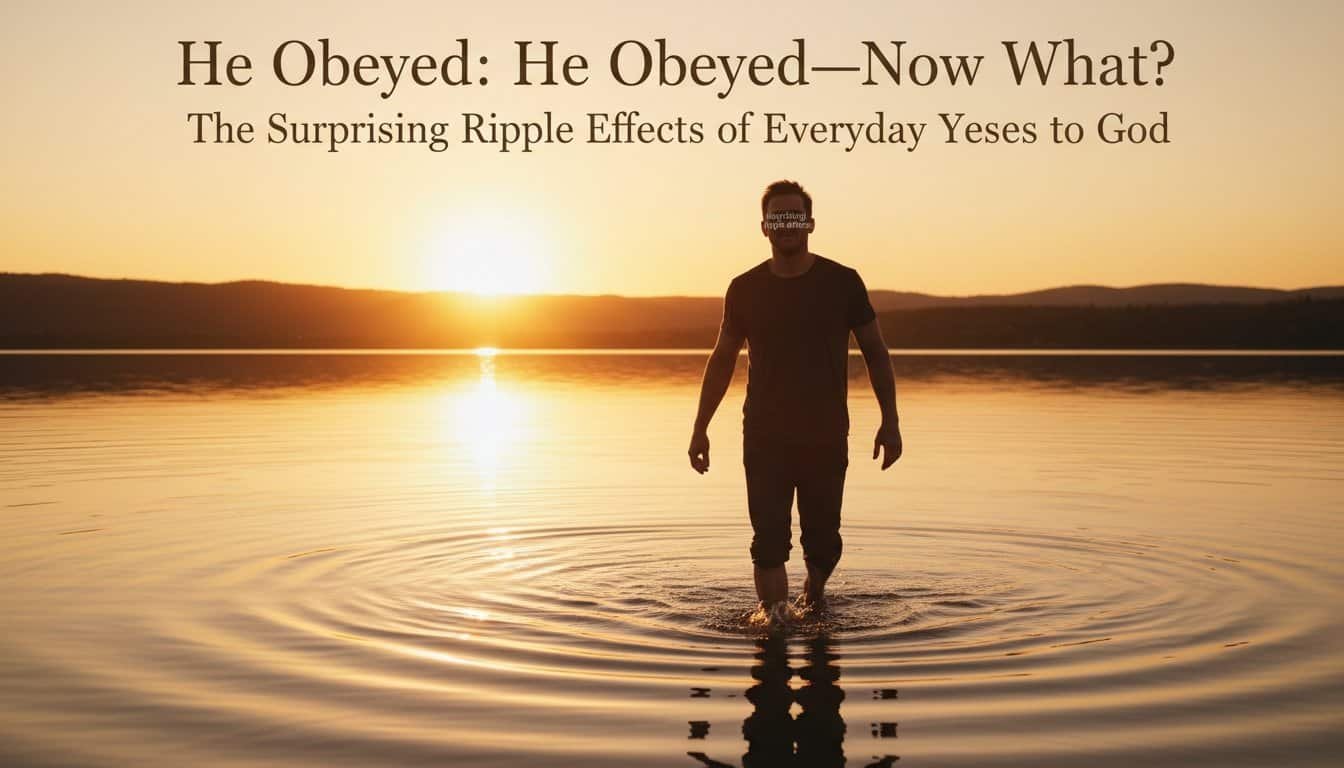
03 Mar He Obeyed Now What? The Surprising Ripple Effects of Everyday Yeses to God
When you consistently say yes to God, you’ll experience transformation that ripples through every area of your life. Your spiritual understanding deepens, relationships become healthier through biblical humility and commitment, and unexpected doors open as obedience acts like a master key. The first thirty days reveal surprising breakthroughs alongside daily resistance, but small yeses build momentum like compound interest. Even when results aren’t immediately visible, your faithfulness positions you for divine favor and intimate recognition of God’s voice, creating lasting change that extends far beyond what you initially imagined.
Table of Contents
Key Takeaways
- Obedience to God creates compound momentum where small daily “yeses” build into surprising breakthrough moments and transformative life changes.
- Spiritual transformation deepens relationships through humility, lasting commitment, and the ability to hear God’s voice with increasing clarity and intimacy.
- The first 30 days reveal both daily resistance patterns and unexpected doors opening to new opportunities, ministry, and divine favor.
- Waiting seasons between obedience and visible results develop faith like biblical heroes who trusted God’s perfect timing despite delays.
- Sustainable obedience requires intentional community and consistent spiritual practices, needing only 2.4% of weekly time for profound transformation.
What Actually Changes When You Obey God?

When you choose to obey God, you’re not just following rules—you’re stepping into a transformation that touches every aspect of your life. Your spiritual understanding deepens as you experience oneness with divine Mind, receiving intelligence and strength beyond your natural abilities. Each act of obedience strengthens your trust through tangible proofs—direction when you’re lost, peace during chaos, and provision when resources seem scarce.
Your relationship with God becomes more intimate as you recognize His voice with growing clarity. That awkward optimism others might question becomes unshakeable confidence rooted in spiritual reality. While secular doubt suggests you’re limiting yourself, obedience actually expands your capacity for wisdom and love.
The peace you gain surpasses understanding, replacing confusion and restlessness with divine purpose. Your thinking shifts from carnal to spiritual, enabling you to overcome obstacles through faith and receive the mind of Christ for every challenge. Like Abraham who went forth not knowing where he was going, true obedience requires unquestioning faith that transcends our need to understand every detail beforehand.
Your First 30 Days of Saying Yes
Your first 30 days of saying yes to God will reveal patterns you’ve never noticed before—both the breakthrough moments that surprise you and the daily resistance that shows up right on schedule.
You’ll discover that obedience builds like compound interest, where each small yes creates momentum for the next one, even when your flesh fights back. This momentum reflects how loving motivation to obey God becomes a key indicator of spiritual maturity in believers.
These initial weeks become your training ground, where God’s Spirit teaches you to recognize His voice and trust His timing in ways that transform ordinary moments into divine encounters.
Week One Breakthroughs
How does God respond when you finally say yes to His call? Within your first week of obedience, you’ll discover transformation accelerates beyond your expectations. Like the first son in Matthew 21:28-32 who initially refused but then obeyed, your delayed yes still fulfills the Father’s will completely.
Here’s a thought experiment: imagine each daily yes as culinary symbolism—ingredients God blends into your spiritual growth. Week one breakthroughs often include heightened awareness of His voice, increased peace during decisions, and surprising open doors. You’ll notice John 15:10’s promise activating: keeping His commandments positions you to abide in God’s love.
Your quick responses prevent waiting until failure teaches hard lessons. Daily prayer seeking to see, hear, and know God’s speech creates momentum. Each yes payment secures more of His dwelling place within you.
Daily Resistance Patterns
Why does resistance intensify just as you’re gaining spiritual momentum?
Research shows daily spiritual experiences create measurable positive changes in your life—better health, stronger relationships, decreased harmful behaviors. Yet you’ll notice resistance patterns emerge precisely when these benefits start manifesting.
Your brain fights new intimacy patterns with God because familiarity feels safer than transformation.
Women and African Americans often report more positive spiritual changes during stress, suggesting cultural factors influence how we process divine encounters.
The key isn’t eliminating resistance but recognizing it as evidence you’re growing.
Establish consistent ritual practices during your first thirty days.
Prayer and worship moderately elevate daily spiritual experiences, creating sustainable momentum.
When resistance whispers “this isn’t working,” remember: your yes to God produces ripple effects that research confirms improve nearly every area of well-being.
Building Momentum Forward
Thirty days of intentional yes responses to God create neural pathways that transform resistance into receptivity. Your growth framework builds spiritual muscle through daily scripture reading, prayer in tongues, and reflective journaling. Each morning’s Colossians study feeds your mind with truth while Proverbs chapters sharpen your wisdom. Prayer tongues—five minutes initially, extending to ten—develops your supernatural communication with God.
Obstacle navigation becomes second nature when you’re grounded in daily practices. Fear management improves as you pray Ephesians 3:14-21 over yourself and six others, declaring God’s abundant provision. Your journal reflections identify growth patterns and purpose discoveries that seemed impossible before.
This momentum compounds. Each yes builds confidence for tomorrow’s obedience. You’re not just completing a challenge—you’re rewiring your spiritual response system for lasting transformation.
Why Obedience Feels Harder Before It Gets Easier

What makes saying “yes” to God feel like swimming upstream at first? You’re experiencing the obedience paradox—following God’s will initially requires more energy because you’re fighting against natural inclinations and cultural conditioning that prioritize personal autonomy.
This spiritual fatigue is normal. Your flesh resists divine direction, creating that familiar “oh-no!” response when the Holy Spirit nudges you toward uncomfortable obedience. You’ll find yourself trying clever workarounds instead of accepting God’s superior wisdom.
The challenge intensifies when you lack Scripture saturation or attempt obedience through willpower alone. Without moment-by-moment dependence on God’s grace and community accountability, sustained obedience becomes impossible.
But here’s the encouraging truth: as you consistently choose God’s way over your preferences, your spiritual muscles strengthen. Divine perspective gradually replaces natural reasoning. What once felt counterintuitive becomes your new normal, transforming struggle into supernatural flow.
How Your Yes Opens Doors You Never Expected
Beyond the initial resistance lies something remarkable: your faithful “yes” to God becomes a master key that unlocks opportunities you couldn’t have imagined or orchestrated yourself.
When you obey despite cultural expectations pushing you toward compromise, you’re positioning yourself for divine favor that transcends human understanding. Noah’s unexpected deliverance, Ruth’s surprising marriage and blessed future, and King Jotham’s increased power all demonstrate this principle. Your obedience doesn’t just bring material prosperity—it opens relational doors, ministry opportunities, and spiritual breakthroughs you never saw coming.
That decision to surrender activates authority in your life and ministry. You’ll discover enhanced capacity for work, trustworthy character that attracts others, and increased probability of finding meaningful relationships. Your “yes” equips you as God’s instrument, generating power that draws people to higher standards. What seemed like limitation becomes the very pathway to unexpected fruitfulness and influence.
When God’s Timeline Doesn’t Match Yours
You’ve said yes to God, but His timeline feels frustratingly different from what you expected—and that’s exactly where faith grows strongest. When Abraham waited twenty-five years for Isaac’s birth, he learned that God’s promises don’t expire, they just mature in His perfect timing.
Your obedience today plants seeds that’ll bear fruit in God’s season, not yours, and trusting His timeline becomes the very foundation of deeper faith.
Waiting in Faith
When God says yes to your prayers but the fulfillment seems stuck in slow motion, you’re walking the same path that shaped history’s greatest faith heroes.
Abraham waited twenty-five years for Isaac’s birth, believing despite physical impossibility.
Mary treasured God’s promise for three decades, pondering each memory.
The disciples devoted ten days to prayer instead of anxiety before Pentecost’s power arrived.
Don’t let doubt become an irrelevant tangent during your waiting season. Focus on prayer and preparation rather than pursuing unrelated considerations that distract from God’s purposes.
Like Abraham, who was credited righteous for his faith, your waiting isn’t wasted time—it’s preparation.
Treasure specific promises, live faithfully in present tasks, and resist resentment.
God’s timeline allows for greater purpose than you can imagine.
Trusting God’s Timing
Despite your best-laid plans and carefully calculated timelines, God operates on a schedule that often defies human logic and patience. His timing isn’t late or early—it’s perfect. When delays test your faith, remember that God’s using this season to prepare both you and your blessing. Like Abraham and Sarah receiving Isaac in old age, or Joseph’s dreams fulfilled after years of hardship, delays aren’t denials.
During waiting seasons, develop journal reflections documenting God’s faithfulness. This habit formation strengthens your trust muscle for future challenges. God changes you more than your circumstances during delays, building character and deepening reliance on His promises. Trust correlates with lower anxiety and higher happiness. Focus on God’s faithful nature rather than visible outcomes—His ways remain higher than yours.
How Obedience Transforms Your Closest Relationships

How does saying yes to God ripple through your most intimate relationships? When you embrace obeying community standards rooted in Scripture, you’ll discover profound transformation in your marriage and closest bonds.
Your quiet surrender to God’s design cultivates humility that helps you see your spouse’s value more clearly. Biblical obedience creates commitment that transcends fleeting emotions—acting according to principles in Song of Solomon and 1 Peter 3:7 actually saves marriages. You’ll find that spiritual maturity combines conviction with compassion, bringing life to your home through godly leadership.
But here’s the key: obedience without affection lacks relational richness. Jesus warns against lip service without heart engagement. True transformation happens when your love for God generates genuine affection and trust in your relationships. Your positive actions will create positive emotions, fostering security and deeper connection. When you guard your heart and follow God’s patterns, your closest relationships flourish according to His perfect design.
Staying Faithful When You Can’t See Results
This transformation in your relationships sets a beautiful foundation, but what happens when you’re walking in obedience and can’t see any results? You’re not alone in this struggle. Scripture shows us that heroes of faith died without receiving promises, seeing them only from afar (Hebrews 11).
The truth is, your obedience often produces unseen rewards that occur in hearts you’ll never recognize. Mathematical modeling shows prayer has no measurable effect, yet God commands continual prayer regardless of visible outcomes (1 Thessalonians 5:17). Success isn’t always measured by increase—John the Baptist’s ministry was marked by decrease.
Focus on faithfulness over outcomes. Practice quiet disciplines like daily confession (only 39% do this) and avoiding temptation situations. God’s ways aren’t your ways (Isaiah 55:8-9), and He sometimes withholds harvest visibility from your obedient actions. Plant your seeds faithfully and trust Him for the increase.
Building a Sustainable Yes-to-God Lifestyle
Why does sustained obedience feel so difficult when the initial excitement fades? You’re fighting against natural human tendencies that prioritize immediate gratification over long-term spiritual growth. Building a sustainable yes-to-God lifestyle requires intentional community and strategic time management.
Building a sustainable yes-to-God lifestyle requires intentional community and strategic time management over immediate gratification.
You need approximately 4 hours weekly for faith activities—that’s just 2.4% of your time. Make it count through focused engagement rather than sporadic attendance. Join small groups, attend multiple services, and prioritize quality over quantity in your spiritual disciplines.
Ancient rituals like prayer and Bible study create daily connection beyond Sunday gatherings. Even digital worship opportunities can strengthen your commitment when physical community isn’t available. You’ll discover that feeling fully known and loved within faith communities sustains long-term obedience.
Post-pandemic research shows increased spiritual receptivity. You’re part of resilient disciples who keep showing up despite cultural pressures. Your consistent participation demonstrates faith’s importance through deliberate scheduling choices.
Frequently Asked Questions
What if I Said Yes to God but Made the Wrong Decision?
Your “yes to God” wasn’t wrong—distinguishing God’s voice from your desires takes practice. Even seasoned believers sometimes misinterpret His leading. Don’t let regret after obedience discourage future responses to Him. God redeems even our imperfect decisions when our hearts seek Him genuinely. Learn from this experience, grow in discernment, and keep saying yes. Your willingness to obey matters more than perfect execution every time.
How Do I Know if It’s God’s Voice or My Own Desires?
You’ll distinguish God’s voice from your desires through consistent discernment practice. God’s voice aligns with Scripture, arrives unexpectedly, and feels clearer than your thoughts. Your desires often feel urgent or self-serving. Test prayer prompts against biblical truth and seek confirmation through trusted spiritual mentors. Regular time in prayer, Scripture meditation, and obedience to small promptings will sharpen your ability to recognize His distinct voice over time.
Can I Take Back My Yes if Circumstances Become Too Difficult?
You can’t truly take back a genuine yes to God, though unclear boundaries around your commitment might create doubt resolution challenges. God’s grace covers your weakness when obedience feels overwhelming, but retreating damages your faith foundation. Instead of withdrawing, return to the cross to renew your motivation and seek His strength. Remember, difficulty doesn’t invalidate God’s call—it often confirms you’re walking His path faithfully.
What Happens When Family Members Oppose My Obedience to God?
Facing family opposition tests your spiritual discernment and deepens your faith journey.
The obedience paradox reveals that following God sometimes creates temporary relational tension, but it’s not your responsibility to manage others’ responses.
Through post decision reflection, you’ll often discover that your faithful obedience eventually draws family members closer to Christ.
Stay gentle, prayerful, and committed—God honors your yes even when others don’t understand it initially.
Is It Normal to Feel Regret After Saying Yes to God?
Yes, experiencing regret after yes is completely normal. You’re not alone in feeling doubt after obedience—even biblical heroes like Jonah and Moses questioned God’s call. These feelings don’t disqualify you or indicate failure. They’re part of the human journey of faith. Trust that God understands your struggles and remains faithful even when emotions waver. Press through; clarity often comes with time and perspective.
Conclusion
You’ve taken the leap—you’ve said yes to God’s call on your life. Now you’re discovering that obedience isn’t a one-time decision but a daily adventure of trust. Each step of faithfulness creates ripples you can’t see yet, opening doors and transforming relationships in ways that’ll surprise you. Keep saying yes, even when it’s hard. God’s working through your obedience in ways far beyond what you’ve imagined.












No Comments