

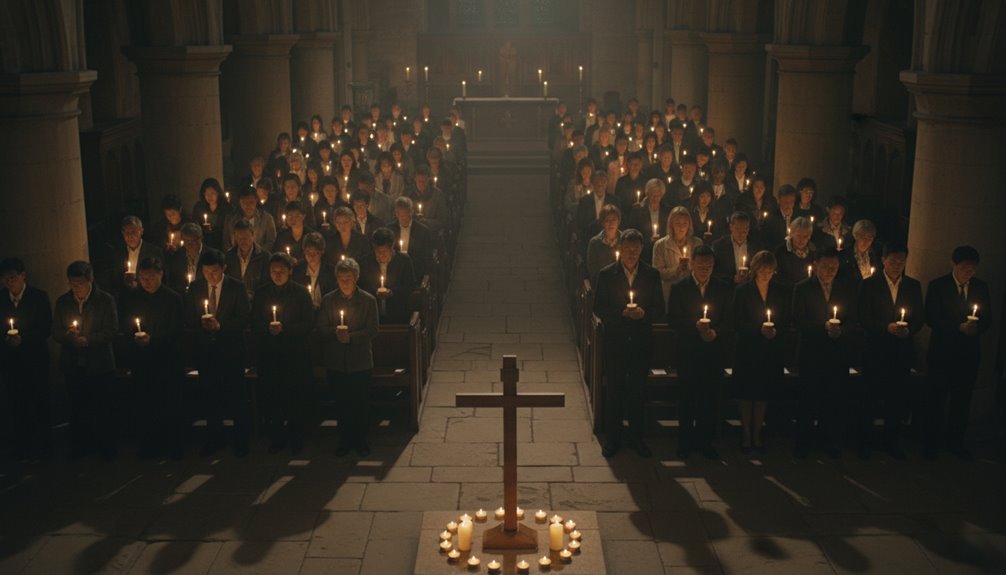
12 Mar What Is Good Friday Cultural Significance?
You’ll find that Good Friday’s cultural significance stems from its central role in Christian faith, commemorating the crucifixion and death of Jesus Christ. This solemn day reflects universal themes of sacrifice, redemption, and human resilience that resonate globally. Beyond religious observances, Good Friday’s impact on public life and evolving symbolism reveal its deep-rooted place in diverse cultures and traditions. If you’d like to learn more about the origins, observances, and modern significance of this pivotal day, keep reading.
Table of Contents
Key Takeaways
- Good Friday commemorates the crucifixion of Jesus Christ, a central event in Christian faith and a time of solemn reflection and mourning.
- Observances worldwide include religious services, processions, and penitential practices that reflect the day’s spiritual significance for Christian communities.
- The day’s cultural significance extends beyond religious contexts, with public holidays, community events, and family traditions marking the Easter weekend.
- Symbolic themes of sacrifice, redemption, and universal human experiences have evolved, allowing diverse modern observers to relate to the day’s meaning.
- Good Friday’s cultural significance represents the interplay between religious tradition, public life, and evolving societal values in a complex, pluralistic world.
The Origins and Significance of Good Friday in Christianity
What’s the origin of Good Friday in Christianity? Good Friday commemorates the crucifixion of Jesus Christ and his death at Calvary. It’s observed on the Friday before Easter Sunday, marking the end of Lent, a 40-day period of fasting, prayer, and repentance. Christians believe Jesus sacrificed himself to absolve humanity’s sins. They commemorate his suffering, death, and resurrection, which are central to their faith. Good Friday is a solemn day of mourning and reflection, with churches holding special services. It’s a public holiday in many countries with Christian majorities, allowing people to observe the occasion.
How Good Friday Is Observed and Commemorated Globally
How do Christians around the world observe and commemorate Good Friday? They gather for solemn religious services, often including the Stations of the Cross, reflections on Christ’s suffering, and Holy Communion. Some engage in fasting and penitence. Processions reenacting Jesus’ journey to the crucifixion are common, especially in Catholic and Orthodox communities. In the Philippines, some even practice self-flagellation or crucifixion rituals. Globally, Good Friday is a public holiday, allowing time for reflection and community gatherings. In secular settings, it marks the start of the Easter weekend, with egg hunts, family meals, and other celebratory traditions. Though the specific practices vary, the day is universally observed as a time of solemnity, sorrow, and reverence for the Christian faithful.
The Impact of Good Friday on Public Life and Traditions
Undoubtedly, Good Friday’s impact extends far beyond religious observances, shaping public life and cultural traditions around the world.
Many nations grant their citizens a national holiday, allowing them to commemorate the day with their families.
Businesses often close, and public transportation runs on reduced schedules.
Schools usually suspend classes, too, as students and teachers observe the solemn occasion.
In some countries, theatrical re-enactments of Christ’s crucifixion are commonplace, drawing large crowds.
Processions, concerts, and other community events also mark the day.
Beyond the religious significance, Good Friday has become ingrained in the fabric of society, influencing how people spend their time and engage with their communities on this sacred day.
The Evolving Meaning and Symbolism of Good Friday in the Modern Era
As the world has evolved, the meaning and symbolism of Good Friday have also adapted to the changing times. What was once a solemn commemoration of Christ’s crucifixion now encompasses broader themes of sacrifice, redemption, and universal human experiences.
Many modern observers, regardless of their religious affiliation, find resonance in the concepts of overcoming adversity and the promise of renewal.
The holiday’s cultural significance has expanded to include messages of hope, unity, and the resilience of the human spirit.
While its core religious foundations remain, Good Friday’s evolving symbolism reflects society’s increasing diversity and the search for shared values in an increasingly complex world.
Frequently Asked Questions
Is Good Friday a Public Holiday in All Countries?
No, Good Friday isn’t a public holiday in all countries. While it’s widely observed in countries with large Christian populations, the observance and designation as a public holiday varies across the globe.
Some nations recognize it as a national holiday, while others treat it as a regular working day.
The cultural significance and recognition of Good Friday depend on the religious composition and traditions of each country.
Can Non-Christians Participate in Good Friday Celebrations?
Certainly, non-Christians can participate in Good Friday celebrations. Many countries recognize the day as a public holiday, offering opportunities for everyone to engage in community events, cultural activities, or simply reflect on the holiday’s significance. While it’s a Christian observance, the themes of sacrifice, redemption, and new beginnings resonate across faiths and cultures, making Good Friday an occasion for shared understanding and fellowship.
How Does the Date of Good Friday Change Each Year?
The date of Good Friday changes each year because it’s tied to the lunar calendar. It’s always the Friday before Easter Sunday, which falls on the first Sunday after the full moon that occurs on or just after the spring equinox. So the date of Good Friday can range from late March to late April.
Is It Necessary to Fast on Good Friday?
No, it’s not necessary to fast on Good Friday. While some Christian traditions encourage fasting or abstaining from meat on this day, it’s not an obligation.
The decision to fast or not is a personal one, based on your own spiritual practices and beliefs.
What matters most is reflecting on the significance of Good Friday and its meaning in your faith.
What Is the Difference Between Good Friday and Easter Sunday?
Good Friday commemorates the crucifixion of Jesus Christ, while Easter Sunday celebrates his resurrection. The former is a solemn day of mourning, while the latter is a joyous occasion marking the triumph of life over death. You don’t have to fast on Good Friday, but it’s a time for reflection and repentance, while Easter Sunday is a time for celebration and renewed hope.
Conclusion
You’ve learned that Good Friday holds deep cultural significance for Christians worldwide. It commemorates the crucifixion of Jesus and marks the start of the Easter celebrations. Though the observance has evolved over time, Good Friday remains a profoundly meaningful day that shapes public life and personal traditions. Its enduring impact reflects the central role of Christianity in shaping the cultural fabric of many societies.










No Comments