

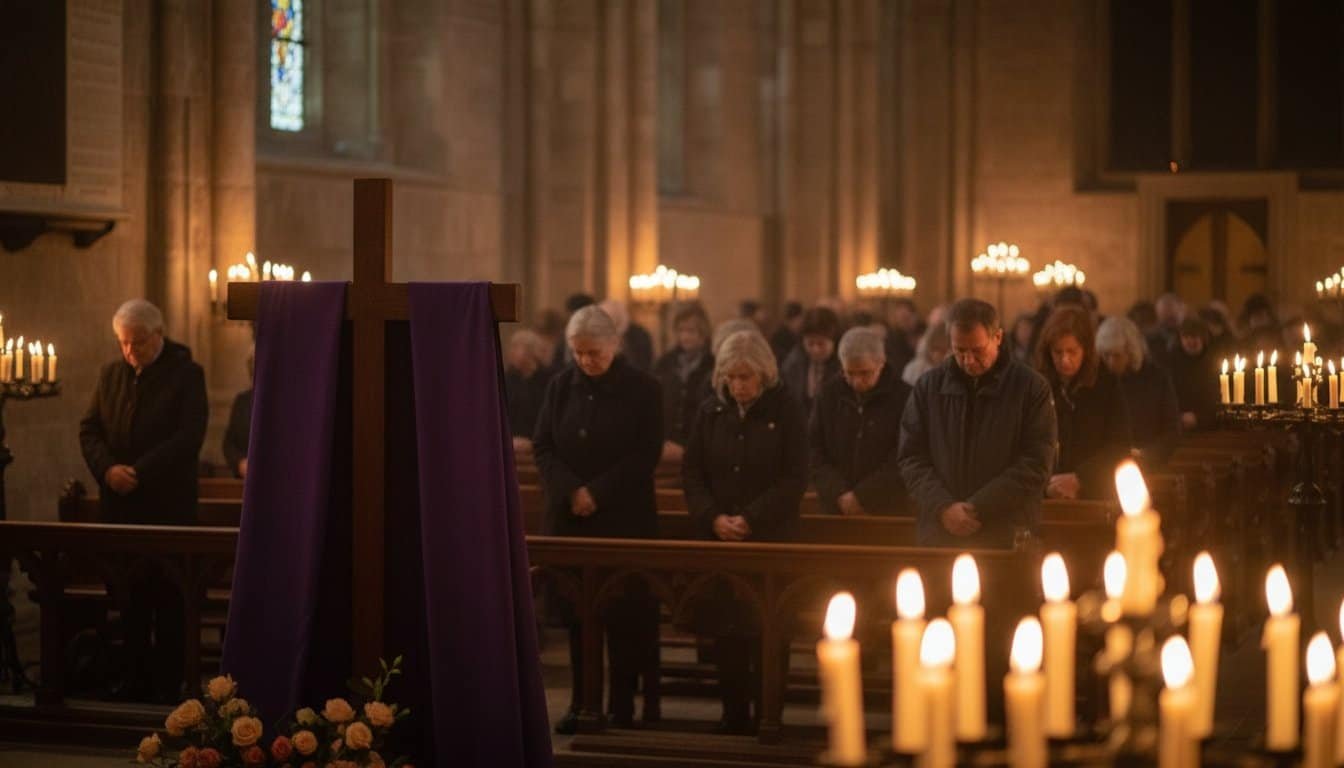
22 Feb Good Friday Church Service and Observance
Good Friday services create a solemn atmosphere where you’ll experience stripped altars, black vestments, and profound silence as the church mourns Christ’s crucifixion. You’ll participate in the Liturgy of the Word, venerate the cross through kissing and genuflection, and often walk the Stations of the Cross with contemplative prayer. Many Catholics also observe fasting and abstinence from meat as acts of devotion. These sacred traditions connect you to centuries of faithful remembrance across diverse cultures and denominations worldwide.
Key Takeaways
- Churches are stripped bare with black vestments, empty tabernacles, and clergy entering in mourning attire with prostration replacing genuflection.
- The liturgy includes the Passion narrative and culminates in cross veneration where the faithful kiss the unveiled cross individually.
- Catholics observe fasting (one full meal, two smaller) and abstinence from meat, with exemptions for pregnant women and health conditions.
- Services feature fourteen Stations of the Cross with wooden crosses, sacred images, candle lighting, and contemplative prayer between stations.
- Global traditions vary from Rome’s Colosseum ceremony to Spain’s elaborate processions and the Philippines’ intense devotional street performances.
What Happens During Good Friday Church Services?
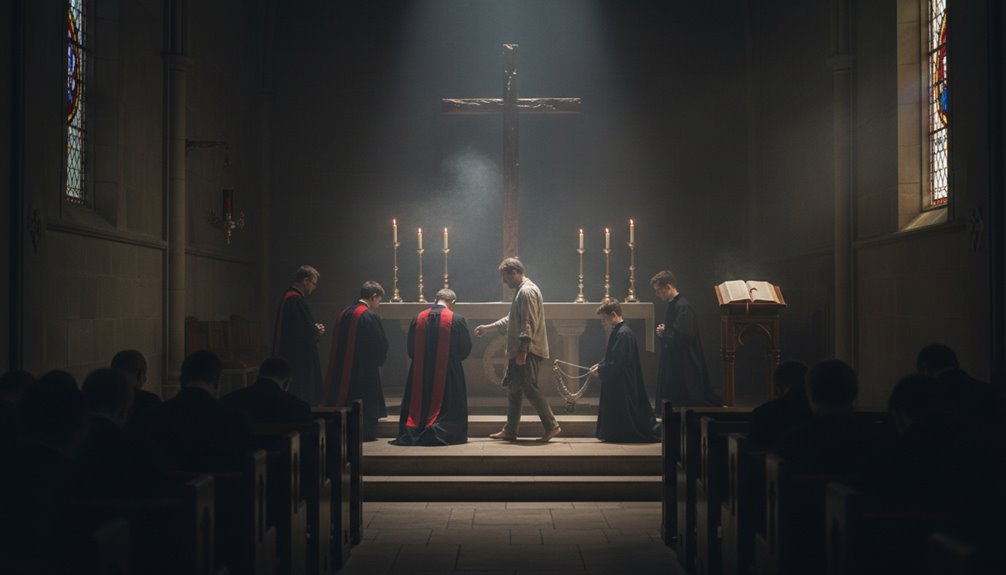
When you enter a Good Friday service, you’ll immediately sense the profound solemnity that sets this day apart from all others in the Christian calendar. The church appears stripped bare—no flowers adorn the altar, the tabernacle stands empty, and black veils shroud sacred symbols. You’ll witness clergy entering through liturgical silence, wearing solid black vestments that proclaim mourning for Christ’s suffering.
The service unfolds through a solemn process beginning with full prostration rather than simple genuflection. During the Liturgy of the Word, you’ll hear the Passion narrative and respond to the haunting Reproaches with “Lord, have mercy.” The wooden clapper’s stark sound replaces bells entirely. You’ll also experience the Prayers of the Faithful with ten specific intentions that progress from prayers for the Church to prayers for all humanity in need.
You’ll participate in venerating the Cross—the service’s central moment—approaching reverently to kiss or touch this symbol of salvation. Finally, you’ll receive Communion using hosts consecrated on Holy Thursday, as no Mass is celebrated today. The service concludes in complete silence.
How To Participate In Stations Of The Cross
Beyond the formal liturgy of Good Friday, you can deepen your spiritual journey through the Stations of the Cross—a profound devotional practice that walks you through Christ’s final hours step by step.
You’ll find fourteen stations arranged along a path in your church, each featuring wooden crosses and sacred images. As you move from station to station, you’ll engage in physical prayer through standing, kneeling, and genuflections while meditating on Christ’s passion. Many churches incorporate candle lighting between stations, creating a contemplative atmosphere that enhances your reflection.
You can participate individually or join a group led by a celebrant, often accompanied by hymn verses sung between each station. This mini-pilgrimage invites you to “take up your cross and follow” Christ, fostering repentance and spiritual growth. The practice began in the fifth century when churches started replicating holy places for those who couldn’t make the physical journey to walk the Via Dolorosa in Jerusalem. Some parishes combine this devotion with fasting rituals, deepening the penitential spirit of Good Friday and helping you enter more fully into Christ’s redemptive suffering.
Good Friday Processions Around The World
Faithful believers across continents transform Good Friday into living expressions of Christ’s passion through ancient processions that span cultures and centuries. You’ll witness remarkable cross cultural contrasts as devotions unfold from Rome’s torch-lit Colosseum ceremony to Jerusalem’s Via Dolorosa pilgrimage. In Spain, cofradías carry elaborate pasos through Seville’s streets while penitents in white habits practice extreme devotion in San Vicente de la Sonsierra.
Mexico’s Iztapalapa district presents dramatic passion plays where 4,000 actors reenact Christ’s final journey, with chosen participants bearing actual crosses weighing 200 pounds. Malta’s Mediterranean communities organize afternoon processions featuring biblical figures carrying sacred statues.
In the Philippines, Good Friday emerges as a holy day marked by widespread pilgrimages and elaborate Way of the Cross performances throughout the islands. Each tradition employs distinct liturgical symbolism—candles flickering in Roman darkness, wooden crosses shouldered in Jerusalem’s ancient streets, incense rising through Spanish processions, and chains dragged in Maltese penance. You’re witnessing how universal faith transcends borders while honoring local customs that have preserved Christ’s passion story for generations.
Catholic Vs Protestant Good Friday Traditions
How do centuries of theological differences shape the way Catholics and Protestants observe Christ’s crucifixion on Good Friday? You’ll find striking contrasts rooted in Catholic salvationism versus Protestant emphasis on faith alone.
In Catholic tradition, you’ll experience formal liturgy with prostrations, Stations of the Cross, and crucifix veneration. The Church offers plenary indulgences, reflecting salvation as a process involving ecclesiastical grace. You won’t receive Eucharist, emphasizing Christ’s sacrificial absence.
Catholic Good Friday liturgy emphasizes physical devotion through prostrations, Stations of the Cross, and crucifix veneration, reflecting salvation through ecclesiastical grace.
Protestant observances vary widely. You’ll notice Protestant iconoclasm’s influence—many prefer empty crosses symbolizing resurrection over crucifixes depicting suffering. Lutheran churches retain crucifixes, while other denominations embrace simpler worship.
Both traditions share fasting practices and solemn meditation on Christ’s passion. However, Catholics follow structured liturgy with specific readings from Isaiah and John’s Gospel, while Protestant services offer more flexibility in worship style, reflecting denominational diversity within broader Protestant theology. Regional customs often influence how cultural variations manifest in local Good Friday observances across different communities.
The Cross Veneration Ceremony Explained
What transforms a simple wooden cross into the focal point of Christianity’s most solemn day? The Veneration of the Cross ceremony elevates this sacred symbol through profound liturgical reverence and deliberate cross adornment.
You’ll witness the cross brought into the sanctuary veiled, accompanied by flickering candles. The priest dramatically uncovers it in three stages—upper portion, right arm, then entirely—while chanting “Behold the wood of the cross, on which hung the savior of the world.” You respond “Come let’s adore” and kneel in reverent silence.
During individual veneration, you’ll approach the cross at the sanctuary entrance. Genuflect by touching your right knee to the ground, then kiss the crucifix. Regional variations allow bowing or touching instead. The faithful may lift their children to kiss the feet of the crucified Christ during these sacred processions.
After the ceremony, ministers carefully place the cross near the altar with lighted candles, creating a sacred space for continued meditation and prayer throughout the Triduum.
Good Friday Fasting Rules And Guidelines
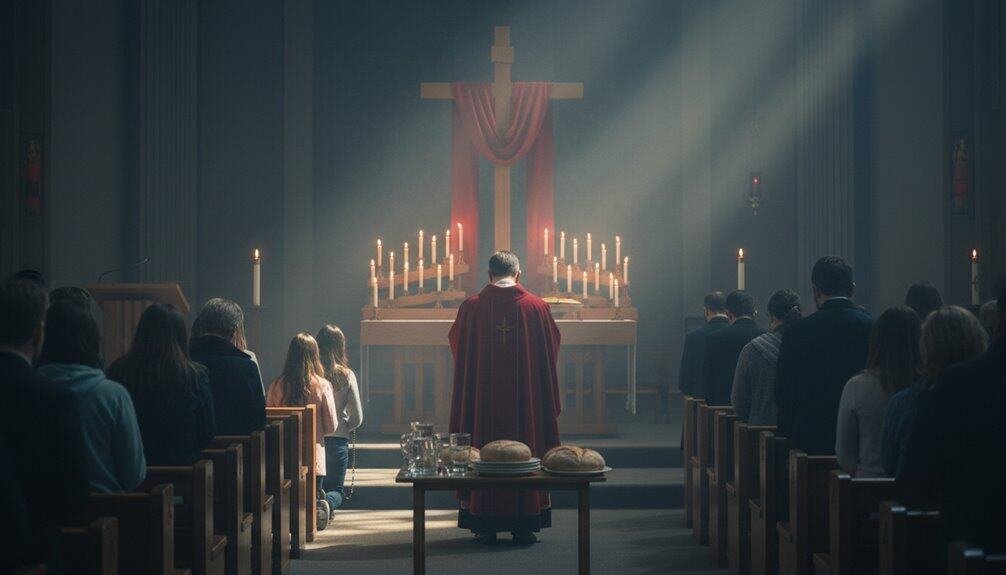
Beyond the profound liturgical acts of worship, Good Friday calls you to unite your body with Christ’s suffering through the ancient disciplines of fasting and abstinence.
Good Friday fasting requires Catholics aged 18-59 to limit themselves to one full meal plus two smaller meals that together don’t equal a normal meal. You’re permitted liquids like milk and fruit juices throughout the day. This practice fosters spiritual dependence on God through physical sacrifice.
Abstinence rules prohibit meat consumption for Catholics 14 and older, though fish remains permissible. Many parishes offer fish fries as communal alternatives during this solemn observance.
Exemptions exist for pregnant women, nursing mothers, children, and those with health conditions. Common sense prevails—your physical well-being shouldn’t be compromised.
Ideally, continue your Paschal fast from Good Friday through Easter Vigil, transforming hunger into prayer and deepening your participation in Christ’s redemptive passion.
Where To Find Good Friday Services Near You
When Good Friday arrives on April 3, 2026, you’ll discover countless opportunities to join fellow believers in commemorating Christ’s passion through solemn worship services spanning from early morning until evening hours.
Major cathedrals like the National Shrine of the Immaculate Conception offer extended observances with relic veneration from 7:00 AM–6:00 PM and Stations of the Cross at noon. Urban congregations create unified gatherings, with churches like Hope Church NYC hosting joint services at 5:00 PM, 6:30 PM, and 8:00 PM.
Community churches provide family-focused programming, including children’s Stations of the Cross at 10:00 AM and evening devotionals at 7:30 PM. Many suburban parishes organize day-long observances with 20-minute prayer periods throughout the day.
Check with local registrations for metropolitan churches, as larger congregations may require advance sign-up. Whether you prefer morning contemplation, afternoon reflection, or evening worship, you’ll find meaningful ways to honor Christ’s sacrifice in your community.
Good Friday Customs By Country And Culture
As you gather with your local congregation for Good Friday worship, you’ll discover that Christians across the globe honor Christ’s passion through remarkably diverse cultural expressions that reflect their unique heritage while maintaining the sacred focus on His sacrifice.
These cultural contrasts reveal God’s universal church unified in remembrance yet beautifully distinct in expression. In Spain’s Seville, elaborate processions carry ornate floats depicting Passion scenes through candlelit streets, while Poland’s faithful kiss wounds on life-size Jesus figures displayed in church tableau. The Philippines’ intense devotion manifests through street crucifixions and Pasyón chanting, contrasting with Malaysia’s quiet, reflective morning services.
Regional rituals incorporate local traditions meaningfully—Africa’s drumming and call-and-response singing, El Salvador’s intricate sawdust alfombras, and Bermuda’s symbolic kite-flying. Whether you’re sharing Nigeria’s post-service community meals or participating in Australia’s solemn crucifixion remembrance, you’re joining believers worldwide in honoring Christ’s ultimate sacrifice through your unique cultural lens.
Frequently Asked Questions
Can Children Participate in Good Friday Services or Are They Too Solemn?
Yes, children can meaningfully participate in Good Friday services despite their solemn atmosphere. You’ll find that age-appropriate presentation helps children understand Christ’s ultimate sacrifice without causing distress. The contrast between Good Friday’s somber tone and Easter’s joy actually deepens their faith comprehension. When you thoughtfully balance reverence with accessibility, child participation enriches their spiritual development and equips them for life’s challenges.
Is It Appropriate to Wear Bright Colors to Good Friday Church Services?
Wearing bright colors to Good Friday services isn’t appropriate, as this day commemorates Christ’s crucifixion and death. You should follow the traditional dress code of dark colors like black, navy, or deep purple that reflect the solemnity and mourning of this sacred day. Your attire should honor the gravity of Jesus’s sacrifice, demonstrating reverence through modest, somber clothing that matches the service’s contemplative nature.
What Should Non-Christians Expect When Attending a Good Friday Service as Guests?
You’ll find warm welcome despite coming from a non church community background. Expect solemn worship commemorating Christ’s crucifixion through scripture readings, hymns, and prayers.
From a non believer perspective, you’ll witness profound reverence as Christians reflect on Jesus’s sacrifice.
You’re invited to participate respectfully—stand, sit, and sing along, but abstain from Communion.
The atmosphere emphasizes quiet reflection rather than celebration, honoring this sacred day.
Are Good Friday Services Shorter or Longer Than Regular Sunday Worship Services?
Good Friday services are typically longer than regular Sunday worship, often extending by an hour or more. You’ll experience reflective worship that unfolds more slowly than typical services. The Three Hours’ Agony spans noon to 3 PM, while parish services average 1.5 hours versus shorter Sunday services. Veneration of the Cross, extended readings, and periods of silent adoration create a more contemplative rhythm than ordinary worship.
Can You Receive Communion if You Missed Maundy Thursday Services?
Yes, you can receive communion on Good Friday even if you missed Maundy Thursday services. Missing Maundy Thursday doesn’t automatically affect your communion eligibility for Good Friday.
However, if Maundy Thursday is a holy day of obligation in your region and you deliberately missed it without serious reason, you’d need sacramental confession first. Otherwise, if you’re properly disposed and free from grave sin, you’re welcome to receive the Eucharist.
Conclusion
As you gather this Good Friday, you’ll find yourself united with believers worldwide in remembering Christ’s ultimate sacrifice. Whether you’re walking the Stations, joining a procession, or sitting quietly in reflection, you’re participating in centuries of sacred tradition. Let this day draw you deeper into the mystery of God’s love—a love so profound that it willingly embraced the cross for your redemption and eternal hope.








No Comments