


22 Feb Easy Family Bible Guitar Chords for Worship Time
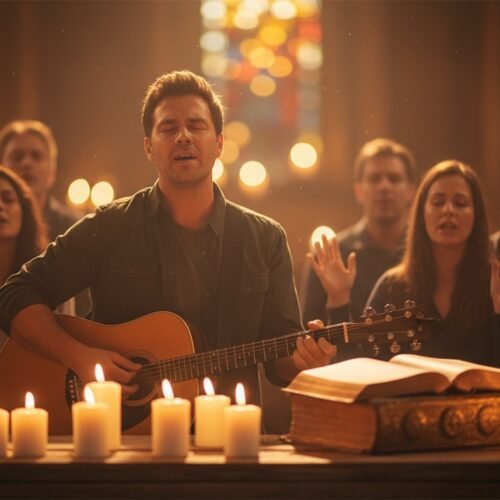
You’ll find the foundational G-C-Em-D progression creates the perfect backbone for family worship sessions with “Family Bible” and similar hymns. Start by practicing the verse pattern moving from G to Em, then A to D, keeping your strumming simple with down beats on 1-4. Use a capo on the first fret to adjust the key for comfortable family singing while maintaining those familiar chord shapes. This approach encourages participation across all ages and skill levels, fostering the sacred atmosphere your family seeks during worship time.
Key Takeaways
- Start with the foundational G-C-Em-D progression, which is transposable with a capo while keeping familiar chord shapes.
- Use a capo on the first fret for key adjustments and to create a warmer sound for family worship.
- Begin with simple three-chord songs before advancing to four-chord progressions like “Blessed Be Your Name.”
- Practice the Em-A7-D7 sequence with anchor finger techniques to maintain smooth transitions during singing.
- Focus on down strums on beats 1-4, emphasizing beats 2 and 4, using wrist motion for consistency.
Family Bible Guitar Chords: Three Easy Keys for Worship

When you gather your family for worship time, mastering three essential keys will unlock the timeless beauty of “Family Bible” on guitar.
Key of G offers the most accessible starting point. You’ll begin with G-C-G for verse openings, transitioning through Em-A7-D7 sequences. The chorus features C-F-C to G shifts, creating that familiar hymnal sound your congregation knows.
Key of C adapts beautifully through capo usage or direct transposition. Start verses with C-F-C, Am-D7-G7, while the chorus moves F-Bb-F to C. This key modulation works perfectly for higher vocal ranges.
Key of A follows Johnny Cash’s memorable version. Verse progressions flow A-D-A, F#m-B7-E7, with the full sequence: A-D-A-F#m-B7-E7-A-D-A-D-A-E-A. Willie Nelson’s composition showcases the enduring power of family rituals through its meaningful verses about gathering around scripture.
Each key maintains the song’s sacred character while accommodating different voices in your family circle. Practice these foundational progressions, and you’ll create meaningful worship moments that echo through generations, just like those cherished family Bible readings.
Essential Strumming Patterns for Family Bible
Mastering chord progressions sets the foundation, but your strumming hand breathes life into “Family Bible” during worship gatherings. Start with basic down strums on beats 1-2-3-4, emphasizing beats 2 and 4 to match the song’s natural rhythm. This simple pattern accommodates different family dynamics while everyone learns their parts.
For smoother chord transitions, incorporate down-up patterns: down on “one,” up on “and,” continuing through each beat. Keep your elbow stationary and use gentle wrist movements for consistent strokes. When moving between chord changes, maintain steady strumming even during transitions.
Build dynamics throughout the song by starting with light strumming during verses, then gradually increasing intensity toward choruses. Pull back during reflective moments to create space for family members to sing comfortably. Practice with a metronome to develop clean chord transitions that won’t disrupt the worship flow, ensuring your guitar supports rather than overwhelms the family’s collective voice in praise. Listen to the drummer’s beat if playing with other musicians to stay in sync and avoid clashing rhythms.
Step-by-Step Family Bible Guitar Tutorial for Beginners
How can you transform simple chord knowledge into a meaningful worship experience for your family? Start by mastering the basic G-C-Em-D progression that forms Family Bible’s foundation. Begin with individual chord practice, focusing on clean finger placement and smooth transitions between these essential positions.
Practice the verse pattern slowly, moving from G to Em, then transitioning to A and D. Don’t let unfamiliar challenge discourage you—these two word ideas represent stepping stones in your worship journey. The G-C-G opening progression establishes the song’s peaceful foundation, while Em provides natural transition points throughout each verse.
Once you’re comfortable with verse transitions, tackle the chorus’s D-G-D progression. The A7 and D7 variations add richness without overwhelming beginners. Consider using a capo on first fret to adjust the key for your vocal range and create a warmer sound. Remember, this isn’t about perfection—it’s about creating sacred space for family devotion. Practice gradually increases your confidence, transforming simple chords into powerful tools for leading your loved ones in worship.
Why Family Bible Creates Perfect Worship Moments
When you gather your family around a guitar to sing “Family Bible,” you’re creating an atmosphere where everyone can join in through simple, accessible chords that welcome participation regardless of musical experience.
The song’s nostalgic lyrics about gathered families reading scripture together naturally inspire reflection on your own spiritual heritage and God’s faithfulness across generations. This practice helps instill core values that shape spiritual development from a young age and creates lasting family traditions.
You’ll find this timeless hymn transforms ordinary moments into sacred encounters, drawing your loved ones closer to each other and to Christ through shared worship.
Simple Chords Enable Participation
Why do some families struggle to create meaningful worship moments while others seem to effortlessly gather around God’s Word? The answer lies in accessibility. When you choose simple guitar chords, you’re removing barriers that prevent participation. Unlike unrelated rumor or weather forecasts that divide attention, basic chords unite your household around shared worship.
Research shows vibrant Christian households prioritize collective spiritual practices, with 25% engaging in daily faith activities together. Simple chord progressions enable everyone—from teenagers to grandparents—to join in singing. Half of regular service attendees already say grace together, proving families crave accessible worship opportunities. These vibrant households also demonstrate that shared meals naturally create opportunities for worship, with 75% eating dinner together where music and faith can blend seamlessly.
Easy chords transform your living room into sacred space where 81% of participating teens report higher engagement, creating the meaningful moments you’ve been seeking.
Nostalgic Lyrics Inspire Reflection
What transforms a simple family gathering into a profound spiritual encounter? Nostalgic songs rooted in biblical narratives create those transformative moments. When you strum familiar hymns, you’re opening doors for meaningful conversations about faith and scripture interpretation.
These beloved melodies become vessels for family memories, weaving together generations through shared spiritual experiences. Your children develop deeper biblical literacy through repeated exposure to scriptural content, while familiar passages allow each family member to share personal insights and spiritual growth.
Nostalgic songs address our contemporary crisis of meaninglessness by reinforcing consistent spiritual devotion. They encourage your family to process how biblical stories apply to daily life, creating structured opportunities for collaborative spiritual engagement that strengthens both faith understanding and family bonds through generations.
Teaching Family Bible Harmony Parts on Guitar
How can you transform your family’s worship time into a rich tapestry of harmonized voices guided by gentle guitar accompaniment? Start with Willie Nelson’s “Family Bible,” which uses accessible G major progressions perfect for teaching harmony fundamentals.
Begin rhythm practice with simple strumming patterns while family members learn their vocal parts. The song’s G-C-G movements provide stable anchoring points where beginning singers can find their pitch. Use capo applications to adjust keys matching your family’s vocal ranges—placing it on the second fret raises everything to A major, making higher harmonies more comfortable.
Teach chord transitions gradually, starting with two-finger shapes before progressing to full voicings. The Em-A7-D7 sequence creates natural movement between sections, allowing harmony singers to follow chord tones easily. Anchor finger techniques help maintain smooth transitions while family members concentrate on blending their voices.
This approach builds both musical confidence and spiritual connection through shared worship experiences.
Family Bible Worship Tips for Small Group Leaders
As a small group leader, you’ll find that simple chord progressions create the foundation for meaningful worship while keeping everyone engaged and comfortable.
Your role in leading group singing extends beyond playing guitar—you’re cultivating an atmosphere where families can connect with God and each other through music.
When you focus on creating a sacred atmosphere rather than perfect performance, you’ll discover how powerful these moments become for building faith and community.
Simple Chord Progressions
When leading family Bible worship in small groups, you’ll find that mastering just a few simple chord progressions opens the door to countless beloved hymns and contemporary worship songs. The foundational G-C-Em-D progression works beautifully for popular worship selections and remains transposable using a capo while maintaining familiar chord shapes.
For atmospheric moments, try the C-D-Fm-C sequence, where each chord sustains over a C bass line at 50 bpm. This creates contemplative space perfect for prayer.
The Ab-Bb-C-C progression offers gentle modulation opportunities during worship transitions.
Don’t overlook two-chord variants like those found in “Holy Spirit You Are Welcome Here.” These simplified arrangements encourage chord improvisation while maintaining tempo consistency.
Leading Group Singing
Where do you begin when your small group gathers around guitars for family worship? Start by understanding family dynamics within your 6-8 member group. Position yourself as a guide with clear direction, modeling reverent leadership while speaking with authority and a penitent heart. Choose familiar songs that encourage participation across all ages, keeping sessions brief—10 minutes works well for morning gatherings.
Foster group cohesion by rotating song selection among families, allowing each household to contribute favorites. When someone’s absent, follow up personally to maintain accountability and connection. Remember that 66% of members already engage in family worship, so you’re building on existing foundations. Lead with firm authority yet remain approachable, creating an environment where both children and adults feel comfortable participating in this sacred time together.
Creating Sacred Atmosphere
How can you transform an ordinary living room into a space where hearts connect with the divine? Creating sacred atmosphere requires intentionality, not expensive decorations. Your awareness and mindful preparation matter more than perfect arrangements.
Position seating to encourage eye contact and interaction during worship. Dim harsh lighting and remove distracting electronics. These simple changes invite reverence and connection.
Establish family routines that signal transition into sacred space. Light a candle before worship begins, or designate special cushions for guitar circle time. When you consistently repeat these practices, your family recognizes worship moments approaching.
Songs That Pair Beautifully With Family Bible
What transforms an ordinary family Bible reading into a memorable worship experience? The right songs paired with simple guitar chords create moments your family will treasure forever.
Choose hymns that complement your Scripture passages. When reading Psalms, “Amazing Grace” with G, C, and D chords provides gentle accompaniment. Practice rhythm slowly at first, letting your chord timing become natural and flowing.
For children’s Bible stories, “Jesus Loves Me” keeps young hearts engaged while you strum basic progressions. “He’s Got The Whole World in His Hands” reinforces God’s sovereignty with familiar G, C, D variations.
Modern worship songs like “How Great is Our God” using G, C, D, Em create intimate family moments. “Peace Like a River” beautifully follows readings about God’s comfort and peace.
Start with three-chord songs before advancing to four-chord progressions like “Blessed Be Your Name.” Your family’s worship time becomes richer when Scripture and song unite hearts in praise.
Troubleshooting Common Family Bible Guitar Challenges
Even seasoned guitarists encounter obstacles during family worship time that can disrupt the sacred atmosphere you’re creating together. When you’re learning multiple songs weekly, structure your practice schedule to avoid overwhelming preparation demands. Quick turnaround times for family worship require consistent daily practice rather than cramming sessions.
Sacred family worship moments demand consistent daily guitar practice over last-minute cramming to maintain the spiritual atmosphere you’re cultivating together.
Strumming pattern uncertainty often stems from overthinking. Listen to your family’s natural rhythm and embrace simplicity over complexity. If someone’s keeping time, match their beat rather than forcing album-perfect patterns.
Transposition techniques become essential when worship keys don’t match original recordings. Practice moving chord shapes efficiently beyond basic open and bar chords. This flexibility serves your family’s vocal ranges better than rigid adherence to original keys.
Gear maintenance prevents technical disasters during precious worship moments. Keep spare batteries, strings, and consider a backup guitar. Start with simple setups—volume pedal, tuner, and delay—avoiding complicated pedalboard configurations that create distracting “holy whale noises.”
Frequently Asked Questions
Can I Play Family Bible on Electric Guitar During Worship Services?
Yes, you can absolutely play Family Bible on electric guitar during worship services. The song’s simple open chords work beautifully with clean electric tones, and its hymn-like structure fits perfectly in congregational settings. Your worship guitar will enhance the devotional atmosphere as families gather to sing this meaningful country gospel classic. Many churches embrace this gentle, reverent approach to worship music.
What’s the Original Key Willie Nelson Used When He First Recorded Family Bible?
Willie Nelson’s original key for “Family Bible” is A major, which you’ll find creates a warm, accessible tone for congregational singing.
When he first recorded it in 1971 on “Yesterday’s Wine,” the recording tempo was moderately slow, allowing the spiritual message to resonate deeply.
This key works beautifully for worship services since it sits comfortably in most singers’ ranges, helping your congregation connect meaningfully with the song’s heartfelt message.
Are There Simplified Chord Versions Suitable for Children Learning Guitar?
Yes, you’ll find excellent simplified chord versions perfect for children learning guitar. Songs like “The B-I-B-L-E” use basic C, F, and G chords, while “Jesus Loves Me” offers beginner friendly chords in simple arrangements. Resources like the Christian Children’s Guitar Collection provide simplified melodies with easy fingerings designed specifically for young guitarists. These worship songs help build your child’s faith while developing their musical foundation together.
Can Family Bible Be Played Effectively With Just Three Basic Chords?
Yes, you can play Family Bible effectively with just G, C, and D7 chords. This three-chord approach maintains the song’s country gospel feel while making it accessible for children. You’ll substitute Em with G and A7 with D7 throughout verses and choruses. This simplified two chord gospel structure works perfectly for beginner strumming patterns, allowing your family to focus on worship rather than complex fingerings during devotional time.
What Capo Position Works Best for Higher Vocal Ranges During Worship?
Capo placement on the 3rd-5th frets works best for higher vocal ranges during worship. You’ll find capo 3rd fret transforms G shapes into Bb, while 5th fret creates C major – both excellent for congregational singing. This positioning keeps everyone within that sweet A-to-D range above middle C.
You’re avoiding strain while maintaining rich, open chord voicings that support your family’s worship beautifully together.
Conclusion
You’ve learned the foundation for leading “Family Bible” in your worship gatherings. Start with simple chords in comfortable keys, practice your strumming patterns regularly, and don’t hesitate to invite others to join in harmony. Remember, it’s not about perfection—it’s about creating sacred moments together. As you continue practicing these techniques, you’ll build confidence and help your family or small group experience deeper connection through meaningful worship music.










No Comments