

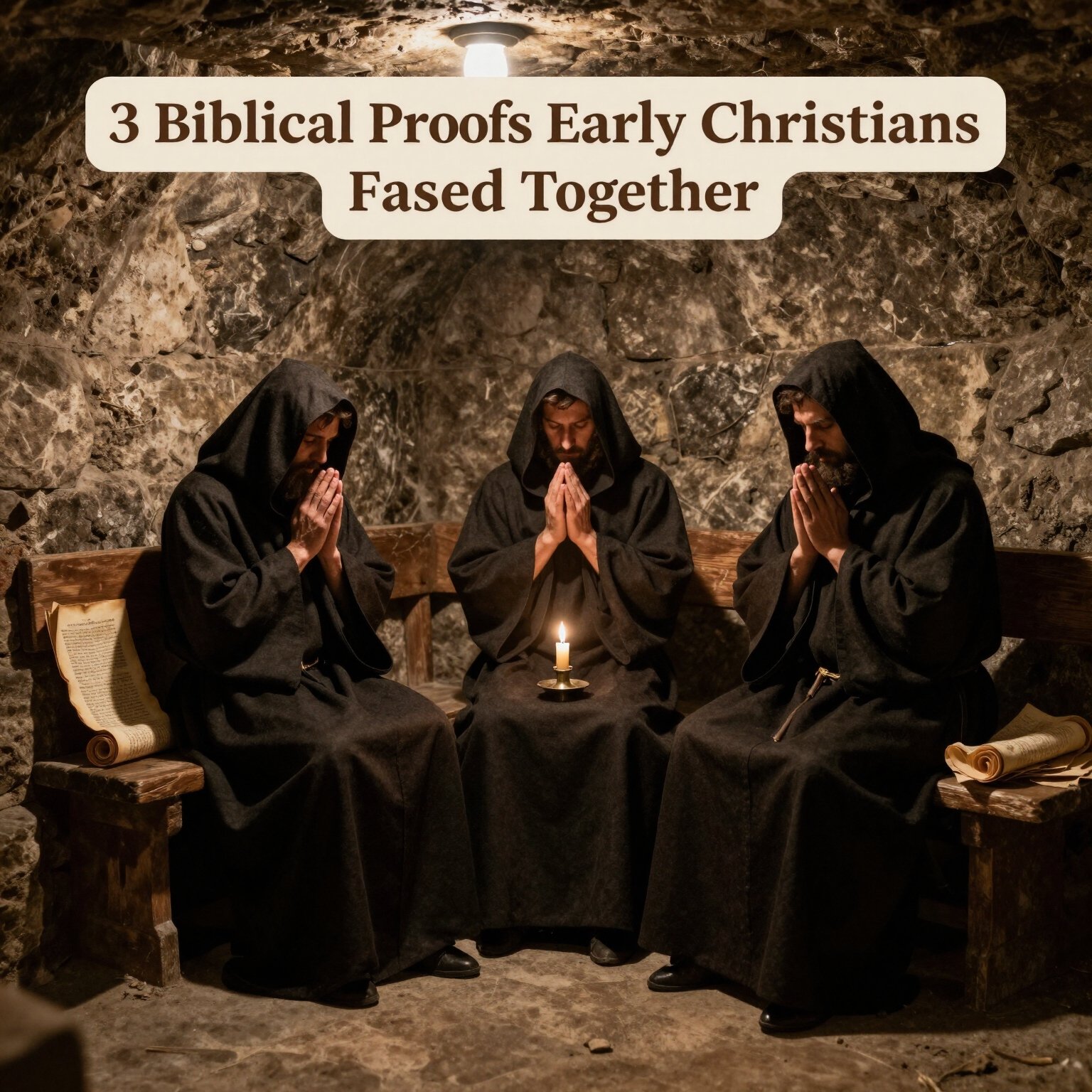
29 Apr 3 Biblical Proofs Early Christians Fasted Together
You’ll see three clear biblical proofs that early believers fasted together: in Acts 13:2‑3 the Antioch church paused, prayed, and fasted before sending Barnabas and Saul; Esther 4:16 records the whole Jewish community sealing their lips for three days; and Ezra 8:21‑23 describes a public fast at the River of Ahava before a dangerous journey. These passages show fasting was a shared, purposeful practice, and the patristic traditions that follow reinforce this communal rhythm. Keep exploring to discover how these early examples shaped later Christian fasting.
Table of Contents
Acts: Early Christian Corporate Fasting
Why did the early church gather to fast together? You see, they believed collective abstinence opened a channel for divine guidance. In Acts 13:2‑3 the Antioch community paused, prayed, and fasted before sending out Barnabas and Saul. This wasn’t a private ritual; it was a shared petition for mission success. You’ll notice the pattern repeats: the believers assembled, laid aside food, and turned their hearts toward God, expecting Holy Spirit involvement. The fast created unity, aligning personal desires with the group’s purpose. You also experience heightened awareness of the Holy Spirit’s presence, as the narrative links fasting directly to the outpouring of gifts. In this way, the early church used corporate fasting not just to deny appetite but to cultivate communal discernment, courage, and obedience to God’s call.
Corporate Fast‑Prayers in Esther, Ezra, and Nehemiah
How do the biblical accounts of Esther, Ezra, and Nehemiah illustrate the power of collective fasting? In Esther 4:16, you see the whole Jewish community sealing their lips for three days, trusting that shared abstinence will sway the king’s heart. Ezra 8:21‑23 shows you and the Israelites gathering at the River of Ahava, fasting together before their perilous journey, acknowledging that humility invites divine protection. Nehemiah 9:1 records you assembling on the plain, wearing sackcloth and dust, confessing national sin while fasting, a public act that unites the people in repentance and hope. Each story emphasizes that fasting isn’t a private ritual; it’s a corporate prayer that marshals communal identity, summons God’s favor, and fortifies resolve. When you join others in fasting, you amplify your petition, demonstrate solidarity, and invite a collective transformation that single prayer alone can’t achieve.
Patristic Views on Corporate Fasting
Building on the biblical examples of collective prayer, the Church Fathers sharpened the theological purpose of communal fasting. You’ll see how they framed fasting not as private piety but as a corporate act that binds the body of Christ. In the Didache, they ordered fasts before baptism and on Wednesdays and Fridays, distinguishing believers from “hypocrites.” Tertullian’s “two weeks of xerophagies” and the Apostolic Constitutions’ fourth‑day fasts show a rhythm that reinforced communal identity. Cyril of Jerusalem taught that abstaining from wine and flesh together yields spiritual reward, while John Chrysostom warned that real fasting means collective repentance, not mere diet. Basil of Caesarea linked fasting to a return to Paradise, insisting that both individual and communal contrition are essential. These fathers also tied fasts to charity; surplus food went to widows and orphans, turning spiritual discipline into social care. Together, their teachings made corporate fasting a cornerstone of early Christian worship and moral responsibility.
Frequently Asked Questions
Did Early Christians Fast on Specific Calendar Dates?
Yes, early Christians fasted on set dates. You’ll find fasts on Wednesdays and Fridays, the fourth day of the week, during Lent, and on the Easter Vigil.
They also observed fasts before Passover, on the day of Pentecost, and whenever the church commissioned missions, like in Acts 13. These calendar‑based fasts reinforced communal prayer, repentance, and solidarity throughout the early church.
How Did Communal Fasts Differ Between Urban and Rural Churches?
You’ll find that urban churches held fasts in packed basilicas, coordinating meals, charity collections, and liturgy with a structured schedule; rural congregations met in modest homes or open fields, sharing simple bread‑and‑water meals and often combining fasting with agricultural work.
In cities, the fasts emphasized public witness and organized almsgiving, while in the countryside they fostered close‑knit mutual support and direct distribution of surplus to neighbors in need.
Were Women Required to Observe the Same Corporate Fasts as Men?
You should know that early Christian women weren’t exempt; they joined the same corporate fasts as men. Texts like the Didache, Apostolic Constitutions, and Acts 13:2‑3 prescribe communal abstinence for the whole congregation, regardless of gender. While some local customs might’ve varied, the official teaching required women to fast on Wednesdays, Fridays, the fourth day, and during Lent just like their male counterparts.
What Role Did Fasting Play in Early Christian Evangelism?
You see fasting acted as a rallying point for early evangelism. When you gathered believers for a corporate fast, you created a shared spiritual urgency that opened hearts to the gospel. You linked repentance, prayer, and charity, demonstrating the faith’s transformative power.
Those fasts preceded missionary commissions, like in Acts 13, and they attracted curious on, showing that the community lived its convictions together.
Did Early Christians Fast During Times of War or Persecution?
You’ll find that early Christians did fast when war or persecution threatened them. They gathered for communal abstinence, praying for divine protection and courage, as seen in Acts 13:2‑3 and the Didache’s fasts before baptism. These fasts linked prayer, charity to the vulnerable, and collective repentance, turning crisis into a unified spiritual response that reinforced community identity and hope.
Conclusion
So, when you look at Acts, Esther, Ezra, and Nehemiah, you see early believers treating fasting as a communal, purpose‑driven practice. The church fathers echo this, urging corporate fasts to seek God’s guidance and power. In short, fast‑praying together wasn’t optional—it was a foundational, unifying discipline that shaped the early Christian identity and mission.










No Comments