


11 May Daniel Chapter 1 Bible Study in Hindi and Gujarati
Daniel Chapter 1 is one of the most powerful opening chapters of any book in the Bible. In just 21 verses, we see a young man taken from everything he knew — his home, his family, his language, his culture — and placed in the most powerful empire on earth. He was given a new name, new food, new education and a new identity. And yet, Daniel held firm to his God.
Table of Contents
For Indian Christians today, Daniel Chapter 1 is not ancient history. It is a mirror. Many of us live in environments — offices, colleges, cities, families — where the pressure to conform, to compromise and to fit in is constant. Daniel’s story shows us how to remain faithful to God when everything around us is pushing us in a different direction.
This Bible study guide covers Daniel Chapter 1 in full, with explanations in Hindi and Gujarati, practical life lessons, and discussion questions suitable for family devotions, church small groups or personal study.
Read Daniel Chapter 1 in full on BibleGateway

For the complete Daniel fast guide including meal plans and prayer points, visit:
Daniel Chapter 1 Summary — What Happened
The events of Daniel Chapter 1 take place around 605 BC, during the third year of King Jehoiakim’s reign in Judah. Nebuchadnezzar, king of the powerful Babylonian empire, besieged Jerusalem and defeated it. He took some of the temple treasures and — crucially — he took some of the best young men from the Israelite royal family and nobility.
His purpose was to train these young men in the language and literature of Babylon. After three years of education in the royal court, they would enter the king’s service. Nebuchadnezzar wanted the best minds of conquered nations working for his empire, fully assimilated into Babylonian culture.
Among those taken were four young men from Judah: Daniel, Hananiah, Mishael and Azariah. They were given Babylonian names: Belteshazzar, Shadrach, Meshach and Abednego. The king provided them with a daily portion of his own food and wine — the best food in the kingdom. But Daniel made a decision that would define his entire life: he resolved not to defile himself with the royal food and wine.
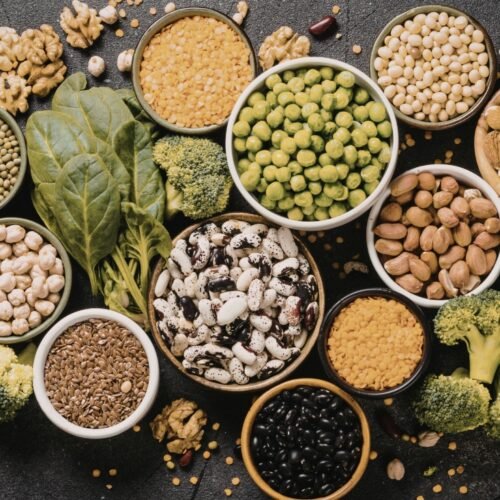
Daniel approached the official in charge and asked for permission to eat only vegetables and water for ten days. The official was afraid — if Daniel and his friends became visibly thinner or weaker than the other young men, he would be in trouble with the king. Daniel proposed a test: ten days of his diet versus the king’s food. At the end of ten days, Daniel and his three friends looked healthier and better nourished than any of the young men who had eaten the royal food. The official permanently changed their diet.

At the end of the three years of training, Daniel, Hananiah, Mishael and Azariah were found by the king to be ten times better in wisdom and understanding than all the magicians and enchanters in his kingdom.
Why Was Daniel Taken to Babylon — Background
To fully understand Daniel Chapter 1, it is important to understand why Israel found itself in this situation at all. The prophets — especially Jeremiah, who was prophesying at exactly this time — had warned the people of Judah for decades that if they continued to disobey God, they would face judgment. They had worshipped idols, neglected the poor, broken the covenant and ignored God’s messengers.
When Nebuchadnezzar came and defeated Jerusalem, the people of God would have faced a devastating crisis of faith. Was God defeated? Had God abandoned them? Daniel Chapter 1 opens with the sobering statement that ‘the Lord delivered Jehoiakim king of Judah into Nebuchadnezzar’s hand.’ This is not an accident of history. God was sovereign even over Babylon.
Hindi explanation: Daniel aur uske doston ko Babylon mein laya gaya kyunki Prabhu ne unhe wahan bheja. Yeh sajaa bhi thi — Israel ke paap ka nateeja — aur ek mauqa bhi — taaki Prabhu ka naam sabse badi duniyawi salta mein bhi jaana jaaye. Daniel ki poori kitaab yeh bataati hai ki Prabhu hi asli Raja hai, Nebuchadnezzar nahi.
Gujarati explanation: Daniel ne Babilon maan lewa gaya karan ke Prabhu e ae thaiya deedhu. Te Israaeel na paap no nateejo hato, pan Prabhu ni niyojana pan hati ke te Babilon maan potanu naam jaher kare.
Why Did Daniel Refuse the Royal Food — Key Lesson
This is the heart of Daniel Chapter 1 and the question that Indian Christians relate to most deeply. Why did Daniel refuse the king’s food? There are several reasons, and each one carries a powerful lesson for us today.
Reason 1 — The food may have been offered to idols. In Babylonian culture, food — especially royal food — was often first offered to the Babylonian gods before being consumed. To eat this food would have been, for Daniel, an act of participating in idolatry. Daniel 1:8 says he ‘resolved not to defile himself’ — the word ‘defile’ indicates a spiritual or ceremonial impurity, not merely a dietary preference.
Reason 2 — The Jewish dietary laws. The food from the king’s table would almost certainly not have been prepared according to the Mosaic laws regarding clean and unclean foods. Daniel’s refusal was an act of obedience to God’s law even in a foreign land.
Reason 3 — Identity and dependence on God. To eat the king’s food was to become dependent on Nebuchadnezzar’s provision. Daniel’s choice to eat vegetables and drink water was a declaration that his ultimate provision came not from the king of Babylon, but from the King of Heaven.
Hindi lesson: Aaj bhi hum aise maahol mein hain jahan duniya hamein apne table par bulati hai aur keh rahi hai: ‘yeh khao, yeh piyo, aise jio.’ Daniel ne ‘nahi’ kaha — aur Prabhu ne use blesse kiya. Kya hum bhi apni daily life mein yeh ‘nahi’ kehne ka sahas rakh sakte hain?
Gujarati lesson: Aaj pan aapane evu jagatmaan jeeviye chhiye jyaan duniya aapane apni vyavastha par chalavaanu kaheto chhe. Daniel e ‘na’ kadhu — ane Prabhu e tene barakat aapi. Shoo aapane pan aaj e ‘na’ kadhi shakiye?
For a detailed explanation of exactly what Daniel ate and why vegetables were his chosen food, visit:
What the Daniel Fast Teaches Us About Purity
The story of Daniel Chapter 1 is the biblical foundation for the Daniel fast. But it teaches us more than just what to eat and what to avoid. It teaches us about purity — the principle of keeping yourself set apart for God in a world that constantly pulls you toward compromise.
Purity in Daniel Chapter 1 is not just about food. It is about identity. When Nebuchadnezzar gave Daniel a Babylonian name, he was trying to replace Daniel’s identity. Daniel’s Hebrew name means ‘God is my judge.’ His Babylonian name, Belteshazzar, referenced a Babylonian god. The king wanted Daniel to forget who he was and where he came from.
Daniel did not forget. Despite the new name, the new language, the new education and the new environment, Daniel maintained his identity as a servant of the Most High God. This is the deepest lesson of Daniel Chapter 1 for Indian Christians: wherever God places you — in a secular workplace, a hostile family situation, a college campus where Christian values are mocked — you retain your identity as God’s child.
Discussion questions for families and church groups:
- In what areas of your life do you feel pressure to compromise your faith in order to fit in?
- How did Daniel maintain his identity and faith in an environment completely hostile to his beliefs? What practical steps did he take?
- What is one area of your daily routine where you could choose, like Daniel, to eat ‘vegetables and water’ — to simplify, to depend on God rather than the world’s provision?
Daniel Chapter 1 in Hindi — Key Verses Explained
Daniel 1:8 (Hindi): ‘Parantu Daniel ne apne man mein thana ki woh raja ke khaane se aur uski sharaab se apne aap ko apavitra nahi karega.’
Yeh poore adhyay ki sabse important line hai. Notice karo ki ‘thana’ ka matlab hai deliberate decision — Daniel ne apne man mein pehle se thaan liya. Yeh ek preplanned response tha, real-time ki reaction nahi. Aaj bhi, jab hum mushkil situations mein jaate hain — kisi party mein, kisi meeting mein, kisi maahol mein — pehle se decide karke jaana ki hum kya karenge aur kya nahi karenge, yahi Daniel ka principle hai.
Daniel 1:17 (Hindi): ‘In chaaron larkoin ko Prabhu ne har qisam ke kitabi ilm aur hikmat di, aur Daniel har qism ke khwaabon aur raoyaon ko samajhne laaya.’
Yeh Prabhu ki promise hai jo Daniel ke liye sach hui. Jab hum Prabhu ke liye compromise nahi karte, woh humari bahut zyada izzat karta hai. Daniel ko duniyawi taleem bhi mili aur Pavitra Aatma ka gift bhi. Khuda ne use dono duniyain mein safal banaya.
Daniel 1:20 (Hindi): ‘Aur har us matter mein jisme raja ne unse maslahat maangi, to usne unhe apne tamam jaadugar aur guni logoin se dus guna behtar paya.’
Das guna — ten times better. Yeh hyperbole nahi hai. Yeh result hai jab Prabhu kisi insaan ko aashirvad deta hai jo uske saath khada rehta hai.
Daniel Chapter 1 in Gujarati — Lesson and Prayer
Daniel 1:8 (Gujarati): ‘Pan Daniel e potana man maan thaanyu ke te pote raajaa na bhojan thi ane tenee daakh madi thi potaane bhrasht nahi karish.’
Gujarati lesson: Daniel e ‘thaan lidu’ — e ek dhyaan poorvak nirnay hato. Tamara jeevanmaan pan, jyaare kasoti aave, tyaare premlal nirnay taiyaar rakhho. Jhakho nahi. Daniel ni jem ‘na’ kahevo haath jodo.
Daniel 1:17 (Gujarati): ‘Aa char juvaaniyone Prabhu e drek safar purustake aur budhhimattaa aapi; ane Danielne drek savapna ane dristantono arth samajhava ni shakti aapi.’
Gujarati lesson: Jyaare tame Prabhu maate nibhaav raakho, tyaare Prabhu tamne evun aapse chhe jo duniya aapi nathi shakti — samaj, divy buddhi ane Prabhu ni saathe ek khaas rishto.
Closing Prayer for Daniel Chapter 1 Bible Study:
He Prabhu Yeshu, aaj main Daniel ki kahani padhke tere saamne aata hoon. Tu ne Daniel ko ek aisa maahol mein rakha tha jo poori tarah uske khilaf tha — aur fir bhi tu ne use sambhala, blesse kiya, aur use apni upasthiti se bhar diya. Mujhe bhi aisi taqat de ki main apni duniya mein ‘thaan sakoon’ — ki main tere liye compromise na karoon. Jahan bhi main hoon — school mein, office mein, ghar mein — mujhe yaad rahe ki tu hi mera asli Raja hai. Amen.
He Prabhu Yeshu, Daniel ni jem, ame pan tamara maate pratibadhh rahiye. Jetli kasotio ane debanaoo aave, tame amara jivanmaan raja raho. Amen.











No Comments