

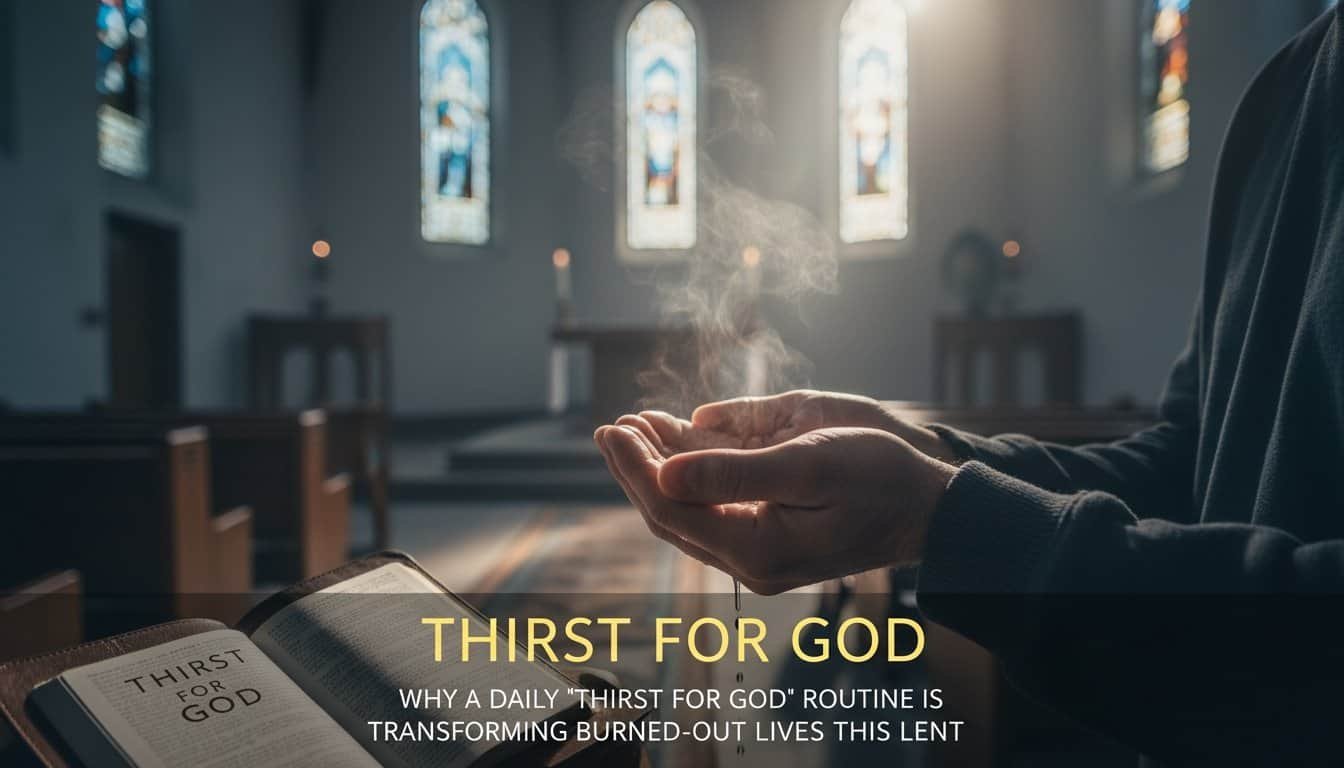
05 Feb Why a Daily “Thirst for God” Routine Is Transforming Burned-Out Lives This Lent
You’re experiencing burnout because you’ve been drinking from broken cisterns instead of living water. A daily “Thirst for God” routine—just 18 minutes of structured prayer, Scripture, and reflection—is transforming exhausted lives this Lent by addressing your desperate spiritual need. This practice activates your brain’s stress-regulation systems, lowering cortisol and releasing natural endorphins that rebuild emotional resilience. You’ll discover how shifting from fleeting achievements to eternal values cultivates supernatural peace that transcends your circumstances and guides your toughest decisions.
Key Takeaways
- Daily spiritual routines address emotional exhaustion by providing structured time for prayer, Scripture reading, and reflection that rebuilds desire for God.
- Prayer scientifically activates brain regions that reduce cortisol, lower stress hormones, and boost serotonin for measurable emotional resilience.
- The practice shifts priorities from temporary achievements to eternal values, cultivating peace that transcends difficult circumstances.
- Honest acknowledgment of desperate need for God during prayer provides access to supernatural guidance for life’s decisions and challenges.
- The 18-minute structured routine includes silence, gratitude, Scripture meditation, sharing needs, and intercession to combat burnout systematically.
What Is a Daily “Thirst for God” Routine and Why It Works for Burnout?

Have you ever felt so spiritually depleted that even breathing feels like effort? You’re experiencing what burnout science calls “emotional exhaustion” – your soul running on empty because you’ve been drinking from broken cisterns instead of God’s living water.
A daily “Thirst for God” routine directly addresses this spiritual depletion. It’s structured time – often mornings – where you engage in prayer, Scripture reading, and reflection, just like the deer panting for water in Psalm 42. This isn’t about adding another task to your overwhelming schedule; it’s about satisfying your deepest thirst for connection with God.
The two word ideas that transform burned-out believers? Desperate need” and “daily drinking.” When you admit your desperate need for God and consistently drink from His Word, even without feeling spiritually thirsty, you rebuild your desire for Him. This practice provides emotional resilience, shifts your priorities from fleeting successes to God’s eternal values, and cultivates peace that transcends your circumstances. Through this hunger for God, you discover supernatural guidance that opens doors to divine direction in every decision and challenge you face.
The Science Behind Prayer’s Power Against Burnout and Stress
When you’re drowning in stress and exhaustion, your brain desperately needs what prayer uniquely provides – and science proves it works.
Research reveals that prayer activates your prefrontal cortex and anterior cingulate cortex, the very regions responsible for neural regulation and emotional balance. This isn’t wishful thinking – it’s measurable brain science.
Prayer’s rhythmic breathing engages your parasympathetic nervous system, triggering deep relaxation responses throughout your body. When you pray, you’re literally modulating your hypothalamic-pituitary-adrenal axis, reducing stress hormones like cortisol that fuel burnout. Studies show prayer lowers your heart rate, blood pressure, and muscle tension while promoting serotonin synthesis in crucial brain regions.
Systematic reviews of 92 studies confirm prayer significantly reduces anxiety and worry. Unlike passive activities, actual prayer – not just reading – transforms your stress reactivity. You’re not just coping; you’re rewiring your brain for resilience through contemplative practice. Prayer also triggers the release of endogenous opioids, creating natural pain relief and feelings of well-being that combat the physical toll of chronic stress.
How to Build Your Personal 18-Minute Thirst for God Practice
Why settle for scattered prayers when you can build a transformative daily rhythm that draws you deeper into God’s presence?
Your 18-minute “Thirst for God” practice becomes your foundation for burnout management and spiritual resilience. Start with minutes 1-2 in silence, whispering God’s presence over your day. Minutes 3-5 flow into praise and gratitude for His faithful actions. During minutes 6-8, read Scripture and meditate on one meaningful word or phrase that resonates.
Minutes 9-11 invite honest sharing—pour out your fears, hopes, and needs without holding back. Finally, minutes 12-15 focus on interceding for others, then resting in stillness and surrender.
This structured approach prevents the chaos of inconsistent prayer while building sustainable habits. You’ll find that consistent 18-minute sessions naturally expand into longer times with God. Don’t aim for perfection initially—simply show up daily. Your faithful presence creates space for His transforming work in your weary heart.
How Daily Prayer Routines Defeated Burnout This Lent
Where burnout once ruled their days, countless believers discovered something remarkable this Lent season—daily prayer routines didn’t just offer comfort, they became powerful weapons against exhaustion and despair.
Daily prayer transforms from simple spiritual practice into a formidable shield against the relentless grip of burnout and despair.
You’re witnessing transformative results that researchers have documented across professions. Teachers practicing daily prayer techniques saw effect sizes reaching 2.87 for psychological health improvements. Healthcare workers with consistent spiritual routines showed dramatically lower burnout levels, while those with irregular practices faced increased burnout odds.
Your daily prayer becomes a safe haven, buffering stress and reshaping how you process overwhelming circumstances. When you establish consistent rhythms—whether morning meditation, evening gratitude, or midday spiritual breaks—you’re engaging in proven burnout prevention strategies.
The spiritual support you cultivate through routine prayer doesn’t just sustain you temporarily. Studies show these benefits lasting weeks beyond training periods. You’re not just surviving this season; you’re building resilience that transforms both your immediate well-being and long-term spiritual vitality.
Frequently Asked Questions
Can I Practice “Thirst for God” Routines if I’m Not Christian?
Yes, you absolutely can adapt these spiritual routines to your beliefs.
Seeking inclusion means recognizing that contemplative practices transcend religious boundaries.
The interfaith applicability of meditation, reflection, and mindful practices allows you to engage with whatever concept of transcendence resonates with you—whether that’s nature, universal energy, or your highest self.
Your spiritual journey is uniquely yours to define and pursue.
What if I Don’t Feel God Answering My Prayers During Burnout?
Feeling unheard during burnout doesn’t mean prayer isn’t working. Your emotional exhaustion can cloud spiritual perception, making divine timing harder to recognize. God often answers through subtle shifts in your resilience, gradual peace, or unexpected support from others. Trust that prayer’s healing effects on your psychological health are occurring even when you can’t feel them. Keep praying consistently—breakthrough often comes when you’re ready to receive it.
Is 18 Minutes Too Long for Beginners Experiencing Severe Burnout?
Yes, 18 minutes is likely too long when you’re experiencing severe burnout. Your exhausted heart needs gentler beginnings. Start with just 2-3 minutes instead—that’s truly beginner burnout friendly. You can’t pour from an empty cup, so honor where you’re right now. Even brief moments with God matter deeply. Consistency with short prayers will rebuild your spiritual strength gradually. You’re not failing; you’re healing wisely.
Can Group Prayer Be More Effective Than Solo “Thirst for God” Practice?
Yes, group prayer can amplify your “thirst for God” practice through collective spiritual energy and mutual accountability. When you’re burned out, shared practice offers encouragement you can’t generate alone. You’ll find strength in others’ faith when yours feels weak. However, don’t abandon solo prayer entirely—you need both intimate personal connection with God and the powerful support that comes from praying alongside fellow seekers on this journey.
What’s the Difference Between Meditation and “Thirst for God” Prayer Routines?
Meditation versus thirst lies in initiation—you actively engage your mind in meditation through scripture reflection and concentration techniques, while “thirst for God” prayer flows as divinely infused awareness beyond your control. Your daily routine comparison reveals meditation requires deliberate effort and methods, but thirst prayer emerges as wordless communion with the Divine Guest within. Both transform you differently through God’s grace.
Conclusion
You don’t have to carry burnout’s weight alone anymore. Your daily thirst for God routine isn’t just another item on your to-do list—it’s your lifeline to peace. As you’ve discovered through these 18 minutes each day, God’s presence transforms exhaustion into rest, anxiety into trust. You’re not seeking perfection; you’re seeking Him. Continue this journey beyond Lent, knowing that every moment you spend thirsting for God, He’s already running toward you with living water.











No Comments