


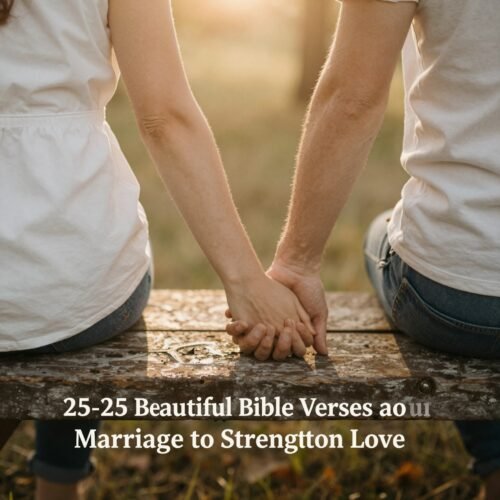
05 May Beautiful Bible Verses for Renewing Marriage Vows
You can anchor your renewed vows in Scripture that celebrates your one‑flesh unity (Genesis 2:24), the steadfast love described in 1 Corinthians 13, and the sacrificial devotion of Ephesians 5:25‑33. Add Ruth’s loyalty promise (“Where you go, I’ll go”) and Colossians’ call to clothe yourselves with patience and forgiveness. These verses weave together divine partnership, enduring love, and daily grace—guiding you to a deeper, more meaningful vow experience.
Table of Contents
Genesis 2:24 – Unity Idea for Biblical Vows
How does Genesis 2:24 shape the way you frame your vows? You see marriage as a single flesh, a partnership that fuses two lives into one. When you speak your promises, you echo that unity by pledging to walk side‑by‑side, share decisions, and blend dreams. You might say, “I’ll honor our oneness, listening before I speak, and seeking harmony in every choice.” This verse also reminds you that the bond is divinely instituted, so your vows carry a sacred weight.
You can weave the imagery of “leaving and cleaving” into a commitment to stay together through change, never drifting apart. By grounding your words in Genesis 2:24, you affirm that love isn’t a fleeting feeling but a lifelong, God‑ordained union that transforms two individuals into a resilient, united whole.
1 Corinthians 13 – Why It Dominates Wedding Vow Ideas
Building on the unity highlighted in Genesis 2:24, many couples turn to 1 Corinthians 13 because it spells out love’s concrete qualities that keep that oneness thriving. You’ll notice the passage lists patience, kindness, humility, and perseverance—traits that translate directly into daily marital habits. When you recite “love never fails,” you’re affirming a commitment that outlasts conflict and fatigue. The verse’s contrast between love and other gifts (prophecy, tongues) reminds you that no ceremony can replace genuine affection. Its brevity makes it easy to weave into vows, while its poetic rhythm resonates with congregations. Because the passage is universally recognized, it bridges cultural and denominational gaps, allowing you to speak a language every Christian understands. Ultimately, 1 Corinthians 13 dominates vow ideas because it offers a clear, actionable blueprint for lasting, self‑sacrificial partnership.

Ephesians 5:25‑33 – Sacrificial Love Vow Idea
Ephesians 5:25‑33 paints a vivid picture of sacrificial love, urging husbands to love their wives as Christ loved the church—selflessly, wholly, and with unwavering commitment. When you craft a vow inspired by this passage, you’re promising more than affection; you’re pledging a lifelong, Christ‑centered devotion that mirrors the gospel’s depth. Express it plainly: “I will love you as Christ loved the church, putting your needs before my own, even when it costs me.”
Highlight the mutual aspect by referencing verse 28, which calls the husband a “head” that nurtures and protects. Include a concrete act—perhaps committing to pray together daily, or to seek counsel when conflict arises—showing that sacrificial love isn’t abstract but lived. By anchoring your vow in Ephesians 5:25‑33, you set a tone of humility, service, and unwavering fidelity that can sustain your marriage through every season.
Ruth 1:16‑17 – Loyalty Theme for Biblical Vows
From the sacrificial love highlighted in Ephesians 5:25‑33, the next powerful biblical model for vows is Ruth 1:16‑17, which captures unwavering loyalty. In those verses Naomi and Ruth pledge to stay together, saying, “Where you go, I’ll go; where you stay, I’ll stay.” When you embed this promise into your marriage vows, you affirm that your commitment endures beyond convenience, travel, or hardship. It tells your spouse that you’ll follow their lead, support their dreams, and remain present through every season. Use the language directly: “I will go where you go, I’ll stay where you stay.” This simple, vivid pledge mirrors Ruth’s devotion and sets a concrete expectation of fidelity. It reminds you both that loyalty isn’t a feeling but a daily, active decision to walk side‑by‑side, no matter the road ahead.
Colossians 3:12‑14 – Forgiveness & Patience Vow Idea
What does Colossians 3:12‑14 teach us about a marriage that endures? It calls you to clothe yourself with compassion, kindness, humility, gentleness, and patience. When you forgive as the Lord forgave, you break the cycle of resentment that erodes intimacy. Patience lets you bear each other’s flaws without rushing to judgment, while love that “binds everything together in perfect harmony” becomes the glue that steadies your covenant.
In your vows, promise to extend grace daily, to listen before reacting, and to choose forgiveness over pride. Declare that you’ll nurture patience, allowing time to heal wounds and deepen trust. By weaving these virtues into your commitment, you create a resilient partnership that mirrors Christ’s steadfast love and stands firm against life’s storms. This vow idea transforms everyday moments into a testament of enduring, forgiving devotion.

One‑Flesh Unity – Full Biblical Vow Template
When you ground your vows in the “one‑flesh” promise of Genesis 2:24, you’re declaring that marriage is a divine partnership that transcends individual desire and becomes a unified life. Begin by affirming, “I choose to be your companion, to walk beside you as the two of us become one flesh, reflecting God’s design.” Follow with a pledge of mutual sacrifice: “I will love you sacrificially, echoing Christ’s love for the church (Eph 5:25).” Add a commitment to honor: “I will respect you above myself, cherishing your gifts as you cherish mine (Rom 12:10).” Include a promise of perseverance: “When trials arise, we’ll stand together, a three‑fold cord with God strengthening us (Eccl 4:9‑12).” Conclude with a vow of fidelity: “I will remain faithful, as Ruth pledged to Naomi (Ruth 1:16‑17), and together we’ll nurture a love that never fails (1 Cor 13:8).”
Sample Vow Templates Blending Multiple Scripture Themes
Building on the one‑flesh foundation, you can weave together several biblical themes into a single, resonant vow. Begin with Genesis 2:24, declaring, “I choose to be one flesh with you, united in purpose.”
Follow with Ephesians 5:25, promising, “I’ll love you sacrificially, as Christ loved the church.”
Add 1 Corinthians 13:4‑7 to describe how you’ll “be patient, kind, and forgiving,” then echo Col 3:12‑14 with a pledge to “bear each other’s burdens in love.”
Conclude with Romans 12:10, affirming, “I’ll honor you above myself, cherishing you daily.”
This structure blends unity, sacrificial love, patience, and honor into a cohesive promise. The result feels scripturally grounded yet personal, allowing you to speak a vow that reflects multiple biblical truths while staying concise and heartfelt.
Personalizing Scripture While Keeping Vow Authentic
Ever wonder how to make biblical verses feel like your own love story without sounding like a sermon? Start by picking a single line that mirrors your relationship’s core—maybe “two are better than one” (Eccl 4:9) for teamwork. Then, rewrite it in everyday language: “We’re stronger together, just as the Scripture says.” Keep the original reference in parentheses so the sacred source stays clear. Next, weave a personal promise around it: “I’ll pray with you each night, honoring the unity God designed for us.” Use the same pattern for every verse you include—short, specific, and directly tied to a concrete action. Avoid long theological essays; instead, let each line be a pledge you can live out daily. By anchoring each vow in a familiar scriptural phrase, you preserve authenticity while making the words unmistakably yours.
Frequently Asked Questions
How Can I Adapt Vows for a Mixed‑Faith Ceremony?
You can blend traditions by picking universal themes—love, commitment, respect—and phrasing them in inclusive language. Start with a simple promise, then add a line that honors each faith, like “I’ll cherish you as we grow together, guided by our shared values and the blessings of our families.” Use a short scripture or reading that resonates with both, and keep the tone sincere, personal, and heartfelt.
What Language Works Best for Elderly Couples Reading Vows Aloud?
Use clear, simple language and speak slowly. Choose short sentences, avoid jargon, and repeat key phrases for emphasis. Keep the wording familiar—“I promise,” “I’ll love you,” “we’ll walk together.” Include gentle pauses after each promise so you can breathe and let the words settle. If you read a biblical verse, use a modern translation and paraphrase the core idea in plain speech. This helps you stay confident and ensures listeners understand every heartfelt vow.
Can I Include a Personal Story Without Breaking Biblical Flow?
Yes, you can weave a personal story into your vows and keep the biblical flow intact. Start with a Scripture reference, then briefly share how that promise showed up in your life. Keep the anecdote short—one or two sentences—so the verse remains the centerpiece. Use simple language, tie the story back to the biblical principle, and let the narrative reinforce, sacred commitment.
How Do I Handle Verses That Conflict With Cultural Traditions?
You balance the tension by first identifying the core biblical principle behind the verse, then checking whether the cultural tradition supports or contradicts that principle.
If it conflicts, you either adapt the tradition to reflect the scriptural intent or replace it with a practice that honors both faith and culture.
Explain your choice to guests, emphasizing love, respect, and unity, so everyone sees the harmony rather than a clash.
Is It Appropriate to Add Non‑Biblical Poetry to Biblical Vows?
Yes, you can blend non‑biblical poetry with biblical vows, as long as you keep the core scriptural promises clear. Choose verses that honor God’s design, then weave in a short poem that reflects your personal story or values. Make sure the poem doesn’t contradict biblical teachings, and keep it brief so the sacred words stay the centerpiece of your ceremony.
Conclusion
By weaving these verses into your vows, you honor God’s design for marriage while speaking from the heart. You’ll echo the unity of Genesis, the love of Corinthians, the sacrifice of Ephesians, the loyalty of Ruth, and the patience of Colossians. This scriptural tapestry creates a vow that’s both timeless and deeply personal—an authentic promise rooted in faith and love.








No Comments